



Recognize that 39% of students who struggle in traditional settings thrive when transferred to alternative schools, where smaller class sizes and individualized attention replace standardized approaches. Alternative schools serve students who’ve been expelled, struggled academically, faced mental health challenges, or simply learned differently—environments where teachers become advocates, mentors, and sometimes the only stable adult presence in a student’s life.
Understand that teaching in these settings demands skills rarely covered in traditional teacher preparation programs. You’ll need trauma-informed practices to work with students who’ve experienced adverse childhood experiences, behavior management strategies that prioritize relationship-building over punishment, and flexibility to abandon lesson plans when students arrive in crisis. Research from the National Center for Education Statistics shows alternative school teachers report higher emotional exhaustion but also greater job satisfaction when they see breakthrough moments with previously disengaged learners.
Embrace the reality that your classroom will look fundamentally different from conventional schools. Instead of 30 students and rigid curricula, expect 8-15 students working at vastly different levels, requiring you to differentiate instruction constantly. You’ll integrate life skills training alongside academics, teaching resume writing and conflict resolution as readily as algebra. These alternative education paths require educators who view success through a wider lens—celebrating a student attending class consistently or completing assignments on time as genuine victories.
Consider whether you possess the resilience and adaptability this work demands. Alternative school teachers experience higher turnover rates, partly because the emotional investment is substantial. Yet those who remain describe unparalleled professional growth and the profound satisfaction of reaching students others have written off, making this career path both challenging and deeply rewarding.
What Makes Alternative Schools Different from Traditional Classrooms

The Students Who Thrive in Alternative Settings
Alternative schools serve a remarkably diverse population of learners who often share one common characteristic: they haven’t thrived in traditional educational environments, though their reasons vary widely.
Gifted students frequently find their way to alternative settings when conventional classrooms fail to challenge them adequately. These learners benefit from self-paced curricula and project-based learning that allows deeper exploration of subjects. Research indicates that approximately 20% of gifted students underperform in traditional settings due to boredom or lack of engagement.
Students with learning differences, including ADHD, dyslexia, and autism spectrum disorders, often flourish with alternative schools’ individualized approaches. Smaller class sizes—typically 10-15 students compared to 25-30 in traditional schools—enable teachers to adapt instruction to different processing styles and provide necessary accommodations without stigma.
Students recovering from trauma, whether from family disruption, mental health challenges, or previous school-related difficulties, find the therapeutic and relationship-focused environment particularly beneficial. These settings prioritize emotional safety alongside academic growth.
Additionally, many students simply learn differently—they’re kinesthetic learners in lecture-based systems, creative thinkers in rigid curricula, or those whose intellectual curiosity doesn’t align with standardized testing priorities. A 2022 study found that 68% of alternative school students reported feeling “understood” compared to 41% in their previous traditional schools.
What unites these diverse learners is their need for flexibility, personalized attention, and educational approaches that honor their individual strengths rather than focusing solely on deficits.
Flexible Structures That Break the Mold
Alternative schools reimagine the traditional school day in ways that better serve their students’ needs. Rather than adhering to rigid bell schedules, many operate on flexible block scheduling that allows for extended project work or hands-on learning experiences. A wilderness therapy program in Colorado, for example, structures learning around seasonal outdoor expeditions, with academic instruction integrated into multi-day hiking trips where students apply math skills to navigation and explore ecology in real time.
Year-round calendars are common in alternative settings, replacing the conventional September-to-June model with shorter, more frequent breaks. This approach helps prevent learning loss and provides natural intervention points for students who need additional support. One therapeutic school in Oregon operates on a trimester system with two-week intersessions dedicated to intensive skill-building workshops.
Physical learning environments also break conventional patterns. Instead of rows of desks, alternative schools often feature flexible spaces with couches, standing desks, and outdoor classrooms. A project-based school in Massachusetts converted a former warehouse into learning studios where students ages 14-18 work alongside each other, with movable walls that adapt to project needs.
Class sizes typically remain small, often capped at 12-15 students, enabling personalized attention. Research from the National Education Policy Center indicates that 68% of alternative schools maintain student-teacher ratios below 15:1, compared to the national average of 24:1 in traditional settings. This structural difference fundamentally changes how teachers interact with students, fostering mentorship relationships rather than purely instructional ones.
Core Teaching Strategies That Work in Alternative Education
Student-Centered Learning in Action
In alternative schools, teachers transform from knowledge dispensers into learning facilitators, empowering students to take ownership of their educational journey. This shift requires practical strategies that honor each student’s unique needs and learning pace.
Teachers implement personalized learning approaches by conducting detailed learning assessments at the start of each term. Rather than following a rigid curriculum, they create flexible learning plans tailored to individual student goals. For example, one teacher might allow a student struggling with traditional math textbooks to demonstrate understanding through real-world budgeting projects or construction measurements.
Student choice becomes central to daily operations. Teachers offer menu-style assignments where students select from multiple options that address the same learning objectives. A history unit might include choices between creating documentary videos, writing research papers, or designing interactive presentations. Data shows that when students exercise choice, engagement increases by up to 40 percent.
Self-directed learning projects form the cornerstone of alternative education. Teachers guide students through project planning, helping them set realistic milestones and identify resources. Weekly one-on-one conferences replace traditional lectures, allowing teachers to provide targeted support and track progress individually. One teacher reports success using learning contracts where students propose projects, establish timelines, and define success criteria collaboratively.
The teacher’s role becomes asking guiding questions rather than providing answers, creating safe spaces for experimentation, and celebrating diverse pathways to mastery. This approach requires patience and trust but yields remarkable results in student confidence and academic growth.

Building Relationships Over Enforcing Rules
In alternative schools, successful teachers understand that traditional discipline models often fail students who’ve experienced trauma, inconsistent boundaries, or repeated school failure. The relationship-first approach recognizes that students cannot learn when they feel unsafe or disconnected from their teachers.
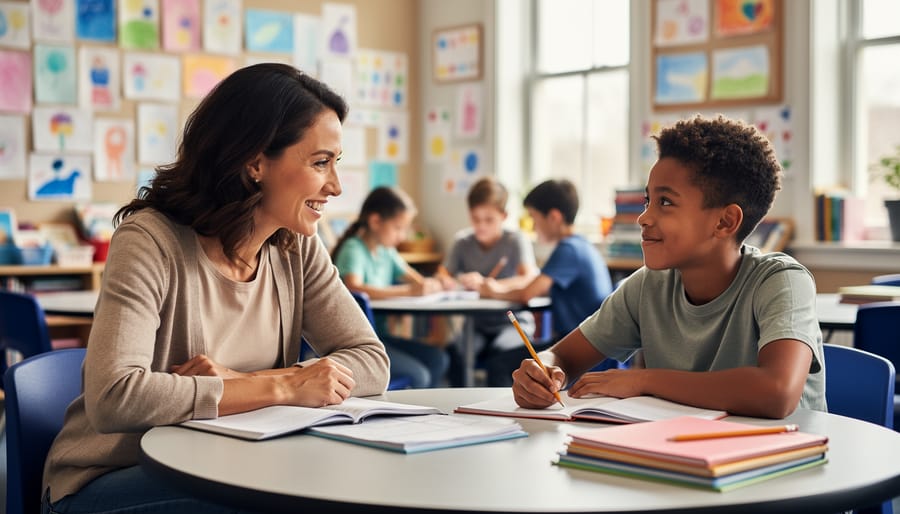
This philosophy means investing time in knowing your students personally before enforcing consequences. One alternative school teacher in Oregon describes greeting each student individually at the door every morning, asking about their weekend or commenting on something they shared previously. This simple practice reduced classroom disruptions by 40% within one semester because students felt seen and valued.
Restorative practices replace punitive discipline with accountability and repair. When conflicts arise, teachers facilitate conversations where students express how they were affected and work together toward solutions. For example, rather than suspending a student for verbal aggression, a restorative circle allows them to understand the impact of their words and make amends through meaningful action, such as writing a reflection or helping a classmate they hurt.
Trauma-informed teaching requires recognizing that challenging behaviors often stem from survival responses, not defiance. When a student refuses to complete work, effective alternative school teachers ask “What happened to you?” rather than “What’s wrong with you?” This reframing opens dialogue about underlying needs like hunger, housing instability, or anxiety.
Data from alternative programs using relationship-based approaches shows 65% improvement in student engagement and significant decreases in chronic absenteeism. These outcomes confirm that when students trust their teachers genuinely care about their wellbeing, academic progress follows naturally.
Competency-Based Assessment Methods
Alternative schools often move beyond traditional testing to embrace competency-based assessment methods that provide a more complete picture of student learning. These approaches recognize that standardized tests may not capture the full range of skills and knowledge students develop, particularly in nontraditional educational settings.
Portfolio reviews stand as a cornerstone of alternative assessment. Students compile work samples over time—essays, projects, artwork, lab reports, and reflections—demonstrating growth and mastery across multiple competencies. For example, a student might showcase their reading comprehension progression through annotated texts, book reviews, and analytical essays collected throughout the semester. Research indicates that portfolio assessment increases student ownership of learning, with one study showing 78% of alternative school students reported greater engagement when using portfolios versus traditional tests.
Demonstrations of mastery allow students to prove competency through hands-on applications. A student learning carpentry might construct a piece of furniture to demonstrate measurement, problem-solving, and craftsmanship skills. Similarly, a student studying environmental science could present findings from a water quality study they conducted independently.
Narrative evaluations replace letter grades with detailed written feedback describing what students can do, areas of improvement, and next learning steps. Teachers might write: “Maria demonstrates strong analytical skills in her ability to identify themes in literature and connect them to contemporary issues. She would benefit from expanding her vocabulary to express these ideas more precisely.”
These assessment methods require more time and detailed observation but yield richer information about student capabilities, making them particularly valuable for students who haven’t succeeded with conventional evaluation approaches.
The Unique Challenges Teachers Face (And How to Overcome Them)
Working With Limited Resources and Funding
Alternative schools frequently operate with significantly tighter budgets than traditional institutions, with some receiving 30-40% less per-student funding according to national education data. This reality requires teachers to become resourceful problem-solvers who can deliver quality education despite financial limitations.
Creative strategies can transform constraints into opportunities. Many successful alternative school teachers build classroom libraries through free book distribution programs like First Book or by partnering with local libraries for rotating collections. Digital resources offer another cost-effective solution—platforms like Khan Academy, Newsela, and OpenStax provide comprehensive educational materials at no cost.
Building community partnerships proves invaluable for resource acquisition. Local businesses often donate supplies, while retired professionals volunteer as guest speakers or mentors. One alternative school in Oregon created a thriving arts program entirely through donated materials and community artist volunteers, demonstrating how relationships can compensate for budget gaps.
Teachers should also embrace project-based learning that utilizes existing materials and student interests rather than expensive curriculum packages. Repurposing everyday items for hands-on science experiments or using students’ own devices for research projects maximizes learning while minimizing costs. The key is focusing on pedagogical innovation rather than material abundance, ensuring every student receives meaningful educational experiences regardless of budget constraints.
Managing Diverse Learner Needs Simultaneously
Alternative school classrooms often resemble one-room schoolhouses, with students spanning multiple grade levels, skill sets, and learning needs within a single space. Successfully managing this diversity requires strategic approaches that honor each student’s starting point.
Start by conducting comprehensive assessments early in the term to identify specific skill gaps and strengths. Research shows that students in alternative settings may read several grade levels below their age peers, making individualized learning plans essential rather than optional. Create learning stations that allow students to work independently at their level while you provide targeted small-group instruction to others.
Leverage technology as a differentiation tool. Adaptive learning platforms can automatically adjust content difficulty based on student performance, freeing you to focus on relationship-building and intervention. One teacher in a Texas alternative school reported significant gains by using blended learning models where students progressed through online modules at their own pace while she circulated for support.
Build peer mentoring systems that pair stronger students with those needing additional help. This approach benefits both learners: mentors deepen their understanding through teaching, while mentees receive immediate, low-stakes assistance. Establish clear routines and visual schedules that provide structure for students who thrive on predictability while building in flexibility for project-based work that engages creative learners. Remember that differentiation isn’t about creating entirely separate lessons for each student, but rather offering multiple entry points to the same essential learning objectives.
Navigating Fewer Support Systems
Alternative schools typically operate with leaner teams than traditional schools, meaning fewer counselors, specialists, and administrative staff to support teachers. A 2022 survey found that 68% of alternative school educators reported having less administrative support compared to conventional settings, requiring them to wear multiple hats throughout the day.
This reality demands proactive relationship-building with your colleagues. Create informal support networks by scheduling weekly check-ins with fellow teachers to share strategies and troubleshoot challenges together. Consider establishing a mentorship system where experienced alternative educators guide newer staff members through common situations like crisis intervention or individualized learning plan development.
Digital communities can also fill support gaps. Join online forums and social media groups specifically for alternative education professionals where you can exchange resources and seek advice during difficult situations. Many teachers report that these virtual networks provide valuable perspectives when on-site support is limited.
Don’t underestimate the power of building relationships with community partners either. Local mental health agencies, youth organizations, and vocational programs can extend your support system beyond school walls. Document these connections in a shared resource guide that all staff can access. Remember, in smaller school environments, every relationship matters, and collaboration becomes essential rather than optional for sustainable teaching practice.

Essential Skills Every Alternative School Teacher Needs
Adaptability and Creative Problem-Solving
Alternative school classrooms demand constant adaptability because traditional lesson plans rarely survive first contact with students who have experienced educational trauma, learning differences, or behavioral challenges. Flexibility means recognizing when a carefully prepared math lesson needs to shift into a social-emotional learning moment because a student arrives upset. Research from the National Education Association indicates that alternative educators report pivoting their instructional approach mid-lesson approximately three times more frequently than traditional teachers.
Creative problem-solving becomes your daily reality. One teacher transformed chronic absenteeism by creating a digital check-in system that students actually wanted to use, incorporating memes and peer shoutouts. Another addressed anxiety around standardized testing by allowing students to demonstrate mastery through podcast creation instead of written essays, maintaining academic rigor while removing barriers.
Thinking on your feet also means resource innovation. When textbook budgets disappear, you learn to curate free online materials, partner with community organizations, or develop project-based assessments using whatever resources students find meaningful. This inventiveness extends to classroom management too—replacing rigid consequence systems with restorative practices that address root causes rather than symptoms. Success in alternative education requires viewing obstacles not as roadblocks but as invitations to design better solutions tailored to your specific students.
Cultural Competency and Empathy
Students in alternative schools often arrive with complex histories that traditional educational approaches may not address effectively. Understanding cultural competency and trauma-informed practices isn’t just beneficial in these settings—it’s essential for building meaningful connections and fostering academic growth.
Cultural competency means recognizing that students come from diverse backgrounds with different values, communication styles, and life experiences. In alternative schools, where students may have faced systemic barriers, discrimination, or family instability, this awareness becomes the foundation for trust. For example, a student who has experienced housing insecurity might struggle with homework completion not due to lack of effort, but because they lack a stable environment to study. Teachers who understand these contexts can adapt expectations and provide appropriate support rather than viewing the situation through a deficit lens.
Trauma-informed practices complement cultural competency by acknowledging how adverse experiences affect learning and behavior. Research shows that approximately 46% of children have experienced at least one traumatic event, with higher rates among alternative school populations. When a student reacts defensively to redirection, trauma-informed educators recognize this may be a survival response rather than deliberate defiance. They respond with calm consistency, establish predictable routines, and create safe spaces where students can regulate their emotions.
Meeting students where they are requires both emotional attunement and academic flexibility. This might mean celebrating a student’s first completed assignment in months, even if it doesn’t meet traditional standards, while simultaneously working toward growth. Successful alternative educators balance high expectations with deep empathy, understanding that progress looks different for each student and that relationship-building often precedes academic achievement.
Making the Transition: From Traditional to Alternative Teaching
Unlearning Traditional Teaching Habits
Teaching in alternative schools requires educators to fundamentally reconsider their approach to classroom management and student success. The most significant shift involves releasing traditional control structures. Rather than directing every moment of learning, alternative school teachers become facilitators who guide students through self-directed exploration. This means accepting that a quiet, orderly classroom isn’t always the goal—productive noise and movement often signal genuine engagement.
Embracing non-linear progress represents another crucial mindset change. In traditional settings, curriculum follows predetermined timelines with standardized benchmarks. Alternative education recognizes that students develop skills at different paces and through varied pathways. A student might struggle with basic multiplication while demonstrating advanced critical thinking about social justice issues. Research from the Alternative Education Resource Organization shows that 73% of alternative school students who were previously failing in traditional settings made measurable academic gains when allowed to progress at their own pace.
Success itself requires redefinition. Instead of focusing solely on test scores and grade-level proficiency, alternative educators celebrate increased attendance, improved social skills, completed projects, and restored confidence. One teacher at a democratic school noted that her greatest success was watching a previously disengaged student voluntarily lead a community meeting—an achievement no standardized test could measure but one that indicated profound personal growth and readiness for future challenges.
Resources and Professional Development
Alternative educators benefit from specialized professional development resources tailored to their unique teaching environments. The Alternative Education Resource Organization (AERO) offers workshops and conferences focused on student-centered learning approaches. Many states provide specialized certifications in alternative education, such as California’s Alternative Education Specialist credential, which equips teachers with trauma-informed practices and behavior intervention strategies.
Online communities like the Alternative Education Facebook group connect over 8,000 educators worldwide, facilitating resource sharing and peer support. Books such as “Teaching Outside the Box” by LouAnne Johnson and “The Educator’s Guide to Alternative Schools” by Lori L. Korinek provide practical frameworks for classroom management and relationship building in non-traditional settings.
Research from the National Center for Education Statistics shows that teachers with alternative education training report 35% higher job satisfaction rates. Professional development through organizations like the Coalition for Community Schools helps educators integrate social-emotional learning with academics. Many districts also offer mentorship programs pairing experienced alternative school teachers with newcomers, providing invaluable real-world guidance for navigating the complexities of serving at-risk student populations effectively.
Teaching in alternative schools represents more than a career choice—it’s an opportunity to transform lives in profound and lasting ways. For students who struggle in traditional settings, alternative educators become the bridge to possibility, offering personalized approaches that honor individual learning styles and life circumstances. Research consistently shows that students in alternative schools who connect with committed, innovative teachers demonstrate significant gains in both academic achievement and social-emotional development.
If you’re an educator feeling constrained by standardized curricula or drawn to working with students who need differentiated support, alternative education may be your calling. These environments reward creativity, flexibility, and relationship-building—skills that make teaching deeply fulfilling. Consider visiting local alternative schools, speaking with current teachers, and reflecting on whether your educational philosophy aligns with student-centered, holistic approaches.
The impact you can have is immeasurable. One alternative teacher shared that a former student, once disengaged and struggling, returned years later to say that her classroom was the first place he felt truly seen and capable. These moments define alternative education.
As our education system evolves to recognize diverse learning needs, alternative schools will continue growing in importance. The field needs passionate educators willing to challenge conventions and advocate for students. If innovation energizes you and you believe every student deserves a path to success, explore alternative teaching opportunities today. Your unique talents could be exactly what a struggling student needs to thrive.