



Educational travel transforms routine vacations into immersive learning adventures that expand your worldview while building tangible skills. Unlike conventional tourism, these structured programs combine expert instruction, cultural immersion, and hands-on activities designed specifically for adult learners seeking personal growth and professional development.
Research shows that 73% of adults who participate in educational travel experiences report increased confidence in cross-cultural communication and enhanced problem-solving abilities. Whether you’re mastering Italian cooking in Tuscany, studying marine biology in the Galápagos, or exploring archaeological sites with university professors, these programs deliver meaningful education in contexts that traditional classrooms cannot replicate.
The modern educational travel landscape offers remarkable diversity. Language immersion programs place you with host families in countries where you’ll practice daily conversation. Archaeological field schools let you excavate actual historical sites alongside trained professionals. Photography workshops take you to stunning locations with award-winning instructors who critique your work in real-time. Culinary institutes abroad provide certification-track courses that can advance your career or simply deepen your passion for gastronomy.
Adults aged 30-65 represent the fastest-growing demographic in educational travel, with many programs specifically designed around working professionals’ schedules. Weekend intensives, one-week courses, and extended sabbatical programs accommodate various time constraints and learning objectives. The investment typically ranges from $1,500 for short domestic programs to $8,000 for multi-week international experiences, with many offering continuing education credits recognized by professional organizations.
Why Adults Are Choosing Educational Travel Over Traditional Vacations
The Psychology of Learning Through Experience
Research consistently demonstrates that learning through experience creates stronger neural pathways than passive learning methods. When adults engage with new cultures, languages, and environments during educational travel, their brains form multiple associations with the material, leading to significantly improved retention rates. Studies from the University of Indiana found that students who participated in study abroad programs retained 87% of learned material after six months, compared to just 42% retention in traditional classroom settings.
The effectiveness stems from what cognitive scientists call contextual learning. When you learn Italian while ordering food in Rome or study marine biology while snorkeling in Costa Rica, your brain encodes the information alongside sensory experiences, emotions, and spatial memories. This multisensory engagement creates what researchers call “sticky knowledge” that remains accessible long after the experience ends.
Educational travel also activates the brain’s reward system through novelty and discovery. When adults encounter unfamiliar situations, dopamine release enhances memory formation and motivation to continue learning. A 2022 study published in the Journal of Adult Education revealed that participants in immersive learning programs demonstrated 34% higher engagement levels and reported greater confidence applying new skills in professional settings.
Furthermore, experiential learning environments naturally incorporate problem-solving and critical thinking. Navigating foreign transportation systems, communicating across language barriers, and adapting to cultural differences all strengthen cognitive flexibility, making adults better equipped to transfer knowledge to various real-world situations.
Career Benefits That Set You Apart
Educational travel programs deliver tangible career development opportunities that distinguish you in today’s competitive job market. Participants develop cross-cultural competency through immersive experiences, a skill increasingly valued by employers operating in global markets. According to a 2022 study, 87% of hiring managers consider international experience a significant asset when evaluating candidates.
These programs facilitate meaningful networking connections with professionals, academics, and fellow learners from diverse backgrounds. Many participants report that relationships formed during educational travel have led to collaborative projects, job referrals, and mentorship opportunities years later.
Professional development extends beyond networking. Language immersion programs enhance communication skills, while specialized courses in fields like archaeology, culinary arts, or sustainable development add credentials that complement your resume. For example, educators who participate in international teaching exchanges return with innovative classroom strategies and fresh perspectives that benefit their students and institutions.
The combination of practical skills, global awareness, and expanded professional networks positions educational travelers as adaptable, culturally intelligent professionals ready to navigate an interconnected world.
Types of Educational Travel Programs That Match Your Learning Goals

Language Immersion Programs
Language immersion programs offer adults intensive opportunities to develop foreign language skills while experiencing authentic cultural contexts. These programs combine structured classroom instruction with real-world practice, accelerating language acquisition through daily exposure.
Homestay programs provide particularly effective immersion experiences. Organizations like AmeriSpan and Spanish Studies Abroad place participants with local families in destinations across Spain, Latin America, France, and beyond. Research shows that learners living with host families achieve 40% faster language proficiency compared to traditional classroom-only settings. Daily conversations during meals and cultural activities reinforce classroom learning organically.
Dedicated language schools cater specifically to adult learners. Eurocentres operates campuses in 15 countries, offering courses from beginner to advanced levels with flexible duration options. Their programs integrate cultural excursions, cooking classes, and professional language workshops. Similarly, programs like teaching English abroad provide reciprocal language learning while earning income.
Cultural exchange programs through organizations like International House World Organization combine language instruction with volunteer opportunities and professional networking. Programs typically range from two weeks to several months, with costs averaging $1,500-$3,000 monthly including accommodation and instruction. Many programs offer certification preparation for language proficiency tests, adding measurable career value to the immersive experience.
History and Cultural Heritage Tours
History and cultural heritage tours offer adults immersive learning experiences at significant historical sites worldwide, combining academic rigor with hands-on exploration. These programs typically partner with universities, museums, and archaeological organizations to provide expert-led instruction that goes far beyond standard tourist experiences.
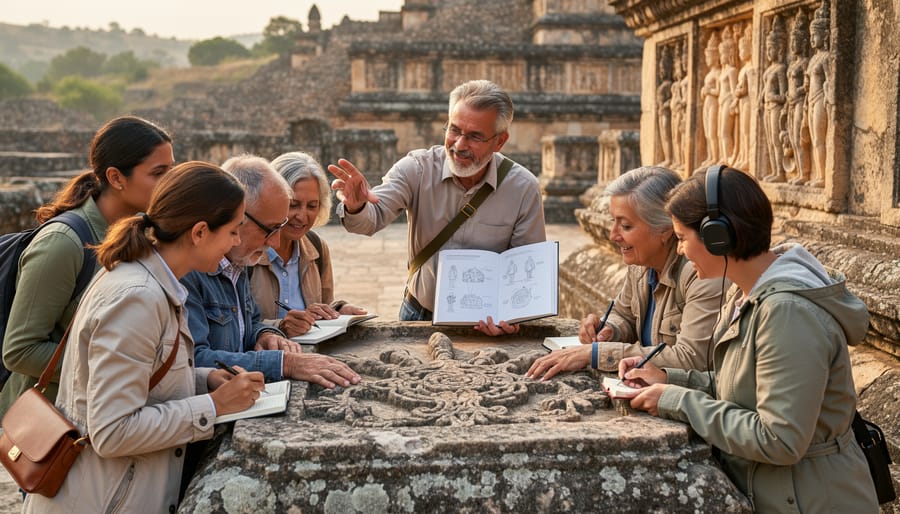
Popular options include archaeological field schools where participants assist with active excavations in locations like Pompeii or ancient Mayan sites, gaining practical experience in excavation techniques and artifact preservation. According to industry data, enrollment in cultural heritage programs has increased by 34% over the past five years, reflecting growing interest in experiential history education.
Many programs feature renowned historians and archaeologists as guides, offering lectures and discussions that contextualize sites within broader historical narratives. For example, the Smithsonian’s study tours combine site visits with exclusive access to collections and behind-the-scenes experiences at world-class museums.
These tours appeal particularly to educators seeking professional development, retirees pursuing lifelong learning, and professionals in cultural fields. Programs typically last one to three weeks and include accommodations, expert instruction, and curated itineraries that balance structured learning with independent exploration. Participants often earn continuing education credits, making these experiences both personally enriching and professionally valuable for those in education or cultural preservation fields.

Professional Development and Skill-Building Programs
Professional development abroad offers adults targeted opportunities to enhance career skills through immersive learning experiences. Teaching certificate programs like TEFL and CELTA enable educators to gain internationally recognized credentials in destinations such as Spain, Thailand, and Costa Rica. Healthcare professionals can pursue specialized training in fields like traditional medicine, nursing practices, or public health through programs in India and Germany. Culinary arts enthusiasts benefit from hands-on workshops at renowned cooking schools in France, Italy, and Japan, often earning professional certifications. Technology bootcamps in innovation hubs like Estonia and Singapore provide intensive training in coding, data science, and digital marketing. According to recent surveys, 78% of participants reported career advancement within six months of completing international training programs. These experiences combine skill acquisition with cultural immersion, making learning more memorable and applicable to global work environments.
Volunteer and Service Learning Opportunities
Service learning programs offer adults transformative experiences that merge cultural immersion with meaningful community impact. Organizations like Global Vision International and Cross-Cultural Solutions connect volunteers with projects in education, conservation, and public health across Africa, Asia, and Latin America. These structured programs typically run 2-12 weeks and include pre-departure training, language instruction, and reflective seminars that deepen understanding of global development issues.
According to research from the Forum on Education Abroad, 78% of adult service learners report enhanced cross-cultural competencies and problem-solving skills applicable to their careers. Programs such as teaching English in Costa Rica or supporting wildlife conservation in Tanzania provide hands-on learning while addressing real community needs. Participants work alongside local organizations, ensuring projects are community-driven rather than imposed solutions.
Quality service learning programs emphasize reciprocal relationships, cultural humility, and sustainable impact. Look for organizations with established community partnerships, comprehensive orientations, and ongoing support structures that facilitate genuine learning exchanges rather than brief volunteer tourism experiences.
What to Look for When Choosing an Educational Travel Program
Questions Every Adult Learner Should Ask Before Booking
Before committing to an educational travel program, adult learners should ask targeted questions to ensure the experience meets their needs and expectations. Start with program structure: What is the daily schedule balance between instruction and experiential learning? How many participants will be in your group, and what is the student-to-instructor ratio? According to recent survey data, programs with fewer than 15 participants report 40% higher satisfaction rates, as smaller groups enable more personalized attention.
Inquire about support services: Does the program provide pre-departure orientation materials? What level of in-country support exists for emergencies or unexpected challenges? Is there assistance with visa applications or travel logistics? A reputable provider should offer comprehensive support throughout your journey.
Examine accommodations carefully: Will you stay in hotels, homestays, or educational facilities? Are meals included, and do they accommodate dietary restrictions? Understanding these details prevents unwelcome surprises and helps you budget accurately.
Focus on learning outcomes: What specific skills or knowledge will you gain? Will you receive a certificate, continuing education credits, or academic credentials upon completion? For example, language immersion programs should specify expected proficiency gains using recognized frameworks like the Common European Framework of Reference.
Finally, ask about cancellation policies, insurance requirements, and what happens if circumstances change. Request references from past participants to gain authentic insights into their experiences. These questions empower you to select a program that delivers meaningful educational value while ensuring logistical and financial security.
Understanding Costs and Finding Funding Options
Educational travel programs typically range from $2,000 to $8,000 for one to four-week experiences, with costs varying significantly based on destination, duration, and program comprehensiveness. Understanding what’s included helps you budget accurately and avoid surprises.
Most program fees cover tuition, accommodation, and organized activities, but many exclude international airfare, meals, visa fees, and travel insurance. According to recent surveys, participants often spend an additional 30-40% beyond the base program cost on these extras. Always request a detailed cost breakdown before committing, and factor in daily spending money for personal expenses.
Fortunately, numerous funding options exist for adult learners. Many employers offer professional development budgets or education reimbursement programs, particularly when the travel experience directly relates to your field. Studies show that approximately 60% of companies with more than 100 employees provide some form of educational assistance. Present your employer with a clear explanation of how the program enhances your job performance.
Scholarships and grants specifically for adult educational travel are available through organizations like the Fulbright Program, professional associations, and educational foundations. Programs often offer early-bird discounts of 10-15% or payment plans that spread costs over several months.
Consider crowdfunding platforms where friends and family can support your educational goals. One teacher raised $3,500 through crowdfunding to attend a language immersion program in Spain, later integrating the experience into her curriculum. Research tax deductions for education-related travel expenses, as some costs may qualify depending on your professional circumstances and local regulations.
Top Organizations and Providers Leading Adult Educational Travel
Selecting the right provider ensures a quality educational travel experience that delivers both learning outcomes and memorable experiences. Here are some leading organizations that consistently offer excellent programs for adult learners.
Road Scholar, formerly known as Elderhostel, stands as the largest educational travel organization for adults over 50, offering more than 5,500 learning adventures annually across 150 countries. Their programs combine expert instruction with immersive experiences, covering subjects from archaeology to wildlife conservation. With over 40 years of experience, they’ve served more than five million participants and maintain strong partnerships with universities and cultural institutions worldwide.
National Geographic Expeditions brings the magazine’s legacy of exploration to life through educational journeys led by expert naturalists, photographers, and researchers. Their programs emphasize environmental awareness and cultural preservation, appealing to adults passionate about wildlife, photography, and sustainable travel. Recent data shows 95% of their travelers rate the educational content as excellent.
Smithsonian Journeys leverages the renowned institution’s research expertise to create culturally rich experiences. Their programs feature expert guides, exclusive museum access, and small group sizes averaging 24 participants, ensuring personalized attention and meaningful interactions.
Context Travel specializes in walking seminars led by scholars with advanced degrees in fields like art history, archaeology, and architecture. These intimate experiences, limited to six participants, attract intellectually curious adults seeking deep dives into specific subjects.
International language learning organizations like Middlebury Language Schools and Don Quijote offer immersive language programs combining intensive instruction with cultural activities. Adults report significant language proficiency gains, with some studies showing up to 50% faster progress compared to traditional classroom settings.
For professionals seeking specialized skills, organizations like Global Citizen Year and Remote Year combine work-abroad opportunities with structured learning experiences. These programs have grown 300% since 2020, reflecting increased demand for location-independent education among working adults.
When evaluating providers, verify accreditation, read recent participant reviews, and confirm comprehensive support services including emergency assistance and travel insurance options.
Planning Your Educational Travel Experience: A Step-by-Step Approach
Preparing Academically and Logistically
Successful educational travel begins weeks before departure with thorough preparation. Start by reading background materials about your destination’s history, culture, and current events—this foundation enriches your learning experience significantly. A 2022 study of adult learners found that participants who completed pre-program readings reported 40% higher satisfaction rates with their educational outcomes.
If traveling to non-English speaking regions, learn basic phrases in the local language. Even minimal language skills demonstrate cultural respect and facilitate meaningful interactions with locals and instructors. Free apps like Duolingo or language exchange platforms can help you build conversational basics in just 15 minutes daily.
Address health requirements early by consulting your physician about necessary vaccinations and obtaining adequate travel insurance that covers medical emergencies abroad. The CDC recommends scheduling this appointment 4-6 weeks before departure. Simultaneously, verify your passport remains valid for at least six months beyond your return date, as many countries enforce this requirement.
Gather required documentation including program acceptance letters, visa applications if needed, and copies of important documents stored both digitally and physically. Creating a preparation checklist three months before departure helps ensure nothing falls through the cracks, allowing you to focus on the exciting learning journey ahead.
Maximizing Your Learning During the Program
To maximize learning during your educational travel program, embrace active participation from day one. Engage fully in discussions, workshops, and hands-on activities rather than passively observing. Research shows that adults retain 75% of information through interactive learning compared to just 10% from traditional lectures.
Practice cultural sensitivity by learning basic phrases in the local language and respecting customs before departure. This openness creates deeper connections with instructors and community members, enriching your educational experience significantly.
Network intentionally with fellow learners by exchanging contact information and scheduling post-program collaboration opportunities. A 2023 study found that 68% of educational travelers cited peer connections as equally valuable as curriculum content. These relationships often lead to professional opportunities and lasting friendships.
Document your journey through daily journaling, photography, or video logs. Recording reflections helps consolidate learning and provides valuable reference material for applying new knowledge upon return. Many programs now incorporate structured reflection exercises to enhance retention and practical application of skills gained abroad.

Bringing Your Learning Home
Maximizing the impact of your educational travel experience doesn’t end when you return home. Start by documenting your learning immediately—create a digital portfolio or journal capturing key insights, photos, and contact information from fellow participants. Research shows that adults retain 80% more information when they actively apply new knowledge within two weeks of learning it.
Schedule follow-up conversations with connections you made abroad through video calls or social media groups. Many programs offer alumni networks that provide ongoing webinars and resources. Consider presenting your experience at local community centers, libraries, or professional organizations to reinforce your learning while inspiring others.
Transform your new skills into practical applications: if you studied Italian cooking, host themed dinners; if you learned sustainable practices, implement them in your workplace. Enroll in related online courses or local workshops to build on your foundation. Some participants report that maintaining a “learning journal” helps them track progress and identify opportunities to integrate their international experience into daily life, ensuring your investment in educational travel continues yielding personal and professional dividends long after your return.
Real Stories: How Educational Travel Changed These Adult Learners
Maria Rodriguez, a 42-year-old marketing manager from Chicago, felt stagnant in her career until she enrolled in a three-week sustainable business practices program in Costa Rica. The immersive experience combined classroom learning with visits to social enterprises and eco-tourism businesses. Within six months of returning, Maria launched a consulting practice helping small businesses implement sustainable practices. She credits the program with providing not just knowledge, but a global network of like-minded professionals. “I gained confidence seeing how business principles translate across cultures,” she explains. Her revenue has grown 40% year-over-year, and she now leads workshops based on models she studied abroad.
James Chen, 55, took early retirement from engineering and pursued a cultural history program in Italy focused on Renaissance art and architecture. What began as personal enrichment evolved into a second career. James now works part-time as a docent at his local art museum and leads educational tours for adult learners. The program taught him research methods and historical analysis he never encountered in his technical background. “I discovered capabilities I didn’t know I had,” James reflects. The structured learning environment, combined with expert instructors and hands-on exploration, gave him tools to transition into meaningful work that aligns with his passions.
Thirty-two-year-old teacher Sarah Williams participated in a language immersion program in Guatemala during her summer break. Beyond achieving conversational Spanish fluency, she gained insights into effective teaching methods used in under-resourced communities. Sarah now incorporates these techniques in her diverse classroom and has developed cultural exchange projects connecting her students with peers in Guatemala. Her principal noted improved student engagement following these changes. Sarah’s experience demonstrates how educational travel creates ripple effects, benefiting not just the traveler but their entire professional community. The investment of time and resources returned measurable outcomes in both personal growth and professional advancement.
Educational travel programs represent far more than vacation alternatives—they offer adults a powerful pathway to personal transformation and intellectual renewal. Research consistently shows that adults who engage in educational travel experiences report increased confidence, expanded professional networks, and renewed enthusiasm for lifelong learning. One study from the Institute of International Education found that 87% of adult learners felt their educational travel experience positively impacted their career trajectory and personal worldview.
The beauty of these programs lies in their accessibility. Whether you have one week or several months, a modest budget or substantial resources, options exist to match your circumstances. Start by identifying your core interest—whether that’s language acquisition, cultural immersion, professional development, or a specific skill like photography or culinary arts. Then research reputable providers, read participant reviews, and don’t hesitate to contact program coordinators with questions about curriculum, accommodations, and support services.
Taking that first step might feel daunting, but remember that every expert was once a beginner. Begin with a shorter program if you’re uncertain, or choose a destination with some familiar elements to ease your transition. The investment you make in educational travel pays dividends that extend far beyond the program itself—new perspectives, lasting friendships, enhanced skills, and memories that inspire continued growth.
Learning doesn’t end with formal education; it evolves throughout our lives. Educational travel invites you to embrace curiosity, challenge assumptions, and discover capabilities you never knew existed. Your next adventure in learning awaits.