


Most parents know the feeling. It’s 4:30 in the afternoon, dinner hasn’t started, and the tablet is sitting right there. You don’t love reaching for it, but you also need twenty quiet minutes.
Cutting back on screens is rarely about willpower. It’s about having something better within arm’s reach at the exact moment things get hard. A good screen-free routine doesn’t need a big budget or a Pinterest-perfect playroom. It needs a little planning, a few smart choices about space and toys, and realistic expectations.
Here’s how to build one that holds up on a busy weeknight.
Why Screen-Free Time Is Hard to Keep Up
Screens win because they’re easy. They need no setup, no cleanup, and no supervision. A child can start in two seconds, and a parent can walk away.
Hands-on play usually asks for more. Someone has to find the pieces, clear a spot on the floor, and sometimes referee a dispute. When you’re tired, that extra effort feels huge.
So the goal isn’t to ban screens or feel guilty about them. The goal is to lower the effort of the alternative until it’s almost as easy as pressing play. Once edfgmbcjrstvx45 ny6,you see it that way, the whole project gets less stressful.
Start With Small Windows, Not Big Rules
Parents often begin with a sweeping rule, like “no screens on weekdays.” It sounds great for about three days. Then a sick day, a long car ride, or a deadline breaks it, and the whole system falls apart.
Smaller windows work better.
Pick predictable moments
Choose one or two times a day when screens are off, and keep them the same every day. Before dinner is a popular choice, because it’s usually the most chaotic stretch of the day. Right after school is another good one, since kids often need to move and decompress anyway.
Predictability matters more than length. Thirty minutes at the same time each day teaches kids what to expect. Two hours on random days just feels like a punishment.
Let kids have a say
Children cooperate more when they help make the plan. Ask your child what they’d like to do during the screen-free window. Offer two or three options instead of an open question, because “What do you want to play?” can freeze a four-year-old.
Set Up the Space So Play Is the Easy Choice
Here’s a trick that works for a lot of families: make play visible. Toys buried in a bin in the closet rarely get used. Toys that are out, at a child’s eye level, get picked up.
Think about where your kids already spend time. The kitchen, the living room corner, the hallway outside their bedroom. A small play zone in one of those spots will see far more action than a dedicated playroom they have to be walked to.
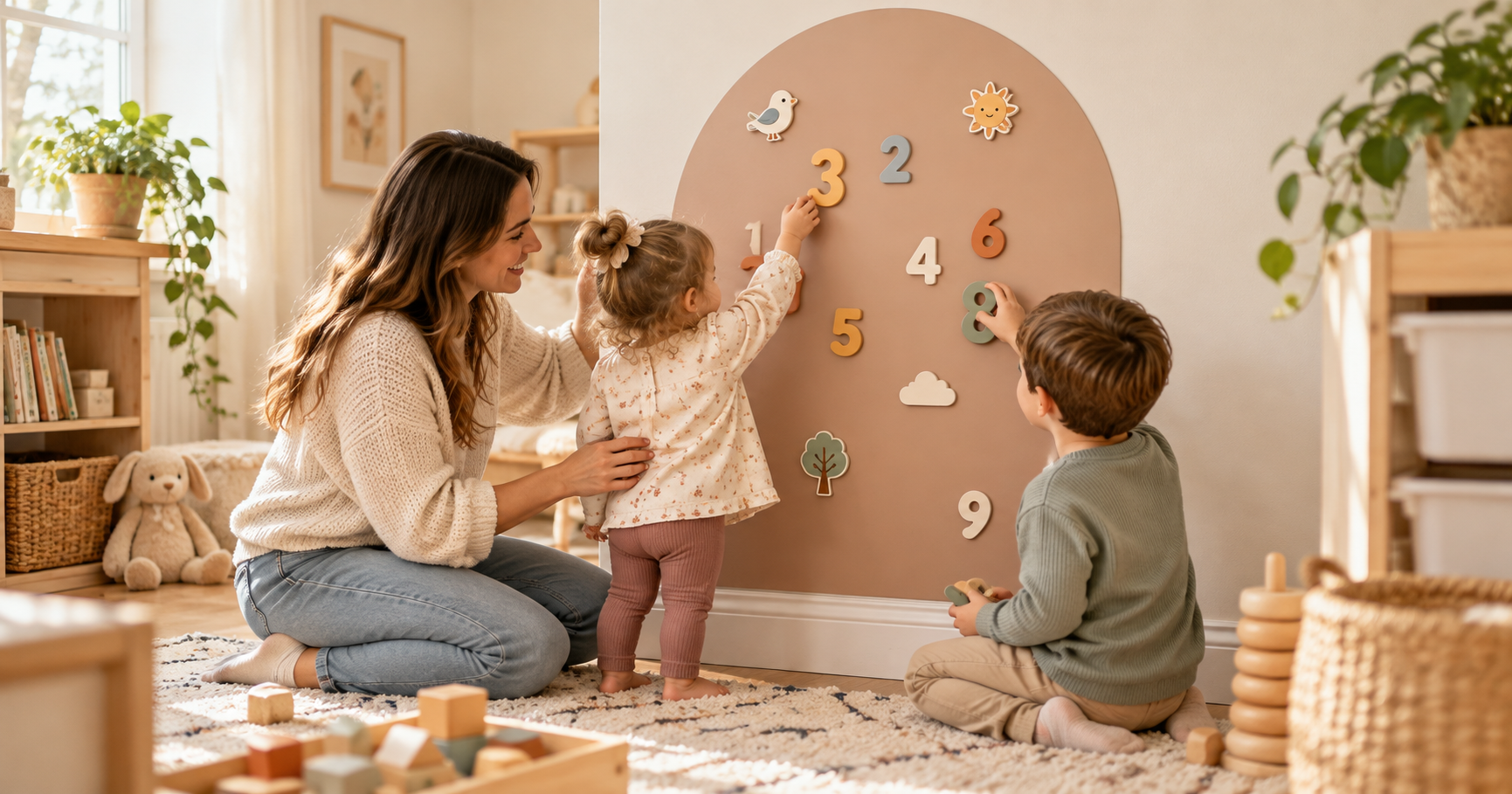
Wall-level play is worth a look, especially for small homes. Floors fill up quickly, and a wall gives you extra play space without taking up any floor at all. A magnetic wall board is one way to do it. Families with limited square footage, or renters who can’t drill into walls, often like that these boards go up without tools. The Tix&Mix magnetic wall board is one example of the idea: a surface kids can draw on and build on, right at their own height.
You don’t need that specific setup to get the benefit. A fridge door, a metal baking sheet, or a low shelf of rotating activities can do the same job. What matters is that the activity is already set up when your child walks in.
Rotate, don’t pile up
Kids lose interest when they see the same twenty toys every day. Keep most of them out of sight and swap a few in every week or two. A toy that was ignored last month often feels brand new after a short break.
Choose Toys That Fit Little Hands and Growing Skills
Not every toy supports independent play. Some need an adult to explain them. Others frustrate kids so much that they give up within a minute.
When you’re picking toys for a screen-free routine, a few questions help:
- Can my child use it without me?
- Is it easy to grip and move?
- Can it be used in more than one way?
- Does it still work as my child gets older?
Open-ended toys tend to pass the test. Blocks, magnets, dough, and drawing tools can be a pretty simple shape for a toddler and a complicated story for a six-year-old.
Pay attention to materials
Size and material matter more than most people expect. Thin, flimsy pieces are hard for small fingers to pick up, which leads to frustration. Chunky wooden pieces are easier to handle, and they hold up better when they get dropped, stepped on, or carried around the house.
Safety matters here too, particularly with younger kids who put everything in their mouths. Look for toys that carry recognized safety marks, such as the European CE mark and EN 71 testing, or ASTM F963 in the US. Be careful with paper-based magnets, which can soften and fall apart when they get wet. Brands like Tix&Mix, for instance, use solid wood pieces with non-toxic finishes for that reason, but whatever you buy, check the label and the age range.
Take the Routine on the Road
A screen-free habit that only works at home isn’t much use. Families spend a lot of time in cars, restaurants, and waiting rooms, and those are exactly the moments when a phone comes out.
Plan ahead for those stretches. A small bag with a few non-screen options goes a long way: a sketchpad, a deck of cards, a few small figures, a magnetic travel tin. Keep it separate from the everyday toys so it feels special.
Road trips also give kids something screens can’t: a reason to look out the window. If you’re planning a long drive, the piece on why slowing down can make a family road trip better has some good thoughts on trading a packed schedule for more breathing room. Fewer stops and fewer rushed hours often mean fewer fights in the back seat, too.
Make Family Outings Do Some of the Work
Screen-free time doesn’t always have to happen at home or alone. Shared activities are some of the easiest ways to pull kids away from devices, because everyone’s busy and nobody’s bored.
Simple outings usually beat elaborate ones. A trip to the park, a bike ride, a walk after dinner. Even a round of mini golf can turn an ordinary evening into something the kids bring up for weeks. If you need ideas, this post on making mini golf a better family outing is a fun place to start.
Add Hands-On Projects for Rainy Days
Weather will ruin your plans at some point, and that’s when a stock of simple projects pays off. Think baking, painting rocks, building a fort, or making slime. These are messy, and kids love them.
The best projects use things you already own. A cardboard box, some tape, and a marker can fill an entire afternoon. If you want a few ideas, the Recipes & DIY section on this site is a good place to browse for projects you can start with what’s in the kitchen.
What to Do When Kids Push Back
They will push back. Every child does, usually in the first week.
A few things help.
Expect the first few days to be loud.
Boredom is part of the adjustment. Kids who are used to constant stimulation often need time to get used to quiet, and the complaining usually fades faster than you’d expect.
Don’t fill every minute.
It’s tempting to jump in with a new idea the moment your child says “I’m bored.” Try waiting. Many kids come up with their own games when nobody offers a better one.
Stay consistent, but be flexible.
If a sick day or a long trip breaks the routine, just start again the next day. One missed afternoon doesn’t undo the habit.
Model it yourself.
Kids notice when a parent is scrolling during the “screen-free hour.” If you can put your own phone in a drawer for part of that time and join in on the floor, you’ll get a lot more buy-in.
A Few Practical Takeaways
You don’t have to overhaul your home to build a screen-free routine. A few small changes can make a real difference:
- Pick one or two daily windows and keep them predictable.
- Let your child choose from a short list of activities.
- Keep play visible and within reach, and rotate toys every week or two.
- Choose open-ended toys that are easy to grip and safe for your child’s age.
- Pack a small non-screen kit for the car and for waiting rooms.
- Plan simple outings and rainy-day projects ahead of time.
- Expect pushback early, and stay patient.
Screens aren’t the enemy, and no family gets this perfect. But when hands-on play is easy, visible, and fun, kids reach for it more often on their own. And that makes those busy 4:30 afternoons a lot less stressful for everyone.