


It is the second week of December. Someone’s backpack smells like peppermint, and nobody in the room wants to hear about fractions.
That restless energy can work in your favor. Holiday traditions are something students already care about. Vienna’s Christmas markets turn those traditions into something they can see, taste and trace on a map.
This lesson fits into one class period and needs almost no prep. It moves through three lenses: traditions, food and geography. It ends with a short activity where students design a market stall of their own.
Why a Market Makes Traditions Easy to Teach
Traditions can feel abstract when you talk about them in general terms. A market makes them concrete.
Every wooden stall sells something with a story behind it. A gingerbread heart. A hand-carved nativity figure. A steaming cup of punch. Students can ask simple questions about each one. Who made this? Why now? Why here?
Vienna is a strong choice because its market history is long and a little messy. Many travel guides say the tradition began in the Middle Ages. It is true that Duke Albrecht I authorized 14-day December fairs back in 1296. Those fairs, however, had nothing to do with Christmas.
The city tells a more careful story. Vienna’s official history page dates the first documented holiday booths to 1626, in front of St. Stephen’s Cathedral. Bakers and gingerbread makers sold their goods there. In 1903, the stalls were lit with electric light for the first time.
That gap between legend and record is a gift for teachers. It lets students practice a real historian’s habit: checking where a claim comes from before repeating it.
Christmas Market River Cruises and the Danube Map
Vienna does not stand alone. It is one stop on a chain of riverside towns that light up every December.
Many travelers now experience that chain through Christmas market river cruises, which connect several holiday cities in one trip. Celebrity River Cruises, for example, offers festive Danube sailings that pair Vienna with Nuremberg, Regensburg and Budapest.
For a classroom, that route works as a ready-made map. Students can follow the river from one market to the next and notice what changes along the way. The language shifts. The food shifts. Some customs stay almost the same.
Project a simple map of the Danube and mark those four cities. Ask students to guess which two sit closest together and which country each belongs to. It takes three minutes, and it sets up the geography thread for the rest of the period.
The Lesson at a GlanceThe Lesson at a Glance
- Time: one 45-minute period
- Grades: works best for grades 4 to 8, with easy tweaks for older students
- Materials: a projector, a Danube map, printed stall cards and sticky notes
- Prep: about 15 minutes to print cards and pull up a few market photos
- Goal: students explain how one holiday tradition connects to a place, a food or a piece of history
Running the Period, Minute by Minute
Minutes 0 to 5: Open With a PhotoMinutes 0 to 5: Open With a Photo
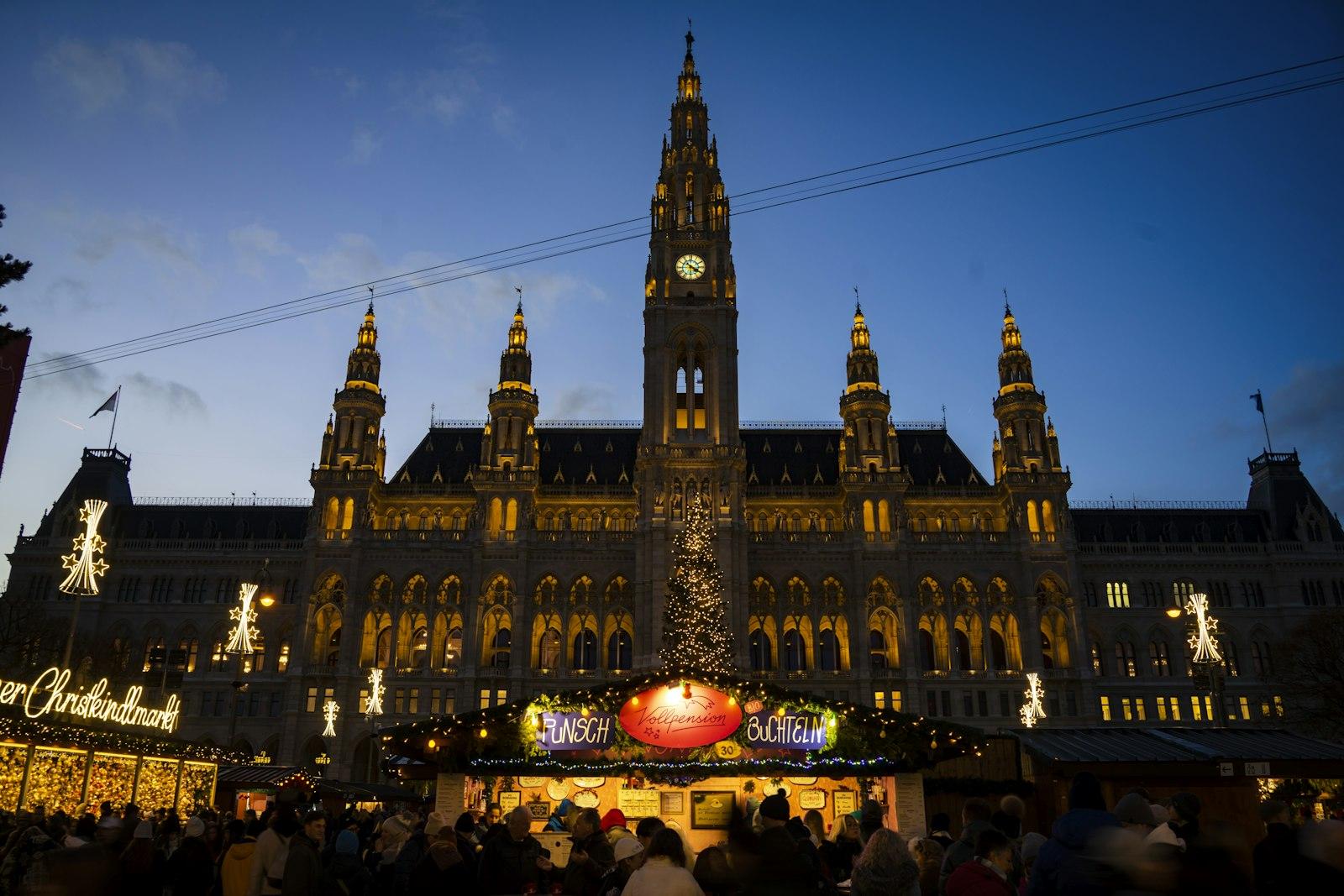
Show one nighttime photo of the market in front of Vienna’s City Hall. Do not explain it yet.
Ask students to write down three things they notice and one question they have. Hear a few questions aloud. You will answer most of them before the bell.
Minutes 5 to 12: Size Up the Markets
Now give students a sense of scale. Vienna runs 14 Advent markets with around 800 stands between them. The biggest one, in front of City Hall, drew roughly three million visitors in 2022.
Ask the class to compare that number with the population of their own town. Most will be surprised. That surprise opens the real question: why would so many people travel for a market?
Let them brainstorm, then steer the answers toward traditions, food and the place itself.
Minutes 12 to 30: Rotate Through Three Stall Cards
Split the class into groups of three or four. Each group starts with one stall card, then rotates every six minutes.
The tradition stall. This card describes the Advent wreath and the nativity figures sold across Vienna’s markets. Students answer two questions. What does this object mean? When do families bring it out?
The food stall. This card covers gingerbread, roasted chestnuts and warm fruit punch. Students pick one ingredient, such as cinnamon or cloves, and guess where it came from before global trade made it common.
The geography stall. This card shows the full Danube route. The river’s basin is shared by 19 different countries, which makes it the most international river basin in the world. Students choose two of those countries and list one way each might mark the season differently.
Walk the room while groups work. Listen for students who link two lenses, like a spice that reached Vienna by river trade. Those are the moments worth sharing with everyone.
Minutes 30 to 42: Design Your Own Stall
This is the short activity, and it is usually the part students remember.
Each student designs one market stall for a tradition from their own family, culture or community. It does not have to be Christmas. Diwali sweets, Hanukkah candles, Lunar New Year lanterns and a grandmother’s cookie recipe all belong in this market.
On a half sheet of paper, students sketch the stall and write three short lines:
- What the stall sells
- Which tradition it comes from
- Where in the world that tradition began
Tape the sheets along one wall. Now the class has its own market, and it looks nothing like Vienna’s. That contrast is exactly the point.
Minutes 42 to 45: Exit Ticket
Hand out sticky notes with one prompt: “Name one thing a Vienna market stall and your stall have in common.”
Strong answers will mention a shared idea, such as light in winter, food made only once a year or gifts for family. Those answers show students have moved past the decorations and into the meaning.
Keeping It Inclusive
Not every student celebrates Christmas, and the lesson does not ask them to. Present the markets as one community’s tradition, studied the same way you would study any other.
The December Dilemma guide from Learning for Justice offers practical advice for discussing religious and secular holidays with respect. It is worth a quick read before you teach this lesson.
Let the stall activity carry the inclusive weight. When every student brings a tradition to the wall, nobody is a guest in someone else’s holiday.
Easy Extensions for Another Day
If the class wants more, there are a few natural next steps:
- Compare Vienna’s market with Nuremberg’s, one of Germany’s best known, and chart the differences.
- Track the old market’s moves around the city on a street map of Vienna.
- Have older students write a short travel diary entry from a stop along the Danube.
- Compare the Danube with rivers in France and ask students how waterways connect cities, trade and local culture.
Each one builds on the same core skill. Students look at a familiar celebration and ask where it came from, who keeps it alive and how a place shapes it. That is a lot of learning for one period and a few printed cards.