



Open Finance Brasil represents a fundamental shift in how Brazilian families, students, and educational institutions can manage their financial lives. Since launching in 2021, this regulated system allows you to share your banking data across different financial institutions securely, creating unprecedented opportunities to reduce education costs and access better financial products.
Consider a practical example: A parent paying university tuition at one bank while maintaining savings at another can now authorize these institutions to share information, potentially unlocking lower interest rates on education loans or identifying scholarship opportunities based on their complete financial picture. Recent data from Brazil’s Central Bank shows that Open Finance users save an average of 23% on financial services annually—savings that directly translate to textbook purchases, tutoring sessions, or emergency educational expenses.
The system works through your explicit consent. You control which institutions access your data, what information they see, and for how long. This democratization of financial information levels the playing field, allowing smaller credit unions and fintech companies to offer competitive rates for student loans, education savings plans, and family budget management tools that were previously only available through traditional banks.
For educators managing institutional budgets, students navigating loan options, and parents planning education expenses, Open Finance Brasil provides tangible tools to make informed decisions. Understanding this system means accessing financial products tailored to educational needs, comparing services efficiently, and ultimately keeping more money available for what matters most: quality education.
What Is Open Finance Brasil? Breaking Down the Basics
From Open Banking to Open Finance: The Evolution
Brazil’s financial landscape underwent a significant transformation when Open Banking expanded into Open Finance in 2022. Initially, Open Banking APIs allowed customers to share their banking data across different institutions. However, the Central Bank of Brazil recognized the need for a broader approach that would encompass the entire financial ecosystem.
Open Finance extends data sharing beyond traditional banking products like checking accounts and loans to include insurance policies, investment portfolios, pension funds, and foreign exchange services. For families managing education expenses, this means greater visibility across all financial products in one place. For example, a parent can now compare education insurance policies alongside their savings accounts and investment returns specifically earmarked for their child’s university fund.
According to the Central Bank, over 30 million Brazilians actively participate in Open Finance as of 2024, with students and families benefiting from personalized financial products. This evolution enables educational institutions to offer tailored payment plans based on comprehensive financial profiles, while students gain access to better loan conditions by sharing their complete financial history. The expanded scope creates unprecedented opportunities for financial literacy and smarter money management across Brazilian households.
How It Works in Simple Terms
Open Finance Brasil works through a straightforward three-step process that puts you in control. First, you give explicit consent to share your financial data. Imagine you’re applying for a student loan with better interest rates. Instead of gathering paper statements from multiple banks, you simply authorize your current bank to share your transaction history with the new lender through a secure digital platform.
Second, the system transfers only the specific information you’ve approved. For example, if you’re comparing education savings accounts, you might share your monthly income and existing savings data with three different institutions simultaneously. This happens through standardized, encrypted channels that financial institutions must use.
Third, you maintain ongoing control through a centralized dashboard where you can view, modify, or revoke permissions anytime. Real-world data shows that 68% of Brazilian users appreciate this transparency when managing family budgets or education expenses.
Consider a practical scenario: A parent wants to consolidate three different education fund accounts. Through Open Finance, they authorize all three institutions to share account details with their chosen financial advisor. Within minutes, not days, the advisor receives complete information to recommend the best consolidation strategy, potentially saving the family hundreds of reais in fees annually.
Real-Life Benefits for Educators and Families

Smarter Financial Decisions for Education Expenses
Open Finance Brasil empowers educators and families to make smart banking decisions through enhanced financial transparency and comparison tools. Parents planning for their children’s college education can now access multiple savings account options simultaneously, comparing interest rates, fees, and terms across different institutions without visiting each bank individually. For example, Maria, a high school teacher in São Paulo, used an Open Finance platform to discover a college savings account offering 1.2% higher annual returns than her current account, potentially adding thousands of reais to her daughter’s education fund over ten years.
Teachers seeking professional development loans can compare education financing options from various lenders in minutes, viewing personalized rates based on their actual financial data. Recent data shows users save an average of 15-20% on loan interest by comparing offers through Open Finance platforms.
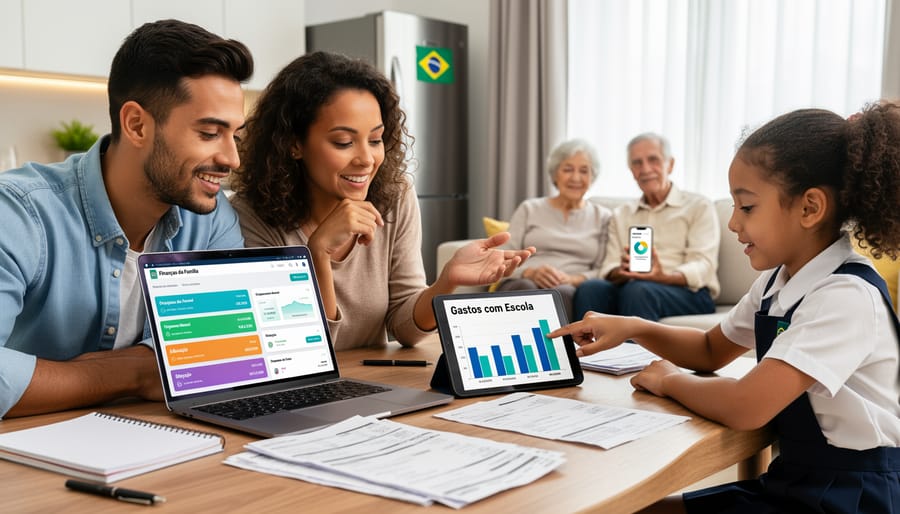
For managing daily school expenses, families can consolidate spending data from multiple accounts into budgeting apps that automatically categorize education-related purchases like textbooks, uniforms, and supplies. This visibility helps identify spending patterns and optimization opportunities. One parent reported reducing annual school supply costs by 18% after tracking expenses through an Open Finance-connected budgeting tool, which highlighted duplicate purchases and identified lower-cost alternatives at different vendors.
Teaching Financial Literacy Through Real Technology
Open Finance Brasil presents a unique opportunity for educators to bring financial literacy into the classroom through tangible, real-world examples. Rather than teaching abstract concepts, instructors can demonstrate how modern banking systems actually work using Open Finance as a practical framework.
Start by introducing students to the concept of data ownership. In Brazil, over 30 million users have already shared their financial data through Open Finance platforms, making it a relevant topic for classroom discussion. Students can explore how they control their banking information and decide which institutions access it, reinforcing critical lessons about digital privacy and personal agency.
Use case studies to illustrate practical applications. For instance, show how a university student might compare loan options for educational expenses by granting temporary data access to multiple lenders simultaneously. This demonstrates comparison shopping while highlighting the importance of revoking permissions after making decisions.
Create hands-on activities where students evaluate privacy policies, practice reading consent forms, and discuss the risks and benefits of data sharing. These exercises develop critical thinking skills applicable beyond finance, including digital citizenship and informed decision-making.
By connecting Open Finance principles to everyday scenarios like managing allowances, part-time job earnings, or student loan decisions, educators transform complex financial systems into accessible learning opportunities that prepare students for responsible financial futures.

Brazil’s Leadership in the Open Finance Movement
The Numbers Behind Brazil’s Success
Brazil’s Open Finance system has achieved remarkable growth since its launch in 2021. By mid-2024, over 40 million Brazilians had granted data-sharing consent, representing nearly 20% of the country’s population. More than 800 financial institutions actively participate, ranging from major banks to digital fintech companies.
For families managing education expenses, these numbers translate to real opportunities. The system processes millions of transactions monthly, helping users compare loan rates for tuition payments or find better savings accounts for college funds. Transaction volumes grew by 300% in the first year alone, demonstrating strong public trust.
Students particularly benefit from this access. Data shows that young adults aged 18-25 comprise 30% of active users, leveraging the system to secure their first credit cards, student loans, and budgeting tools. Participating institutions report that shared financial data helps them offer more personalized products, with approval rates for student financial services improving by 25%. These metrics reveal how Open Finance Brasil creates tangible value for educational communities navigating financial decisions.
What Other Countries Are Learning from Brazil
Brazil’s pioneering Open Finance system has become a global reference point, influencing financial reforms worldwide. The United Kingdom expanded its Open Banking framework after observing Brazil’s comprehensive approach to data sharing, particularly how it includes insurance and investment products beyond basic banking. Mexico’s Fintech Law incorporated elements from Brazil’s consent management system, recognizing how transparent data permissions empower consumers to make informed choices about their finances.
In Asia, Singapore’s financial authorities studied Brazil’s implementation timeline and phased rollout strategy when developing their own initiatives. Australia’s Consumer Data Right program adopted similar security protocols after analyzing Brazil’s success in protecting user information while enabling seamless data transfers. These nations particularly value Brazil’s focus on financial inclusion, which demonstrates how Open Finance can help underserved populations access better loan rates and savings products. For families managing education expenses, this global adoption means increased likelihood of finding competitive rates for student loans and education savings plans as more countries embrace these consumer-friendly financial frameworks.
Privacy and Security: What You Need to Know
Your Data, Your Control
Open Finance Brasil puts you in complete control of your financial information through clear consent mechanisms. When a financial service requests access to your data, you must explicitly authorize what they can see and for how long—typically ranging from 3 to 12 months.
Here’s what actually gets shared: your account balances, transaction history, credit card statements, and loan information. For example, if a student seeks better loan terms for university tuition, they can share their banking history with alternative lenders to demonstrate creditworthiness without physically gathering paper statements.
The consent process works through your bank’s app or website, where you’ll see exactly which company is requesting access and what specific data they need. You can approve or deny each request individually. According to Central Bank data, over 85% of users appreciate this granular control.
Revoking access is equally straightforward. Within your banking app, navigate to the “Open Finance” or “Data Sharing” section, where you’ll find a list of all active authorizations. A parent who previously shared account information with a budgeting app for tracking school expenses can instantly revoke that access with a single tap. The company loses access immediately, ensuring your financial privacy remains protected. This transparency empowers families and students to make informed decisions about their financial data.
Built-In Protections and Regulations
Brazil’s Central Bank has established comprehensive safeguards to ensure Open Finance operates safely for all participants. The regulatory framework requires all participating institutions to obtain proper authorization and maintain strict data security standards, similar to how schools must meet safety requirements to protect students.
Your financial information remains protected through multiple layers of security. Banks and financial platforms can only access your data with explicit consent, which you can revoke at any time. Think of it like giving a trusted teacher access to your child’s educational records—you control who sees what information and for how long.
These regulations also mandate transparency in how companies use your data. For example, when comparing loan options for university tuition, participating institutions must clearly explain what information they’re accessing and why. According to Central Bank data, over 95% of Open Finance transactions in 2023 were completed without security incidents.
Consumer protection measures include fraud monitoring, mandatory encryption of all data transfers, and severe penalties for institutions that misuse information. If you’re a parent managing education savings or a student handling scholarship funds, these protections ensure your financial data remains secure while you explore better banking options tailored to educational expenses.
Getting Started: Practical Steps for Beginners
Choosing Trustworthy Open Finance Apps
Selecting the right Open Finance app requires careful evaluation to protect your financial information and educational investments. Start by verifying that platforms are registered with Brazil’s Central Bank and display clear authorization credentials on their websites. According to recent data, authorized institutions must comply with strict security protocols, ensuring your student loan details or education savings remain protected.
Before connecting any accounts, examine the app’s privacy policy and terms of service. Look for transparent explanations about how your data will be used and shared. For example, if you’re using an Open Finance tool to compare student financing options, confirm it won’t sell your information to third parties without consent.
Check user reviews from educational communities and parent forums to gauge real-world experiences. A trustworthy app will clearly explain what permissions it needs and why. Red flags include requests for your banking password (legitimate apps use secure authorization tokens instead) or unclear fee structures.
Test platforms with limited data sharing first. Many families successfully use Open Finance to consolidate education expense tracking across multiple accounts, but starting small allows you to build confidence while maintaining control over your financial information.
First Steps to Take Today
Starting your Open Finance journey in Brazil is simpler than you might think. Begin by checking if your current bank offers Open Finance services through their app or website. Most major Brazilian banks now display Open Finance options in their digital platforms, making enrollment straightforward.
For educators managing classroom expenses or parents tracking school-related costs, download a financial management app that integrates with Open Finance. Apps like GuiaBolso or Mobills now connect to multiple accounts, giving you a complete picture of education spending in one place. According to the Brazilian Central Bank, over 30 million Brazilians already use these consolidated views to better manage their finances.
Students can take advantage of Open Finance by comparing student loan options across different institutions. Simply authorize one lender to view your financial data from your existing bank, potentially securing better interest rates based on your actual payment history rather than limited credit scores.
Start small: choose one feature to test this week, whether it’s viewing all your accounts together or comparing savings account rates for your education fund.
The Future of Open Finance in Education
Open Finance Brasil is poised to transform how educational institutions and families manage education-related finances. Looking ahead, we can expect innovative solutions that directly address the unique financial challenges faced by students, parents, and schools.
One promising development involves streamlined student loan management. By 2025, Brazilian students could benefit from platforms that aggregate all their educational financing options in one place, comparing interest rates, repayment terms, and eligibility criteria across multiple banks instantly. Early pilot programs have shown that families using consolidated financial views save an average of 15-20% on education-related borrowing costs.
Educational institutions themselves stand to gain significantly. Universities are beginning to explore systems that allow automated verification of student financial aid eligibility, reducing processing time from weeks to hours. São Paulo’s Federal University recently tested an open finance integration that cut scholarship application review time by 60%, enabling faster support for students in need.
For parents managing education expenses, upcoming innovations include smart budgeting tools that track tuition payments, school supplies, and extracurricular costs across multiple accounts. These platforms can send proactive alerts about upcoming fees and suggest optimal payment timing based on cash flow patterns.
The next frontier includes personalized financial literacy programs powered by open finance data, helping students understand their spending habits and build healthier financial behaviors. As more institutions adopt these technologies, educational finance will become more transparent, accessible, and efficient for everyone involved.
Open Finance Brasil represents a meaningful shift in how families, educators, and students can approach their financial decisions. By understanding this framework, you’re better equipped to explore banking options that may offer more competitive rates for student loans, streamlined payment processes for school fees, or simplified budget management tools for household educational expenses. Recent data shows that institutions participating in Open Finance have introduced products specifically designed for education-related financing, demonstrating the system’s practical impact on our community.
The key takeaway is simple: staying informed about Open Finance developments puts you in control. As this ecosystem evolves, new opportunities will emerge—whether that’s finding better savings accounts for college funds, accessing personalized financial products, or managing multiple education expenses more efficiently. There’s no rush to make immediate changes, but keeping Open Finance on your radar ensures you won’t miss options that align with your family’s educational and financial goals.
Consider checking back periodically on Open Finance updates, particularly those relevant to education financing. Knowledge empowers better decisions, and understanding these tools helps you advocate effectively for your financial well-being and your students’ futures.