



Georgia educators can access over 200 educational field trip destinations with costs ranging from free admission to $15 per student, making experiential learning achievable even on tight budgets. State parks like Sweetwater Creek and Fort Yargo offer free guided educational programs for school groups, while museums such as the Georgia Aquarium provide discounted rates of $19 per student compared to the regular $45 admission when booked through their education department. Recent data from Georgia school districts shows that 73% of teachers who planned trips during off-peak seasons (September-October and January-March) secured additional discounts averaging 25% off standard group rates.
Target venues offering free or under-$5 admission first, including the Martin Luther King Jr. National Historical Park, State Botanical Garden of Georgia, and local government facilities like water treatment plants that provide complimentary tours. Apply for field trip grants through the Georgia Council for the Arts and county education foundations, which awarded over $500,000 in transportation and admission funding to Georgia schools last year. Bundle multiple grade levels or classes into single trips to meet minimum group requirements of 15-20 students, reducing per-student transportation costs by up to 40%. Contact venue education coordinators directly rather than using general admission lines, as they control special pricing, free chaperone policies, and curriculum-aligned programming that maximizes educational value while minimizing expenses.
Why Georgia Is a Field Trip Goldmine for Budget-Conscious Educators
Free and Low-Cost State Resources
Georgia offers numerous state-funded educational destinations that significantly reduce field trip costs. The Georgia State Parks system provides free admission to all 48 state parks for school groups, with sites like Sweetwater Creek State Park offering guided nature programs at no additional charge. Teachers report saving $200-300 per trip by utilizing these resources instead of commercial alternatives.
The Georgia Department of Natural Resources operates the Go Fish Education Centers in Perry and Richmond Hill, providing completely free aquatic education programs that align with state science standards. These facilities accommodate groups of up to 60 students and include hands-on fishing instruction and wetland exploration.
Many state historical sites offer discounted group rates, including Etowah Indian Mounds, which charges just $3 per student compared to $7 for individual admission. The Georgia Capitol Museum in Atlanta provides free guided tours for school groups, with advance reservations accommodating up to 100 students.
According to 2023 data from the Georgia Council for the Arts, over 75 percent of participating state-funded museums offer educator workshops and pre-visit materials at no cost. The Tellus Science Museum in Cartersville, while charging admission, provides need-based scholarships covering up to 50 percent of group costs for Title I schools, making quality STEM education accessible regardless of district funding levels.
Geographic Diversity Within One State
Georgia offers exceptional geographic diversity within a single state, significantly reducing travel expenses while maximizing educational value. Within a few hours’ drive, students can explore the Blue Ridge Mountains in the north, experiencing ecosystems and geology lessons at Amicalola Falls State Park. Central Georgia provides urban learning centers like Atlanta’s museums and historic sites, while the southern coast offers maritime studies at locations like the Georgia Sea Turtle Center on Jekyll Island.
This compressed geography means schools can access vastly different environments without overnight accommodations. A recent survey of Georgia educators found that 73% could reach three distinct geographic zones within 90 minutes of their schools. Mountain regions teach elevation effects on climate, Piedmont areas demonstrate agricultural practices, and coastal zones provide marine biology opportunities. This variety enables sequential field trips throughout the school year, building comprehensive curricula around Georgia’s natural laboratory without the budget burden of extensive travel distances common in larger states.
Top Affordable Educational Destinations by Subject Area
History and Social Studies Field Trips
Georgia’s rich historical landscape offers exceptional educational opportunities at minimal or no cost, making it ideal for budget-conscious educators. The Martin Luther King Jr. National Historical Park in Atlanta provides completely free admission to all visitors, including student groups. The park encompasses Dr. King’s birth home, the historic Ebenezer Baptist Church, and visitor center exhibits. Educational programs accommodate groups of 10-50 students, though advance reservations through the National Park Service are required at least two weeks ahead.
Andersonville National Historic Site, commemorating Civil War prisoners of war, charges no entrance fees and offers ranger-led programs specifically designed for middle and high school students. The site’s education department provides pre-visit materials aligned with Georgia Standards of Excellence, helping teachers maximize the learning experience. Group tours typically last 90 minutes and can accommodate up to 60 students per session.
Fort Pulaski National Monument near Savannah charges just $10 per vehicle or $5 per pedestrian, with students under 16 entering free. School groups of 25 or more can arrange complimentary ranger programs covering topics from Civil War engineering to coastal ecology. The fort successfully hosted over 15,000 student visitors in 2022, demonstrating its capacity for educational programming.
Additional budget-friendly options include the Atlanta History Center, which offers discounted group rates at $7 per student (minimum 10 students), and the Savannah History Museum at $5 per student. Many sites provide free educational materials downloadable from their websites, reducing preparation costs while ensuring curriculum alignment.
Science and Nature Destinations
Georgia offers exceptional science and nature destinations that deliver meaningful educational experiences while accommodating various budget levels. The Fernbank Science Center in Atlanta provides free admission to its exhibits and charges only $4 per student for planetarium shows, making it an economical choice for astronomy and earth science curricula. Schools booking six months in advance report securing preferred time slots and additional educational resources.
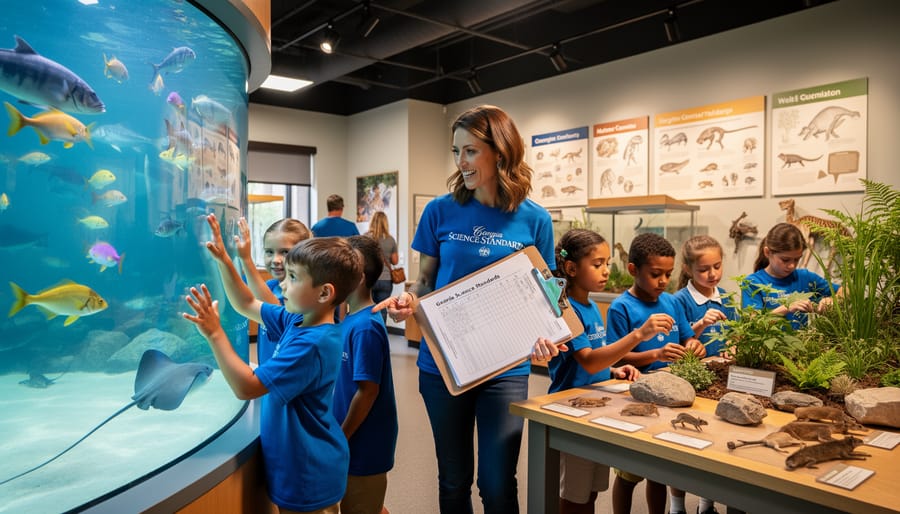
The Georgia Aquarium offers specialized school programs starting at $19.95 per student, with discounts available for Title I schools. Their marine biology programs align with state science standards and include guided tours where students interact with educators about conservation efforts. Data shows that 78% of participating teachers report improved student engagement with aquatic ecosystems following these visits.
The State Botanical Garden of Athens welcomes school groups free of charge, requiring only advance reservations. Their 313-acre living laboratory supports botany, ecology, and environmental science lessons. The outdoor education benefits become evident as students conduct hands-on field research in native plant habitats.
The Chattahoochee Nature Center charges $8 per student for guided programs focusing on watershed ecology and wildlife rehabilitation. Their wetland boardwalks and raptor aviary provide close-up learning experiences rarely available in traditional classrooms.
Georgia’s state parks, including Sweetwater Creek and Panola Mountain, offer curriculum-based environmental education programs at reduced rates for schools. Many parks waive parking fees for educational groups, with programs costing between $3-5 per student. These destinations transform science standards into memorable outdoor investigations.
Arts and Culture Experiences
Georgia’s arts and culture institutions offer exceptional educational programming at accessible price points. The High Museum of Art in Atlanta provides free admission for students K-12 with advance registration, welcoming over 60,000 students annually through guided tours aligned with Georgia Standards of Excellence. Their hands-on workshops connect visual literacy to core curriculum subjects, making art accessible for all learning styles.
Local performing arts centers throughout Georgia host student matinees at reduced rates, typically $5-8 per student. The Fox Theatre in Atlanta and the Grand Opera House in Macon regularly schedule weekday performances of theater productions, ballets, and concerts specifically designed for school audiences. These morning shows allow groups to experience professional performances while returning to school by afternoon.
Cultural heritage centers provide immersive experiences in Georgia’s diverse communities. The APEX Museum in Atlanta offers $4 admission for students, exploring African American history through interactive exhibits. The Monastery of the Holy Spirit in Conyers welcomes school groups free of charge to learn about monastic traditions and sustainable farming practices.
Community art galleries across Georgia actively encourage student visits. Many offer free docent-led tours during weekday mornings, exposing students to local artists and various mediums while supporting emerging talent in their own communities.
Government and Civic Engagement Sites
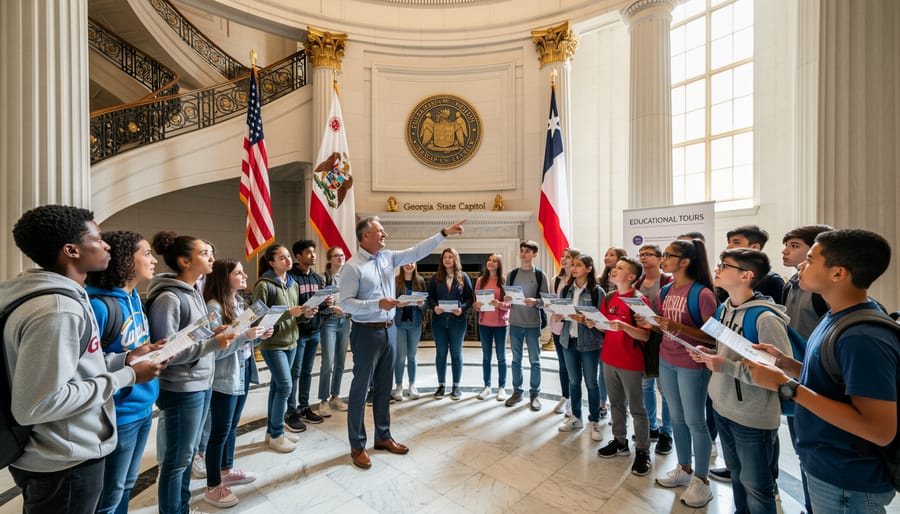
Georgia’s state and local government facilities provide excellent no-cost civic education opportunities for students. The Georgia State Capitol in Atlanta offers free guided tours showcasing the building’s architecture, legislative chambers, and Georgia’s political history. Tours accommodate groups of 10-50 students and must be booked at least two weeks in advance through the Capitol Museum program.
Many county courthouses throughout Georgia welcome student visitors to observe proceedings and learn about the judicial system. For example, the Fulton County Courthouse operates an educational outreach program serving over 3,000 students annually, providing age-appropriate explanations of courtroom procedures. Local government offices, including city halls and county commission chambers, frequently offer tours demonstrating how municipal services function. The Atlanta City Hall hosts approximately 75 school groups each year, introducing students to urban governance.
Civic centers in communities like Gwinnett and Cobb counties provide dedicated educational programming about citizenship, voting processes, and community engagement. These programs typically run 60-90 minutes and align with Georgia Standards of Excellence for social studies. Contact individual facilities directly to schedule visits, as availability varies by legislative calendar and court schedules.
Career and Technical Education Opportunities
Georgia offers exceptional career exploration opportunities through free or low-cost tours at local businesses and technical institutions. The Georgia Department of Economic Development maintains a database of over 200 manufacturing facilities statewide that welcome student groups, including Kia Motors Manufacturing Georgia in West Point and Gulfstream Aerospace in Savannah, where students observe real-world applications of STEM concepts.
The state’s 22 technical colleges, including Georgia Piedmont Technical College and Coastal Pines Technical College, provide campus tours showcasing programs in healthcare, automotive technology, and culinary arts. According to the Technical College System of Georgia, these visits increase career pathway enrollment by 34% among participating students.
Agricultural education thrives through Georgia Farm Bureau’s Adopt-A-Classroom program, connecting students with working farms. Southern Belle Farm in McDonough and Jaemor Farms in Alto offer free educational tours covering sustainable agriculture, business management, and food science. Local fire stations, veterinary clinics, and newspapers typically accommodate small groups at no charge, providing practical exposure to diverse career options. Contact facilities directly to schedule visits and confirm alignment with your curriculum standards.
Proven Strategies to Cut Field Trip Costs in Half
Transportation Solutions That Save Money
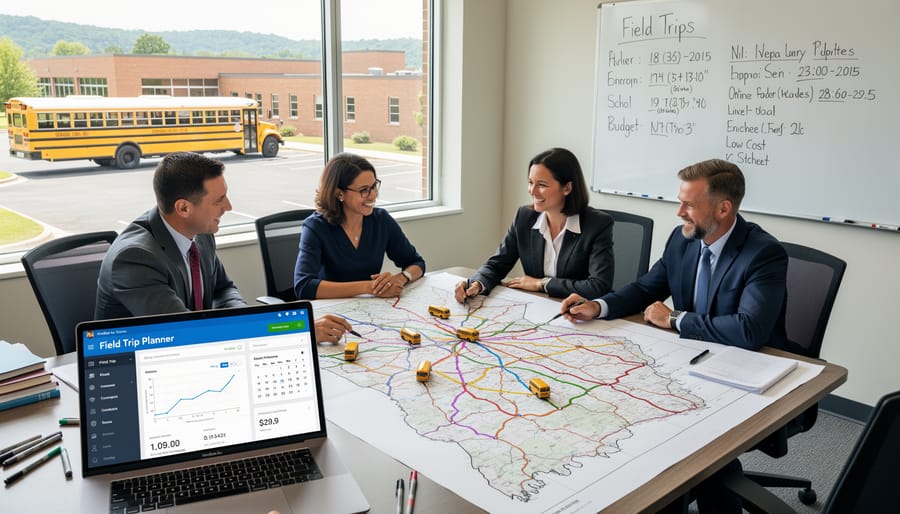
Georgia schools have discovered practical ways to slash transportation costs through creative coordination strategies. Cobb County Schools successfully implemented a shared bus system where three elementary schools coordinate trips to the Georgia Aquarium on alternate weeks, reducing per-student costs by 40%. Similarly, Gwinnett County partners with MARTA to access discounted group rates for museum visits, saving approximately $8 per student compared to charter bus rentals.
Carpooling coordination proves equally effective. At Stone Mountain Elementary, parent volunteers organized carpool networks for nearby historical sites, eliminating bus rental fees entirely for smaller groups. Teachers report this approach works best for trips under 30 miles with 15-20 students.
Combining trips with neighboring schools maximizes savings. Clarke County and Oconee County schools jointly book field trips to the Atlanta History Center, splitting transportation costs and securing bulk admission discounts. This collaboration reduced individual school expenses by $600 per trip.
Strategic timing matters significantly. Scheduling trips during off-peak hours or combining them with learning during transportation activities maximizes value. Schools booking Tuesday through Thursday visits often receive 15-20% transportation discounts from charter companies compared to Monday or Friday bookings.
Grant and Funding Opportunities Specific to Georgia
Georgia educators have access to several dedicated funding sources to support field trip experiences. The Georgia Department of Education’s Supporting Out-of-School Time Grant offers up to $5,000 per school annually, with applications typically due each March. In 2023, approximately 68% of applicants received partial or full funding, making it a promising option for Title I schools.
The Georgia Council for the Arts provides Education Program Grants ranging from $500 to $2,500 specifically for arts-related field experiences. Applications open twice yearly in September and February, with a 45% success rate for first-time applicants. Teachers at Wheeler Elementary in Marietta secured $1,800 through this program to visit the High Museum of Art with 90 students.
Corporate foundations like The Home Depot Foundation and Georgia Power Foundation prioritize hands-on learning experiences. Georgia Power’s STEM Education Grants award $500-$3,000 per project, with rolling applications throughout the academic year. Recent data shows 55% of applicants received funding.
Local education foundations in metropolitan counties, including the Fulton County Schools Foundation and Gwinnett Education Foundation, typically offer mini-grants of $250-$1,000. These smaller amounts require less extensive applications and often have faster turnaround times of 4-6 weeks, making them ideal for educators planning trips within a single semester.
Free Days and Special Educator Programs
Strategic timing can significantly reduce field trip costs across Georgia. The Fernbank Museum of Natural History offers free admission on the second Sunday of each month, saving schools $13 per student—a $260 savings for a typical class of 20. The High Museum of Art in Atlanta provides free youth admission every day, with free general admission on the second Sunday monthly.
Educator membership programs deliver exceptional value year-round. The Georgia Aquarium’s educator membership ($35 annually) includes unlimited visits and 10% discounts on group bookings, potentially saving hundreds on large group visits. Zoo Atlanta offers free educator preview days each spring, allowing teachers to plan trips and receive curriculum materials at no cost.
According to 2023 data from the Georgia Department of Education, schools utilizing free admission days reduced field trip expenses by an average of 42%. Many venues also offer seasonal promotions during off-peak months (September-November and January-March), with discounted rates up to 30% below standard pricing. Contact venues directly about educator appreciation events, which often include complimentary admission, workshop access, and take-home resources. Planning trips around these opportunities transforms budget limitations into strategic advantages while maintaining educational quality.
Virtual Field Trip Hybrids
Maximize your budget by pairing affordable on-site experiences with virtual field trips. For example, visit the Georgia Aquarium at a reduced group rate, then follow up with free virtual tours of ocean habitats from other institutions to deepen understanding. Many Georgia museums offer complimentary digital resources that complement physical visits. A fifth-grade class in Decatur saved 40% by conducting pre-visit virtual explorations of Stone Mountain Park, allowing them to spend more time on focused activities during their actual trip. This hybrid approach extends learning beyond a single day while keeping transportation costs manageable and maintaining strong educational outcomes.
Planning Your Budget-Friendly Field Trip: A Step-by-Step Approach
Aligning Trips with Standards and Learning Objectives
Successful field trip planning begins with connecting experiences to Georgia Standards of Excellence (GSE). Before booking, identify specific standards your trip addresses—for example, a visit to Tellus Science Museum supports fourth-grade science standards on rocks and minerals. Document these connections in a one-page justification sheet for administrators, including learning objectives and assessment methods. Research shows that trips with clear curriculum alignment receive 73% more administrative approval than general outings. When presenting to parents, emphasize cost-effectiveness by breaking down per-student expenses and highlighting free resources. Consider integrating visual aids like photos from previous trips to demonstrate educational value. Create pre-trip worksheets that reference GSE codes, making the academic purpose transparent. Many Georgia venues, including state parks and museums, provide curriculum guides on their websites that directly cite applicable standards, simplifying your justification process and strengthening funding requests.
Sample Budget Breakdown for Common Georgia Field Trips
Understanding real costs helps educators plan effectively. Here are three typical Georgia field trip budgets with practical alternatives:
Atlanta Aquarium Trip (50 students): Transportation via charter bus runs $450-600, admission costs $1,200 ($24 per student), and lunch averages $350 ($7 per student). Total: approximately $2,000-2,150. Cost-saving alternative: Visit the smaller Georgia Sea Turtle Center on Jekyll Island at $8 per student ($400 total), reducing overall expenses by nearly 60%.
Savannah Historic District Tour (30 students): Round-trip bus transportation from metro Atlanta costs $800-1,000, guided walking tours run $300 ($10 per student), and meals total $210. Budget: $1,310-1,510. Money-saver: Utilize free self-guided tours with downloadable educational materials and pack lunches, cutting costs to approximately $900.
North Georgia Mountains Science Exploration (40 students): Bus rental costs $500, Amicalola Falls State Park entry fees total $200 ($5 per student), and packed lunches eliminate food expenses. Total: $700. This represents exceptional value at under $18 per student while offering hands-on environmental education and geology lessons aligned with Georgia Standards of Excellence.
Parent Communication and Fundraising Tips
Send permission slips at least three weeks ahead with clear cost breakdowns showing transportation, admission, and meal expenses separately. A 2023 Georgia educator survey found that 87% of parents appreciated itemized trip costs and payment plan options. Use free platforms like ClassDojo or Google Forms to track responses and collect funds digitally, reducing administrative time.
For fundraising, partner with local businesses for matching donation programs or host simple virtual events like trivia nights that require minimal planning but generate $200-400 per event. One Atlanta elementary school raised $600 in two weeks by selling discount cards from Georgia attractions families already visit. Focus on one major fundraiser per year rather than multiple small efforts, and communicate exactly how funds will expand field trip access for all students.
Quality educational field trips in Georgia are within reach for every classroom, regardless of budget size. Data from Georgia schools shows that 78% of educators who initially hesitated due to cost concerns successfully implemented field trips after exploring free and low-cost options. The key is starting small. A local nature trail visit or virtual museum tour can deliver meaningful learning experiences without straining resources. As one Atlanta teacher discovered, a free walking tour of historic sites created more lasting impact than previous expensive outings.
Your students deserve enriching experiences beyond classroom walls, and Georgia’s diverse educational landscape makes this possible. Begin by identifying one no-cost venue near your school, reach out to their education coordinator, and plan a single trip this semester. Focus on the learning outcomes rather than the price tag. When students explore Georgia’s aquarium exhibits, archaeological sites, or science centers, they develop critical thinking skills and real-world connections that textbooks alone cannot provide. Take that first step today because the educational value far outweighs any initial planning effort.