



Financing a U.S. education as an international student requires navigating a complex landscape where federal aid remains off-limits, but substantial opportunities exist through strategic planning. Each year, U.S. colleges award approximately $400 million in institutional aid to international students, yet fewer than 30% of applicants know where to look or how to position themselves competitively.
Start by targeting need-aware institutions that explicitly offer financial aid to international students. Schools like Harvard, Yale, MIT, and Amherst provide need-blind admissions with full demonstrated need coverage for admitted international students. In 2023, Harvard enrolled 754 international students with an average aid package exceeding $65,000 annually. Liberal arts colleges including Wesleyan, Grinnell, and Colby also maintain dedicated international aid budgets ranging from $2-5 million per year.
Apply for merit-based scholarships from individual universities, which don’t consider financial need. The University of Iowa offers Presidential Scholarships up to full tuition for high-achieving international students, while Arizona State University provides New American University Scholarships worth $13,000-$15,000 annually based solely on academic credentials.
Research external scholarships from private organizations, home country governments, and multinational corporations. The Joint Japan World Bank Graduate Scholarship Program fully funds master’s degrees for students from developing countries, while the Aga Khan Foundation provides need-based grants and loans to students from specific nations.
The key differentiator is timing—students who research aid availability before selecting schools increase their funding success rate by 64% compared to those who apply to schools first and seek aid second.
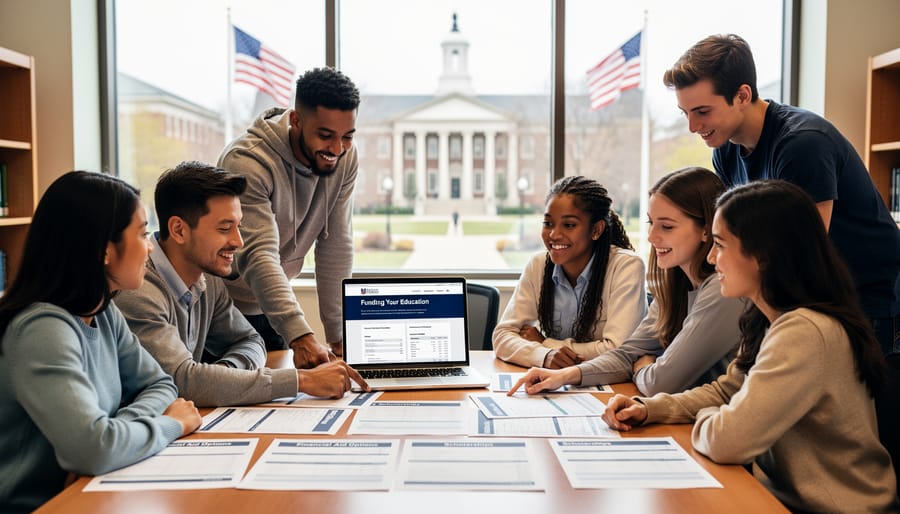
Understanding the Financial Aid Landscape for International Students
What International Students Need to Know About Federal vs. Institutional Aid
Understanding the distinction between federal and institutional aid is crucial for international students planning their U.S. education. Here’s what you need to know: federal financial aid, distributed through the Free Application for Federal Student Aid (FAFSA), is exclusively available to U.S. citizens and eligible non-citizens. This means international students cannot access federal grants, loans, or work-study programs regardless of financial need.
However, institutional aid offers significant opportunities. Colleges and universities distribute their own scholarships, grants, and fellowships directly from their endowments and operating budgets, and many actively welcome international applicants for these funds. According to NAFSA, approximately 60% of international undergraduates receive some form of institutional financial assistance.
The data reveals encouraging trends. Well-endowed private universities often provide the most generous packages. For example, Harvard University awarded an average of $67,000 in institutional aid to international students in recent years, with similar packages available at Princeton, Yale, and MIT. Liberal arts colleges like Amherst and Williams also demonstrate strong commitment, often meeting 100% of demonstrated need for admitted international students.
Public universities typically offer less institutional aid due to state funding priorities for residents, though exceptions exist. The University of Virginia and University of North Carolina at Chapel Hill provide need-based aid to select international students. Graduate students frequently access assistantships, fellowships, and research grants tied to their academic departments, making advanced degrees sometimes more affordable than undergraduate programs.
The Truth About Need-Blind vs. Need-Aware Admissions
Understanding the difference between need-blind and need-aware admissions is crucial when seeking financial aid as an international student. Need-blind admissions means a university reviews applications without considering a student’s ability to pay, making admission decisions based solely on merit. Need-aware (or need-sensitive) admissions means financial need is factored into the admissions decision, which can disadvantage students requiring substantial aid.
The reality is stark: only a handful of U.S. institutions practice need-blind admissions for international students while also meeting 100% of demonstrated financial need. As of 2024, this exclusive group includes MIT, Harvard University, Yale University, Princeton University, and Amherst College. These schools evaluate international applicants without considering financial circumstances and provide full support packages to admitted students. Understanding financial aid at Ivy League schools can help you compare specific offerings.
Beyond this elite group, some institutions like Dartmouth College and Bowdoin College have recently expanded their need-blind policies to include international students, reflecting a growing commitment to global access. However, the vast majority of U.S. colleges operate under need-aware policies for international applicants.
This distinction matters significantly for your application strategy. If you require substantial financial aid, prioritizing need-blind institutions increases your chances of both admission and adequate funding. For need-aware schools, demonstrated ability to cover costs may strengthen your application, making merit-based aid and external scholarships particularly important components of your funding strategy.
Merit-Based Scholarships That Actually Welcome International Students
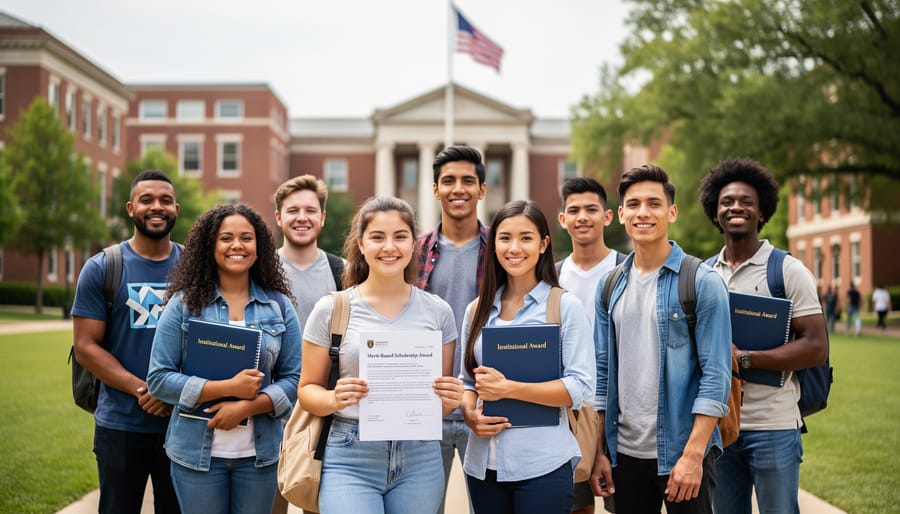
University-Specific International Scholarships
Many U.S. universities recognize the value international students bring to campus and offer dedicated scholarship programs to attract global talent. Understanding which institutions provide the most generous support can significantly impact your college search strategy.
Clark University in Massachusetts offers the Global Scholars Program, awarding approximately $15,000-$25,000 annually to qualified international students. This merit-based scholarship considers academic achievement and demonstrated leadership, requiring a minimum GPA of 3.3 and strong standardized test scores when submitted.
The University of Oregon provides International Cultural Service Program (ICSP) scholarships ranging from $9,000-$30,000 per year. Recipients share their culture with the campus community through presentations and events, making this both a financial and cultural exchange opportunity.
At Fordham University in New York, international students can receive Dean’s Scholarships worth up to $25,000 annually based on academic merit. The university automatically considers admitted students for these awards, requiring no separate application.
The University of Alabama offers particularly competitive packages, with Presidential Scholarships covering full tuition for four years for students meeting specific GPA and test score thresholds. International students with a 3.5 GPA and strong ACT/SAT scores regularly qualify.
Smaller liberal arts colleges often provide substantial aid. Wesleyan University meets 100% of demonstrated financial need for international students, though admission is need-aware. Similarly, Colby College covers full demonstrated need for admitted international students and admits a portion of its international class need-blind.
When researching university-specific scholarships, examine each institution’s international student webpage carefully, as application deadlines for merit scholarships often precede regular admission deadlines by several weeks. Contact admissions offices directly to clarify current award amounts and eligibility requirements, as funding availability can change annually based on institutional budgets.
Private Organizations and Foundations Offering Aid
Beyond university-based financial aid, numerous private organizations and foundations provide substantial scholarship opportunities for international students pursuing U.S. education. These external funding sources often target specific demographics, fields of study, or career aspirations, making them valuable additions to your funding strategy.
The Fulbright Foreign Student Program stands as one of the most prestigious options, funding graduate students, young professionals, and artists from over 160 countries for master’s and doctoral study. With approximately 4,000 awards annually, this merit-based program covers tuition, airfare, living stipends, and health insurance. Applications typically open 12-18 months before the intended start date, with deadlines varying by country—usually between February and October of the year preceding enrollment.
The Joint Japan/World Bank Graduate Scholarship Program targets students from developing countries pursuing development-related fields like economics, public health, and education. This program funds master’s degrees at participating universities and requires at least three years of professional experience. Applications open in January with an April deadline, approximately six months before the academic year begins.
Subject-specific foundations offer targeted opportunities. For engineering and science majors, the American Association of University Women International Fellowships supports women pursuing full-time graduate or postdoctoral study, awarding $18,000-$30,000. The PEO International Peace Scholarship Fund provides up to $12,500 annually for women from countries other than the U.S. and Canada. Students pursuing technology scholarships should explore options from companies like Google, Microsoft, and Adobe, which often offer $10,000-$25,000 awards with rolling deadlines throughout the year.
Regional organizations like the Organization of American States and the Asian Cultural Council also provide significant funding. Research foundation deadlines 8-12 months before your intended enrollment to maximize opportunities and allow sufficient preparation time for required essays and recommendations.
Strategic School Selection to Maximize Financial Aid
How to Research a School’s Aid Track Record for International Students
Understanding a school’s financial aid commitment to international students requires strategic research. The Common Data Set (CDS) is your most valuable starting point—a standardized form published annually by most U.S. institutions. Section H of the CDS specifically details financial aid statistics, including the number of international students who received aid and the average award amount. For example, if a university reports awarding aid to only 10 out of 500 international applicants, your chances are considerably lower than at a school supporting 200 out of 300.
To access these datasets, visit a college’s institutional research webpage or search “college name + Common Data Set” online. Compare Section H across multiple schools to identify patterns. A 2022 analysis revealed that only about 300 U.S. colleges offer need-based aid to international students, with average awards ranging from $15,000 to full tuition.
Beyond the CDS, directly contact financial aid offices with specific questions: What percentage of international students receive aid? Are awards renewable for four years? What is the average aid package for students from your country? Document these responses for comparison.
Additionally, review official websites for transparency indicators like published aid statistics, dedicated international student financial aid pages, and clear application requirements. Schools genuinely committed to supporting international students typically showcase this information prominently. Cross-reference your findings with student forums and current international student experiences to verify accuracy and gain practical insights about the actual aid disbursement process.
Liberal Arts Colleges: Hidden Gems for International Aid
While large research universities often dominate rankings and name recognition, smaller liberal arts colleges frequently provide more generous financial aid packages to international students. These institutions prioritize building diverse campus communities and often have deeper endowments relative to their student populations, allowing them to offer substantial support.
According to recent data, colleges like Amherst, Williams, and Grinnell meet 100% of demonstrated financial need for all admitted students, including internationals. For example, Grinnell College awarded an average of $58,000 annually to international students in 2023, with many receiving full-tuition packages. Similarly, Colby College admits international students on a need-blind basis and meets full demonstrated need.
Beyond the most selective institutions, regional liberal arts colleges such as Macalester, Trinity College, and Lawrence University also allocate significant resources to international aid. These schools typically enroll 300-600 international students, creating tight-knit communities where individual attention flourishes.
The strategic advantage is clear: while you might compete with thousands of applicants at state universities offering minimal international aid, liberal arts colleges actively recruit globally and budget specifically for international scholarships. Research each college’s Common Data Set to find actual international aid statistics, giving you concrete data to guide your application strategy.
Graduate Students: Assistantships and Fellowships That Pay Your Way

How to Secure Teaching and Research Assistantships
Teaching and research assistantships represent one of the most reliable funding sources for international graduate students, with approximately 60% of STEM doctoral students receiving this support. These positions typically cover full tuition plus a monthly stipend ranging from $1,500 to $3,000, depending on the institution and location.
Start your search early by identifying departments with robust research programs and high graduate student enrollment. STEM fields, particularly computer science, engineering, biology, and chemistry, offer the most assistantship opportunities due to substantial research funding. Business and economics departments also frequently hire teaching assistants for undergraduate courses.
Begin by thoroughly reviewing department websites for assistantship announcements, typically posted between November and February for fall admission. Contact potential faculty advisors directly, expressing specific interest in their research and asking about available positions. Your initial email should be concise, include your CV, and demonstrate genuine knowledge of their work.
When applying to graduate programs, explicitly indicate your interest in assistantships on application materials. Many universities automatically consider admitted students for these positions, but some require separate applications with additional deadlines.
A 2022 survey by the Council of Graduate Schools found that 73% of international doctoral students in physical sciences received assistantships compared to 45% in humanities. Engineering departments at public universities like Purdue and University of Illinois consistently offer strong assistantship packages, with some providing additional summer research funding.
Network with current international students in your target programs to learn about typical compensation, workload expectations, and application timelines. Their insights prove invaluable for understanding departmental culture and identifying unadvertised opportunities that significantly impact your funding success.
Fully-Funded PhD Programs That Cover International Students
PhD programs in STEM fields (science, technology, engineering, mathematics) typically offer comprehensive funding packages that cover tuition, health insurance, and provide stipends averaging $25,000-$35,000 annually for international students. According to the National Science Foundation, approximately 90% of doctoral students in computer science and engineering receive full funding. Humanities and social sciences programs also offer funding, though at slightly lower rates (65-75%).
To identify fully-funded opportunities, search program websites for terms like “guaranteed funding,” “fellowship support,” or “assistantship positions.” Most funded PhD students work as teaching or research assistants 15-20 hours weekly. When reviewing graduate business programs and other doctoral opportunities, directly contact current international students to verify funding reliability.
Key indicators of strong funding include multi-year guarantees (typically 5-6 years), coverage of international student fees, and summer research support. Programs at institutions like MIT, Stanford, and University of California schools consistently provide full funding to admitted doctoral candidates regardless of citizenship status.
Alternative Funding Sources Beyond Traditional Scholarships
On-Campus Work Opportunities Within Your Visa Limits
International students on F-1 visas have legitimate work opportunities that can meaningfully offset educational expenses while maintaining visa compliance. Understanding these options helps you plan realistic budgets and gain valuable professional experience.
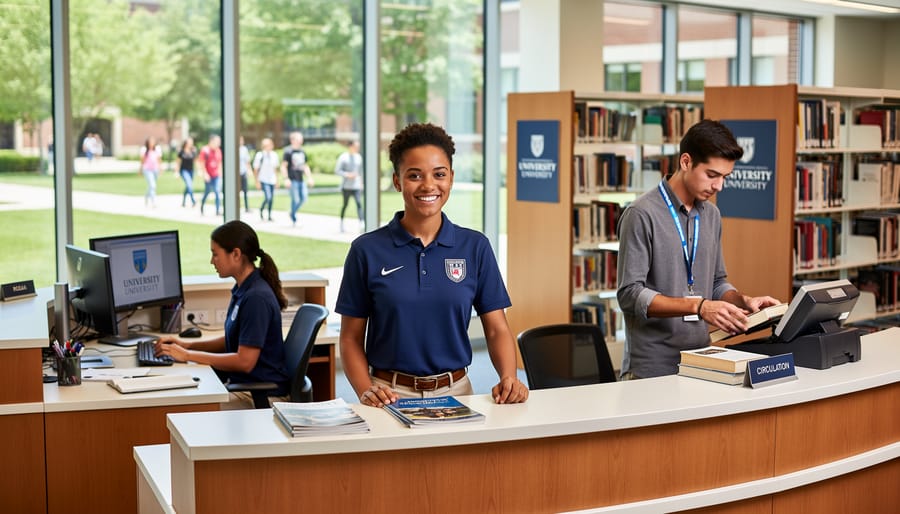
On-campus employment represents your most accessible option. F-1 students can work up to 20 hours weekly during academic terms and full-time during breaks without special authorization. Typical positions include library assistants, dining hall workers, residence hall desks, and departmental administrative roles. Realistic earnings range from $10-15 per hour, translating to approximately $800-1,200 monthly during the semester. A 2023 survey found that 62% of international students working on-campus earned between $4,000-6,000 annually, which covers textbooks, personal expenses, and reduces loan dependency.
Curricular Practical Training (CPT) allows work directly related to your major during your program, typically after completing one academic year. For example, business students might secure paid internships with local companies, while engineering students participate in cooperative education programs. CPT provides professional experience while earning income comparable to entry-level positions in your field.
Optional Practical Training (OPT) permits 12 months of work authorization after graduation, extending to 36 months for STEM graduates. This post-graduation employment offers full-time earnings potential and often serves as a pathway to employer sponsorship. According to recent data, STEM OPT participants earned median salaries of $65,000-75,000, significantly impacting their ability to repay educational investments.
Always consult your designated school official before accepting any position to ensure compliance with visa regulations and maintain your legal status.
International Student Loans and Cosigner Alternatives
While federal financial aid remains largely unavailable to international students, several private lenders have developed loan programs specifically for this population. Understanding these options can help bridge funding gaps when scholarships and personal resources fall short.
Traditional private student loans typically require a creditworthy U.S. cosigner—usually a citizen or permanent resident. Major lenders like Sallie Mae, Discover, and Citizens Bank offer competitive rates (currently ranging from 4% to 14% APR) for international students who can secure such a cosigner. These loans often cover the full cost of attendance minus other aid received.
However, finding a U.S. cosigner presents a significant barrier for many international students. Fortunately, several lenders now offer no-cosigner alternatives. MPOWER Financing and Prodigy Finance lead this space, evaluating applicants based on future earning potential rather than credit history or collateral. MPOWER serves students from over 200 countries at select U.S. schools, with fixed rates starting around 10-12% APR. Prodigy Finance focuses primarily on graduate students in business, engineering, law, and public policy programs.
According to recent data, approximately 20% of international graduate students use private loans, compared to only 8% of undergraduates. These loans typically offer 10-20 year repayment terms, though shorter terms reduce overall interest costs.
When considering private loans, compare total repayment amounts, not just interest rates. Factor in origination fees (typically 0-5%) and understand grace periods. Additionally, explore student banking options that can help manage loan proceeds effectively and build U.S. financial literacy.
Cost-Cutting Strategies to Stretch Your Budget Further
Smart Housing Choices That Save Thousands Annually
Housing represents one of the largest expenses for international students, often exceeding tuition costs over four years. According to recent data, on-campus dormitories average $10,000-$14,000 annually, while shared off-campus apartments can reduce costs to $6,000-$9,000 per year in many college towns.
Living off-campus with roommates typically offers the greatest savings potential. A student at the University of Texas at Austin saved $4,200 annually by sharing a two-bedroom apartment with three other international students instead of choosing campus housing. Similar arrangements near Arizona State University reduced housing costs by 35% compared to dorm rates.
To find affordable options, start your search 3-4 months before the semester using platforms like Facebook Marketplace, university housing boards, and local student groups. Consider locations slightly farther from campus with reliable public transportation access. Many students discover that living 15-20 minutes away cuts rent by 20-30%.
Calculate total costs including utilities, internet, and transportation when comparing options. A seemingly cheaper apartment requiring a car may actually cost more than a pricier unit near campus. Implementing solid budgeting strategies helps track these expenses effectively and identify additional savings opportunities throughout the academic year.
Academic Cost-Savers: From Textbooks to Course Selection
Beyond securing financial aid, international students can significantly reduce their overall education costs through smart academic choices. Textbook expenses, which average $1,200 annually according to the College Board, represent a prime opportunity for savings. Instead of purchasing new books, explore campus bookstore buyback programs, online marketplaces like Chegg or Amazon, or rental options that can cut costs by 50-70%. Many professors now incorporate Open Educational Resources—free, high-quality digital textbooks and materials—saving students hundreds of dollars per semester.
Strategic course selection also impacts your budget. Taking a full credit load each semester helps you graduate on time, avoiding additional tuition payments and living expenses. At many universities, tuition remains the same whether you take 12 or 18 credits, making maximum enrollment financially advantageous. Consider summer courses at community colleges for general education requirements, which can transfer to your university at a fraction of the cost—sometimes saving $2,000-$3,000 per course.
Libraries offer another underutilized resource. Most campus libraries stock textbooks on reserve for short-term borrowing and provide free access to research databases and study materials. Additionally, forming textbook-sharing arrangements with classmates or joining student organizations that maintain lending libraries can further reduce academic expenses while building valuable peer connections.
Creating Your Personalized Financial Aid Application Strategy
Securing financial aid requires a well-organized, proactive approach that begins at least 12-18 months before your intended enrollment date. According to data from the Institute of International Education, students who start their aid search early increase their funding success rate by nearly 40 percent compared to those who begin just a few months before application deadlines.
Start by creating a comprehensive timeline. If you plan to begin studies in fall 2025, launch your research phase by summer 2024. During this period, identify 15-20 universities that match your academic profile and specifically offer aid to international students. Create a spreadsheet tracking each school’s application deadline, required documents, aid availability, and specific scholarship opportunities.
Next, develop parallel application tracks. While preparing university applications, simultaneously research and apply for external scholarships from organizations like the Aga Khan Foundation, Joint Japan World Bank Graduate Scholarship Program, or country-specific programs. For example, Maria from Colombia applied to 12 university-based scholarships and 8 external funding sources simultaneously, ultimately securing a 75 percent tuition waiver from her chosen university plus a 5,000 dollar external scholarship.
Prioritize schools strategically. Target a mix of reach schools with competitive aid, match schools with moderate funding opportunities, and safety schools known for generous international support. Liberal arts colleges and regional universities often provide more substantial aid packages than larger research institutions.
Set monthly milestones: completing standardized tests, gathering recommendation letters, drafting scholarship essays, and submitting applications. Remember that many scholarship deadlines fall between December and February, months before university admission decisions. Starting early allows you to craft compelling, individualized applications rather than rushing generic submissions that rarely succeed.
Securing financial aid as an international student in the US is undeniably challenging, but it is far from impossible. Each year, thousands of international students successfully finance their American education through scholarships, assistantships, and institutional aid. The key difference between those who succeed and those who struggle often comes down to strategic planning, early preparation, and persistence.
Consider the case of Maria from Brazil, who received a full scholarship to study computer science at a mid-sized university by applying to 15 institutions and tailoring each application to highlight her unique research interests. Her success illustrates an important reality: casting a wide net and starting the research process at least 12-18 months before your intended enrollment significantly improves your chances.
Recent data shows that international students who apply to a diverse range of schools, including those outside the top 50 rankings, receive substantially more aid offers. Remember that your US education is an investment that extends far beyond the degree itself. The networks you build, the cross-cultural competencies you develop, and the global perspectives you gain create returns that compound throughout your career.
Begin your funding search today by exploring university websites, contacting admissions offices directly, and connecting with current international students at your target schools. While the path requires dedication and strategic effort, the transformative power of US education makes every application, every essay, and every funding inquiry worthwhile. Your educational dreams are achievable with the right approach and unwavering determination.