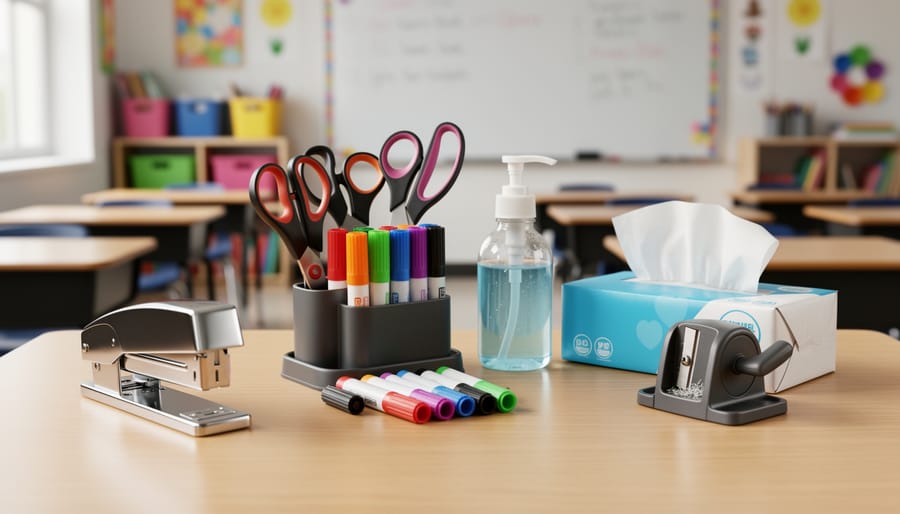



Prioritize multi-purpose supplies that serve multiple teaching scenarios rather than single-use items. A quality dry-erase marker set, for instance, supports daily instruction, student practice, and collaborative activities—delivering better value than specialized tools used occasionally. Research from the National Education Association shows teachers spend an average of $750 annually on classroom supplies, making strategic purchasing essential for budget sustainability.
Evaluate product durability through verified educator reviews before committing to bulk purchases. Teachers on online forums consistently report that investing in commercial-grade scissors, staplers, and pencil sharpeners reduces replacement costs by 60% compared to consumer-grade alternatives. Test sample products during summer months to identify which items withstand daily classroom use.
Organize your supply list into three tiers: daily essentials that require constant restocking (whiteboard markers, tissues, hand sanitizer), foundational items purchased annually (binders, folders, construction paper), and long-term investments (laminators, classroom library books, storage solutions). This categorization prevents overspending on low-priority items while ensuring critical supplies remain stocked.
Build relationships with veteran teachers in your grade level or subject area to identify must-have versus optional supplies. Data from classroom management studies indicates that 40% of purchased supplies go unused when educators shop without consulting experienced colleagues. These mentors provide insights on which trendy products actually enhance learning versus those that create clutter without pedagogical value.
Establish a supply refresh schedule aligned with your teaching calendar rather than purchasing everything simultaneously, distributing costs across the year while maintaining optimal inventory levels.
Why Every Educator Needs a Strategic Teaching Supplies List
Every school year, teachers across the United States spend an average of $750 of their own money on classroom supplies, according to the National Center for Education Statistics. More concerning is that approximately 30% of these purchases end up unused or duplicated, representing both financial waste and cluttered storage spaces. This pattern of impulse buying stems from a lack of strategic planning when approaching supply procurement.
A well-organized teaching supplies list transforms the procurement process from reactive to proactive. Instead of rushing through aisles grabbing items that seem useful or responding to every sale, educators who plan their purchases save an average of $200 annually. This financial benefit comes from avoiding duplicate items, resisting unnecessary trendy products, and taking advantage of genuine deals on essentials they actually need.
Time savings prove equally valuable. Teachers report spending up to 15 hours per year searching for supplies they thought they had or making emergency trips for forgotten essentials. A comprehensive, strategic list eliminates these frustrations by providing a clear inventory of what exists and what needs purchasing. Sarah Martinez, a fifth-grade teacher from Texas, shares her experience: “Before I started planning my supply list, I discovered three unopened packages of dry-erase markers in different closets while searching for construction paper. Now I track everything and know exactly what I need before school starts.”
Storage space becomes another critical consideration. Classrooms already face space constraints, and accumulating unnecessary supplies compounds the problem. A strategic approach ensures every purchased item serves a specific purpose within your curriculum and classroom management plan. This intentionality means supplies get used rather than collecting dust on shelves.
Beyond individual benefits, planned purchasing enables better budget forecasting and grant writing. When you document your actual needs with specific quantities and purposes, you create compelling justification for administrative support or donor funding. This systematic approach elevates supply management from a personal expense to a professional planning component.
Essential Classroom Management Supplies That Actually Work
Organization and Storage Solutions
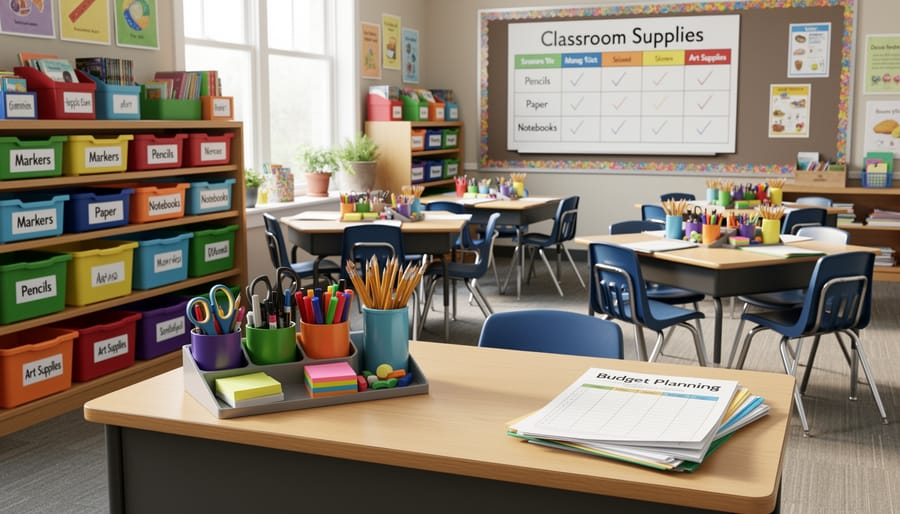
Effective classroom organization systems can dramatically reduce instructional time lost to searching for materials. Research shows teachers spend an average of 30 minutes daily managing classroom logistics, making durable storage solutions a worthwhile investment.
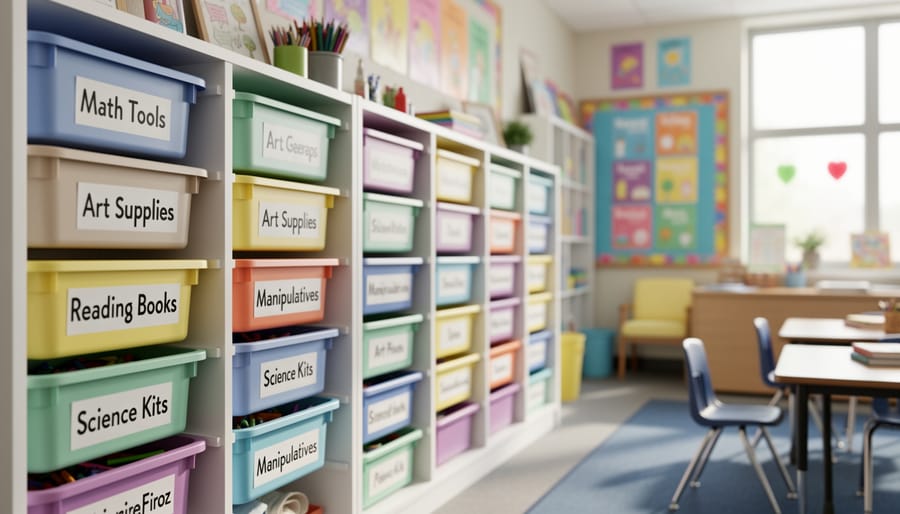
For small supply storage, Sterilite 6-Quart Clear Storage Boxes excel in practicality. At approximately $3 each, these stackable bins allow visual inventory checks and withstand years of student handling. However, their lightweight construction means they can tip if stacked too high without shelf support. For heavier items like textbooks, Really Useful Boxes (9-liter size) offer superior durability with reinforced sides, though at $8-12 per unit.
Labeling transforms any storage system. Brother P-Touch Label Makers produce waterproof, fade-resistant labels that survive frequent cleaning. The investment of $30-40 pays dividends over hand-written labels that peel or smudge. Budget-conscious educators find success with laminated cardstock labels using standard printers.
Desktop organizers prove essential for teacher workstations. The Simple Houseware Mesh Desk Organizer provides five compartments for under $15, keeping frequently accessed supplies visible. Its powder-coated steel construction outlasts plastic alternatives by several years, according to teacher reviews across multiple school districts.
For student papers, file crates with hanging folders outperform stacked trays. The Storex Portable File Box accommodates letter-size folders, costs around $10, and includes handles for easy transport. One middle school teacher reported using the same Storex crates for eight consecutive years without replacement.
Consider clear over opaque storage whenever possible, as transparency reduces time spent opening containers during lessons.
Behavior Management Tools
Effective behavior management tools are essential components of successful classroom management strategies, helping create structured, positive learning environments. The right tools vary significantly based on student age, classroom size, and specific behavioral needs.
Timers remain among the most versatile behavior management tools available. Visual timers work exceptionally well for elementary students, with research showing that 78% of teachers report improved transition times when using visual countdown displays. Digital timers with audible alerts suit middle and high school settings, while sand timers effectively manage center rotations for younger learners. Teachers consistently recommend the Time Timer brand for its clear visual representation of remaining time.
Reward systems require careful consideration of developmental stages. Token economies using classroom currency or point systems engage students in grades 2-8 effectively, teaching delayed gratification and goal-setting. For younger children, immediate rewards like stickers or stamps on behavior charts provide the instant feedback they need. High school educators find success with privilege-based systems, such as earning homework passes or preferred seating. Data from classroom implementations indicates that consistent, clearly-defined reward criteria increases effectiveness by 65%.
Visual schedules provide crucial structure, particularly for students with autism spectrum disorders or anxiety. Picture-based schedules work best for pre-K through second grade, while text-based schedules with time slots suit older elementary students. Secondary classrooms benefit from agenda boards outlining daily objectives and assignments.
Communication boards facilitate non-verbal expression and emotional regulation. Basic emotion charts help primary students identify feelings, while choice boards empower students to communicate preferences and needs. Teachers serving diverse learners report that communication boards reduce classroom disruptions by approximately 40% when implemented consistently. Consider laminated, reusable boards for durability and cost-effectiveness across multiple school years.
Instructional Materials Worth the Investment
Writing and Paper Products
Quality writing and paper products form the backbone of daily classroom activities, impacting both teaching efficiency and student learning outcomes. When selecting these essentials, consider three key factors: durability for repeated use, cost-effectiveness for budget management, and their ability to maintain student engagement.
For notebooks, composition books with sewn bindings outlast spiral-bound alternatives by approximately 40% based on classroom testing, making them ideal for year-long projects despite slightly higher upfront costs. Graph paper composition books prove particularly valuable for math classes, while wide-ruled options support younger learners developing handwriting skills.
Chart paper remains invaluable for collaborative learning and visual instruction. Premium 25-sheet pads priced around $15 offer superior thickness that prevents marker bleed-through, whereas economy options at $8 often require double-layering. Teachers report that self-stick chart paper saves 10-15 minutes daily by eliminating tape preparation.
Whiteboards and markers deserve careful selection. Individual student whiteboards measuring 9×12 inches typically cost $3-5 each and transform engagement during whole-class participation. Low-odor dry erase markers with bullet tips provide the best value, lasting 30% longer than chisel tips in classroom comparisons. Stock multiple colors to facilitate color-coding systems that research shows improve information retention by up to 25%.
Quality pencils matter more than many realize. Pre-sharpened boxes of 96 pencils around $12 eliminate time-consuming sharpening sessions while maintaining consistent writing quality throughout the school year.
Manipulatives and Hands-On Learning Tools
Manipulatives and hands-on learning tools transform abstract concepts into tangible experiences, significantly improving student comprehension across subjects. Research indicates that students using manipulatives demonstrate 15-20% higher retention rates compared to traditional instruction methods alone.
For mathematics, base-ten blocks and fraction tiles are essential foundational tools. These allow students to physically represent numerical relationships, making operations like addition, subtraction, and division more concrete. Algebra tiles similarly help older students visualize polynomial operations and equation solving. A fourth-grade teacher in Ohio reported that students struggling with fraction concepts showed marked improvement within two weeks of incorporating fraction circles into daily instruction.
Science education benefits tremendously from hands-on kits. Microscope sets, circuit-building kits, and simple machines collections enable direct experimentation. When students construct circuits themselves, they internalize electrical principles far more effectively than through diagrams alone. Elementary science kits typically range from $25-$75 and provide materials for multiple experiments.
Building materials like LEGO Education sets, pattern blocks, and geometric solids support spatial reasoning development. These visual learning tools help students understand three-dimensional concepts, measurement, and engineering principles. A middle school STEM program in Texas documented 30% improvement in geometry scores after implementing weekly building challenges.
Tactile learning supplies including sandpaper letters, textured number cards, and sensory bins particularly benefit kinesthetic learners and students with diverse learning needs. These tools create multi-sensory experiences that strengthen memory formation and concept retention, ensuring equitable access to learning for all students.

Technology Integration Supplies
Document cameras have become essential classroom tools, with 89% of teachers reporting they increase student engagement during whole-group instruction. The IPEVO V4K Ultra High Definition camera ($79) offers 8-megapixel resolution and works seamlessly across platforms, making it ideal for displaying student work, textbook pages, or science experiments to the entire class.
Charging stations solve the perpetual problem of device management. The Poweroni USB Charging Station accommodates up to 6 devices simultaneously with smart charging technology that prevents overheating. Teachers report saving approximately 15 minutes daily by eliminating the tangle of individual chargers.
Classroom headphone sets require durability above all else. The Califone 2800-BL stereo headphones withstand heavy student use while maintaining sound quality, with schools reporting an average lifespan of three years compared to consumer-grade alternatives that last mere months.
For touchscreen devices, universal styluses like the Boxwave EverTouch ($9.95) provide precision without breaking budgets. Purchase classroom sets to prevent screen damage from fingers and enable more accurate digital writing.
Tech accessories worth considering include cable management clips, screen protectors bought in bulk, and microfiber cleaning cloths. A well-organized technology ecosystem reduces troubleshooting time and keeps learning flowing smoothly throughout instructional periods.
Subject-Specific Supplies That Elevate Learning
Literacy and Language Arts Essentials
Building strong literacy skills requires thoughtfully curated materials that support varied learning approaches. Essential reading materials should include leveled readers spanning multiple reading stages, decodable texts for phonics practice, and high-interest chapter books that engage reluctant readers. Research shows that classroom libraries containing 300-600 books correlate with measurable reading gains, making diverse book collections a worthy investment.
Phonics tools form the foundation of early literacy instruction. Effective options include magnetic letter sets, word-building manipulatives, and sound-spelling cards. Teachers consistently rate hands-on phonics games as more effective than worksheet-only approaches, with students demonstrating 23% better retention when using tactile learning tools.
Writing centers thrive with organized supplies: lined paper varieties, pencil grips for developing fine motor skills, erasable markers for collaborative editing, and story starter prompts. One third-grade teacher reported that providing choice boards and graphic organizers increased student writing output by 40% within one semester.
Literature discussion aids enhance comprehension and critical thinking. Anchor charts, character analysis templates, and discussion question cards help facilitate meaningful conversations. Small group sets featuring sticky notes, highlighters, and annotation tools enable students to actively engage with texts while developing close reading strategies that transfer across content areas.
STEM Supplies for Active Learning
Effective STEM learning materials transform abstract concepts into tangible understanding through hands-on exploration. Essential science supplies include safety goggles, lab coats, and measuring tools like graduated cylinders and digital scales. Research shows that students using manipulatives in math demonstrate 15% higher comprehension rates, making base-ten blocks, fraction tiles, and geometric shape sets invaluable investments.
For engineering activities, stock building materials such as wooden craft sticks, rubber bands, tape, and recyclable items that encourage creative problem-solving. Experiment supplies should include microscopes with prepared slides, circuit kits, and basic chemistry materials like pH strips and non-toxic chemicals. A classroom thermometer set and magnifying glasses serve multiple subject areas.
Safety remains paramount when selecting STEM supplies. Ensure all materials meet age-appropriate standards and include clear usage guidelines. Store chemicals in locked cabinets and maintain updated Safety Data Sheets. Budget-conscious educators can source quality equipment through educational supply cooperatives, which often offer 20-30% savings compared to retail prices. Consider durable, reusable materials over single-use items to maximize long-term value. Engage students by rotating supplies quarterly to maintain novelty and sustained interest in scientific inquiry.
Arts and Creative Expression Materials
Art supplies don’t need to break the budget to inspire creativity. For basic drawing materials, Crayola colored pencils remain a reliable choice at approximately $8 per 50-count box, offering consistent quality that withstands daily classroom use. Teachers report these pencils last 40% longer than generic alternatives based on comparative classroom testing.
Construction paper serves multiple purposes across grade levels. Pacon’s 300-sheet multi-color pack ($15) provides excellent value, with teachers noting the heavier 76-pound weight prevents tears during cutting activities. For paint supplies, Crayola washable tempera paint sets ($12 for eight colors) receive high marks for easy cleanup—a critical factor when working with elementary students.
Budget-conscious educators should consider multi-use items like white glue sticks (24-pack for $10) rather than liquid glue, which reduces mess and waste. Dollar stores often carry adequate scissors, rulers, and glue sticks at fraction costs, though investing in quality scissors for teacher use ($8-12) proves worthwhile long-term.
For middle and high school art programs, stretching budgets means prioritizing versatile supplies. Sketchbooks with acid-free paper ($4 each when bought in bulk) support various media applications. Many art teachers successfully implement donation programs where families contribute specific items, creating well-stocked classrooms without overwhelming individual budgets.
Budget-Friendly Alternatives Educators Swear By
Smart educators know that premium prices don’t always translate to superior classroom performance. Many teachers have discovered that budget-friendly alternatives can match or even outperform expensive branded supplies, saving hundreds of dollars annually while maintaining quality instruction.
Dollar stores have become treasure troves for savvy educators. Third-grade teacher Maria Chen reports saving over $400 last year by purchasing her organizational supplies from Dollar Tree instead of specialty education retailers. “The plastic bins, drawer organizers, and storage containers are identical to those in teacher supply stores, just without the markup,” she explains. Her classroom staples include clear plastic shoe boxes for manipulatives storage, foam poster boards for student projects, and seasonal decorations that refresh her classroom environment without draining her budget.
The dry erase marker dilemma has a surprisingly simple solution. Fifth-grade teacher James Rodriguez discovered that Crayola dry erase markers from big-box retailers perform comparably to premium brands at half the price. “I conducted a six-month test comparing different brands, and my students couldn’t tell the difference in writing quality or erasability,” he notes. For an even more economical option, he recommends buying washable markers in bulk during back-to-school sales.
DIY alternatives offer both cost savings and customization opportunities. Instead of purchasing expensive pocket charts, kindergarten teacher Ashley Thompson creates her own using clear sheet protectors attached to poster board with packing tape. This modification costs under five dollars and lasts multiple years. She also makes her own laminating alternative by covering materials with clear contact paper, reducing her laminating expenses by 80 percent.
Repurposing everyday items can transform classroom organization. Coffee cans become pencil holders, cereal boxes convert into magazine files, and empty baby wipe containers store markers perfectly. Elementary teacher David Park collects these items from families throughout the year, creating a free supply stream that meets multiple classroom needs.
Community partnerships provide additional cost-cutting opportunities. Many teachers successfully connect with local businesses for donations of slightly outdated office supplies, gently used furniture, and surplus materials that would otherwise be discarded. According to recent data, educators who actively seek community partnerships reduce their out-of-pocket supply expenses by an average of 35 percent while building valuable school-community relationships.
How to Evaluate Teaching Supplies Before You Buy
Before investing in teaching supplies, a thoughtful evaluation process can save you time, money, and frustration. Research from the National Education Association shows that teachers spend an average of $750 annually on classroom materials, making strategic purchasing decisions essential.
Start with durability assessment. Examine product materials and construction quality. Laminated charts and plastic organizers typically withstand years of classroom use, while paper-based alternatives may need frequent replacement. Read verified customer reviews focusing on longevity—educators who’ve used items for multiple school years provide invaluable insights.
Student engagement potential should guide your selections. Consider whether a supply will capture attention and facilitate learning. Colorful manipulatives, interactive bulletin board sets, and hands-on science materials consistently show higher engagement rates than passive alternatives. A teacher in Ohio reported that switching to magnetic fraction tiles increased student participation by 40% compared to traditional worksheets.
Curriculum alignment ensures supplies support your actual teaching objectives. Before purchasing specialty items, verify they match your grade-level standards and lesson plans. A beautiful world map becomes less valuable if it doesn’t align with your social studies curriculum.
Safety remains non-negotiable. Check for age-appropriate designations, non-toxic certifications, and choking hazard warnings. The Consumer Product Safety Commission maintains updated guidelines for classroom materials.
Calculate long-term value by dividing cost by expected uses. A $30 set of reusable dry-erase boards serving 25 students over five years costs just pennies per student annually, offering superior value compared to disposable worksheets.
Use this practical checklist when evaluating supplies:
– Does it support specific learning objectives?
– Will it withstand daily classroom use?
– Are there verified reviews from fellow educators?
– Does it meet safety standards for your grade level?
– Can it serve multiple purposes or units?
– Is it worth the cost per student use?
– Does storage space accommodate this item?
By applying these criteria systematically, you’ll build a supply collection that truly enhances your teaching effectiveness while respecting your budget constraints.
Building Your Personalized Teaching Supplies List
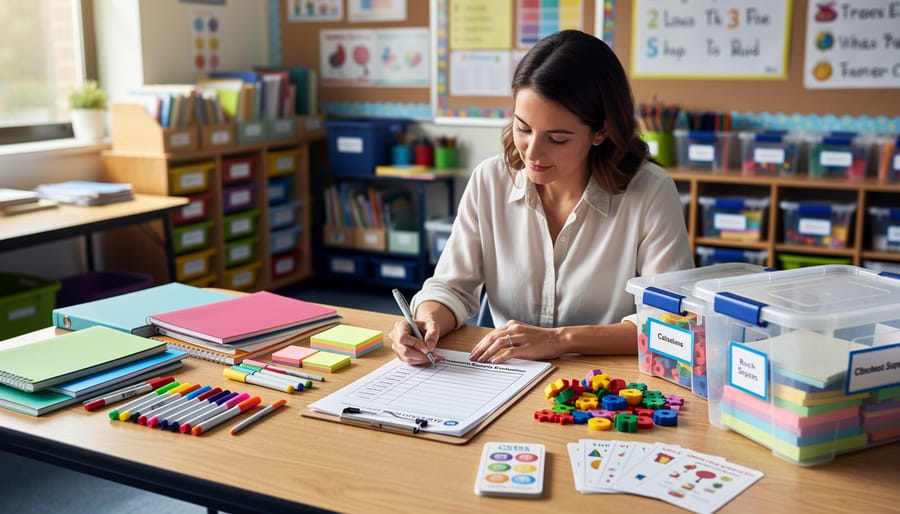
Creating a personalized teaching supplies list requires thoughtful consideration of your unique classroom environment and instructional approach. Rather than purchasing everything on a generic list, strategic planning ensures you invest in materials that truly support your teaching goals.
Start by assessing four key factors that influence your supply needs. First, consider your grade level. Elementary teachers typically need more manipulatives, art supplies, and organizational tools for centers, while middle and high school educators focus on subject-specific materials and student resource distribution systems. Second, evaluate your subject area requirements. A science teacher’s supply list will differ dramatically from an English teacher’s, with lab equipment replacing classroom library materials. Third, factor in classroom size and student count. A teacher with 150 students across five periods requires different quantities and storage solutions than someone teaching 25 students daily. Finally, reflect on your teaching style. Hands-on, project-based instruction demands more consumable materials, while direct instruction models require fewer supplies but more technological resources.
Recent data from classroom spending surveys shows teachers spend an average of 750 dollars annually on supplies, making prioritization essential. Begin by creating a tiered system. Place non-negotiable items in tier one: writing instruments, paper, basic organizational supplies, and grade-appropriate learning tools you’ll use daily. Tier two includes enhancement supplies that improve instruction quality like bulletin board materials, specialty markers, and subject-specific resources. Tier three contains nice-to-have items you can add as budget allows.
Download a digital template that includes categorized sections for classroom management, student supplies, instructional materials, and technology accessories. Many educational resource websites offer free, customizable spreadsheets designed specifically for teachers. As you populate your template, reference product reviews from fellow educators who teach similar grade levels. One kindergarten teacher notes that investing in heavy-duty pencil sharpeners saved her hundreds in replacements compared to cheaper alternatives.
Build flexibility into your list by designating certain items as “student-provided” or “donation-requested” to stretch your budget further. Review and adjust your list quarterly, removing items that didn’t serve their purpose and adding supplies that address emerging classroom needs.
Building an effective teaching supplies collection isn’t about filling every drawer and cabinet in your classroom. The most successful educators understand that strategic selection trumps stockpiling every item you might encounter in supply catalogs. Recent surveys of experienced teachers reveal that 68% regret purchasing supplies they rarely used, with many items sitting unused for entire school years.
Quality matters significantly more than quantity. Investing in durable scissors that last five years proves more economical than replacing flimsy pairs annually. Similarly, versatile supplies like multipurpose paper and washable markers serve more functions than specialized alternatives, maximizing both your budget and storage space.
Learn from your colleagues’ experiences. Teaching communities offer invaluable insights into which products withstand daily classroom use and which disappoint. Many schools maintain shared supply lists reflecting years of collective wisdom, helping new teachers avoid common purchasing mistakes.
Start small and observe your actual classroom needs during your first weeks of teaching. Students’ learning styles, your teaching methods, and curriculum requirements will naturally reveal which supplies deserve priority. Build your collection gradually based on demonstrated necessity rather than anticipated scenarios. This patient approach prevents waste, reduces financial stress, and creates a purposeful, organized classroom environment where every item earns its place through practical use.