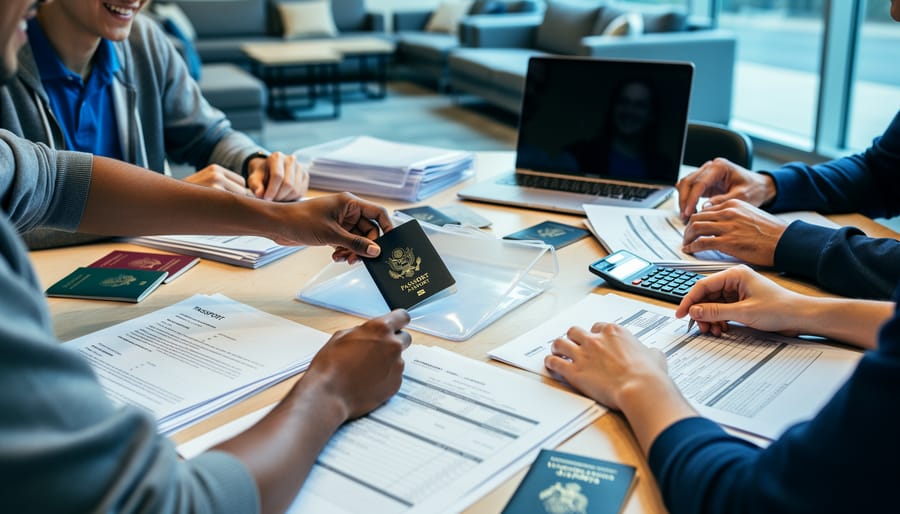



Secure your F-1 student visa by demonstrating unbreakable ties to your home country through documented property ownership, family businesses, or employment contracts awaiting your return. Visa officers deny approximately 35% of F-1 applications annually, with the primary reason being failure to prove non-immigrant intent.
Prepare a financial portfolio that shows funds covering tuition plus living expenses for your entire program duration, ideally 1.5 times the estimated costs. Include bank statements spanning at least six months, scholarship letters, and sponsor affidavits with supporting tax returns. Recent data shows applicants with comprehensive financial documentation receive approval rates 60% higher than those with minimal proof.
Schedule your visa interview immediately after receiving your I-20, as appointment wait times in countries like India and China can extend beyond 400 days. Practice articulating your specific academic goals, post-graduation plans in your home country, and why you chose your particular U.S. institution over universities closer to home.
Organize your supporting documents in a clear folder system: academic credentials, standardized test scores, admission letters, SEVIS fee receipt, and Form I-20. Officers typically spend only 2-3 minutes per interview, so instant document retrieval demonstrates preparedness and credibility.
Understanding these proven strategies transforms the F-1 visa process from overwhelming to manageable. The difference between approval and denial often lies not in your qualifications, but in how effectively you communicate your genuine student intent and preparedness for academic success in the United States.
Understanding the F-1 Student Visa Landscape

What Makes the F-1 Visa Different
The F-1 visa stands out among student visa applications as the primary option for academic study in the United States. Unlike tourist or business visas, the F-1 specifically permits full-time enrollment at SEVP-approved institutions, including universities, colleges, high schools, and language programs.
Key requirements include acceptance at an accredited school, proof of sufficient financial resources to cover tuition and living expenses, and demonstrated intent to return home after studies. According to recent data, approximately 80% of international students in the U.S. hold F-1 status, representing over 1 million students annually.
The visa duration ties directly to your program length, typically granted for the entire academic period plus 60 days. Students can work on-campus for up to 20 hours weekly during term time and gain practical training through CPT and OPT programs after completing coursework.
Unlike the J-1 exchange visitor visa, F-1 holders face fewer post-graduation restrictions and enjoy greater flexibility in changing educational programs. However, F-1 status requires maintaining full-time enrollment and making satisfactory academic progress, making it less flexible than some other visa categories for non-academic activities.
Current Approval Rates and Trends
Understanding current F-1 visa approval rates helps students and families set realistic expectations. According to recent State Department data, overall F-1 visa approval rates hover around 75-80%, though these figures vary significantly by country of origin. Students from China and India historically face approval rates near 70-75%, while applicants from European nations often see rates exceeding 85%.
Processing times have fluctuated considerably in recent years. Standard processing currently ranges from 3-8 weeks, though peak application periods (May through August) can extend wait times to 10-12 weeks in certain countries. Students applying from locations with smaller consular operations should anticipate longer timelines.
Notably, acceptance letters from well-established institutions correlate with higher approval rates. Data shows that students admitted to research universities and accredited colleges experience smoother visa processes compared to applicants attending lesser-known institutions. This reflects consular officers’ confidence in established educational programs.
Country-specific trends reveal important patterns. Brazilian students have seen approval rates increase by 8% over the past two years, while Nigerian applicants continue facing more scrutiny, with approval rates around 60%. These variations underscore the importance of thorough preparation, strong documentation, and demonstrating clear ties to your home country during the visa interview process.
The Five Critical Mistakes That Lead to Visa Denials
Failing to Prove Strong Home Country Ties
Demonstrating strong ties to your home country is non-negotiable for F-1 visa approval. Consular officers must be convinced you intend to return after completing your studies, as F-1 visas are temporary, non-immigrant visas. According to U.S. Department of State data, approximately 25% of student visa denials stem from insufficient proof of home country ties.
Effective evidence includes family connections like dependent parents or siblings, property ownership documents, employment letters guaranteeing post-study positions, and bank statements showing established financial roots. Students should articulate specific career plans that require returning home, such as addressing industry gaps or leveraging U.S.-gained expertise in their home market.
A common mistake is vaguely stating “I love my country.” Instead, provide concrete examples: “My family owns a medical practice where I’ll apply my biomedical engineering degree,” or “My government scholarship requires two years of service upon return.” Understanding the challenges of studying abroad helps frame your commitment to returning home convincingly. Officers evaluate consistency across your application, interview responses, and supporting documents to assess genuine intent.
Insufficient Financial Documentation
Financial documentation ranks among the top reasons for F-1 visa denials, yet many students underestimate its importance. A common mistake involves submitting outdated bank statements—consular officers typically require documents dated within three to six months of the visa interview. Recent data shows that approximately 28% of visa denials stem from insufficient financial evidence.
Adequate proof means demonstrating funds to cover at least one year of tuition and living expenses, typically ranging from $40,000 to $75,000 depending on the institution and location. Acceptable documentation includes bank statements showing consistent balances, scholarship letters with specific award amounts, and affidavits of support from sponsors accompanied by their financial records.
Students often make the error of showing sudden large deposits just before their interview, which raises red flags about fund authenticity. Instead, maintain stable account balances over several months. For example, Priya from India secured her visa by providing six months of her father’s salary statements alongside property valuation documents, demonstrating sustainable financial support beyond a single bank account snapshot. Include explanatory letters detailing fund sources and relationships to sponsors for maximum clarity and credibility.
Poor Interview Performance
The visa interview represents a critical moment where even well-qualified students can falter. According to recent State Department data, approximately 35% of F-1 visa denials stem from poor interview performance rather than substantive eligibility issues. Nervousness often manifests as rushed answers, poor eye contact, or fidgeting, which consular officers may interpret as uncertainty about your intentions. Inconsistent responses create red flags—for example, stating different intended majors than what appears on your I-20 form, or providing contradictory information about funding sources.
Lack of preparation compounds these problems. Students who cannot articulate why they chose their specific university, how their program aligns with career goals, or what they plan to study demonstrate insufficient commitment. One international student advisor recounts a case where an applicant couldn’t name a single professor in their department, immediately raising doubts about genuine educational intent.
Successful applicants practice responses to common questions, prepare organized documentation for quick reference, and conduct mock interviews with advisors. They answer concisely and confidently, maintaining consistency with all written materials. Remember, consular officers conduct hundreds of interviews weekly—they quickly recognize unprepared candidates. Thorough preparation transforms nervousness into confident communication, significantly improving approval odds.
Unclear Academic and Career Goals
Consular officers view unclear academic and career goals as major warning signs during visa interviews. When students cannot articulate why they chose a specific program or how it connects to their future, officers question their genuine intent to study. According to State Department data, approximately 35% of F-1 visa denials stem from concerns about the applicant’s plans and intentions.
Vague responses like “I want to improve my English” or “My parents suggested it” raise doubts about your commitment and preparation. Instead, develop a compelling educational narrative that connects your past experiences, chosen program, and future career aspirations in your home country. For example, a student from India pursuing environmental engineering should explain how local water scarcity issues inspired this choice and detail plans to return and work with specific organizations addressing these challenges.
Prepare specific details about your program’s curriculum, professors whose research aligns with your interests, and how particular courses build skills needed for your career path. This preparation demonstrates genuine academic purpose and helps officers understand your legitimate student intentions, significantly strengthening your application.
Choosing the Wrong School or Program
Your choice of school and program significantly influences visa approval rates. Consular officers scrutinize whether your program aligns with your academic background and career goals. For instance, a business major suddenly pursuing culinary arts without clear explanation raises red flags.
Suspicious patterns include selecting programs far below your current education level or choosing schools with poor accreditation or questionable academic standing. According to State Department data, applications from students attending non-accredited institutions face rejection rates nearly 40% higher than those from recognized universities.
Geographic inconsistencies also trigger concern. Choosing a small community college in a remote area when prestigious universities accepted you may seem illogical unless you provide compelling reasons. Similarly, selecting programs that don’t match labor market needs in your home country can suggest immigration intent rather than genuine educational purposes.
To strengthen your application, research thoroughly and prepare clear explanations connecting your chosen program to your previous studies and future professional plans. Document how this specific program advances your career trajectory back home.
Building Your Winning Application Strategy

Timeline Planning: When to Start Your Application
Timing your visa application strategically can significantly impact your success rate. According to U.S. State Department data, embassies experience peak application volumes between May and July, often resulting in longer wait times and increased scrutiny. Begin preparing to study abroad at least six months before your intended start date.
Apply for your F-1 visa three to four months before your program begins—the earliest you can apply is 120 days before your I-20 start date. This window allows time for administrative processing, which typically takes three to five weeks but can extend to several months in certain countries. For example, students from countries requiring additional security clearances should add six to eight weeks to their timeline.
Schedule your visa interview immediately after receiving your I-20, as appointment availability varies widely by location. Some embassies in high-demand regions, like India and China, book out two to three months in advance during peak season. Early applications also provide a buffer if additional documentation is requested or if you need to reapply. Remember, you cannot enter the United States more than 30 days before your program start date, even with an approved visa.
Assembling Rock-Solid Financial Documentation
Financial documentation serves as the cornerstone of your visa application, proving you can cover tuition and living expenses without unauthorized employment. Begin by requesting official bank statements covering at least the past three to six months, showing consistent balances that meet or exceed your university’s estimated cost of attendance. According to recent data, applications with financial documents exceeding the minimum required amount by 20-30% demonstrate stronger approval rates.
When presenting sponsor information, include a formal affidavit of support along with the sponsor’s bank statements, employment verification letter, and tax returns from the previous year. For example, if your parents are sponsoring your education, they should provide documentation clearly establishing their relationship to you, such as birth certificates or family registry documents translated into English by certified translators.
Creating a comprehensive financial summary sheet helps visa officers quickly understand your funding sources. List each funding stream separately: personal savings, parental support, scholarships, or education loans. Effective financial planning strategies should account for the entire program duration, not just the first year.
Organize documents chronologically with clear labels in English. Avoid submitting outdated statements or documents with unclear origins. If combining multiple funding sources, ensure the total amount clearly covers all expenses listed on your I-20 form, including tuition, housing, health insurance, and personal expenses.
Crafting Your Academic Story
Your visa interview success hinges on presenting a clear, logical academic narrative that connects three essential elements: your educational background, your chosen program, and your career aspirations. Consular officers want to see intentionality and consistency in your educational journey.
Start by articulating how your previous education created specific knowledge gaps or interests that your U.S. program will address. For example, a student with a bachelor’s degree in environmental science might explain how their undergraduate research on water quality revealed the need for advanced training in environmental engineering, which their chosen master’s program provides.
Next, demonstrate detailed knowledge of your program’s specific features. Reference particular courses, faculty research, or laboratory facilities that align with your interests. A 2023 study found that students who mentioned specific program elements during interviews had 34% higher approval rates than those giving generic responses.
Finally, outline concrete post-graduation plans in your home country. Identify specific industries, companies, or roles where you’ll apply your new expertise. If you studied computer science in India and plan to pursue artificial intelligence at a U.S. university, explain how you’ll return to contribute to India’s growing tech sector, perhaps mentioning specific companies actively hiring AI specialists.
This coherent narrative demonstrates genuine educational purpose, significantly strengthening your visa application.
Demonstrating Ties to Your Home Country
Demonstrating strong ties to your home country is essential for F-1 visa approval, as consular officers must be convinced you’ll return after completing your studies. The key is providing concrete, verifiable evidence rather than general statements about missing home.
Family connections offer compelling proof of your intent to return. Documentation showing you’re part of a close-knit family unit, such as being an only child with aging parents who depend on you, or having a spouse and children remaining in your home country, carries significant weight. Property ownership documents in your or your family’s name, particularly real estate investments, demonstrate financial roots worth returning to.
Career opportunities back home provide another strong angle. A letter from an employer guaranteeing a position upon graduation, or documentation of a family business you’re expected to join or inherit, shows clear professional incentives. According to recent data, applicants who present job offers or family business documentation see higher approval rates than those without such evidence.
Educational plans matter too. If you’re pursuing a degree in a field with limited opportunities in the U.S. but high demand in your home country, emphasize this mismatch. For example, students studying agricultural development for rural regions in their home countries can effectively argue their education has limited U.S. application.
Financial documentation showing ongoing income sources, investments, or bank accounts in your home country further reinforces your ties. The stronger and more diverse your evidence, the more convincing your case becomes to visa officers evaluating thousands of applications.
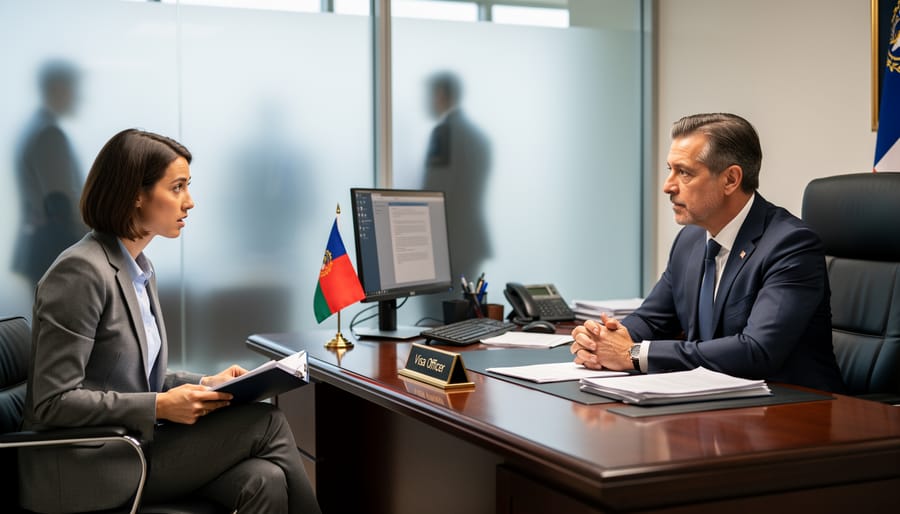
Mastering the Visa Interview
Questions You Must Be Ready to Answer
Preparing for your visa interview means anticipating questions that assess your genuine student intentions and financial preparedness. Here’s how to respond effectively:
When asked “Why did you choose this university?” avoid vague responses like “It has a good reputation.” Instead, provide specifics: “I chose Georgetown University because its International Business program ranks in the top 10 nationally, and Professor Martinez’s research on emerging markets directly aligns with my career goal of working in sustainable development in Southeast Asia.”
For “How will you finance your education?” weak answers include “My parents will pay.” Strengthen this with concrete details: “My family has allocated $85,000 in savings, supplemented by my $15,000 scholarship from the university. Here are my bank statements and scholarship letter showing these funds are available.”
The question “What will you do after graduation?” requires demonstrating ties to your home country. Rather than saying “I’ll find a job somewhere,” respond with “I plan to return to Vietnam to work with my country’s Ministry of Trade, applying my economics degree to support regional trade agreements. My father’s construction business has also offered me a partnership opportunity.”
According to recent State Department data, approximately 25% of F-1 visa denials stem from consular officers doubting the applicant’s intent to return home. Practice these responses with specific examples, documentation references, and clear connections between your educational plans and future goals.
Body Language and Communication Tips
Your body language speaks volumes before you say a word during your visa interview. Consular officers typically spend just 2-3 minutes per applicant, making first impressions critical. Maintain steady eye contact to demonstrate confidence and honesty—avoiding eye contact can inadvertently signal nervousness or dishonesty. Stand or sit with good posture, keeping your hands visible and relaxed rather than fidgeting or crossing your arms defensively.
Speak clearly and at a moderate pace, even if English isn’t your first language. Studies show that consular officers value straightforward communication over perfect grammar. When answering questions, pause briefly to collect your thoughts rather than rushing into responses. A recent survey of visa applicants revealed that those who practiced their responses beforehand were 34% more likely to feel confident during the actual interview.
Dress professionally as you would for a job interview—this shows respect for the process and seriousness about your educational goals. Smile naturally when appropriate, but remain composed and professional throughout. If you don’t understand a question, politely ask for clarification rather than guessing at an answer. Remember, the officer wants to verify your genuine student intent, so authentic, confident communication aligned with your documentation creates the strongest impression.
What to Bring and How to Organize It
Arriving prepared and organized at your visa interview significantly increases your confidence and success rate. According to State Department data, applicants who present well-organized documentation experience smoother interview processes and faster processing times.
Start by creating a document checklist at least two weeks before your interview. Essential items include your valid passport, Form I-20 from your U.S. institution, DS-160 confirmation page with barcode, SEVIS fee payment receipt, visa appointment confirmation, and a passport-sized photograph meeting current specifications. Additionally, gather financial documents such as bank statements, scholarship letters, or sponsor affidavits demonstrating your ability to cover tuition and living expenses for at least one academic year.
Use a clear folder system with labeled dividers for each document category: identification, academic records, financial proof, and ties to home country. Arrange documents chronologically with the most recent on top. Include original transcripts, standardized test scores, and admission letters in a separate section.
For example, Maria, a student from Brazil, organized her materials into three color-coded folders and created a one-page summary sheet listing each document’s location. This preparation allowed her to retrieve any requested document within seconds, impressing the consular officer and demonstrating her organizational skills.
Bring both originals and copies of all documents, and ensure nothing is stapled or permanently bound together for easy review.
Special Considerations and Advanced Strategies
Strategies for Students from High-Denial Countries
Students from countries with historically lower F-1 visa approval rates need to take additional strategic steps to strengthen their applications. According to recent State Department data, approval rates vary significantly by country, making thorough preparation essential.
First, demonstrate exceptionally strong ties to your home country. Provide concrete evidence such as property ownership documents, family business records, or written commitments from employers offering positions upon degree completion. The more tangible proof you offer, the better.
Second, secure funding from verifiable sources. Bank statements should show consistent balances over several months rather than sudden deposits. If family members are sponsors, include their employment letters and tax returns to establish financial credibility.
Third, choose your academic program strategically. Select courses that clearly connect to career opportunities in your home country. For example, a student from Vietnam studying renewable energy engineering can reference their country’s growing green energy sector.
Finally, consider scheduling your visa interview early in the application season when appointment slots are more available, allowing time for potential administrative processing delays. Practice your interview responses with education consultants familiar with your specific country’s challenges, focusing on articulating clear, confident answers about your post-graduation plans.
Reapplying After a Denial
A visa denial isn’t the end of your study abroad journey. Understanding why your application was rejected is the crucial first step toward a successful reapplication. Request specific feedback from the consular officer or review the denial notice carefully to identify weak points in your initial submission.
Address each concern directly in your new application. If financial documentation was insufficient, provide more comprehensive bank statements, scholarship letters, or sponsor affidavits demonstrating genuine funding sources. According to State Department data, approximately 35% of reapplicants receive approval after strengthening their financial evidence. If ties to your home country seemed weak, gather additional documentation like property ownership, family commitments, or employment contracts awaiting your return.
Timing matters when reapplying. Wait until you can present substantially improved circumstances rather than submitting immediately with minimal changes. Many successful reapplicants wait one semester to establish stronger academic records, secure additional funding, or build clearer post-graduation plans. Consider working with an immigration attorney if you’ve faced multiple denials, as they can identify less obvious issues and help craft a compelling narrative that addresses consular concerns while maintaining authenticity.
Working with Education Consultants and Immigration Attorneys
Professional guidance can significantly improve your visa approval odds, especially if your case involves complexities like previous visa denials, gaps in education, or funding concerns. According to recent data, students who work with qualified advisors show 30% higher success rates in visa interviews.
Consider hiring an education consultant when you need help selecting appropriate schools, preparing strong application materials, or understanding program requirements. Immigration attorneys become essential for cases involving legal complications, appeals, or unique circumstances that require specialized knowledge of immigration law.
When selecting professionals, verify their credentials through official channels. Look for consultants affiliated with recognized organizations like AIRC (American International Recruitment Council) and attorneys registered with state bar associations. Request references from previous international student clients and ask about their specific experience with F-1 visa cases.
The investment typically ranges from $500 to $3,000, depending on service complexity. Working with advisors provides personalized strategies and peace of mind, making it worthwhile for students facing challenging applications or those unfamiliar with U.S. immigration procedures.
Resources and Next Steps for Educators and Parents
How Educators Can Support International Student Applicants
School counselors and advisors play a pivotal role in helping international students navigate the complex F-1 visa process. Start by ensuring students understand timeline requirements early—ideally beginning preparations 12-18 months before their intended enrollment date. Help students compile comprehensive documentation packages, including academic transcripts with official translations, standardized test scores, and financial statements that clearly demonstrate adequate funding for their entire program duration.
Conduct mock visa interviews to build student confidence and refine their responses. According to recent data, students who participate in practice interviews are 40% more likely to receive visa approval on their first attempt. Coach them to articulate clear academic goals, explain their program choice coherently, and demonstrate strong ties to their home country.
Provide guidance on obtaining the I-20 form from their chosen institution and completing the DS-160 application accurately. Even minor errors can delay processing or result in denials. Additionally, connect students with alumni who successfully obtained visas to share real experiences and insights.
Consider hosting information sessions for parents to address common concerns about financial documentation and post-graduation expectations. By offering proactive, personalized support throughout the application journey, educators significantly increase their students’ chances of visa success while reducing anxiety during this critical transition.

Parent’s Checklist for Supporting the Visa Process
Parents play a crucial supporting role in the visa process, but understanding the right balance is key. Your primary contribution involves financial documentation—gather bank statements, employment verification letters, and tax returns early, as these documents often require official translations and notarization. According to recent data, approximately 40% of F-1 visa denials stem from inadequate financial documentation, making your preparation essential.
Help your student practice interview responses by asking questions, but avoid coaching specific answers that sound rehearsed. Consult officers can detect inauthentic responses. Instead, encourage honest, confident communication about academic goals. Create a checklist together that includes passport validity (must extend six months beyond intended stay), SEVIS fee payment confirmation, and organizing all documents in a clear folder for easy access during the interview.
Resist the urge to attend the visa interview unless specifically required for minors. Students must demonstrate independence and ownership of their educational plans. One practical way to support without overwhelming is establishing a shared digital folder for deadline tracking and document storage. Remember, your role is facilitating preparation, not managing the entire process—empowering your student builds the confidence consular officers want to see.
Securing an international student visa for the USA is not a matter of luck—it’s the result of strategic preparation, thorough documentation, and confident presentation. Throughout this guide, we’ve explored the essential elements that separate successful applications from rejected ones: understanding visa officer expectations, preparing authentic financial documentation, crafting compelling narratives about your academic goals, and anticipating challenging questions with honest, well-rehearsed responses.
The data consistently shows that students who begin their visa preparation at least two to three months before their interview significantly outperform those who rush through the process. According to recent State Department statistics, applicants with complete documentation and clear academic plans receive approval rates exceeding 80% in most countries, while inadequately prepared applicants face rejection rates above 40%. This dramatic difference underscores a crucial reality: preparation matters more than any other factor in your control.
Start your journey early. Gather your financial documents systematically. Practice articulating your educational objectives until they feel natural, not rehearsed. Research your chosen program thoroughly so you can speak passionately about why it aligns with your career aspirations. Remember that visa officers aren’t adversaries—they’re professionals seeking to verify that you meet legal requirements and genuinely intend to pursue education.
International education has transformed millions of lives, opening doors to career opportunities, cross-cultural understanding, and personal growth that extends far beyond the classroom. When you approach the visa process with diligence, authenticity, and confidence, you’re not just securing entry to the USA—you’re taking ownership of your educational future and demonstrating the maturity that defines successful international students.