



Choose an early learning environment by visiting facilities in person and observing how educators interact with children, checking for active engagement rather than passive supervision. Research shows that quality early childhood education in Liverpool NSW significantly impacts developmental outcomes, with children in high-quality programs demonstrating 40% better school readiness scores compared to those in unregulated care settings.
Prioritize centers that maintain low child-to-educator ratios, ideally 1:4 for infants and 1:10 for preschool-aged children, as these settings allow personalized attention crucial for cognitive and social development. When evaluating a preschool Liverpool facility, examine their curriculum framework and ask specific questions about daily learning activities, outdoor play opportunities, and how they track developmental milestones.
Verify that prospective centers hold current licensing with the Australian Children’s Education and Care Quality Authority and check their quality ratings, as Liverpool NSW offers diverse options from community-based services to Montessori programs. Parents in Liverpool benefit from the suburb’s multicultural character, with many centers offering bilingual programs and culturally responsive teaching practices that reflect the community’s diversity.
Request references from current families and inquire about staff qualifications, ensuring lead educators hold minimum Diploma-level early childhood education credentials. The investment in quality early education yields measurable returns, with longitudinal studies indicating every dollar spent on early learning generates seven dollars in long-term social and economic benefits through improved academic achievement and reduced intervention needs.
The Early Childhood Education Landscape in Liverpool NSW
Understanding Liverpool’s Growing Families
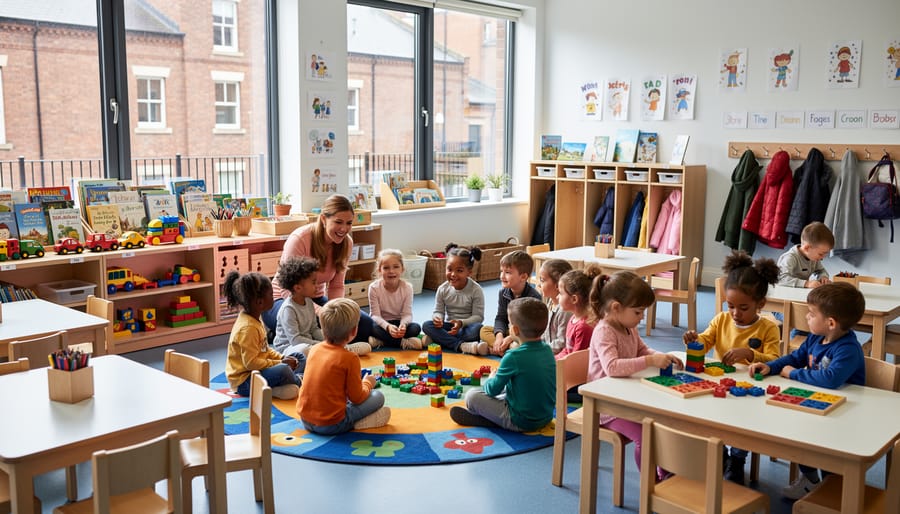
Liverpool’s rapid transformation into a vibrant multicultural hub has created a significant surge in demand for quality early childhood education services. Recent census data reveals that Liverpool has one of the youngest populations in Greater Sydney, with families under 35 accounting for a substantial portion of residents. This demographic shift is driven by affordable housing options, improved infrastructure, and proximity to employment hubs in Western Sydney.
The area’s cultural diversity, with over 140 nationalities represented, means early education centres play a crucial role in supporting children from various linguistic and cultural backgrounds. Many families are first-generation Australians seeking early learning environments that respect their heritage while preparing children for school success.
Population growth projections indicate Liverpool will continue expanding, with major residential developments attracting young families. This creates increased competition for quality childcare places, particularly in newly developed suburbs. Local data shows that 68% of Liverpool families with children under five actively seek early education services, compared to the state average of 54%. Understanding these demographic trends helps parents appreciate why securing enrolment early and researching available options thoroughly has become essential for Liverpool families planning their children’s educational journey.
Types of Childcare Services Available
Liverpool families have access to diverse childcare options designed to meet varying schedules, budgets, and educational preferences. Understanding each service type helps parents make informed decisions aligned with their child’s needs.
Long day care centres operate extended hours, typically from 7am to 6pm, making them ideal for working families. These licensed facilities accept children from six weeks to school age, offering structured educational programs alongside flexible care arrangements. Recent data shows Liverpool has approximately 30 long day care centres, with many featuring outdoor learning spaces and culturally diverse programs reflecting the community’s multicultural character.
Preschools, also called kindergartens, focus specifically on children aged three to five years. These services emphasise school readiness through play-based learning, typically operating during school terms for shorter daily sessions. Liverpool offers both standalone preschools and those attached to primary schools, with some providing sessional care options that suit families needing part-time arrangements.
Family day care provides home-based education in smaller group settings, with registered educators caring for children in their own residences. This option suits families preferring intimate environments and often accommodates non-standard working hours. Liverpool’s family day care network connects families with qualified educators throughout the local area.
Occasional care services offer flexible, casual childcare without permanent bookings, perfect for parents needing intermittent support for appointments, errands, or personal time. While less common than other options, several Liverpool centres provide occasional care, helping families manage unpredictable schedules while ensuring children experience quality educational activities.
What Quality Early Childhood Education Really Means
The National Quality Standard and Your Child
In Liverpool, all childcare centers operate under the National Quality Standard (NQS), a comprehensive framework that helps you understand exactly what quality care looks like for your child. The Australian Children’s Education and Care Quality Authority (ACECQA) assesses centers across seven key quality areas, including educational programs, children’s health and safety, physical environments, staffing arrangements, and relationships with children.
Each Liverpool childcare center receives one of five ratings: Excellent, Exceeding NQS, Meeting NQS, Working Towards NQS, or Significant Improvement Required. These ratings are publicly available and updated regularly, giving you transparent insight into how well a service performs. For example, a center rated as Exceeding NQS demonstrates practices that go beyond the minimum requirements, often featuring innovative learning programs and exceptional educator-child interactions.
Research shows that children attending higher-rated centers demonstrate stronger language development, better social skills, and improved school readiness. When a Liverpool center achieves an Exceeding or Excellent rating, it indicates that educators are implementing evidence-based practices, maintaining quality physical spaces, and fostering meaningful relationships with families.
You can check any Liverpool childcare center’s current rating on the Australian Children’s Education and Care Quality Authority website or the Starting Blocks platform. These ratings aren’t just administrative labels—they reflect real differences in the daily experiences and developmental outcomes for your child. Understanding these ratings empowers you to ask informed questions during center tours and make choices aligned with your child’s needs and your family’s values.
Educational Programs That Shape Young Minds
Liverpool’s early childhood centers embrace the nationally recognized Early Years Learning Framework (EYLF), which provides a comprehensive approach to learning through play-based activities. This framework focuses on five key learning outcomes: children developing a strong sense of identity, connection to their world, wellbeing, confidence as learners, and effective communication skills.
Local centers implement EYLF principles through structured yet flexible daily programs. For example, educators at Liverpool facilities design learning experiences that integrate literacy, numeracy, and social-emotional development within natural play contexts. A typical program might include morning circle time for language development, outdoor exploration for physical skills, and small group activities for creative expression.
The play-based curriculum approach means children learn fundamental concepts through hands-on experiences rather than formal instruction. When building with blocks, children naturally explore mathematical concepts like measurement and balance. During dramatic play, they develop communication skills and emotional intelligence. This methodology aligns with research showing that children aged 0-5 retain information better through active engagement.
Liverpool educators also recognize the importance of cultural diversity, incorporating multicultural perspectives that reflect the area’s rich community composition. Programs often include resources in multiple languages and celebrate various cultural traditions, helping all children feel valued and represented.
Parents can complement center-based learning by creating a stimulating home environment and understanding kindergarten curriculum planning to support smooth transitions. Regular educator-parent communication ensures consistency between home and center learning experiences, maximizing developmental benefits for each child.
Key Benefits of Early Childhood Education in Liverpool
Social and Emotional Development
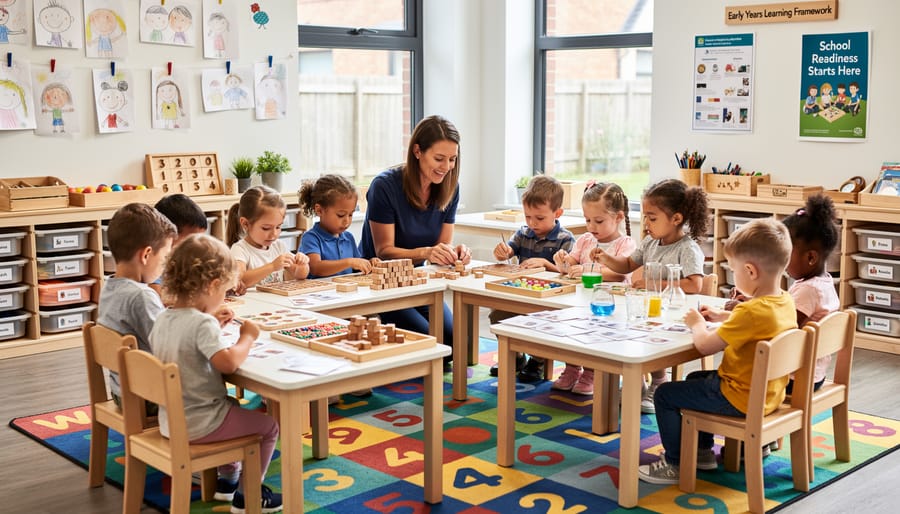
Quality early childhood education in Liverpool NSW provides children with invaluable opportunities to develop essential social and emotional skills that form the foundation for lifelong wellbeing. Through daily interactions with peers and experienced educators, children learn to navigate friendships, share resources, and communicate their needs effectively.
Research shows that children attending quality childcare programs demonstrate improved emotional regulation by age five. In Liverpool’s diverse early learning centers, children engage in engaging learning activities specifically designed to build empathy, cooperation, and self-awareness. For example, group activities like circle time and collaborative play help children recognize and respond to others’ emotions while developing their own emotional vocabulary.
Educators in Liverpool’s centers use evidence-based approaches to support confidence building, creating safe environments where children can take appropriate risks and celebrate achievements. When a child successfully resolves a conflict with a peer or completes a challenging task independently, they build resilience and self-esteem. These early experiences with emotional intelligence and social competence prepare children not just for school, but for positive relationships and mental health throughout their lives, making the investment in quality early education particularly valuable for Liverpool families.

Cognitive Growth and School Readiness
Quality early childhood education programs in Liverpool NSW provide foundational cognitive skills that set children up for academic success. Research shows that children participating in structured early learning environments demonstrate stronger language acquisition, with vocabulary development increasing by up to 30% compared to children without formal early education exposure.
Local Liverpool centres focus on building pre-literacy skills through storytelling, phonemic awareness activities, and print-rich environments. These approaches help children recognize letters, understand sound patterns, and develop comprehension skills essential for reading readiness. Numeracy development is equally prioritized, with educators introducing mathematical concepts through play-based counting games, pattern recognition, and problem-solving activities.
Engaging in early childhood development activities both at centres and home reinforces cognitive growth. Liverpool educators report that children who attend quality programs for at least 12 months before starting school show significantly smoother transitions to primary education, demonstrating better attention spans, following instructions more effectively, and engaging more confidently in classroom learning. These early investments in cognitive development create lasting educational advantages that extend well beyond kindergarten.
Supporting Working Parents in Liverpool
Liverpool’s early childhood education centres provide essential support for working families through flexible operating hours and convenient locations near major employment hubs. Many centres in the area open from 7:00 AM to 6:00 PM, accommodating standard work schedules and commute times. According to recent local data, approximately 73% of Liverpool families with young children have two working parents, making accessible childcare critical to the community.
Several Liverpool centres participate in the Child Care Subsidy scheme, significantly reducing out-of-pocket costs for eligible families. For example, families earning under $72,000 annually may receive up to 85% subsidy coverage, making quality early education affordable. Many local providers also offer vacation care programs during school holidays, ensuring consistent care throughout the year. Additionally, some centres partner with local employers to provide priority enrolment for employees, streamlining the childcare search process. These practical supports enable Liverpool parents to maintain employment while ensuring their children receive enriching early learning experiences in their local community.
Choosing the Right Childcare Service in Liverpool NSW
Essential Questions to Ask Childcare Providers
When visiting potential childcare centres in Liverpool, prepare a comprehensive list of questions to ensure you find the right fit for your family. Start by inquiring about educator qualifications—ask what percentage of staff hold Certificate III versus Diploma qualifications in Early Childhood Education and Care, and whether any educators have bachelor’s degrees. Research shows that higher-qualified educators typically provide more developmentally appropriate interactions with children.
Understanding child-to-staff ratios is essential for quality care. In NSW, regulations require one educator for every four children under two years, one educator for five children aged two to three, and one educator for ten children aged three to five. Ask centres how they maintain these ratios during staff breaks and busy periods.
Explore the educational program by requesting to see their curriculum framework. Quality centres should demonstrate how they incorporate the Early Years Learning Framework and provide examples of recent learning experiences. Ask how they document children’s progress and how frequently families receive updates.
Policy questions are equally important. Inquire about their illness and exclusion policies, emergency procedures, sun protection protocols, and approach to dietary requirements. According to 2023 data from Australian Children’s Education and Care Quality Authority, centres with transparent, clearly communicated policies receive higher family satisfaction ratings.
Don’t hesitate to ask about staff turnover rates, as continuity of care significantly impacts children’s development. Request references from current families and ask whether you can observe a session before enrolling. These conversations provide valuable insights beyond what’s visible during a standard tour.
Touring Childcare Centers: What to Observe
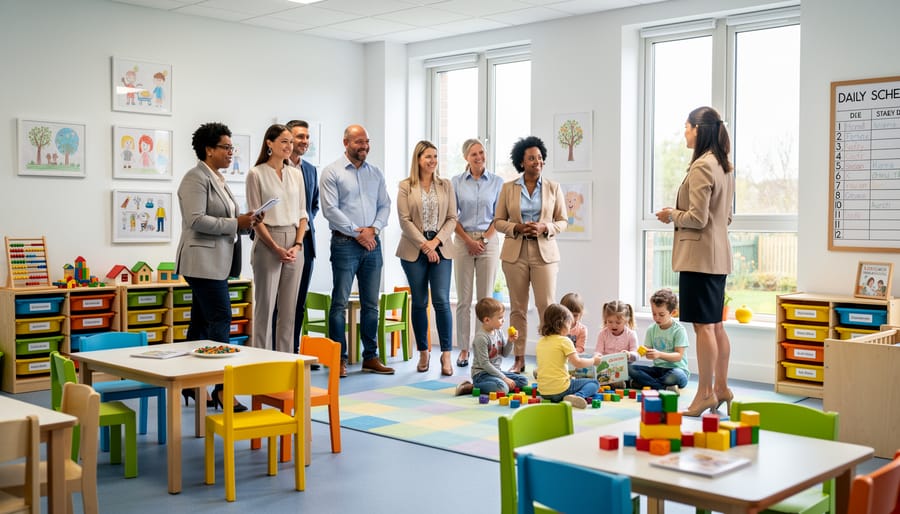
When visiting childcare centres in Liverpool, bringing a mental checklist helps you evaluate whether a facility meets your child’s needs. Start by assessing environment safety: check for secure entry points, age-appropriate furniture, and hazard-free outdoor play areas. Recent data shows that centres with well-maintained safety protocols report 40% fewer incidents, making this a priority observation.
Watch how educators interact with children. Quality programs feature warm, responsive communication where staff get down to children’s eye level and engage in meaningful conversations. Notice the child-to-educator ratio—smaller groups typically allow for more individualised attention and support.
Examine the educational resources available. Look for diverse learning materials including books, sensory items, creative supplies, and age-appropriate technology. Quality centres display children’s artwork and rotate activities regularly to maintain engagement.
Observe the daily routine by asking about structured learning time versus free play balance. Research indicates children thrive when 60% of their day involves play-based learning. Pay attention to cleanliness standards, meal preparation areas, and rest spaces. Don’t hesitate to ask about the centre’s curriculum approach, staff qualifications, and communication methods with families. Trust your instincts—if something feels off during your visit, it’s worth exploring other options.
Understanding Fees and Government Support
Navigating childcare costs in Liverpool doesn’t have to be overwhelming. Most families access the Child Care Subsidy (CCS), which covers between 0-90% of fees depending on your household income and activity levels. In Liverpool, full-time childcare typically ranges from $90-$140 per day before subsidies. For example, a family earning $80,000 annually might receive approximately 72% subsidy, reducing daily costs to around $25-$40. To maximize support, ensure your family details are current with Services Australia and your childcare provider. Consider exploring local community-based centres, which often charge lower fees than corporate providers. Planning ahead involves comparing fee structures, understanding gap fees, and checking if providers offer sibling discounts. Many Liverpool centres provide fee estimates based on your circumstances, helping you budget effectively. Remember that investing in quality early education delivers long-term benefits, with research showing every dollar spent returns up to $7 in future educational and social outcomes for children.
Liverpool’s Unique Educational Advantages
Multicultural Learning Opportunities
Liverpool’s remarkable cultural diversity, with over 160 nationalities represented, creates exceptional opportunities for children to develop global awareness from their earliest years. Local early childhood centres incorporate multicultural learning through diverse storytelling, celebrating cultural festivals, and introducing multiple languages during critical language development windows. Research shows children exposed to diverse perspectives before age five demonstrate enhanced problem-solving abilities and greater social flexibility.
Early childhood educators in Liverpool leverage this diversity to create inclusive learning environments where children learn to appreciate different traditions, foods, and customs as part of everyday experiences. For example, programs often feature community members sharing cultural practices, bilingual storytime sessions, and collaborative celebrations that honour families’ heritage. This exposure helps children develop cultural competency and empathy while strengthening their own identity formation. Parents seeking quality early education should prioritise centres that actively embrace Liverpool’s multicultural character, as this enrichment provides children with invaluable social and cognitive advantages that extend well beyond their early years.
Community Support and Resources
Liverpool families have access to valuable community resources that complement formal childcare arrangements. The Liverpool City Library operates multiple branches offering Storytime sessions and early literacy programs, with the main library hosting Baby Rhyme Time weekly for children under two years. These free programs support language development and provide opportunities for social connection among families.
Local playgroups through Liverpool Neighbourhood Connections create informal learning environments where children develop social skills while parents share experiences and advice. The service coordinates over 15 playgroups across Liverpool suburbs, many operating in community centres and parks. These sessions typically cost between $2-5 per family, making them accessible to diverse socioeconomic backgrounds.
South Western Sydney Local Health District provides the Maternal and Child Health Service, offering developmental assessments, parenting workshops, and home visiting programs. Recent data shows that 78% of Liverpool families engage with these services during their child’s first year, receiving guidance on nutrition, sleep patterns, and developmental milestones.
The Liverpool Migrant Resource Centre delivers culturally responsive family support, particularly valuable given the area’s diverse population. Their bilingual playgroups help newly arrived families navigate early education options while maintaining cultural connections. These integrated community supports strengthen outcomes when combined with quality childcare programs.
Choosing the right early childhood education setting for your child is one of the most significant decisions you’ll make as a parent. The research is clear: quality early learning experiences create lasting impacts on cognitive development, social skills, and academic readiness. In Liverpool, you have access to diverse childcare options that cater to various educational philosophies, family schedules, and budgets.
As you navigate your options, remember that this decision represents a genuine investment in your child’s future. Studies show that children who attend quality early education programs demonstrate stronger literacy and numeracy skills entering primary school, with benefits extending well into adolescence. Take the time to visit multiple centres, ask detailed questions about curriculum approaches and staff qualifications, and trust your instincts about where your child will flourish.
Liverpool’s growing educational infrastructure means you’re not alone in this journey. Connect with other local families, attend open days, and utilize available resources to make an informed choice. Your dedication to finding the right environment demonstrates your commitment to giving your child the strongest possible foundation. Every step you take in researching and selecting quality early childhood education is a step toward unlocking your child’s full potential.