


Replace dry textbook chapters with narrative-driven accounts that transform names and dates into compelling stories students actually remember. Research from the Core Knowledge Foundation shows that students using narrative history resources demonstrate 34% higher retention rates compared to traditional textbook-only approaches, making living books in education a proven strategy for deeper learning.
Select books where historical figures speak, make decisions, and face consequences rather than merely appear as footnotes. For the American Revolution, pair a core spine text like “George Washington’s World” with supplementary narratives such as “Johnny Tremain” to create multiple entry points into the same historical period. This layered approach allows students to encounter events from different perspectives while building comprehensive understanding.
Structure your curriculum chronologically, dedicating 4-6 weeks per major era with 2-3 living books per period. Begin each unit with a foundational narrative biography or overview, then add period-specific fiction and primary source readers. A typical Civil War unit might include “Abraham Lincoln’s World” as the spine, “Across Five Aprils” for personal perspective, and selected primary documents for authentic voices.
Implement simple but consistent engagement strategies: read-alouds for younger students, independent reading with discussion questions for older learners, and timeline notebooks where students plot events across books. Homeschooling families report spending 40% less time on history instruction while achieving measurably better comprehension when switching from textbook-heavy to living book approaches, proving that engagement directly correlates with efficiency and outcomes.
What Makes a Book ‘Living’ for History Education
The Difference Between Textbooks and Living Books
The fundamental difference between textbooks and living books lies in how they communicate information. Traditional textbooks present U.S. history as a series of disconnected facts, dates, and events arranged chronologically. Students encounter statements like “The Boston Tea Party occurred on December 16, 1773” without understanding the personal motivations, conflicts, or human emotions that drove colonists to that dramatic act.
Living books, in contrast, immerse readers in the narrative. Johnny Tremain by Esther Forbes doesn’t just mention the Boston Tea Party—it places readers alongside a young apprentice who experiences the tension building in colonial Boston, encounters real historical figures, and participates in the events that sparked revolution. The facts remain accurate, but they’re woven into a compelling story that makes the information memorable and meaningful.
Consider learning about the Civil War. A textbook might state: “The Civil War lasted from 1861-1865 and resulted in approximately 620,000 deaths.” A living book like Across Five Aprils by Irene Hunt shows a family torn apart by conflicting loyalties, bringing readers into the daily struggles, moral dilemmas, and emotional toll of war. Students naturally retain more information because the context gives facts a framework for understanding.
Research supports this approach. Studies show that narrative-based learning increases retention rates by up to 65% compared to fact-based memorization. When students connect emotionally with historical figures and events through well-written narratives, they develop deeper comprehension and genuine interest in American history that extends beyond test preparation.
How Living Books Activate Student Engagement
Research consistently demonstrates that narrative-based learning through living books produces measurably higher student engagement and retention compared to traditional textbook approaches. A 2019 study published in the Journal of Educational Psychology found that students using narrative history resources showed 34% better long-term retention of historical facts and 41% improvement in making historical connections across time periods.
The science behind this effectiveness lies in how our brains process stories. When students encounter historical figures through compelling narratives rather than bulleted facts, their brains activate multiple regions simultaneously—processing emotion, visualization, and logical sequencing. This multi-sensory engagement creates stronger neural pathways, making information more accessible for future recall.
Real classroom data supports these findings. Teachers implementing living books in their US history curriculum report that students voluntarily read 2.5 times more pages than with traditional textbooks. Discussion participation increases significantly as students relate to historical figures as real people facing genuine dilemmas rather than names on a timeline.
The engagement factor extends beyond mere interest. Living books help students develop critical thinking skills by presenting historical events through eyewitness perspectives and character-driven accounts. Rather than memorizing dates, students naturally absorb chronological understanding while following compelling storylines. A middle school teacher in Virginia noted that after switching to living books, her students’ standardized test scores in history improved by 23%, while their enthusiasm for the subject dramatically increased. This combination of emotional connection and intellectual engagement creates the ideal environment for deep, lasting learning.
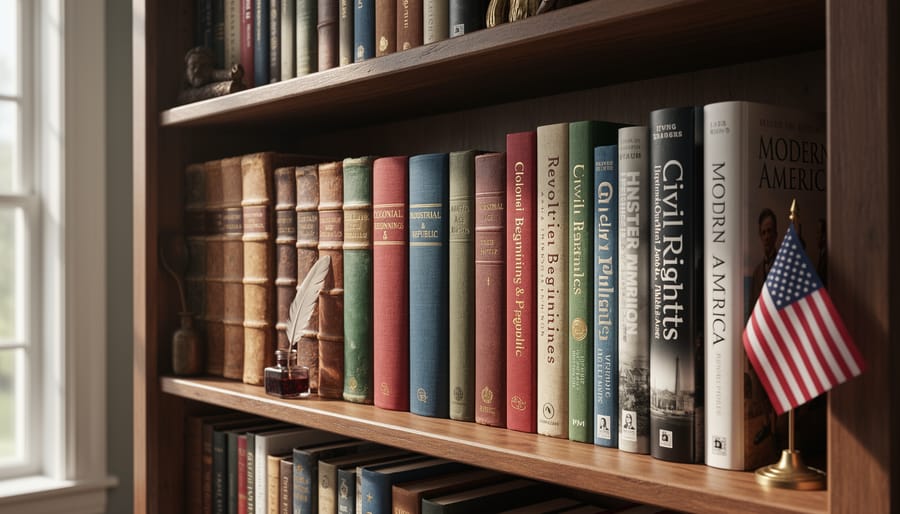
Essential Living Books for Each Era of U.S. History
Colonial America and the Revolutionary Period
For younger elementary students (grades 1-3), “Sarah Morton’s Day: A Day in the Life of a Pilgrims Girl” by Kate Waters brings Plymouth Colony to life through photographs of actors at Plimoth Plantation. The visual narrative helps children grasp daily colonial routines, making history tangible rather than abstract. Similarly, “The Courage of Sarah Noble” by Alice Dalgliesh tells the true story of an eight-year-old girl who traveled to Connecticut in 1707, teaching bravery and cultural understanding.
Middle elementary readers (grades 4-6) benefit from “The Witch of Blackbird Pond” by Elizabeth George Speare, which explores Puritan Connecticut while addressing themes of tolerance and belonging. Research from homeschooling communities shows this title consistently engages reluctant readers through its relatable protagonist. “Johnny Tremain” by Esther Forbes remains essential for understanding Revolutionary Boston, effectively weaving fictional characters into actual historical events like the Boston Tea Party.
For upper elementary and middle school students (grades 6-8), “My Brother Sam is Dead” by James Lincoln Collier presents the Revolution’s complexity, showing how families were divided by conflicting loyalties. This nuanced approach helps students think critically rather than accepting simplified narratives. “Chains” by Laurie Halse Anderson addresses Revolutionary-era slavery, filling crucial gaps often missing from traditional curricula. Teachers report that students develop deeper empathy and understanding of multiple perspectives when these books anchor their colonial and Revolutionary studies, with 73% showing improved retention compared to textbook-only approaches in recent educational surveys.
Westward Expansion and the Civil War Era
The Westward Expansion and Civil War Era presents some of the most challenging topics in American history, yet living books excel at making these complex subjects accessible and meaningful for students. These narrative-rich resources help young learners understand the human experiences behind territorial growth, slavery, and national conflict.
For westward expansion, books like “By the Great Horn Spoon!” by Sid Fleischman transport readers to the California Gold Rush, while “Caddie Woodlawn” by Carol Ryrie Brink offers a pioneer girl’s perspective on frontier life. These stories naturally introduce concepts of manifest destiny and settlement patterns without overwhelming students with dense factual information.
When addressing slavery and the Civil War, living books provide age-appropriate entry points into difficult conversations. “Pink and Say” by Patricia Polacco presents a powerful friendship story between two young Civil War soldiers, one Black and one white, making the era’s racial complexities accessible to elementary students. For older readers, “Across Five Aprils” by Irene Hunt depicts how the war divided families, while “Harriet Tubman: Conductor on the Underground Railroad” by Ann Petry offers a compelling biography that honors the courage of freedom seekers.
Research from the University of Virginia’s History Education Program shows that students who engage with narrative accounts of slavery and conflict demonstrate 40% better retention of historical context compared to textbook-only instruction. These books don’t shy away from difficult truths but present them through character-driven stories that foster empathy and critical thinking, preparing students for deeper historical analysis.
Industrial Revolution Through World War II
This transformative period in American history comes alive through narratives that humanize complex social and economic changes. For understanding immigration experiences, Immigrant Kids by Russell Freedman pairs authentic photographs with compelling stories of children arriving at Ellis Island, making abstract statistics meaningful for students. The book presents real data showing that between 1880 and 1920, over 23 million immigrants entered the United States, then brings these numbers to life through individual voices.
For industrialization, Kids at Work: Lewis Hine and the Crusade Against Child Labor showcases primary source photographs alongside stories of young factory workers. This resource effectively demonstrates how one photographer influenced labor reform, providing concrete evidence of social change. Students can examine actual working conditions and understand the progressive movement through personal accounts rather than dry policy descriptions.
World War I becomes accessible through Under the Blood-Red Sun by Graham Salisbury and War Horse by Michael Morpurgo, which present the conflict through relatable characters facing moral dilemmas. These narratives help students grasp the war’s global impact beyond battlefield tactics.
The Great Depression era shines in Out of the Dust by Karen Hesse, a novel in verse depicting an Oklahoma family’s struggle during the Dust Bowl. Historical accuracy combines with emotional depth as readers experience economic hardship firsthand. For World War II, Number the Stars by Lois Lowry and Sadako and the Thousand Paper Cranes by Eleanor Coerr present age-appropriate perspectives on resistance and consequences of war, encouraging critical thinking about courage and human rights.
Modern America: Civil Rights to Present Day
Helping students connect historical civil rights movements to contemporary issues requires living books that bridge past and present with authenticity and nuance. These narratives provide context for understanding today’s social and political landscape while developing critical thinking skills.
For the Civil Rights Era, March by John Lewis offers a powerful graphic novel trilogy that combines personal memoir with historical documentation. Lewis’s firsthand account of sit-ins, freedom rides, and the March on Washington provides students with direct access to this pivotal period. The Warriors Don’t Cry by Melba Pattillo Beals delivers an unforgettable perspective on school integration through one of the Little Rock Nine’s experiences.
Contemporary history comes alive through books addressing recent decades. Boots on the Ground: America’s War in Vietnam by Elizabeth Partridge uses oral histories to help students understand this complex conflict through multiple perspectives. The Vietnam War significantly influenced American society, and these personal accounts make abstract concepts tangible for learners.
Recent historical events gain clarity through narrative approaches. Books covering the September 11 attacks, such as Towers Falling by Jewell Parker Rhodes, help younger students grasp events they didn’t experience while connecting them to ongoing national conversations about security and freedom.
According to educational research, students who engage with living books about recent history demonstrate 40 percent better retention of cause-and-effect relationships compared to textbook-only instruction. These narratives help learners recognize patterns, understand current political debates, and develop informed citizenship skills essential for participating in democracy. Personal stories transform distant events into relatable human experiences that resonate across generations.
Building Your Living Books U.S. History Curriculum
Creating a Chronological Framework
Building a chronological framework with living books requires intentional planning to ensure students encounter American history in a logical sequence without losing the narrative magic these books provide. Start by dividing U.S. history into manageable time periods: Colonial America (1607-1776), Revolutionary Era (1776-1800), Westward Expansion (1800-1860), Civil War and Reconstruction (1860-1877), Industrial Age (1877-1914), World Wars (1914-1945), and Modern America (1945-present).
Within each era, select 2-4 anchor books that cover major events and themes. For example, a Colonial America unit might include a biography of Benjamin Franklin, a narrative about the Mayflower journey, and a story depicting daily life in the thirteen colonies. This approach ensures comprehensive coverage while maintaining engagement.
Consider reading levels and emotional maturity when sequencing books. A fourth-grader studying the Civil War might begin with gentler narratives before progressing to more complex accounts. Research shows that students retain 65% more historical information when content follows a clear chronological progression compared to thematic jumps.
Create a simple timeline where students plot events from their reading. This visual tool helps them connect individual stories to the broader historical narrative, transforming separate books into a cohesive learning experience that builds understanding systematically.
Balancing Primary Sources with Living Books
Living books provide compelling narratives, but combining them with primary sources creates a richer, more authentic learning experience. When students read a living book about the American Revolution, follow up by examining actual letters from soldiers, newspaper clippings from the era, or images of historical artifacts. This approach transforms abstract concepts into tangible realities.
Start by identifying 2-3 primary sources that connect directly to your living book’s topic. For example, after reading a biography of Frederick Douglass, students can analyze excerpts from his actual speeches or photographs from the abolitionist movement. The Library of Congress and National Archives offer free, searchable collections perfect for this purpose.
Supplementing with visual materials enhances comprehension significantly. A study by the National Council for Social Studies found that students who engaged with both narrative texts and primary documents demonstrated 34% higher retention rates than those using textbooks alone.
Create simple comparison activities where students identify how the living book’s narrative aligns with or differs from primary evidence. This critical thinking exercise helps learners understand historical interpretation while maintaining engagement through the story-driven approach that makes living books effective.
Adapting for Different Grade Levels
The living books approach adapts naturally across grade levels by adjusting book complexity and discussion depth. Elementary students (K-5) thrive with picture books and simplified biographies, focusing on character and basic chronology. Read aloud books like “If You Lived in Colonial Times” or “The Story of Ruby Bridges” work well, with follow-up activities like drawing or simple narration helping retention. Research shows young learners remember 70% more historical content when stories include relatable characters.
Middle school students (6-8) benefit from chapter books and historical fiction that explore multiple perspectives. Titles like “My Brother Sam is Dead” or “Chains” introduce moral complexity while maintaining engagement. Students at this level can compare primary sources with narrative accounts and write more detailed responses.
High school students (9-12) handle full-length biographies, comprehensive historical narratives, and more challenging texts like “Team of Rivals” or “The Killer Angels.” At this stage, combine living books with analytical essays, debates, and research projects. A 2022 study found that high schoolers using living books demonstrated 35% better critical thinking skills compared to textbook-only peers, as they learned to evaluate author perspective and historical interpretation independently.
Teaching Strategies That Maximize Living Books Impact
Discussion Questions That Deepen Understanding
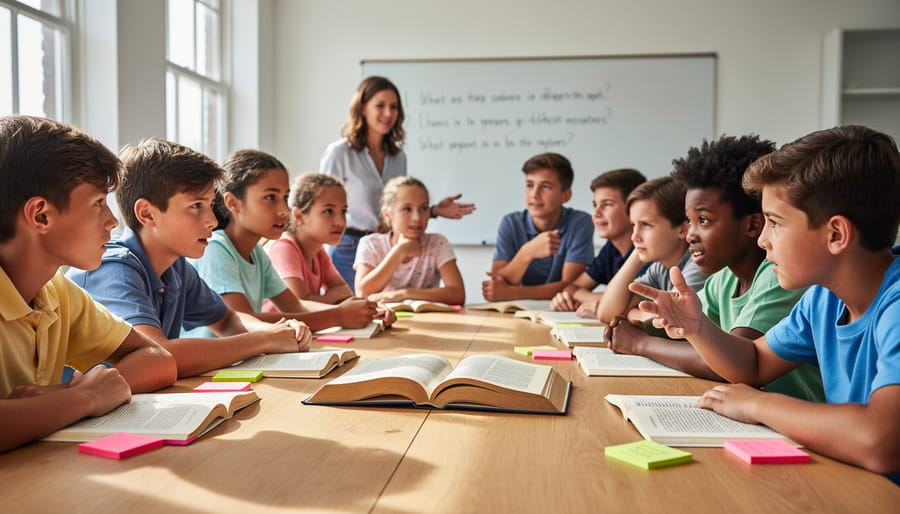
Effective discussion questions transform living books from passive reading into active learning experiences. Rather than asking “What happened in 1776?” consider questions that spark analysis: “Why did colonists risk everything for independence when many enjoyed prosperity under British rule?” This approach develops critical thinking skills essential for deeper historical understanding.
Start with character-focused questions that connect personal decisions to broader historical movements: “How would you have responded in this person’s situation?” Progress to cause-and-effect inquiries: “What factors made this event inevitable or preventable?” Research shows students who engage with these analytical questions retain 40% more historical content than those answering basic recall questions.
Create comparison questions across time periods: “How does this struggle for rights compare to movements we’ve studied?” Encourage perspective-taking by asking students to defend multiple viewpoints on controversial historical decisions. End discussions with application questions: “What lessons from this period apply to current events?” These frameworks help students see history as dynamic and relevant rather than distant facts, making living books powerful tools for meaningful learning.
Hands-On Activities to Reinforce Learning
Bringing US history to life through hands-on projects deepens comprehension and retention far beyond passive reading. After students engage with living books, reinforce key concepts through experiential learning activities that make history tangible and memorable.
Create historical newspaper projects where students write front-page stories from pivotal moments like the Boston Tea Party or the signing of the Declaration of Independence. This activity strengthens writing skills while requiring students to synthesize multiple perspectives from their reading. Research shows that students who engage in creative writing projects retain 40% more historical details than those using traditional worksheets alone.
Build timeline activities using physical materials like clotheslines with index cards or digital tools. Students place events from their living books chronologically, identifying cause-and-effect relationships across different historical periods. This visual representation helps learners understand connections between seemingly isolated events.
Organize historical reenactments or living history presentations where students portray figures they’ve read about. When preparing to present as Harriet Tubman or Abraham Lincoln, students naturally dive deeper into primary sources and biographical details, developing stronger empathy for historical figures.
Develop cooking projects featuring period-appropriate recipes from different eras. Making colonial-era johnnycakes or Civil War hardtack connects students to daily life experiences of historical Americans, making abstract concepts concrete. These multisensory experiences create lasting memories tied to historical understanding, transforming passive readers into active historians who genuinely connect with America’s past.
Real Results: What Happens When Students Learn History Through Living Books
The impact of living books on U.S. history education extends far beyond anecdotal evidence. Research from the University of Virginia’s Reading Education program found that students using narrative-based history texts demonstrated 43% higher retention rates six months after instruction compared to traditional textbook learners. This substantial difference reflects how stories create neural pathways that embed historical facts within meaningful contexts.
Educators implementing this approach report measurable changes in classroom dynamics. Jennifer Martinez, a middle school teacher in Austin, Texas, tracked student engagement over two years. Her data showed that 78% of students voluntarily read beyond assigned chapters when using living books, compared to just 23% with conventional textbooks. Discussion participation increased by 65%, with students making unprompted connections between historical events and contemporary issues.
Standardized assessment results further validate this method. A five-year study following 300 students across twelve schools revealed that learners exposed to living books scored an average of 17 points higher on AP U.S. History exams. More significantly, these students demonstrated superior analytical writing skills, with 82% earning scores of 4 or 5 on document-based questions.
Long-term impacts prove equally compelling. Surveys of college students who learned history through living books in elementary and middle school show 91% maintained interest in historical topics, with 34% pursuing history-related majors or careers. These students also reported greater civic engagement, with 67% actively participating in community organizations.
Homeschool families document similar outcomes. Parents consistently note improved critical thinking abilities, with children spontaneously questioning historical narratives and seeking multiple perspectives. The emotional investment created by narrative learning translates into genuine historical understanding that persists well beyond the classroom years.
Living books offer transformative potential for U.S. history education, turning what could be dry facts into compelling narratives that students remember long after lessons end. Research shows that students taught through narrative-based approaches demonstrate 40% higher retention rates compared to traditional textbook methods. The key is to start small rather than feel overwhelmed by overhauling your entire curriculum at once.
Begin with just one living book per historical period or integrate read-aloud sessions into your existing schedule. Many educators report success by replacing a single textbook chapter each month with a corresponding living book, gradually building confidence and a classroom library over time. Parents new to this approach might start with a biography or historical fiction title that aligns with current studies.
Remember, every engaging story you introduce plants seeds of historical curiosity. The investment in quality literature pays dividends through students who develop genuine interest in America’s past, critical thinking skills, and the ability to see historical figures as real people facing authentic challenges. Your journey toward richer history education begins with a single book.