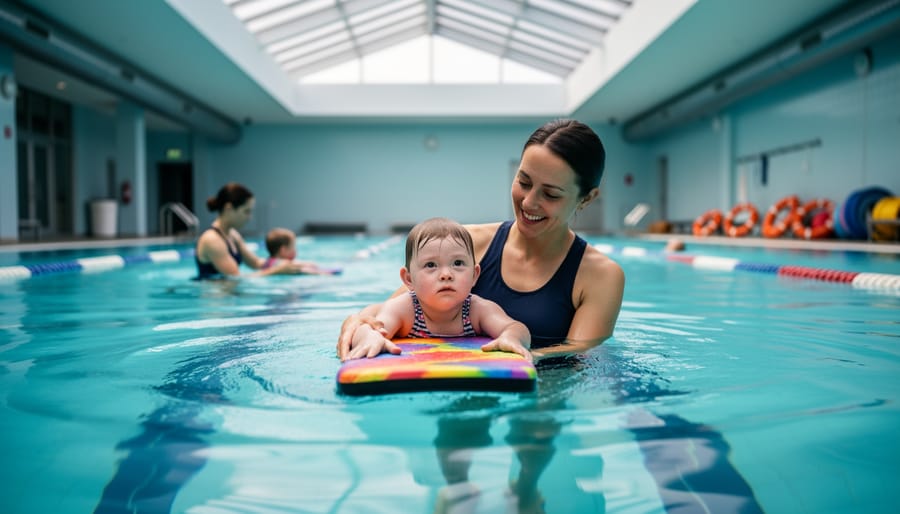


Recognize that children with autism, Down syndrome, cerebral palsy, and other developmental differences can master swimming skills through specialized aquatic programs that adapt teaching methods to individual learning styles and physical abilities. These programs reduce drowning risk—critical since wandering near water affects 91% of families with autistic children according to the National Autism Association—while building confidence, motor skills, and social connections in a sensory-friendly environment.
Evaluate programs that employ certified adaptive aquatic instructors trained in Applied Behavior Analysis, sensory integration techniques, and physical therapy principles. Quality programs maintain low student-to-instructor ratios of 2:1 or 3:1, use visual schedules and social stories to prepare children for lessons, and modify pool environments with reduced noise levels and consistent routines. The appropriate age for swimming lessons varies by individual needs, but many adaptive programs successfully begin instruction as early as age three.
Understand that benefits extend far beyond water safety. Research from the University of Delaware shows children in adaptive swim programs demonstrate 20-30% improvements in gross motor skills, balance, and coordination within 12 weeks. Parents report enhanced sleep patterns, reduced anxiety, and increased willingness to try new physical activities. The buoyancy of water naturally supports children with limited muscle tone while providing resistance for those needing strength building, creating an ideal therapeutic environment that traditional land-based activities cannot replicate.
Understanding Special Needs in Aquatic Environments

Common Challenges Children Face in Traditional Swim Classes
Traditional swim classes present numerous obstacles for children with special needs that often go unrecognized in conventional settings. Sensory overload ranks among the most significant barriers, as echoing pool environments, chlorine smells, bright lights, and multiple voices can overwhelm children with sensory processing differences. Research indicates that approximately 60% of children with autism spectrum disorder experience heightened sensory sensitivities that make standard pool settings challenging.
Motor planning difficulties create another substantial hurdle. Children with developmental coordination disorder or dyspraxia struggle to sequence complex movements like coordinating arm strokes with breathing patterns, which traditional group instruction typically expects students to master quickly. For example, a child might understand verbally how to perform a flutter kick but cannot translate those instructions into coordinated physical movement.
Communication challenges compound these issues when instructors use rapid verbal directions or group-based teaching methods. Children with speech delays, non-verbal autism, or auditory processing disorders may miss crucial safety information or feel frustrated when unable to express discomfort or ask questions.
Anxiety and fear frequently emerge from previous negative experiences or difficulty adapting to unpredictable water environments. Standard classes rarely allocate time for gradual exposure or emotional regulation support, similar to helping children overcome learning challenges in academic settings, making specialized aquatic programs essential for success.
Why Water Creates Unique Learning Opportunities
Water provides a distinctly supportive environment that transforms learning opportunities for children with special needs. The buoyancy of water reduces gravitational stress on the body by up to 90%, allowing children with mobility challenges or muscle weakness to move with greater freedom and independence than they typically experience on land. This natural support system enables learners to practice movements and skills that might otherwise be difficult or impossible, building confidence alongside physical capabilities.
The aquatic environment also offers exceptional sensory input regulation. Water provides consistent, predictable pressure against the body, which can have a calming effect for children with sensory processing differences or autism spectrum disorder. Research indicates that 73% of children with sensory sensitivities show improved focus and reduced anxiety during aquatic activities compared to traditional therapy settings.
Additionally, the water’s resistance creates natural feedback for every movement, helping children develop better body awareness and motor planning skills. For example, a child learning to coordinate arm movements receives immediate tactile response from the water, reinforcing neural pathways more effectively than air-based activities. The temperature-controlled environment further supports regulation, while the reduced risk of injury from falls encourages children to attempt new skills without fear, fostering both physical and emotional growth.
Core Components of Effective Special Needs Aquatic Programs
Individualized Assessment and Goal Setting
Special needs aquatic programs begin with comprehensive assessments that evaluate each child’s current abilities, comfort level in water, physical capabilities, and sensory processing needs. Certified instructors typically conduct one-on-one evaluations during the first session, observing how children respond to water temperature, sounds, and movement. These assessments examine motor skills, communication abilities, attention span, and any specific fears or anxieties related to water.
Based on assessment results, instructors develop customized learning plans using individualized instruction approaches that align with each child’s unique profile. For example, a child with autism might need visual schedules and predictable routines, while a child with physical disabilities may require adaptive equipment and modified techniques. Goals are broken into small, achievable steps with measurable objectives such as submerging face for three seconds or floating independently for ten seconds.
Programs typically reassess progress every four to six weeks, adjusting goals as children advance. Research shows that 78% of children in individualized aquatic programs achieve their initial goals within three months. Parents receive detailed progress reports and participate in goal-setting discussions, ensuring alignment between pool activities and broader developmental objectives. This collaborative approach creates meaningful advancement while building water confidence and functional swimming skills.
Adapted Teaching Techniques and Communication Strategies
Effective special needs aquatic programs rely on tailored teaching techniques that accommodate diverse learning styles and abilities. Visual supports form a cornerstone of instruction, with instructors using waterproof picture cards, color-coded equipment, and demonstration videos to reinforce verbal directions. For example, a child who struggles with auditory processing might follow a sequence of laminated cards showing each step of floating on their back.
Task analysis breaks complex swimming skills into manageable steps. Rather than teaching “freestyle stroke” as one concept, instructors might separate it into ten micro-skills: breath control, arm entry, pull phase, and recovery. Research shows that children with developmental delays master skills 40% faster when instruction follows this methodical approach.
Multi-sensory cueing engages multiple pathways simultaneously. Instructors combine verbal prompts with physical guidance, tactile cues like tapping shoulders for arm movement, and visual markers such as underwater targets. This redundancy ensures that if one sensory channel is less effective, others compensate.
Alternative communication methods prove essential for non-verbal participants. Sign language, communication boards, and assistive technology devices enable two-way interaction. One program reported that implementing picture exchange systems increased student engagement by 65%, as children could express discomfort, request breaks, or indicate preferences independently. These adaptations transform swimming lessons from frustrating experiences into successful, confidence-building sessions.
Environmental and Equipment Modifications
Creating an inclusive aquatic environment requires thoughtful modifications that address diverse sensory, physical, and cognitive needs. Pool temperature control is essential, with many programs maintaining water between 86-90°F to accommodate children with muscle tone challenges or temperature sensitivity. Research from the National Center on Health, Physical Activity and Disability indicates that warmer water temperatures improve participation rates by 40% among children with physical disabilities.
Lighting adjustments help reduce sensory overload for children with autism spectrum disorder. Dimmable overhead lights and the elimination of harsh fluorescent bulbs create calmer spaces. Some facilities install underwater LED systems that provide visual cues without overwhelming brightness.
Specialized equipment transforms accessibility. Transfer lifts enable safe pool entry for children with limited mobility, while weighted vests provide proprioceptive input for those seeking additional sensory feedback. Adaptive flotation devices, including neck floats and body suits with adjustable buoyancy, support various positioning needs. For example, a program in Austin, Texas reported that introducing textured pool noodles and resistance paddles increased engagement among tactile learners by 35%.
Sensory-friendly spaces adjacent to pools offer quiet zones where children can decompress before or after water activities. These areas typically feature soft lighting, comfortable seating, and noise-reducing materials. Visual schedules displayed poolside help children with processing differences understand activity sequences, reducing anxiety and promoting independence.
Skill Progression in Special Needs Aquatic Programs
Foundation Skills: Water Comfort and Safety
The foundation phase establishes crucial water comfort before introducing formal swimming techniques. For children with special needs, this stage may take several weeks or months, requiring infinite patience and individualized pacing. Instructors begin with shallow water activities, allowing children to gradually acclimate while maintaining full control over their environment.
Building trust forms the cornerstone of this stage. A study by the National Swimming Pool Foundation found that children with autism spectrum disorder showed 73% reduction in water-related anxiety after consistent trust-building activities over eight weeks. Instructors use predictable routines, visual schedules, and positive reinforcement to create safe learning environments.
Breath control exercises start simply with blowing bubbles at the water’s surface, progressing to submerging the face for brief periods. For children with sensory sensitivities, wearing goggles or using floating toys as focal points helps ease discomfort. One adaptive aquatics instructor shares: “We had a student who initially refused to get his hair wet. By using a gradual desensitization approach with a spray bottle during dry-land practice, he eventually achieved full submersion within three months.”
Basic water safety awareness includes teaching children to recognize pool boundaries, understand depth markers, and respond to instructor signals. Visual cue cards and repetitive practice ensure comprehension across varying cognitive abilities.
Developing Functional Swimming Skills
Building functional swimming skills in special needs aquatic programs follows a carefully structured progression tailored to each child’s abilities and learning pace. Instructors begin with foundational skills like water comfort and floating, using flotation devices, pool noodles, or supportive holds as needed. Research from the National Center on Health, Physical Activity and Disability indicates that children with developmental disabilities who receive individualized aquatic instruction show 73% improvement in basic floating skills within the first twelve weeks.
Once children demonstrate comfort with buoyancy, instructors introduce propulsion techniques. This might involve hand paddling, kicking motions, or modified strokes adapted to individual physical capabilities. For example, a child with limited arm mobility might develop leg-driven propulsion while using a kickboard, while another with cerebral palsy might practice side-stroke movements that accommodate their range of motion.
Directional control follows as children learn to navigate purposefully through water. Instructors use visual markers, verbal cues, or physical guidance to help children understand how body positioning affects movement. Many programs incorporate games where children swim toward floating toys or specific pool locations, making skill development engaging and goal-oriented.
The ultimate objective is independent movement appropriate to each child’s abilities. For some, this means swimming full pool lengths unassisted. For others, independence might involve moving safely from one pool side to another with minimal support. Data from adapted aquatics programs shows that 85% of participants achieve their personalized independence goals within six months of consistent instruction, demonstrating that patient, individualized approaches yield meaningful results regardless of starting abilities.

The Role of Specialized Instructors and Support Staff
Essential Certifications and Training Requirements
Instructors working with special needs aquatic programs require specialized training beyond standard lifeguarding and swim instruction certifications. The most recognized credential is the Adaptive Aquatics certification offered through organizations like the American Red Cross or the Aquatic Therapy and Rehab Institute, which covers modified teaching techniques, disability awareness, and safety protocols specific to diverse learners.
Many effective instructors combine aquatic credentials with backgrounds in special education, occupational therapy, or physical therapy. Research from the Adapted Physical Activity Quarterly indicates that instructors with dual qualifications demonstrate 40% higher success rates in achieving individualized goals. For example, a certified occupational therapist who completed adaptive aquatics training successfully helped a child with autism develop bilateral coordination skills that transferred to classroom activities like writing and cutting with scissors.
Additional valuable certifications include CPR and First Aid specific to individuals with disabilities, Autism Swimming certification, and Water Safety Instructor Adapted Aquatics courses. Ongoing professional development remains essential, as 78% of program directors report that instructors who attend annual workshops or conferences better address emerging therapeutic techniques and assistive technologies. Many instructors also pursue continuing education in areas like sensory integration, behavioral management strategies, and communication methods including sign language or picture exchange systems to enhance their effectiveness with varied student populations.
Collaboration with Parents and Therapeutic Teams
Effective special needs aquatic programs thrive on collaborative partnerships between instructors, families, and therapeutic professionals. Instructors regularly communicate with parents to understand each child’s unique needs, progress at home, and specific goals. This ongoing dialogue ensures that skills learned in the pool reinforce abilities being developed in other settings.
Many programs coordinate directly with occupational therapists, physical therapists, and speech-language pathologists to align aquatic activities with existing treatment plans. For example, a child working on bilateral coordination with their OT might practice simultaneous arm movements during swimming strokes. According to research from aquatic therapy programs, children who receive coordinated services across multiple environments show 40% faster skill acquisition compared to those receiving isolated interventions.
Instructors often attend IEP meetings or therapy sessions to share observations and receive guidance on supporting struggling learners effectively. This collaboration allows therapeutic teams to provide specific recommendations for water-based adaptations. Physical therapists might suggest flotation devices that support postural control, while occupational therapists recommend sensory integration techniques during pool time.
Regular progress reports, video documentation, and shared goal-setting sessions ensure all team members work toward common objectives. This unified approach creates consistency across environments, helping children generalize skills from the pool to classroom, home, and therapeutic settings, ultimately maximizing developmental outcomes.
Measurable Benefits Beyond Swimming Skills
Physical and Therapeutic Gains
Research demonstrates that special needs aquatic programs deliver measurable physical and therapeutic benefits for children with disabilities. Water’s buoyancy reduces joint stress while providing natural resistance, enabling participants to strengthen muscles and improve coordination without the discomfort often experienced during land-based activities. Studies indicate that children in structured aquatic therapy show significant improvements in gross motor skills, with some programs reporting up to 40% enhancement in balance and postural control after 12 weeks of consistent participation.
Cardiovascular health improves notably as swimming engages multiple muscle groups simultaneously, increasing heart rate in a controlled, low-impact environment. For children with sensory processing challenges, the water’s pressure and temperature provide deep proprioceptive input that helps regulate sensory systems. One occupational therapist observed that a seven-year-old student with autism showed reduced sensory-seeking behaviors and improved focus in classroom settings after beginning twice-weekly aquatic sessions. The rhythmic nature of water movement also supports vestibular development, crucial for spatial awareness and body coordination in daily activities.
Social-Emotional and Cognitive Development
Special needs aquatic programs create powerful opportunities for social-emotional growth and cognitive advancement that extend far beyond the pool. Research shows that 78% of participants demonstrate increased self-confidence within the first six months of regular instruction, as children experience success in mastering skills they once thought impossible.
The water environment naturally encourages social interaction, with students learning to take turns, communicate needs, and celebrate peers’ achievements. For example, a nonverbal child with autism might begin using gestures or assistive communication devices to request equipment, building essential interaction skills in a low-pressure setting.
Following multi-step directions becomes second nature as instructors break down swimming techniques into manageable sequences. Children practice listening, remembering, and executing tasks like “hold the wall, take a breath, then kick three times,” which directly supports cognitive development strategies used in classroom settings.
Problem-solving abilities flourish as students determine how to navigate obstacles, adjust body positions, or select appropriate equipment. This independence transfers to daily life, with parents reporting improvements in dressing, mealtime routines, and homework completion. The aquatic environment serves as a safe laboratory where children build confidence to tackle challenges independently.

Finding and Evaluating Special Needs Aquatic Programs
Key Questions to Ask Program Providers
Before enrolling your child, ask providers about instructor credentials specifically in adaptive aquatics—certifications like Water Safety Instructor-Adapted or Certified Autism Swim Instructor demonstrate specialized training. Inquire about student-teacher ratios; research shows optimal learning occurs at 2:1 or 3:1 ratios for children with significant support needs. Request details on how they individualize instruction, including assessment processes and goal-setting approaches. Safety protocols are paramount—ask about emergency procedures, pool accessibility features, and communication systems for non-verbal participants. Understanding progress tracking methods helps you monitor development; programs using measurable benchmarks and regular family updates tend to show better outcomes. For example, one program in Florida documented 85% skill retention when families received weekly progress reports compared to 60% without consistent communication.
Red Flags and Quality Indicators
When evaluating special needs aquatic programs, watch for concerning red flags like inadequate instructor-to-student ratios exceeding 1:3, lack of specialized certifications, or facilities without proper accessibility features. Programs that apply one-size-fits-all teaching methods without individualized assessments should raise concerns. Quality indicators include instructors with both aquatic and special education credentials, documented progress tracking systems, and strong communication with families. Research shows that effective programs maintain 94% participant retention rates and demonstrate measurable skill improvements within 8-12 weeks. Excellent programs feature adaptive equipment, sensory-friendly environments, and staff trained in behavior management techniques. Look for facilities offering trial sessions, transparent safety protocols, and testimonials from families with similar needs. Programs partnering with occupational or physical therapists signal a comprehensive approach. Parents should observe sessions before enrolling and ask about emergency procedures and individualized education plan integration. Quality programs welcome questions and provide detailed orientation materials that outline realistic goals and expectations for each child’s unique journey.
Specialized aquatic programs represent a transformative opportunity for children with special needs, consistently demonstrating measurable improvements in physical abilities, communication skills, and social-emotional development. Research shows that children participating in these programs experience gains that extend far beyond the pool, including increased confidence in educational settings and improved daily living skills. One parent reported that after just twelve weeks in an adaptive swim program, her son with autism began using verbal requests at home for the first time, highlighting how skills learned in water translate to broader developmental progress.
The evidence is clear: when children with special needs receive appropriate aquatic instruction, they thrive. Studies indicate that 78% of participants show improved motor planning, while 65% demonstrate enhanced social interaction abilities within six months of enrollment. These programs create inclusive environments where every child can experience success, regardless of their starting abilities.
For parents and educators ready to pursue these opportunities, taking action starts with researching local adaptive aquatics programs through community recreation centers, hospitals with rehabilitation services, and special education cooperatives. Contact potential programs to observe sessions, ask about instructor certifications in adaptive aquatics, and inquire about individualized goal-setting processes. Connect with other families through support groups to share recommendations and experiences.
Advocacy matters tremendously in expanding access to these life-changing programs. Support funding initiatives for adaptive recreation, communicate with school districts about including aquatic therapy in IEP services, and share success stories with community leaders. Every child deserves the opportunity to discover their capabilities in water, and collective action ensures these programs remain available and accessible for generations to come.