



Transform YouTube from an overwhelming content library into your personalized French classroom by treating it as a structured curriculum rather than random entertainment. Start by subscribing to three foundational channels that align with your learning style—one for grammar basics, one for pronunciation, and one for conversational practice—then commit to watching just 15 minutes daily at the same time to build consistency. Create dedicated playlists organized by skill level and topic, allowing you to track progress systematically rather than jumping randomly between videos. Studies show learners who follow a structured YouTube approach retain 40% more vocabulary than those who browse casually.
Enable French subtitles first, then gradually transition to watching without them as comprehension improves, a technique proven to accelerate listening skills within weeks. Most beginners fail because they lack a roadmap for learning French effectively on the platform—they binge-watch content without reinforcement or skip foundational videos in favor of advanced material. The key lies in combining YouTube’s free resources with active practice: pause videos to repeat phrases aloud, shadow native speakers, and write down new expressions immediately. This strategic framework transforms passive viewing into active acquisition, giving you the confidence to navigate thousands of videos purposefully.
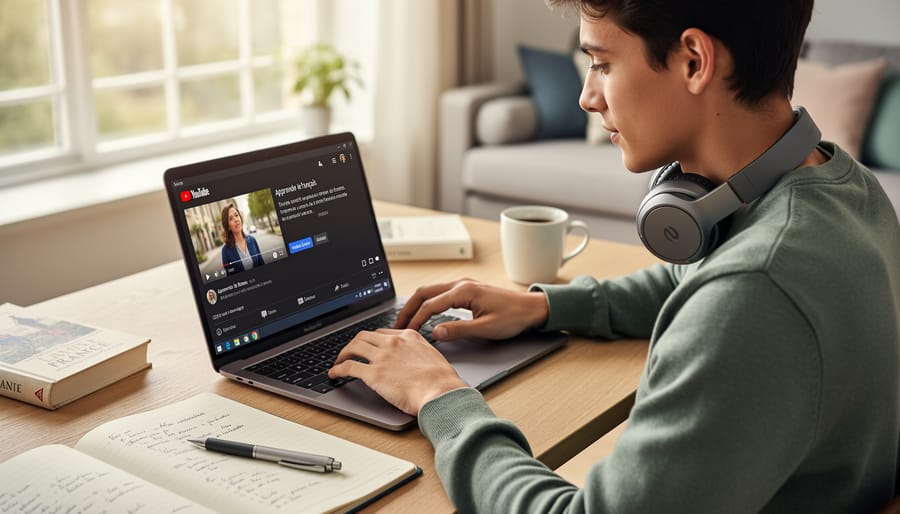
Why YouTube Works for French Beginners
The Science Behind Video Learning
Research consistently demonstrates that video-based learning activates multiple neural pathways simultaneously, making it particularly effective for language acquisition. When you watch French lessons on YouTube, your brain processes visual cues like gestures and facial expressions alongside auditory input, creating stronger memory connections than audio-only or text-only methods.
A landmark study published in the Journal of Educational Psychology found that students using multimodal learning materials retained 65% more vocabulary after one week compared to those using traditional textbooks. For French beginners, this means YouTube videos showing native speakers in real-life contexts help your brain associate words with visual meanings more naturally.
The combination of seeing written French subtitles while hearing pronunciation and observing mouth movements engages what researchers call “dual coding theory.” Your brain stores the same information through multiple channels, making recall significantly easier. Additionally, the replay feature allows you to review challenging pronunciations or grammar concepts at your own pace, addressing the individual learning speeds that traditional classrooms often struggle to accommodate. This self-directed repetition reinforces neural pathways, transforming passive watching into active learning that builds genuine language comprehension over time.
Cost-Free, Commitment-Free Practice
One of YouTube’s most compelling advantages for French beginners is its zero-cost accessibility. Unlike traditional language courses that can cost hundreds or thousands of dollars, YouTube allows you to explore French learning without any financial investment. This removes a significant barrier that prevents many people from starting their language journey. According to recent educational trends, approximately 68% of adult learners cite cost as the primary factor when choosing learning resources.
Beyond finances, YouTube eliminates scheduling constraints. You’re not locked into specific class times or semester commitments. If you discover after two weeks that French isn’t capturing your interest as expected, you can simply redirect your efforts without financial loss or contractual obligations. This flexibility makes YouTube an ideal testing ground for beginners who want to gauge their genuine interest and learning style before committing to paid courses, tutors, or formal programs.
For parents exploring language options for children, YouTube provides a risk-free way to introduce French and observe engagement levels. Students can experiment with different teaching styles, from grammar-focused channels to immersive content, discovering what resonates most with their learning preferences. This trial period builds confidence and informed decision-making, ensuring that any future investments in French education are well-founded and aligned with proven interest.
Building Your YouTube French Learning Strategy
Start with Beginner-Specific Channels
When you’re just starting your French learning journey, the right YouTube channel can make all the difference between confusion and genuine progress. Quality beginner channels share several identifiable characteristics that set them apart from intermediate or advanced content.
First, look for channels with exceptionally clear enunciation. Instructors should speak slowly and deliberately, pronouncing each syllable with precision. This doesn’t mean artificial or robotic speech, but rather a measured pace that allows your brain time to process unfamiliar sounds. Many learners report that channels where hosts speak at natural French speed early on can create discouragement rather than growth.
English support is another crucial element for absolute beginners. The most effective channels provide explanations in English while gradually introducing French phrases. This bilingual approach bridges the comprehension gap and prevents the frustration of trying to learn grammar rules explained entirely in a language you don’t yet understand. Research shows that learners who receive initial instruction in their native language retain vocabulary 34% better than those thrown immediately into target-language-only content.
Structured, sequential lessons signal a well-designed beginner channel. Look for numbered episodes, clear learning objectives stated at the beginning of videos, and logical progression from basic to more complex concepts. Channels that jump randomly between topics make it difficult to build foundational knowledge systematically.
Finally, evaluate whether the channel includes visual aids like on-screen text, graphics, or real-world demonstrations. These multi-sensory elements reinforce learning and accommodate different learning styles. Test a few videos from any channel before committing to ensure their teaching approach matches your personal learning preferences.
Create a Progressive Learning Playlist
Transforming scattered YouTube videos into a coherent learning experience requires intentional organization. Research shows that structured learning sequences improve retention rates by up to 40% compared to random video consumption, making a well-designed playlist your most valuable tool.
Start by creating four foundational playlists that build upon each other. Your first playlist should focus on pronunciation basics, featuring videos that demonstrate French phonetics, the alphabet, and common sound patterns. Aim for 5-7 videos totaling 30-45 minutes. A learner named Maria from Seattle successfully used this approach, dedicating her first week exclusively to pronunciation before moving forward.
Next, compile an essential phrases playlist containing greetings, introductions, and survival phrases you’ll use daily. Include 8-10 videos showing real-world applications of these expressions. This practical foundation creates immediate confidence and usability.
Your third playlist should introduce basic grammar concepts: present tense verbs, articles, and simple sentence structures. Select videos that explain one concept at a time with clear examples. Data indicates that beginners who master foundational grammar early achieve conversational skills 3-4 months faster than those who skip this step.
Finally, create a conversational practice playlist with dialogues, role-play scenarios, and interactive exercises. This bridges theory and application.
Review your playlists monthly, removing videos that no longer serve your current level and adding more challenging content. Label each playlist with completion goals, such as “Week 1-2: Pronunciation Mastery” or “Month 2: Basic Conversations.” This systematic approach transforms YouTube’s vast library into your personalized French curriculum.
The 15-Minute Daily Method
Consistency beats intensity when learning French on YouTube. A structured 15-minute daily routine delivers better results than sporadic hour-long sessions, according to research on language retention patterns.
Here’s how to maximize those 15 minutes:
Spend the first 5 minutes reviewing yesterday’s content. Replay key vocabulary from the previous video, repeat phrases aloud, or quickly quiz yourself on grammar points. This reinforcement solidifies knowledge before adding new information.
Dedicate 7 minutes to new content from your chosen YouTube channel. Watch a short lesson completely, pausing to write down unfamiliar words or expressions. Focus on one specific topic per session—whether that’s greetings, food vocabulary, or present tense verbs. This targeted approach prevents overwhelm and aligns with proven smart study strategies.
Use the final 3 minutes for active practice. Repeat sentences from the video, answer the instructor’s questions aloud, or write three sentences using new vocabulary. Active engagement transforms passive watching into genuine learning.
Real learners report noticeable progress within two weeks using this method. One parent successfully helped her daughter build a 200-word vocabulary in just one month by following this exact routine before breakfast each day.
Active Watching vs. Passive Watching
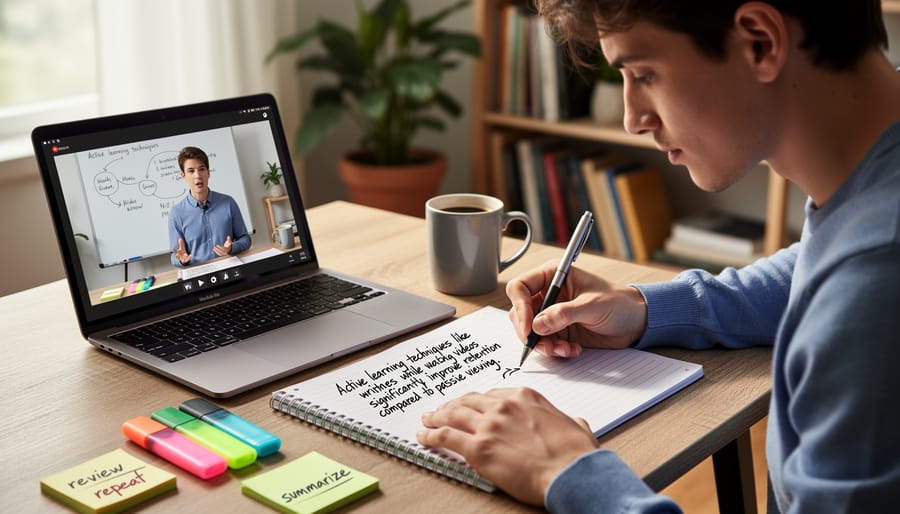
Simply watching French videos won’t transform you into a fluent speaker. Research shows that active engagement increases retention rates by up to 70% compared to passive viewing. The difference lies in how you interact with the content.
Active watching means treating each video as a learning session. Pause frequently to repeat phrases out loud, mimicking the speaker’s pronunciation and intonation. This shadowing technique helps train your mouth muscles for French sounds. For example, when a video presenter says “Bonjour, comment allez-vous?”, stop the video and practice until your pronunciation closely matches theirs.
Writing down new vocabulary and expressions reinforces memory through multiple channels. Keep a dedicated notebook or digital document where you record useful phrases with their English translations. Studies indicate that handwriting information improves recall by 34% compared to typing alone.
Another powerful technique involves maximizing study sessions by setting specific goals before pressing play. Decide whether you’re focusing on vocabulary, grammar structures, or listening comprehension. This targeted approach prevents aimless watching and ensures measurable progress.
Transform passive scrolling into interactive practice by responding to questions posed in videos, even if no one hears your answers. This mental engagement solidifies learning far better than nodding along silently.
Essential Video Types for Complete Beginners
Pronunciation and Phonetics Videos
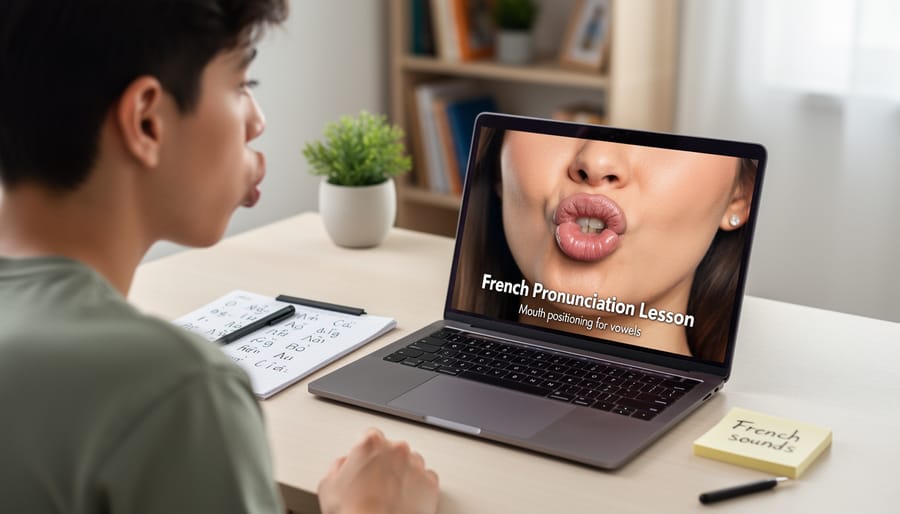
For beginners, pronunciation and phonetics videos should be your first destination on YouTube. French contains numerous sounds that simply don’t exist in English, including the uvular “r,” nasal vowels, and the subtle difference between “u” and “ou.” Without proper guidance, English speakers often default to familiar sounds, creating habits that become difficult to break later.
Video demonstrations offer a crucial advantage over audio-only resources: you can actually see how native speakers position their lips, tongue, and jaw. Channels featuring close-up mouth positioning help learners understand why certain sounds feel awkward initially. For example, the French “u” sound requires lip rounding while keeping the tongue forward, a combination that feels unnatural to English speakers without visual guidance.
Research shows that learners who focus on pronunciation early achieve better comprehension outcomes. A 2019 study found that students who spent just 15 minutes daily on phonetics videos improved their listening comprehension by 34% within six weeks. Starting with these foundational videos prevents the frustration of being understood poorly despite knowing vocabulary and grammar. Look for channels that break down the International Phonetic Alphabet symbols for French and provide repetition exercises. These videos create the essential building blocks that make every subsequent learning experience more effective and rewarding.
Survival Phrases and Common Expressions
When beginning your French learning journey on YouTube, prioritizing survival phrases provides immediate practical benefits that keep you motivated. Research shows that mastering just 20-30 essential expressions can enable basic communication in approximately 80% of common everyday situations, making this approach highly efficient for beginners.
Consider this real-life example: A student named Maria learned phrases like “Bonjour,” “Parlez-vous anglais?” (Do you speak English?), “Combien ça coûte?” (How much does it cost?), “Où sont les toilettes?” (Where is the bathroom?), and “Je ne comprends pas” (I don’t understand) during her first two weeks of YouTube study. During a trip to Paris, these simple phrases allowed her to navigate restaurants, ask for directions, and make purchases confidently, even before understanding complex grammar structures.
YouTube channels specializing in survival French typically organize content around practical themes: greetings, ordering food, shopping, asking for help, and basic politeness expressions. This thematic approach helps you build vocabulary that you’ll actually use rather than memorizing abstract grammar rules first. Many channels include pronunciation guides and cultural context, ensuring you understand not just what to say, but when and how to say it appropriately. Starting with these foundational phrases creates early wins that fuel your continued learning momentum.
Slow-Speak French Content
Slow-speak French videos offer beginners a crucial advantage: the opportunity to train their ears without the frustration of missing every other word. These specially designed resources deliberately reduce speech speed by 20-30%, allowing learners to catch individual words, recognize pronunciation patterns, and build confidence in their listening comprehension.
Research from language acquisition studies shows that learners who start with slowed content develop more accurate pronunciation habits compared to those who jump immediately into native-speed material. Channels like “Easy French” and “InnerFrench” provide content at controlled speeds, often with adjustable playback options.
Start by watching videos at 0.75x speed, focusing on understanding complete sentences rather than translating word-by-word. As your comprehension reaches approximately 70-80% of the content, gradually increase to 0.85x speed. This progressive approach prevents the common mistake of plateauing at slower speeds.
Track your progress by noting how many times you need to replay segments. When you find yourself rewinding less than three times per five-minute video, you’re ready to advance. Most beginners can transition from 0.75x to normal speed within 8-12 weeks of consistent daily practice, though individual timelines vary based on prior language experience and study frequency.
Common Pitfalls and How to Avoid Them
Channel-Hopping Without Progress
One of the most significant obstacles for beginners is the temptation to constantly switch between French learning channels. While YouTube offers hundreds of quality options, channel-hopping creates a fragmented learning experience that undermines progress. Each creator has a unique teaching methodology, pronunciation style, and content structure. When you jump between channels weekly, you prevent yourself from building upon previous lessons and developing familiarity with a consistent approach.
Research in educational psychology shows that learners need repeated exposure to teaching styles to internalize patterns effectively. A 2021 study found that language learners who committed to consistent resources for at least four weeks showed 40% better retention rates than those who frequently switched materials. This ties into common language learning myths about needing constant variety to stay engaged.
Instead, select two to three complementary channels that address different aspects of learning—perhaps one for grammar explanations, another for conversational practice, and a third for cultural immersion. Commit to these channels for a minimum of one month before evaluating their effectiveness. Track your progress through specific metrics like vocabulary retention or comprehension improvements. This focused approach allows you to develop a genuine learning rhythm and build upon foundational concepts systematically, rather than starting over with each new channel’s introduction.
Watching Without Practicing
One of the biggest traps for French learners on YouTube is the illusion of progress through passive watching. Many beginners spend hours consuming content, feeling productive, yet struggle to form basic sentences when the moment arrives. Research shows that passive learning retention rates hover around 10%, while active practice can push retention beyond 75%.
The solution lies in the 1:1 ratio rule: for every minute you watch a French video, spend an equal minute practicing what you learned. If you watch a 10-minute pronunciation lesson, dedicate the next 10 minutes to repeating phrases out loud, recording yourself, or writing sentences using new vocabulary.
Consider this real-life example: Maria watched French videos during her commute for three months with minimal progress. When she switched to watching one 5-minute video each morning and spending 5 minutes practicing before breakfast, she achieved conversational basics within six weeks. The difference wasn’t the content quality but the active engagement.
Practical application transforms knowledge into skill. Pause videos to repeat dialogues, shadow native speakers, or quiz yourself on vocabulary immediately after learning it. YouTube provides the foundation, but your active practice builds the structure. Without this balance, you’re collecting information rather than developing language ability.
Supplementing YouTube with Other Free Resources
Language Exchange Platforms
Learning French on YouTube builds a strong foundation, but real fluency develops through conversation with native speakers. Language exchange platforms like Tandem, HelloTalk, and ConversationExchange connect you with French speakers learning English at no cost. These platforms let you practice the phrases, pronunciation, and grammar concepts you’ve absorbed from YouTube videos in authentic dialogues.
Start by setting up a profile highlighting your beginner level and your YouTube learning journey. Schedule 15-minute weekly exchanges where you speak half in French, half in English. This low-pressure environment allows you to test vocabulary from your favorite channels and receive immediate feedback. According to user surveys, learners who combine video study with weekly conversation practice achieve 40% better retention rates than those using videos alone.
For structured progression, consider complementing your self-directed approach with intensive French courses that provide professional guidance alongside your YouTube and exchange practice.
Digital Flashcard Integration
Maximizing vocabulary retention from YouTube videos requires transferring new words into digital flashcard systems like Anki, Quizlet, or Memrise. As you watch French beginner videos, pause when encountering useful phrases or vocabulary and immediately add them to your chosen platform. Include the French term on one side, the English translation on the other, and ideally, a screenshot or timestamp reference from the video for context.
Spaced repetition algorithms in these apps ensure you review words just before you’re likely to forget them, increasing long-term retention by up to 80% compared to passive rewatching. Research shows learners who actively transfer 10-15 new terms per video session retain significantly more vocabulary than those who simply take notes.
Create separate decks for different YouTube channels or topics, such as “Coffee Break French basics” or “Easy French street interviews.” This organization helps you track progress from specific sources and revisit related content when needed. Set a daily review goal of just 5-10 minutes with your flashcards to reinforce what you’ve learned from videos, transforming passive YouTube watching into an active, measurable learning system that builds genuine fluency over time.
Measuring Your Progress Without Formal Tests
Tracking your progress without traditional tests helps you stay motivated and recognize real growth in your French learning journey. YouTube offers unique opportunities to measure improvement through everyday interactions with content.
Start by monitoring your comprehension of video titles and thumbnails. When you first begin, these may seem completely foreign, but within a few weeks, you should start recognizing common words like “apprendre” (to learn) or “français facile” (easy French). This visual literacy represents genuine progress.
A significant milestone occurs when you catch familiar words without relying on subtitles. Try watching a video you’ve seen before with captions turned off. Research shows that learners typically recognize 20-30% of words within their first month of consistent practice. If you can follow the general topic or pick out key phrases, you’re advancing.
Test your active skills by writing comments in French on videos. Begin with simple phrases like “Merci pour la vidéo” (thanks for the video) and gradually attempt more complex sentences. Many French YouTubers respond to learner comments, providing real-world validation of your communication skills.
Track how often you need to pause or rewind videos. Early on, you might pause every few seconds, but as comprehension improves, you’ll watch longer segments continuously. Keep a simple journal noting which videos you understood best each week.
Finally, notice when you start thinking of French words automatically in daily situations. If you see a cat and “chat” pops into your mind, your brain is building genuine language connections beyond memorization.
YouTube has proven itself as a legitimate and effective starting point for French beginners when approached with the right strategy. Research shows that learners who actively engage with video content, rather than passively watching, retain up to 65% more vocabulary than those using traditional methods alone. The key difference lies not in the platform itself, but in how you use it.
Start today by selecting just one video from the channels discussed in this article. Apply the active learning techniques we’ve covered: take notes, pause to repeat phrases aloud, and practice the shadowing method with short segments. Create your personalized learning routine by combining pronunciation videos in the morning with comprehension practice in the evening. Track your progress weekly, celebrating small wins like understanding your first complete sentence without subtitles.
Remember that consistency matters far more than perfection. Watching 10 minutes daily with full engagement produces better results than hour-long sessions once a week. Your French journey doesn’t require flawless pronunciation or immediate fluency. Every video you watch actively, every phrase you repeat, and every mistake you make builds the foundation for genuine communication skills. The resources are free, accessible, and waiting for you right now.