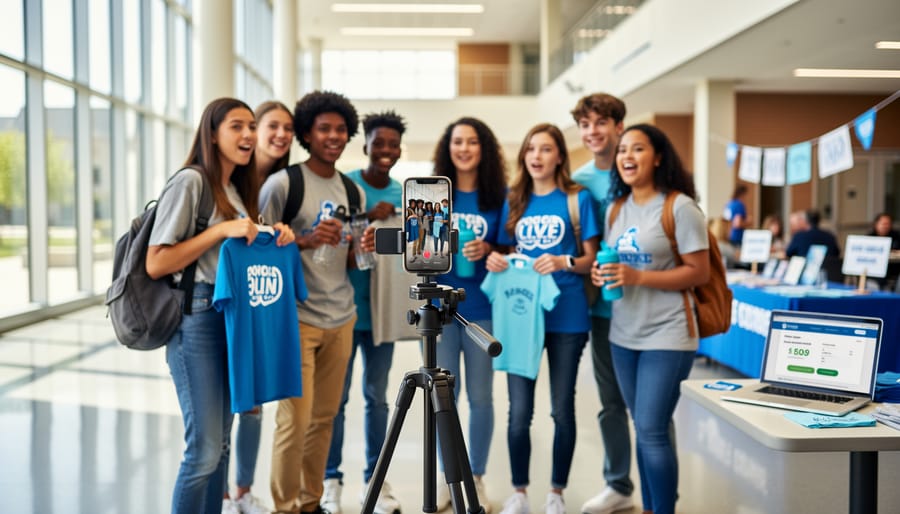



Transform your traditional bake sale approach by launching student-led crowdfunding campaigns on platforms like DonorsChoose or GoFundMe, where schools report raising 40% more funds when students share their own stories through video content. Studies show that youth-driven campaigns generate three times more engagement than adult-organized events because they tap into authentic peer networks and social media reach.
Replace outdated magazine sales with skill-based fundraisers where students offer services their community actually needs—tech tutoring for seniors, lawn care, pet-sitting, or tutoring younger students. A Michigan middle school raised $12,000 in one semester by organizing a “Student Skills Marketplace” that strengthened community connections while teaching entrepreneurship.
Implement hybrid fundraising events that combine in-person experiences with digital giving options. Virtual fun runs, online talent showcases, and livestreamed game nights remove geographic barriers and allow extended family members to participate from anywhere. Schools using this dual approach see participation rates increase by 60% compared to traditional in-person-only events.
Design product fundraisers around items students genuinely want to sell—custom school merchandise, eco-friendly products, or local partnerships with popular businesses. When students feel proud of what they’re offering rather than embarrassed, sales conversion rates jump dramatically. The impact of school fundraising extends far beyond dollars raised, building leadership skills, financial literacy, and community engagement that benefit students long after graduation. Success requires moving past tired methods and embracing approaches that resonate with today’s digitally connected, socially conscious youth.
Why Traditional Fundraising Falls Flat with Today’s Students
The traditional fundraising playbook is losing its effectiveness with today’s students, and the numbers tell a compelling story. Door-to-door candy sales and catalog order forms that once generated reliable revenue are now met with declining participation rates. According to recent studies, only 35% of students actively participate in traditional fundraisers, down from 58% a decade ago.
Gen Z and Gen Alpha students experience the world differently than previous generations. They’ve grown up with technology at their fingertips, instant communication, and a heightened awareness of social causes. These digital natives find little appeal in approaching neighbors with order forms or selling products they don’t personally connect with. A 2023 survey of middle school students revealed that 72% felt uncomfortable with door-to-door sales, citing safety concerns and the impersonal nature of the transaction.
What motivates today’s students centers on three key factors: authenticity, experience, and purpose. They want to understand the direct impact of their efforts. When students at Lincoln Elementary in Portland shifted from wrapping paper sales to a crowdfunded robotics equipment campaign, participation jumped from 28% to 81%. Students could articulate exactly what they were working toward and felt genuine ownership of the outcome.
Additionally, today’s youth crave experiences over transactions. They’d rather host a community event, create digital content, or provide a service than simply take orders. Research from the Association of Fundraising Professionals shows that experiential fundraisers generate 43% higher student engagement compared to product-based campaigns.
The disconnect also stems from changing family dynamics. Parents, often the actual purchasers in traditional fundraisers, are increasingly resistant to purchasing unnecessary items. They’re bombarded with catalogs from multiple children and schools simultaneously, leading to fundraising fatigue. One parent survey indicated that 68% would prefer making a direct donation over buying fundraising products.
Understanding these shifts isn’t about abandoning fundraising altogether. It’s about recognizing that effective youth fundraising must align with how today’s students think, communicate, and find meaning in their activities.
Digital-First Fundraising Ideas That Students Actually Enjoy
Crowdfunding Campaigns with a Twist
Modern crowdfunding platforms offer youth fundraisers a powerful advantage: the ability to tell compelling stories that resonate beyond your immediate community. The key to exceeding campaign goals lies in creating authentic content that showcases student voices and transparent progress tracking.
Start by selecting platforms like GoFundMe, DonorSee, or Kickstarter that allow multimedia integration. Feature short videos where students explain what the funds will support and why it matters to them personally. A middle school in Portland raised 340% of their robotics team goal by posting weekly 60-second updates showing students designing and testing prototypes. These authentic glimpses into student work created emotional connections with donors far beyond their local area.
Implement a visual progress tracker that updates in real-time, breaking your goal into meaningful milestones. When Jefferson High School sought $15,000 for new band instruments, they displayed how each $500 increment would fund specific instruments, complete with photos of students who would receive them. This specificity helped donors understand their direct impact.
Leverage student-created content across social media channels. A elementary school in Michigan empowered fifth-graders to manage their playground renovation campaign, resulting in students producing shareable graphics, thank-you videos, and donor spotlights. Their campaign raised $22,000 in three weeks, largely because the student-generated content felt genuine and inspired peer-to-peer sharing among families.
Remember to celebrate small wins publicly and acknowledge every contribution, regardless of size. This builds momentum and encourages continued engagement throughout your campaign duration.
Social Media Challenges and Virtual Events
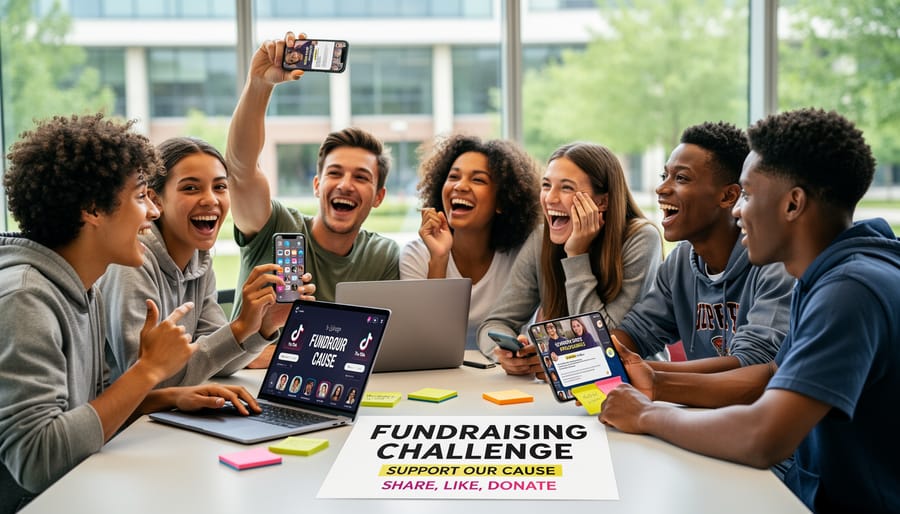
Young people today spend significant time on social media and gaming platforms, making these spaces ideal for fundraising campaigns. Schools can harness this digital engagement through creative challenges that spread organically and generate both awareness and donations.
TikTok challenges have proven particularly effective for youth fundraising. In 2023, Lincoln High School in Portland raised $12,000 through a dance challenge where students created videos showcasing their talents, with each post tagged with their school’s fundraising link. The campaign reached over 500,000 views within two weeks. Instagram fundraising features allow students to create donation stickers in their Stories, making giving seamless and shareable.
Virtual talent shows offer inclusive participation opportunities without venue costs. Riverside Middle School in Ohio hosted a streamed talent show that attracted 800 viewers and raised $8,500. Students performed everything from music to comedy sketches, with viewers purchasing virtual tickets and voting for winners through small donations.
E-sports tournaments tap into gaming culture while building community. Jefferson Academy organized a Fortnite tournament that drew 64 participants and raised $4,200 through entry fees and sponsorships from local businesses. The event streamed on Twitch, attracting additional donations from viewers.
When implementing digital fundraisers, educators should guide students on digital responsibility, including appropriate content creation and privacy protection. Establish clear guidelines about sharing personal information and ensure adult supervision of all platforms. These virtual events require minimal upfront investment while reaching broader audiences than traditional fundraisers, making them practical solutions for schools seeking modern, student-centered approaches.
Student-Created Digital Products
Today’s digitally-savvy students can transform their creative talents into fundraising revenue through school-approved digital platforms. Students can design custom graphics, illustrations, or photography for sale as digital downloads on platforms like Teachers Pay Teachers or Etsy for Educators, with proceeds supporting school programs. According to recent educational fundraising data, student-designed products generate 40% higher engagement than traditional merchandise because peers and families feel personally connected to the creators.
Print-on-demand services like Bonfire or CustomInk allow students to upload artwork onto t-shirts, stickers, or phone cases without upfront inventory costs. A middle school in Oregon raised $3,200 by having art students design mascot variations that classmates voted on and purchased. For tech-forward schools, student digital art collections can be minted as NFTs through education-focused blockchain platforms with parental consent and proper oversight, though this requires careful vetting for age-appropriateness and security. The key is establishing clear content approval processes, ensuring student privacy protection, and maintaining transparent revenue tracking so young creators see the direct impact of their digital entrepreneurship on school initiatives.
Experience-Based Fundraisers That Build Community
Student Talent Showcases and Performance Nights
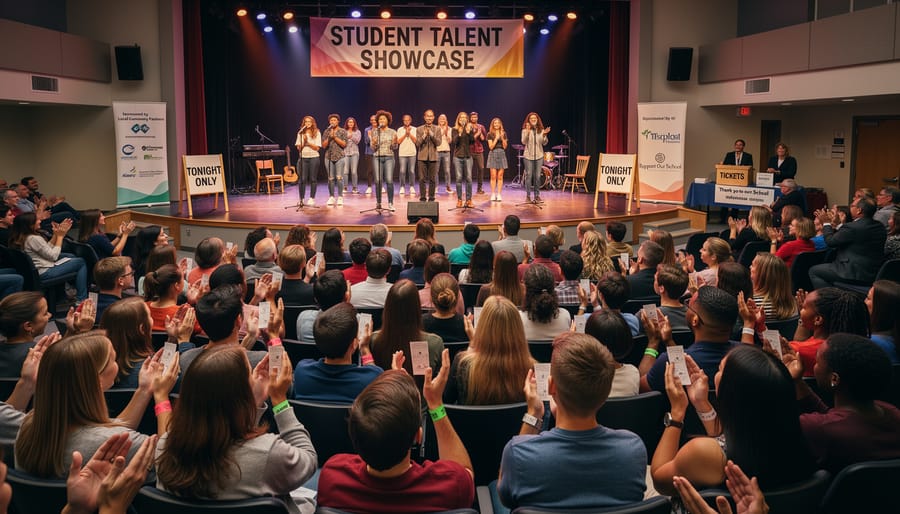
Student talent showcases transform ordinary school nights into exciting fundraising opportunities while celebrating student achievements. These ticketed events can feature musical performances, dance recitals, comedy acts, poetry slams, or variety shows that highlight diverse talents within your student body.
Start by selecting a venue that matches your expected audience size, whether it’s your school auditorium or a local community theater. Set ticket prices strategically between $5-15 for students and $10-20 for adults, ensuring accessibility while maximizing revenue. According to research from educational fundraising platforms, schools typically raise $2,000-5,000 per showcase event when pricing tickets appropriately.
Budget carefully by minimizing production costs through student-created programs, donated refreshments, and volunteer staff. Allocate funds for essential sound equipment and basic lighting to ensure quality performances. Consider partnering with local businesses to sponsor the event in exchange for program advertising, offsetting your expenses.
Promote your showcase through social media campaigns featuring rehearsal clips and performer spotlights. Create anticipation by releasing the performance lineup gradually. Distribute flyers throughout the school and community, and encourage performers to invite extended family and friends. Many successful schools report that student performers themselves become the best marketers, selling an average of 8-12 tickets each through personal networks.
Themed Fun Runs and Activity Challenges
Traditional walk-a-thons still work, but themed fun runs inject excitement that dramatically boosts participation. Color runs have proven particularly successful, with schools reporting 40-60% higher attendance than standard walking events. Participants pay an entry fee and collect sponsorships while getting doused in colorful, washable powder at stations throughout the course.
Obstacle course challenges tap into the popularity of events like Tough Mudder, scaled appropriately for youth. One middle school in Oregon raised $12,000 by transforming their athletic fields into a mini obstacle course with cargo net climbs, tire runs, and balance beams. Students paid $25 to participate and gathered additional sponsors based on completion time or obstacles conquered.
Gamified fitness challenges extend fundraising beyond a single day. Schools can organize month-long step challenges where students track daily activity through apps or pedometers, with family and friends sponsoring per mile walked. Dance-a-thons and sports marathons (basketball free-throws, soccer penalty kicks) create engaging alternatives that let students showcase different talents. The sponsorship model works beautifully here—donors pledge amounts per activity unit completed, transforming physical achievement into financial support. These events also promote wellness while building community spirit, addressing multiple educational goals simultaneously.
School Carnivals with Student-Run Booths
School carnivals with student-run booths transform traditional fundraisers into engaging learning experiences while generating substantial revenue. Research from the National Association of Secondary School Principals shows that events featuring student leadership increase participation by up to 40% compared to adult-only organized activities.
Students can design creative booth concepts that align with their interests and skills. Popular options include dunking booths where teachers volunteer as targets, raising an average of $500-800 per event. Face painting stations operated by art students typically generate $3-5 per customer with minimal supply costs. Gaming booths featuring ring toss, basketball challenges, or prize wheels consistently attract participants when prizes are donated by local businesses.
Food stands managed by culinary students or parent-student teams offer another revenue stream. Simple options like popcorn, cotton candy, or baked goods maintain healthy profit margins of 60-75%. One middle school in Ohio reported earning $2,300 from their student-operated carnival, with proceeds funding field trips and classroom supplies.
The key to success lies in giving students genuine ownership. When they plan booth themes, manage budgets, and interact with customers, they develop entrepreneurial skills while creating memorable community events. Assign each grade level or club a booth to maximize participation and foster healthy competition that benefits the entire school.
Service-Based Fundraising That Teaches Life Skills
Student Skill Workshops and Tutoring Programs
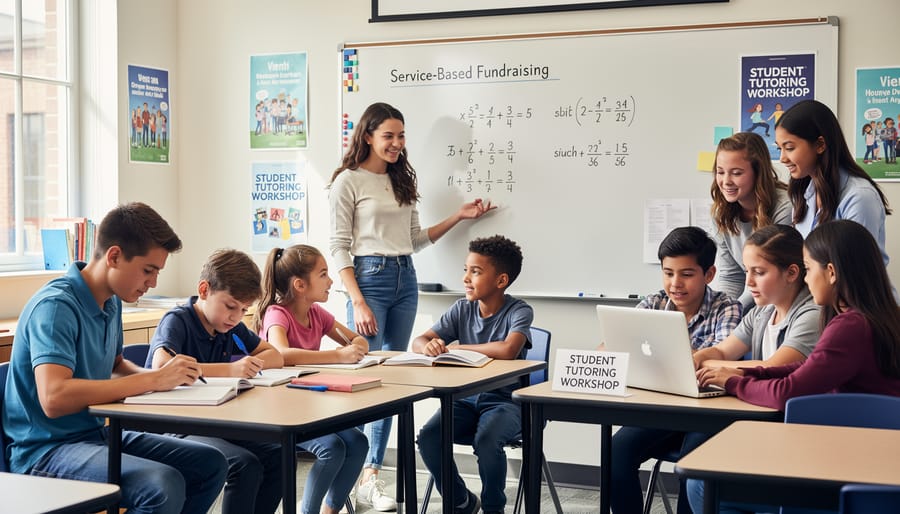
Student-led workshops and tutoring programs create meaningful fundraising opportunities while building valuable financial literacy skills. High school students can offer subject-specific tutoring to middle schoolers at $15-25 per hour, while specialized workshops in coding, art, music, or sports typically range from $20-40 per session.
To implement successfully, create a clear scheduling system using free platforms like Google Calendar or SignUpGenius. Structure programs in 4-6 week blocks with weekly sessions, allowing families to commit to manageable timeframes. For example, a middle school in Oregon raised $3,200 through eight weeks of Saturday coding workshops, with 12 student instructors teaching Python basics to 45 younger students.
Establish quality standards by requiring student instructors to submit lesson plans and maintain attendance records. Set a 70-30 revenue split, with 70 percent supporting school programs and 30 percent compensating student teachers, creating fair incentives while meeting fundraising goals.
Group workshops prove more profitable than individual tutoring, with one art workshop serving 10 students generating $300 versus $25 from single tutoring sessions. Promote programs through parent newsletters, social media, and local community centers to maximize enrollment and ensure consistent participation throughout each session block.
Community Service Days with Sponsorships
Community service days combined with sponsorships create meaningful fundraising opportunities while teaching students civic responsibility. This model works by recruiting local businesses or community members to sponsor students at a set rate per hour—typically $10 to $25—as they complete service projects like yard work for seniors, neighborhood cleanups, or car washes.
Implementation is straightforward: identify community needs, secure sponsor commitments before the event, and organize students into teams with adult supervision. A Michigan middle school raised $8,400 in one Saturday by having 60 students complete yard maintenance for elderly residents, with each student hour sponsored by local businesses at $15. Students gained work experience while sponsors received positive community visibility.
The approach succeeds because it addresses multiple stakeholder interests simultaneously. Parents appreciate that their children develop work ethic and empathy. Sponsors value the tangible community impact and tax-deductible contributions. Students feel genuine pride in their accomplishments rather than simply selling products door-to-door.
To maximize participation, document the service through photos and share impact stories with sponsors afterward. Consider recurring quarterly service days to build sustained relationships with business partners and create predictable fundraising revenue throughout the school year.
Tech Support and Digital Assistance for Seniors
Students can bridge the digital divide while raising funds by offering tech support sessions for seniors in their community. This intergenerational approach teaches young people valuable skills in communication and patience while addressing a genuine community need. Schools implementing this program typically charge $10-15 per hour-long session, with students helping seniors navigate smartphones, video calling apps, online banking, and social media platforms.
A middle school in Oregon raised over $2,000 in one semester by pairing tech-savvy eighth graders with local retirement community residents. Each student worked with 2-3 seniors on personalized technology goals, from setting up email accounts to learning photo-sharing apps. Beyond fundraising, 87% of participating students reported increased confidence in teaching others, while seniors gained independence and reduced isolation. This model works particularly well as an ongoing service rather than a one-time event, creating sustainable funding and lasting relationships. Schools can partner with senior centers, assisted living facilities, or advertise through community newsletters to find participants eager for patient, affordable tech assistance.
Product-Based Fundraising Done Right
Eco-Friendly and Socially Conscious Products
Today’s students are passionate about environmental and social issues, making eco-friendly fundraisers particularly effective. According to a 2023 study, 73% of Gen Z consumers prefer to purchase from sustainable brands, making this approach both meaningful and profitable for youth fundraising.
Consider partnering with companies that offer sustainable products like reusable water bottles, bamboo utensils, or organic cotton tote bags. Students can customize these items with their own designs, adding personal value while supporting environmental causes. One middle school in Oregon raised $8,500 by selling student-designed reusable shopping bags made from recycled materials, with proceeds supporting both their music program and a local conservation project.
Another approach involves creating upcycled products through student workshops. Art classes can transform reclaimed materials into marketable items like planters from tin cans or journals from recycled paper. These projects teach valuable skills while generating funds.
Social enterprise fundraisers also resonate strongly with youth values. Partner with fair-trade organizations or donate a portion of proceeds to causes students care about, such as ocean cleanup initiatives or educational programs in underserved communities. This dual-impact model engages students more deeply than traditional fundraisers, as they see their efforts supporting both their school and broader social good. Transparency about the environmental impact and ethical sourcing builds trust with supporters and creates meaningful learning opportunities.
School Spirit Merchandise with Student Designs
Transform ordinary school merchandise into something students genuinely want by letting them lead the creative process. Launch a design competition where students submit artwork, slogans, or graphics for t-shirts, hoodies, water bottles, or phone accessories. This approach typically generates 40-60% higher sales compared to generic school spirit items because students feel ownership over the designs.
Create a judging panel that includes student representatives, teachers, and parent volunteers to select winning designs. Consider having different categories—funny quotes, artistic interpretations of school mascots, or designs celebrating specific clubs and sports teams. One California high school raised over $8,000 by featuring three winning designs and giving student designers a small royalty on each item sold, which further motivated participation.
Use print-on-demand services to minimize upfront costs and inventory risks. These platforms allow you to offer various products without purchasing bulk quantities, making it easier to test different designs and price points. Promote the merchandise through student social media ambassadors who can showcase items authentically to their peers. Setting up pop-up shops during school events, parent nights, and sports games creates immediate purchasing opportunities. This fundraising method combines creativity, student engagement, and practical merchandise that extends your reach beyond campus when students wear their designs in the community.
Local Partnerships and Community Product Sales
Partner with local bakeries, coffee shops, or restaurants to sell signature items where a percentage of profits supports your school. For example, a Massachusetts middle school generated $2,400 in three months by selling custom-branded cookies at a neighborhood café. Another effective approach involves creating community cookbooks featuring favorite recipes from families, teachers, and local chefs. Sell these cookbooks at school events and local stores. This strategy raised over $5,000 for one Texas elementary school while strengthening community bonds and celebrating cultural diversity through shared culinary traditions.
Getting Students Invested: Leadership and Ownership Strategies
The difference between student-led and adult-led fundraisers is striking. Research from Independent School Management shows that student-driven initiatives achieve 47% higher participation rates and raise approximately 35% more funds than their adult-led counterparts. This data underscores a fundamental truth: when students have genuine ownership, they become passionate advocates rather than reluctant participants.
To cultivate this investment, start by involving students in the decision-making process from day one. Rather than presenting a predetermined fundraising plan, facilitate brainstorming sessions where students identify causes they care about and propose creative approaches. When a high school in Oregon allowed students to choose between three fundraising concepts, participation jumped from 32% to 78% because students felt their voices mattered.
Create leadership opportunities through tiered responsibility structures. Assign students specific roles such as social media coordinator, event planner, or team captain. A middle school in Texas implemented this approach for their walkathon, appointing student leaders for each grade level. These leaders recruited peers, managed communications, and tracked progress, resulting in their most successful fundraiser in five years.
Connect fundraising activities to real-world skill development. Help students recognize that organizing a fundraiser builds project management, marketing, and financial literacy skills. Frame these experiences as resume-building opportunities, particularly for high school students preparing for college applications. This practical angle transforms fundraising from an obligation into an investment in their future.
Transparency also builds trust and motivation. Share regular updates showing exactly how funds are being used and the impact they’re creating. When students see tangible results from their efforts, whether it’s new sports equipment or a funded field trip, they develop pride in their accomplishments. This connection between effort and outcome fosters student growth and resilience, teaching valuable lessons about persistence and collective action that extend far beyond fundraising.
Common Pitfalls and How to Avoid Them
Even well-intentioned fundraising campaigns can fall short when schools encounter common obstacles. Understanding these pitfalls and their solutions helps ensure your efforts generate maximum impact.
One frequent mistake is overcomplicating logistics. When a middle school in Ohio attempted a multi-vendor craft fair with over 40 participating families, coordination became overwhelming. The event required managing vendor fees, setup schedules, and parking arrangements that exhausted volunteer resources before the event even began. The solution: start simple. Choose fundraisers with minimal moving parts, especially for first-time initiatives. A straightforward bake sale or virtual talent show often outperforms elaborate events simply because they’re easier to execute consistently.
Age-inappropriate fundraising ideas represent another significant challenge. Elementary students selling high-priced products door-to-door creates safety concerns and unrealistic expectations. Similarly, asking high schoolers to participate in activities they perceive as childish diminishes participation. Research from the National Association of Elementary School Principals shows that age-aligned activities see 40 percent higher engagement rates. Match activities to developmental stages: younger students thrive with hands-on projects like art sales, while teenagers prefer autonomous roles in organizing larger events or digital campaigns. This approach proves particularly effective when engaging reluctant students who might otherwise avoid participation.
Poor communication derails many campaigns before they begin. Parents receive vague emails about expectations while students remain unclear about goals. Combat this by establishing a communication timeline: announce fundraisers three weeks ahead, send weekly updates with specific progress metrics, and use multiple channels including email, social media, and student announcements.
Finally, schools often forget to celebrate milestones along the way. When a Texas elementary school implemented weekly “thermometer updates” showing progress toward their playground equipment goal, participation increased by 35 percent. Recognition fuels momentum. Acknowledge top contributors, celebrate halfway points, and publicly thank participants. These moments transform fundraising from obligation into community celebration, building enthusiasm for future initiatives.
The most successful youth fundraising initiatives share three essential ingredients: authentic student voice, alignment with their interests, and a clear connection to meaningful outcomes. When students understand exactly how their efforts will impact their school experience—whether funding new technology, supporting a field trip, or launching a program they’re passionate about—participation rates soar. A 2022 study of school fundraising campaigns found that student-led initiatives raised 43% more funds than adult-driven campaigns, highlighting the power of youth ownership.
Traditional fundraiser fatigue is real, but the solution isn’t abandoning fundraising altogether. Instead, educators should reimagine the process by bringing students to the planning table from day one. Ask them which ideas resonate, what causes matter to them, and how they want to contribute. This collaborative approach transforms fundraising from a chore into an opportunity for students to develop leadership skills, financial literacy, and civic engagement.
Don’t let the fear of trying something new hold your school community back. Review the ideas presented in this article and identify one approach that aligns with your students’ interests and your school’s needs. Start small with a pilot program, gather feedback, and refine your approach. The creative social media auction that seems daunting today could become your most successful annual tradition tomorrow.
Your next great fundraising success story begins with a simple conversation with your students. Schedule that brainstorming session this week and discover what becomes possible when young people help shape the solutions.