


Traditional school discipline isn’t working. Suspension rates have climbed 40% over the past three decades, yet behavioral problems persist and even worsen. Students who face punitive consequences often feel more alienated, not more accountable. Meanwhile, achievement gaps widen and entire school communities suffer from fractured relationships.
Restorative practices offer a fundamentally different approach. Rather than asking “What rule was broken and what punishment is deserved?”, this framework asks “Who was harmed, what are their needs, and whose obligation is it to meet those needs?” This shift transforms discipline from punishment into an opportunity for genuine learning and relationship repair.
The results speak volumes. Schools implementing restorative practices report suspension reductions of 40-60%, with parallel improvements in attendance, academic performance, and school climate. Denver Public Schools documented a 52% decrease in out-of-school suspensions after adopting restorative approaches, while simultaneously improving the sense of safety and belonging among both students and staff.
At its core, restorative practices recognize what research has confirmed: young people learn appropriate behavior through supportive relationships and meaningful accountability, not through isolation and punishment. This approach builds communities where conflicts become teaching moments, harm creates opportunities for growth, and every member—students, teachers, and administrators—shares responsibility for maintaining healthy relationships. The question isn’t whether schools can afford to implement restorative practices, but whether they can afford not to.
What Are Restorative Practices in Schools?

The Core Principles Behind Restorative Approaches
Restorative practices rest on four foundational principles that distinguish them from conventional disciplinary approaches. First and foremost, the focus shifts from punishment to repairing harm. When a student breaks a rule or hurts someone, traditional discipline asks “What rule was broken and what consequence is deserved?” Restorative approaches instead ask “Who was harmed, what are their needs, and whose obligation is it to meet those needs?” This fundamental reframe transforms how schools respond to conflict.
Second, restorative practices prioritize building and maintaining relationships. Research shows that students with strong connections to teachers and peers demonstrate 40% fewer behavioral issues. These inclusive classroom practices recognize that meaningful relationships form the foundation for accountability and positive change.
Third, collective responsibility replaces individual blame. Rather than isolating the offending student, restorative practices engage the entire community in addressing harm. A fifth-grade classroom in Portland implemented weekly circles where students collectively discussed conflicts. Within one semester, office referrals dropped by 65%, demonstrating how shared accountability creates lasting behavioral change.
Finally, restorative approaches address root causes rather than surface behaviors. When a student acts out, practitioners investigate underlying issues like trauma, unmet needs, or skill deficits. One middle school discovered that 70% of chronic discipline cases involved students facing food insecurity or unstable housing. By connecting families with resources while implementing restorative circles, they reduced repeat offenses by half, proving that understanding context produces better outcomes than punishment alone.
How Restorative Practices Differ from Traditional Discipline
The fundamental difference between traditional discipline and restorative practices lies in their underlying questions and goals. Traditional discipline asks “What rule was broken and what punishment fits?” while restorative practices ask “Who was harmed, what are their needs, and whose obligation is it to meet those needs?”
Consider a common classroom scenario: A student repeatedly disrupts class by talking out of turn and distracting peers.
In a traditional discipline approach, the teacher might warn the student, then escalate to detention, parent phone call, or removal from class. The focus remains on the infraction and enforcing consequences. The student learns what not to do, but may become resentful, feel labeled as a troublemaker, and miss valuable instruction time. According to recent studies, students subjected primarily to punitive measures are 37% more likely to disengage from school.
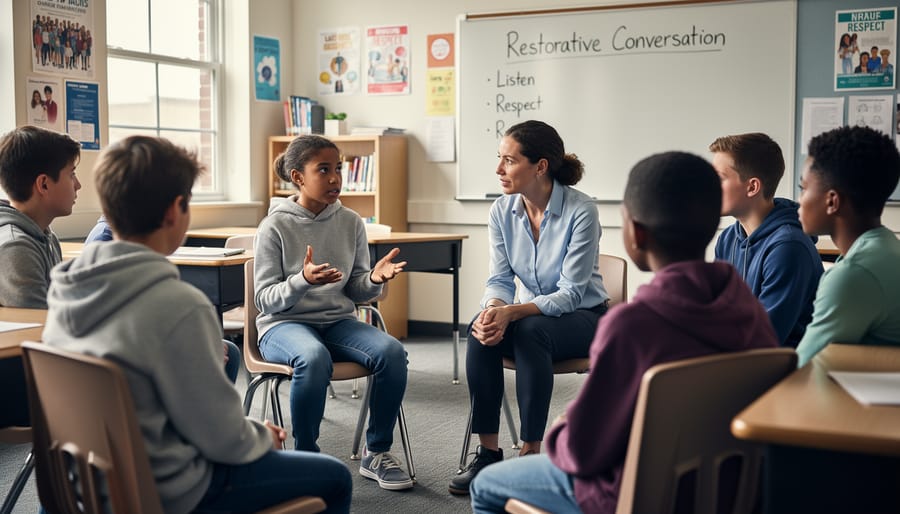
In a restorative approach, the teacher first acknowledges that the disruption affected other students’ learning. The teacher might hold a brief circle discussion where the disruptive student hears directly from classmates about how the behavior impacted them. Together, they develop a plan where the student identifies underlying needs—perhaps difficulty understanding the material, needing more engagement, or managing emotions. The student commits to specific actions like asking for help appropriately or taking brief breaks when overwhelmed.
The outcomes differ significantly. Traditional discipline often creates a power struggle and fails to address root causes, with 60% of students receiving multiple referrals for the same behaviors. Restorative practices, by contrast, strengthen relationships and develop accountability. Students learn to understand consequences through community impact rather than external punishment. They maintain classroom connection rather than experiencing isolation, and they develop problem-solving skills that prevent future incidents. This approach transforms discipline from something done to students into something done with them.
The Restorative Practices Framework in Classroom Management
Proactive Strategies: Building Community Before Problems Arise
The foundation of restorative practices lies in building strong relationships before conflicts occur. Rather than waiting for problems to surface, proactive strategies create a positive learning environment where students feel connected and valued from day one.
Community circles represent one of the most effective proactive tools. Teachers at Jefferson Middle School in Oregon begin each week with check-in circles, where students share personal updates or respond to simple prompts like “What’s something you’re looking forward to this week?” This regular practice has reduced behavioral incidents by 34% over two years, according to school data. The circles establish trust and give every voice equal weight.
Relationship-building activities extend beyond circles. Simple practices like greeting students at the door, sharing a weekly appreciation board, or creating peer mentoring partnerships strengthen classroom bonds. At Riverside High School, teachers dedicate the first three weeks of each semester to team-building exercises and storytelling activities, helping students see each other as individuals rather than stereotypes.
Classroom agreements co-created by students prove more effective than top-down rules. When students participate in establishing guidelines for respectful communication and conflict resolution, they develop ownership over classroom culture. Teachers facilitate discussions asking questions like “What do we need from each other to feel safe learning here?” These agreements become living documents students reference throughout the year.
Establishing a restorative culture also means addressing individual student needs proactively. Regular one-on-one check-ins, strengths-based feedback, and celebrating small wins create connections that prevent escalation. Research from the International Institute for Restorative Practices shows schools implementing these proactive strategies experience 40-60% fewer disciplinary referrals compared to traditional approaches, demonstrating that investment in relationships yields measurable results.
Responsive Strategies: Addressing Conflicts and Harm
When conflict arises or harm occurs, restorative practices offer a structured pathway that prioritizes understanding and repair over punishment. The approach varies in intensity based on the severity of the incident, creating a tiered response system that educators can navigate with confidence.
The foundation begins with restorative questions, used immediately following an incident. These include: “What happened?” “Who has been affected?” “What needs to happen to make things right?” A middle school teacher in Oregon shared that when two students argued over a group project, these simple questions helped them recognize how their frustration had disrupted the entire team’s progress, leading to a student-led solution within minutes.
For situations requiring more attention, informal conferences bring together the individuals directly involved. A facilitator guides a conversation where each person shares their perspective and feelings. In one elementary classroom, a student who damaged another’s artwork met privately with the affected peer. Through guided dialogue, the student who caused harm offered to help create a new piece during recess, strengthening their relationship rather than creating resentment.
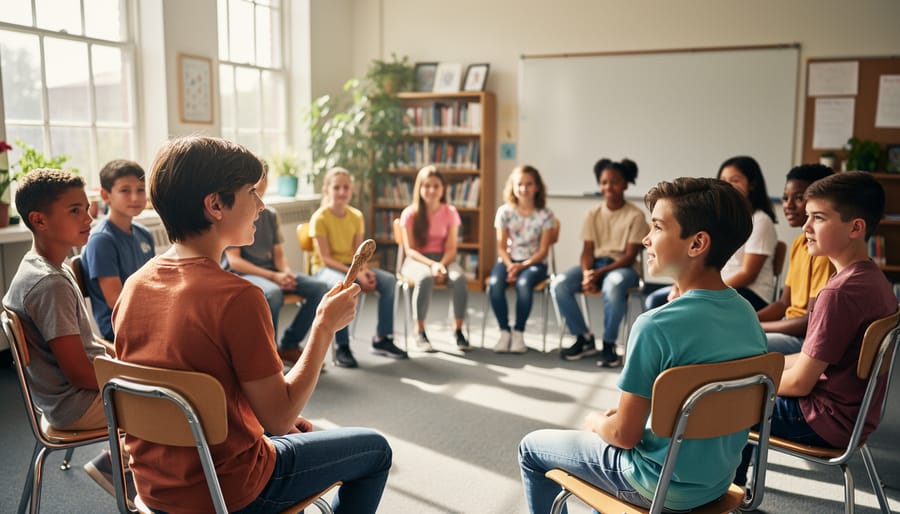
Formal restorative circles address more serious incidents or involve multiple parties. Participants sit in a circle, often passing a talking piece to ensure everyone has a voice. A high school in Minnesota used this approach after rumors spread about a student online. The circle included the targeted student, those who spread the rumors, and supportive peers. Research from the International Institute for Restorative Practices shows that schools using formal circles report 40-60% reductions in repeat offenses.
Each level emphasizes accountability through dialogue, ensuring students understand the impact of their actions while actively participating in solutions that repair relationships and rebuild trust within the school community.
What This Looks Like in Real Classrooms
In elementary classrooms, restorative practices transform how young students navigate conflicts. When a first-grade student knocked over another child’s block tower, the teacher facilitated a restorative conversation rather than issuing timeout. The student who knocked the tower explained feeling frustrated about not being included in play, while the other child shared disappointment about losing their creation. Together, they agreed to rebuild the tower as partners. This five-minute interaction taught empathy, communication skills, and problem-solving while strengthening their relationship. Data from schools implementing such approaches shows a 40% reduction in classroom disruptions within the first year.
Middle school scenarios often involve more complex social dynamics. At one California middle school, a group of students excluded a classmate from their lunch table for weeks. Instead of detention, the school convened a restorative circle where the excluded student shared feelings of isolation and hurt. The other students initially defensive, gradually recognized their impact. Through guided discussion, they developed an action plan including a class agreement about inclusive behavior and regular check-ins. Three months later, the previously excluded student reported feeling welcomed, and the group demonstrated increased awareness about belonging. This approach addresses the root causes of behavior rather than just symptoms, incorporating engaging classroom strategies that build community.
High schools see restorative practices applied to serious incidents. When vandalism occurred in a Texas high school bathroom, administrators identified the responsible students through investigation. Rather than immediate suspension, they organized a restorative conference including the students, their parents, custodial staff, and a facilitator. The students heard directly how their actions created extra work, budget strain, and safety concerns. They took responsibility, completed community service hours maintaining school facilities, and created anti-vandalism posters for display. One student later joined the school’s peer mediation program. Research indicates that students participating in restorative processes demonstrate 35% lower recidivism rates compared to those receiving traditional punishments.
These examples demonstrate restorative practices fostering accountability, repairing relationships, and teaching valuable life skills across all grade levels while maintaining safer, more connected learning environments.
The Research Behind Restorative Practices
Research consistently demonstrates that restorative practices create measurable improvements across multiple dimensions of school performance. A comprehensive study by the RAND Corporation found that schools implementing restorative practices experienced a 50% reduction in suspensions over three years, while simultaneously improving academic outcomes for students who previously faced frequent disciplinary action.
The data on attendance is equally compelling. Schools in Oakland, California reported a 24% decrease in chronic absenteeism after adopting restorative approaches. When students feel connected to their school community and believe conflicts will be handled fairly, they’re more likely to show up consistently.
Academic performance shows notable gains as well. A longitudinal study tracking 22 schools over five years found that schools using restorative practices saw reading proficiency increase by 15% and math proficiency by 11% compared to control groups. These improvements were particularly significant among students of color and those from low-income backgrounds, who traditionally face disproportionate disciplinary consequences.
School climate surveys reveal additional benefits. In Denver Public Schools, 78% of teachers reported improved classroom management after restorative training, while 82% of students said they felt safer and more respected. Teacher retention improved by 13%, addressing the critical issue of educator burnout.
One striking real-life example comes from a Pennsylvania middle school that reduced office referrals by 65% in just one year. The principal noted that students began resolving conflicts independently, using circle processes they’d learned in class.
These outcomes aren’t accidental. Research published in the Journal of Educational Psychology confirms that when students participate in decision-making about harm repair, they develop stronger social-emotional skills and take greater responsibility for their actions. The evidence is clear: restorative practices work.
Getting Started: Practical Steps for Teachers
Three Simple Practices You Can Start Tomorrow
Ready to bring restorative practices into your classroom? Here are three evidence-based strategies you can implement immediately:
Start each day with morning check-ins. Dedicate five minutes for students to share how they’re feeling using a simple rating scale or emotion words. Research from schools implementing this practice shows a 32% decrease in classroom disruptions. Simply ask: “What number from 1-10 represents your energy today?” This builds emotional awareness and helps you identify students who need extra support before issues escalate.
Next, replace traditional discipline questions with restorative ones. When conflicts arise, ask: “What happened? Who was affected? What needs to happen to make things right?” These questions shift focus from punishment to understanding and accountability. A middle school teacher in Oregon reported that using these questions reduced repeat behavioral incidents by 45% within one semester because students learned to reflect rather than defend.
Finally, implement weekly community circles. Gather students in a circle for 15 minutes to discuss a prompt like “Share something that made you proud this week.” Pass a talking piece—only the holder speaks, ensuring everyone is heard. This practice strengthens relationships and creates psychological safety. Schools using circles report improved peer connections and reduced bullying. You can combine circles with calm down corners to provide comprehensive emotional support systems.
These practices require minimal preparation but yield significant returns in classroom climate and student well-being.

Navigating Common Obstacles
Implementing restorative practices can feel overwhelming, but understanding common obstacles helps you navigate them effectively. Here’s how to address the challenges most educators encounter.
Time constraints rank as the primary concern for teachers. While circles and conferences initially require investment, they ultimately save time by reducing recurring behavioral issues. Start small with five-minute morning check-ins rather than attempting full-scale implementation immediately. One middle school in Oregon found that dedicating just 10 minutes daily to community building reduced disciplinary incidents by 40 percent within one semester, actually reclaiming instructional time.
Limited administrative support can stall progress. Build your case with data from similar schools that have reduced suspension rates and improved climate scores. Document your pilot efforts with photos and student feedback. Invite administrators to observe a circle session to witness student engagement firsthand. Many principals become advocates after seeing the approach in action.
Resistant students often test new approaches. Remember that students accustomed to punitive discipline may initially distrust restorative methods. Consistency matters more than immediate buy-in. A high school teacher in Texas reported that her most resistant student became a peer mediator after six months of persistent, respectful engagement through circles.
Parent concerns typically stem from misunderstanding restorative practices as being “soft on discipline.” Communicate clearly that accountability remains central—students must face those they’ve harmed and make things right. Share concrete examples of how restoration differs from punishment while still addressing harmful behavior. Host informational sessions where parents experience circles themselves, transforming skeptics into supporters through direct participation.
Transforming school culture through restorative practices doesn’t happen overnight, but the journey is worth every step. Research consistently shows that schools implementing these approaches see significant improvements: suspension rates drop by an average of 40-50%, while academic engagement and student belonging increase measurably. These aren’t just statistics—they represent real students who stay in classrooms learning instead of sitting in detention or facing suspension.
The beauty of restorative practices lies in their accessibility. You don’t need a complete overhaul of your discipline system to begin. Start small: try a morning circle with your class, use restorative questions when conflicts arise, or facilitate one peer mediation this month. Each conversation that prioritizes understanding over punishment plants seeds for lasting change.
Remember, shifting from punitive to restorative thinking requires patience with yourself and your school community. There will be challenges and learning curves, but educators who embrace this approach consistently report feeling more connected to their students and more effective in their roles.
The students in your classroom deserve an environment where they can learn from mistakes, repair harm, and grow. Take that first step today—your school community’s transformation begins with you.