



Explore accredited online healthcare certification programs through the U.S. Department of Education’s database or professional bodies like the American Nurses Credentialing Center to verify legitimacy before enrollment. Compare program costs ranging from $500 for basic certifications like Certified Nursing Assistant to $15,000 for advanced credentials such as Health Information Management, ensuring the investment aligns with your salary expectations—certified medical coders average $47,000 annually while nurse practitioners exceed $115,000.
Assess your learning style against program formats, as synchronous courses require real-time attendance while asynchronous options let you study around work schedules, a critical factor since 68% of healthcare certification students maintain full-time employment during their studies. Verify clinical requirements early, because programs like phlebotomy and medical assisting mandate hands-on hours at approved facilities, which may require local availability despite online coursework.
Research employer recognition in your target job market by reviewing job postings and consulting hiring managers, since a career in healthcare depends heavily on credentials employers actually value. Calculate total completion time realistically—most certificates require 6-18 months, but working professionals average 25% longer due to competing responsibilities.
Request detailed syllabi and connect with program alumni through LinkedIn to understand actual learning outcomes versus marketing promises. Check if certifications require ongoing education credits, as many healthcare credentials mandate 20-40 hours of continuing education biennially to maintain active status.
The Rise of Online Healthcare Certification: Meeting Modern Workforce Demands
The healthcare industry is experiencing a significant transformation in how professionals acquire credentials and advance their careers. With the U.S. Bureau of Labor Statistics projecting a need for 203,200 new registered nurses annually through 2031, and similar shortages affecting allied health professions, the demand for accessible training pathways has never been greater. Online healthcare certification programs have emerged as a practical solution, removing traditional barriers that once prevented many qualified individuals from entering or advancing in the field.
Just a decade ago, healthcare education largely required physical classroom attendance, creating obstacles for working parents, rural residents, and career changers with full-time jobs. Today, digital learning platforms have revolutionized this landscape. According to a 2023 National Center for Education Statistics report, over 65% of healthcare students now take at least one online course, with fully online programs growing by 42% since 2019. Programs like online nursing programs exemplify this shift, offering flexible scheduling that allows students to balance education with existing responsibilities.
The accessibility benefits extend beyond convenience. Online programs have democratized healthcare education for underserved populations. A community health worker in rural Montana, for example, can now pursue medical coding certification without relocating to urban centers, while a single parent working evening shifts can complete phlebotomy training during daytime hours. These programs typically incorporate asynchronous learning modules, virtual simulations, and coordinated local clinical placements that maintain educational rigor while accommodating diverse learner needs.
Furthermore, the COVID-19 pandemic accelerated institutional acceptance of online credentials, with 78% of healthcare employers now viewing accredited online certifications as equivalent to traditional programs. This shift has created unprecedented opportunities for individuals from various backgrounds to enter healthcare careers, helping address critical workforce shortages while expanding educational access to historically marginalized communities.

Understanding Healthcare Certification Pathways: What You Need to Know
Entry-Level Certifications for Quick Career Starts
For those seeking rapid entry into healthcare, several certification programs offer career-ready credentials in just weeks or months. Certified Nursing Assistant (CNA) programs typically require 4-12 weeks of training, with graduates earning median salaries of $30,000-$35,000 annually. Sarah Martinez, a career changer from retail, completed her online CNA coursework in eight weeks and secured employment within two weeks of certification.
Phlebotomy certification programs generally take 4-8 weeks, preparing students to collect blood samples in hospitals, labs, and clinics. Medical billing and coding certifications, such as the Certified Professional Coder (CPC), can be completed in 4-6 months and lead to remote work opportunities with starting salaries around $45,000. According to the American Academy of Professional Coders, certified coders earn 27% more than non-certified peers.
EKG technician programs offer another quick pathway, with most certifications achievable in 6-12 weeks. These entry-level positions provide foundational healthcare experience while allowing students to work and pursue additional certifications. Many graduates use these credentials as stepping stones toward nursing or other advanced healthcare roles, making them ideal for testing career fit before committing to longer programs.
Advanced Certifications for Career Advancement
For healthcare professionals looking to advance into leadership or specialized roles, advanced certifications open significant career opportunities. According to the Bureau of Labor Statistics, medical and health services managers earn a median salary of $104,280 annually, demonstrating the financial benefits of advancement.
Healthcare Management certifications prepare professionals for administrative leadership positions. Programs typically cover healthcare finance, policy implementation, and operations management. These 6-12 month online programs suit nurses, medical technicians, and clinical coordinators transitioning to supervisory roles. For example, Sarah Chen, a registered nurse with five years of experience, completed her healthcare management certification online while working full-time and secured a department coordinator position within three months.
Medical Coding Specialist certifications offer another advancement path, particularly for those with billing or administrative experience. The Certified Professional Coder (CPC) credential increases earning potential by approximately 27% according to AAPC data. Online programs include anatomy, medical terminology, and coding systems training, typically requiring 4-6 months to complete.
Clinical Research Coordinator certifications appeal to healthcare professionals interested in pharmaceutical trials and research operations. These programs combine regulatory knowledge with project management skills, preparing graduates for positions in hospitals, universities, and pharmaceutical companies where coordinators earn between $48,000 and $65,000 annually depending on experience and location.
Top Online Healthcare Certification Programs Worth Your Time

Clinical and Direct Patient Care Certifications
Clinical and direct patient care certifications provide essential entry points into hands-on healthcare roles, with many programs now offering hybrid online formats that combine theoretical coursework with required in-person clinical practice. The Certified Nursing Assistant (CNA) program typically requires 75-150 hours of combined online instruction and supervised clinical experience, preparing students to assist patients with daily living activities in hospitals, nursing homes, and home care settings. According to the Bureau of Labor Statistics, CNAs earn a median salary of $30,290 annually, with employment projected to grow 5% through 2031.
Patient Care Technician certifications build upon CNA training by adding phlebotomy and EKG monitoring skills, taking approximately 4-6 months to complete through hybrid formats. Medical Assistant programs represent another popular pathway, offering comprehensive training in both clinical procedures and administrative tasks over 9-12 months. These programs prepare graduates to take certification exams from organizations like the American Association of Medical Assistants, with certified professionals earning approximately 20% more than their non-certified counterparts. All these certifications require completion of supervised clinical hours at approved healthcare facilities, making location and facility partnerships important considerations when selecting an online program. Career outcomes remain strong across these pathways, with graduates typically finding employment within three months of certification.
Administrative and Technical Healthcare Certifications
Administrative and technical certifications provide essential behind-the-scenes expertise that keeps healthcare facilities running efficiently. Medical billing and coding programs teach students to translate medical services into standardized codes for insurance reimbursement, with certified professional coders earning an average of $57,000 annually according to AAPC data. These programs typically require 4-6 months of online study and prepare students for credentials like the Certified Professional Coder (CPC) or Certified Coding Specialist (CCS).
Health Information Management (HIM) certifications focus on maintaining patient records, ensuring data security, and managing healthcare information systems. The Registered Health Information Technician (RHIT) credential, offered through AHIMA, qualifies graduates for positions averaging $52,000 per year. Healthcare administration certifications, including the Certified Healthcare Administrative Professional (cHAP), prepare individuals for supervisory roles in medical offices and hospitals, with salaries ranging from $45,000 to $65,000 depending on experience and facility size. These online programs offer flexible scheduling ideal for working professionals transitioning into healthcare careers without clinical patient contact.
Specialized Healthcare Certifications
Beyond general healthcare certifications, several specialized programs address emerging industry needs and offer promising career trajectories. These niche credentials position professionals for roles in rapidly expanding healthcare sectors.
Telehealth coordinators facilitate virtual care delivery, an increasingly vital function as remote healthcare services continue expanding. Telehealth training programs typically require 3-6 months and cover virtual patient management, technology platforms, and regulatory compliance. The Bureau of Labor Statistics projects 32% growth for medical and health services managers through 2030, with telehealth specialists commanding median salaries around $52,000 annually.
Healthcare data analysts interpret clinical information to improve patient outcomes and operational efficiency. Online certification programs in healthcare analytics combine medical terminology with data visualization tools, typically spanning 6-9 months. With healthcare organizations investing heavily in data infrastructure, certified analysts earn approximately $67,000 annually, with demand expected to grow 36% by 2031.
Pharmacy technician certifications prepare students for medication dispensing roles through 4-8 month online programs followed by practical training. The field projects 6% growth through 2031, with certified technicians earning median wages of $36,000. Many programs include exam preparation for the Pharmacy Technician Certification Board credential, enhancing employment prospects in retail, hospital, and specialty pharmacy settings.
How to Choose the Right Online Healthcare Certification Program
Selecting the right online healthcare certification program requires careful evaluation across several key dimensions. By using a structured approach, you can identify programs that align with your professional goals while fitting your personal circumstances.
Start with accreditation verification. According to the U.S. Department of Education, only programs accredited by recognized bodies ensure your credentials will be valued by employers. For instance, medical coding programs should hold approval from the American Academy of Professional Coders (AAPC) or the American Health Information Management Association (AHIMA). A student from Texas shared that she initially enrolled in an unaccredited program, only to discover later that hospitals in her area wouldn’t recognize her certificate, costing her both time and money.
Next, analyze the total investment required. Beyond tuition, factor in textbook costs, examination fees, and technology requirements. Data from the National Center for Education Statistics shows that online healthcare certifications range from $1,200 for basic programs like Certified Nursing Assistant to $8,000 for advanced credentials such as Health Information Management. Create a comprehensive budget that includes potential lost income if you need to reduce work hours during intensive study periods.
Consider the time commitment realistically. Review the program structure carefully. Self-paced programs offer flexibility but require strong self-discipline, while cohort-based programs provide structured deadlines and peer support. For example, a working parent might choose a 12-month self-paced phlebotomy program over an intensive 6-week format, even though both lead to the same certification.
Align program selection with your career trajectory. Research job postings in your target role to identify which certifications employers specifically request. A recent graduate interested in healthcare administration found that 78% of job listings in her region required Certified Medical Administrative Assistant credentials, making her program choice straightforward.
Finally, assess your learning preferences. If you thrive on interaction, prioritize programs offering live virtual sessions and robust discussion forums. Independent learners might prefer asynchronous formats with comprehensive recorded content. Many programs offer trial periods or sample modules, allowing you to test the platform before committing. This hands-on evaluation can prevent costly mismatches between your learning style and program delivery methods.
Accreditation and Recognition: Making Sure Your Certificate Matters
Before investing time and money in an online healthcare certification program, verifying its accreditation status is essential. Legitimate accreditation ensures your certificate will be recognized by employers and may be required for licensure in certain states.
Start by checking whether the program holds accreditation from nationally recognized bodies. For healthcare programs, look for approval from organizations like the Commission on Accreditation of Allied Health Education Programs (CAAHEP), the Accrediting Bureau of Health Education Schools (ABHES), or specialty-specific accreditors. For example, nursing programs should be accredited by the Commission on Collegiate Nursing Education (CCNE) or the Accreditation Commission for Education in Nursing (ACEN). According to recent data, approximately 15% of online healthcare programs lack proper accreditation, potentially rendering certificates worthless.
Regional accreditation for the institution itself also matters. The U.S. Department of Education maintains a database of recognized accrediting agencies on their website, which you can use to verify program legitimacy. Additionally, check if your state’s professional licensing board recognizes the certification for any licenses you’ll need.
Warning signs of diploma mills include promises of certification in unrealistically short timeframes, lack of transparent contact information, absence from accreditation databases, and pressure to pay immediately. One real-life example involved students discovering their “certified medical assistant” program wasn’t recognized by any state board, resulting in wasted tuition and delays in employment.
Before enrolling, contact potential employers in your target field to confirm they recognize the certification. Many hospitals and healthcare facilities maintain lists of preferred or required certifications. Taking this extra step protects your investment and ensures your credential will truly advance your career in healthcare.
What to Expect: The Online Learning Experience in Healthcare Education
Online healthcare certification programs offer flexibility, but success requires understanding what you’re committing to. Most programs combine asynchronous coursework with structured clinical requirements, creating a unique learning environment that differs from traditional classroom settings.
Expect to dedicate 10-20 hours weekly for most certificate programs, though this varies by specialty and intensity. Coursework typically includes video lectures, interactive modules, discussion forums, and virtual simulations. According to recent data, 68% of healthcare students report that time management is their biggest challenge when pursuing online learning for career growth.
Technology requirements are straightforward but essential. You’ll need reliable high-speed internet, a computer with webcam and microphone, and sometimes specific software for virtual labs or simulations. Many programs provide technical support and orientation sessions to ensure you’re prepared before coursework begins.
Clinical and practical components cannot be completed entirely online. Programs require hands-on experience through local clinical placements, skills labs, or in-person intensives. For example, Medical Assistant certification programs typically mandate 160-200 clinical hours at approved healthcare facilities near your location. Your program coordinator will help arrange these placements, but flexibility in scheduling is crucial.
Sarah Martinez, a working mother who completed her Phlebotomy Technician certification online, shares: “I studied after my kids went to bed and completed clinicals on weekends. The program’s flexibility made it possible, but I had to be disciplined about carving out study time.”
Successful online healthcare students implement these strategies: creating dedicated study spaces, using digital calendars to block learning time, joining student study groups via video chat, and communicating proactively with instructors when challenges arise. Many students find that treating online coursework like a scheduled class—rather than something to squeeze in whenever—dramatically improves outcomes.
The key is approaching online healthcare education with realistic expectations about time commitment, self-motivation requirements, and the hybrid nature of combining virtual learning with hands-on practice.
Costs, Financial Aid, and Return on Investment
Understanding the financial investment required for healthcare certification programs helps you make informed decisions about your education and career path. Online healthcare certifications typically range from $500 to $5,000, depending on the program’s complexity and duration. For example, Medical Billing and Coding certifications average $1,200-$2,500, while more specialized programs like Certified Clinical Medical Assistant can cost $3,000-$5,000.
Many students discover multiple financial aid options available to offset these costs. Federal financial aid through FAFSA may apply if the program is offered by an accredited institution, and private education loans provide additional funding sources. Approximately 65% of healthcare employers offer tuition reimbursement programs, making it worthwhile to discuss educational benefits with your human resources department before enrolling.
Payment plans represent another accessible option, with most online programs offering monthly installments that spread costs over 6-12 months. Some platforms partner with financing companies to provide interest-free payment options for qualified students, removing significant financial barriers to entry.
The return on investment for healthcare certifications proves compelling when examining salary data. Medical coders earn median salaries of $47,000 annually, while Phlebotomy Technicians average $37,000 and Patient Care Technicians earn approximately $32,000. Consider that many entry-level certifications require just 3-6 months of training. A medical coding certification costing $2,000 can be recouped within the first two months of employment, demonstrating substantial ROI.
Research from the Bureau of Labor Statistics shows healthcare support occupations growing 13% through 2031, faster than average across all industries. This growth trajectory, combined with relatively low entry costs and quick completion times, positions online healthcare certifications as practical investments in your professional future, particularly for career changers seeking stability and growth potential.
From Certification to Career: Next Steps After Completion
Completing your healthcare certification represents a significant milestone, but strategic next steps transform credentials into career success. Research shows that certified professionals who follow structured post-completion strategies secure positions 40% faster than those without clear action plans.
Begin exam preparation immediately after coursework completion while information remains fresh. Create a study schedule allocating at least two weeks for comprehensive review, focusing on practice tests that mirror actual certification formats. The American Medical Certification Association reports that candidates dedicating 15-20 hours weekly to exam preparation achieve first-time pass rates exceeding 85%.
Your resume requires strategic updating to highlight new credentials prominently. Position your certification near the top, including the full title, issuing organization, and completion date. Quantify clinical hours completed and specific competencies gained. For instance, a newly certified phlebotomist should detail the number of successful blood draws performed during training rather than simply listing course completion.
Leverage networking opportunities through professional associations like the American Health Information Management Association or local healthcare groups. Attend virtual conferences, join LinkedIn groups specific to your certification area, and connect with program alumni who successfully transitioned into roles. Maria Rodriguez, a medical billing specialist, credits her first position to connections made through her certification program’s online community forum.
Most healthcare certifications require continuing education units for renewal, typically 10-20 hours annually. Track requirements immediately and incorporate ongoing learning into your professional routine. Many employers offer tuition reimbursement for continuing education, making advancement more accessible.
Consider volunteer opportunities at clinics or hospitals to gain practical experience while job searching. This demonstrates initiative and builds references, addressing the common challenge of limited experience that entry-level candidates face.
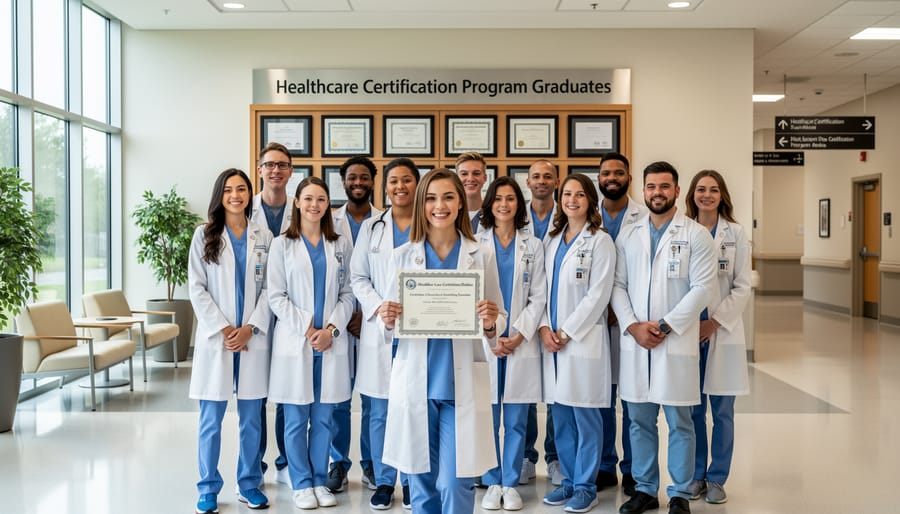
Online healthcare certification programs have revolutionized access to rewarding careers in one of the fastest-growing industries. With the U.S. Bureau of Labor Statistics projecting healthcare employment to grow 13% through 2031—much faster than the average for all occupations—now is an opportune time to pursue certification. These flexible, accessible pathways enable you to balance education with existing responsibilities while gaining credentials that employers actively seek.
Whether you’re a recent graduate exploring entry points into healthcare, a professional considering a career change, or a current healthcare worker advancing your expertise, online certification programs offer practical solutions tailored to your goals. The key is taking that crucial first step: research programs aligned with your interests, verify accreditation credentials, and connect with admissions advisors who can answer your specific questions.
Remember that investing in your healthcare education is investing in job security and meaningful work. Certified professionals consistently report higher satisfaction rates and better employment prospects. Review your options carefully, consider your timeline and budget, and choose a program that positions you for long-term success. The healthcare field needs qualified, compassionate professionals—your journey can start today.