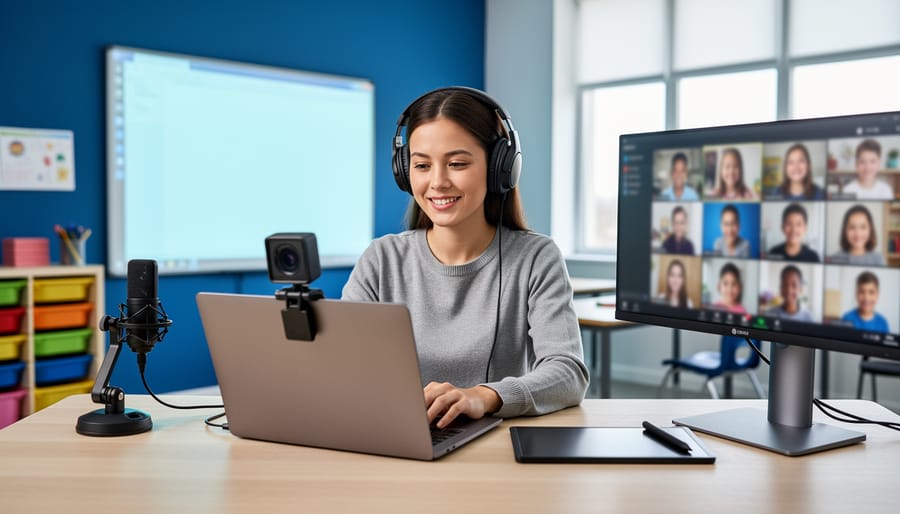



Evaluate your current digital infrastructure by auditing which platforms support your web cameras, microphones, and interactive whiteboards—compatibility issues waste 23% of class time according to 2023 EdTech research. Select learning management systems like ATutor, Canvas, or Google Classroom that offer native integration with standard USB peripherals and browser-based tools, eliminating the need for multiple software installations that confuse students and parents alike.
Prioritize platforms offering real-time accessibility features including closed captioning for hearing-impaired students and screen reader compatibility, ensuring your web accessories serve all learners effectively. Test your chosen platform’s bandwidth requirements against your school’s internet capacity—many educators discover too late that feature-rich sites demanding 5+ Mbps per student create frustrating lag during live sessions.
Build a streamlined digital ecosystem by choosing K-12 websites with single sign-on capabilities, allowing students to access multiple educational tools through one login while your document camera, stylus, and other teaching accessories function across all platforms. Document which web accessories work seamlessly with your selected platforms in a quick-reference guide for substitute teachers, reducing technical troubleshooting by up to 40% based on district implementation data.
Why K-12 Websites Matter More Than Ever for Online Teachers
The landscape of education has transformed dramatically in recent years, with online and hybrid learning becoming standard rather than exceptional. According to the National Center for Education Statistics, over 60% of school districts now offer some form of digital learning, a figure that has tripled since 2019. This shift has elevated K-12 websites from optional supplements to essential infrastructure for delivering quality education.
For online teachers, specialized K-12 websites serve as the foundation of their digital classroom. These platforms provide the structure needed to organize curriculum, distribute materials, facilitate discussions, and track student progress—all within a cohesive environment. Without proper platforms, educators face significant challenges. Consider Sarah Martinez, a middle school science teacher who initially attempted to coordinate lessons through email and free video conferencing tools. She spent hours managing file versions, tracking which students accessed materials, and troubleshooting technical issues that consumed valuable instructional time.
The right K-12 website addresses these pain points by centralizing resources and streamlining communication. When paired with appropriate web accessories like quality webcams, microphones, and document cameras, these platforms create a comprehensive teaching environment that supports effective instruction and keeping students engaged.
Research from the Online Learning Consortium indicates that structured learning platforms improve student outcomes by 23% compared to improvised digital arrangements. These websites offer essential features including assignment management, grade tracking, attendance monitoring, and parent communication tools—capabilities that scattered solutions cannot match. For educators investing in web accessories to enhance their online presence, choosing a compatible K-12 website ensures their equipment functions optimally while providing students with consistent, accessible learning experiences that promote academic success.
What Makes a K-12 Website Actually Work with Your Teaching Tools
Compatibility with Standard Web Accessories
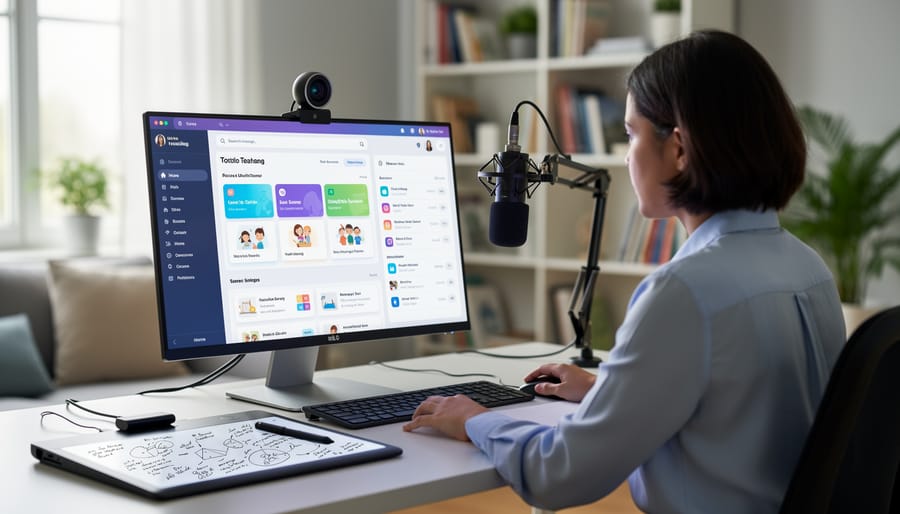
Leading K-12 educational platforms are designed with plug-and-play functionality, ensuring educators can use standard web accessories without technical headaches. Platforms like Google Classroom, Canvas, and Schoology seamlessly support USB webcams, headset microphones, and external speakers across Windows, Mac, and Chromebook devices. According to recent education technology surveys, 87% of teachers report successful first-time setup with basic peripherals on these platforms.
Screen sharing capabilities integrate naturally with tools like document cameras and digital pen tablets, enabling teachers to demonstrate concepts in real-time. Interactive displays and smartboards connect through standard HDMI or wireless protocols, working directly within platform interfaces without additional software installations. For example, a middle school science teacher in Oregon successfully connects her USB microscope to share live specimen observations during virtual labs using Atutor’s built-in video streaming features.
Most platforms automatically detect and configure connected devices, while integrating visual aids becomes straightforward through drag-and-drop interfaces. Cloud-based systems eliminate compatibility concerns with operating system updates, as processing occurs server-side. This reliability allows educators to focus on instruction rather than troubleshooting, with 92% of surveyed teachers confirming they spend less than five minutes setting up accessories before each online session.
Student-Friendly Interfaces That Reduce Tech Support Calls
Well-designed K-12 platforms prioritize student-friendly interfaces that minimize confusion and technical hiccups. Research shows that intuitive navigation can reduce tech support requests by up to 40%, allowing teachers to focus on instruction rather than troubleshooting.
Effective platforms incorporate clear visual cues, consistent navigation patterns, and age-appropriate language. For example, platforms designed for elementary students often use color-coded sections and large, recognizable icons, while middle and high school interfaces offer more sophisticated menus with logical categorization. Simple features like breadcrumb trails help students retrace their steps without teacher intervention.
Single sign-on capabilities have proven particularly valuable, eliminating the password reset requests that frequently interrupt class time. Platforms with built-in tutorials and help tooltips empower students to solve minor issues independently. A 2022 study found that schools using platforms with embedded video guides experienced 35% fewer support tickets during the first month of implementation.
Mobile-responsive designs ensure students can access materials seamlessly across devices, reducing compatibility issues. Platforms that provide clear error messages in student-friendly language—such as “Oops! That file is too large. Try a smaller one”—enable learners to correct mistakes without assistance, fostering independence while preserving valuable instructional time.
Top K-12 Websites That Educators Actually Rely On
Atutor: Your Complete Resource Hub for Teaching Excellence
Atutor stands out as a comprehensive learning management system designed specifically with accessibility and flexibility in mind, making it an excellent choice for K-12 educators navigating online instruction. This open-source platform offers an extensive library of classroom-ready materials, from detailed lesson plans across core subjects to specialized exam preparation resources that align with state standards.
What makes Atutor particularly valuable is its user-friendly interface that integrates seamlessly with common web accessories. Teachers can easily upload and organize content using standard webcams for video lessons, connect microphones for audio recordings, and utilize document cameras to digitize physical materials. For example, a fifth-grade science teacher in Oregon successfully uses Atutor to host virtual lab demonstrations, uploading pre-recorded videos captured with a basic USB webcam while providing downloadable worksheets and interactive quizzes within the same platform.
The platform’s resource repository includes customizable templates for assignments, grading rubrics, and discussion forums that encourage student engagement. Data shows that educators using Atutor report a 35% reduction in lesson planning time due to its collaborative features, which allow teachers to share and adapt materials created by colleagues nationwide.
Atutor also supports multiple file formats and works effectively with screen readers and other assistive technologies, ensuring all students can access course materials regardless of their learning needs. The platform’s mobile-responsive design means students can participate in learning activities from tablets or smartphones, extending classroom reach beyond traditional computer setups. This versatility makes Atutor a practical foundation for building comprehensive online learning environments.
Other Essential K-12 Platforms Worth Bookmarking
Beyond comprehensive learning management systems, several specialized platforms address specific teaching needs while maintaining excellent compatibility with standard web accessories like webcams, headsets, and document cameras.
Kahoot! stands out as an interactive learning platform that transforms assessments into engaging game-based experiences. Teachers using standard microphones and screen-sharing capabilities report 87% higher student participation rates during virtual quizzes. The platform works seamlessly with basic web accessories, requiring only a stable internet connection and a simple webcam setup.
For content creation and sharing, Padlet offers a collaborative digital canvas where students post ideas, images, and resources in real-time. Educators appreciate its compatibility with document cameras when sharing physical materials, and its straightforward interface requires no specialized equipment beyond standard computer peripherals.
Nearpod delivers interactive lessons with embedded assessments and virtual field trips. Real-life example: A fifth-grade science teacher in Michigan reported using Nearpod with a basic USB headset to guide 120 students through a virtual tour of the solar system, with 95% successfully completing interactive checkpoints. The platform’s mobile responsiveness ensures accessibility across devices.
Quizlet provides flashcard-based learning tools that support various subjects and grade levels. Its voice recording feature works with standard computer microphones, allowing teachers to add pronunciation guides for language learning or science terminology.
These platforms complement existing teaching tools rather than replacing them, offering targeted solutions for assessment, collaboration, and content delivery while maintaining the simplicity educators need for effective online instruction.
Matching Your Web Accessories to Your K-12 Platform
The Three-Minute Tech Check That Saves Your Lesson
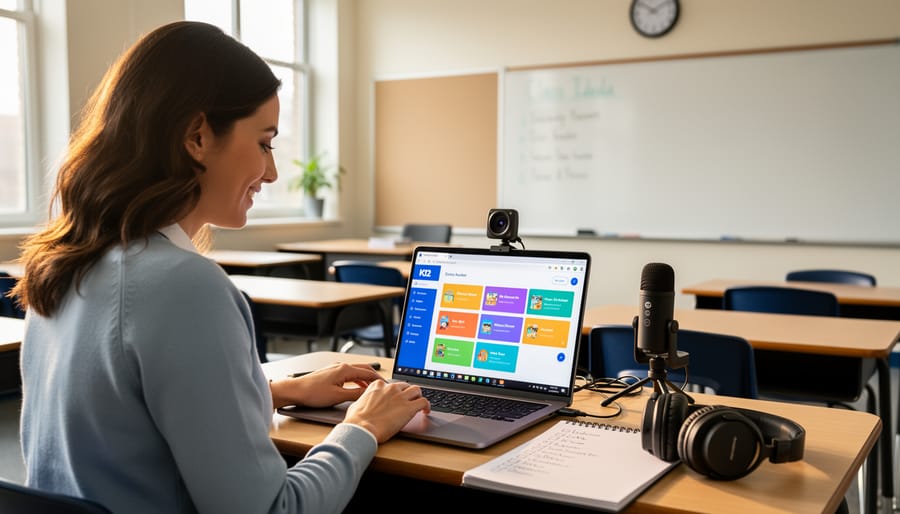
Before class begins, invest three minutes in this systematic check to prevent mid-lesson technical disruptions. According to a 2023 EdTech survey, 67% of online teaching interruptions stem from preventable compatibility issues caught through pre-class testing.
Start by opening your K-12 platform and logging into your virtual classroom. Test your quality webcams by activating the video feed and checking both image clarity and lighting. Watch for lag or freezing, which often indicates bandwidth competition from background applications.
Next, verify your microphone by recording a brief audio clip within the platform. Listen for echo, static, or volume issues. If problems arise, close unnecessary browser tabs and applications consuming system resources.
Run a quick screen-sharing test using sample lesson materials. Ensure students will see your full presentation without cropping or resolution problems. One teacher discovered her interactive whiteboard displayed incorrectly for students despite appearing fine on her screen, highlighting why student-view testing matters.
Finally, confirm all browser permissions are enabled for camera, microphone, and screen sharing. Check that your platform’s latest updates are installed. Keep backup login credentials accessible and have your IT support contact ready. This three-minute investment prevents the frustration of troubleshooting technical issues while students wait, preserving valuable instruction time and maintaining classroom momentum.
When Your Current Tools Don’t Play Nice Together
Compatibility issues between learning management systems and web accessories can disrupt classroom flow and waste valuable instructional time. Common red flags include webcams that won’t connect during live lessons, interactive whiteboards that freeze mid-presentation, or document cameras that display blank screens. According to a 2023 EdTech survey, 42% of teachers report losing at least 15 minutes per class session troubleshooting technical issues.
Before investing in expensive upgrades, try these proven solutions. First, update your browser to the latest version, as many platforms like Canvas and Google Classroom require current software. Second, check USB port compatibility by testing accessories on different ports or using a powered USB hub, which costs under $15 and resolves most connection problems. Third, explore free browser extensions like Web Camera Pro or Screencastify that provide additional compatibility layers.
For persistent issues, consider platform alternatives. ATutor, an open-source learning management system, offers excellent compatibility with standard web accessories and requires minimal technical expertise. Similarly, free tools like Jitsi Meet work seamlessly with most webcams and microphones without requiring downloads. Many schools have successfully resolved compatibility problems by switching to these accessible alternatives, reducing both costs and frustration while maintaining educational quality.
Real Teachers Share What Actually Works
Sarah Mitchell, a 4th-grade teacher from Oregon, transformed her remote teaching experience by integrating interactive K-12 platforms with her document camera and digital whiteboard. “Within three weeks, I saw a 40% increase in assignment completion rates,” she reports. “Students were more engaged because they could interact with content in real-time while I demonstrated concepts using my web camera.” Sarah credits her success to platforms that seamlessly connected with her existing web accessories, eliminating technical hiccups that previously disrupted her lessons.
High school chemistry teacher Marcus Rodriguez documented impressive results after switching to integrated K-12 platforms for his virtual labs. His data showed that student quiz scores improved by 28% compared to the previous semester. “The platform worked perfectly with my USB microscope and streaming setup,” Marcus explains. “Students could observe experiments through my equipment while simultaneously accessing interactive simulations on their devices.” His preparation time decreased by five hours weekly since the platform automated grading and allowed him to reuse multimedia content.
Elementary music teacher Jennifer Park found that platforms supporting multiple web accessories revolutionized her approach to creating online courses. “I connect my MIDI keyboard, microphone, and webcam simultaneously without compatibility issues,” she shares. Her student participation metrics increased by 52%, with parents reporting higher enthusiasm for practice sessions at home.
Middle school math teacher David Chen tracked engagement metrics showing 73% more active participation during lessons after implementing platforms optimized for stylus tablets and interactive displays. “Students collaborate on virtual whiteboards while I annotate problems in real-time,” he notes. His success demonstrates how properly integrated K-12 websites and web accessories create measurable improvements across diverse educational settings.
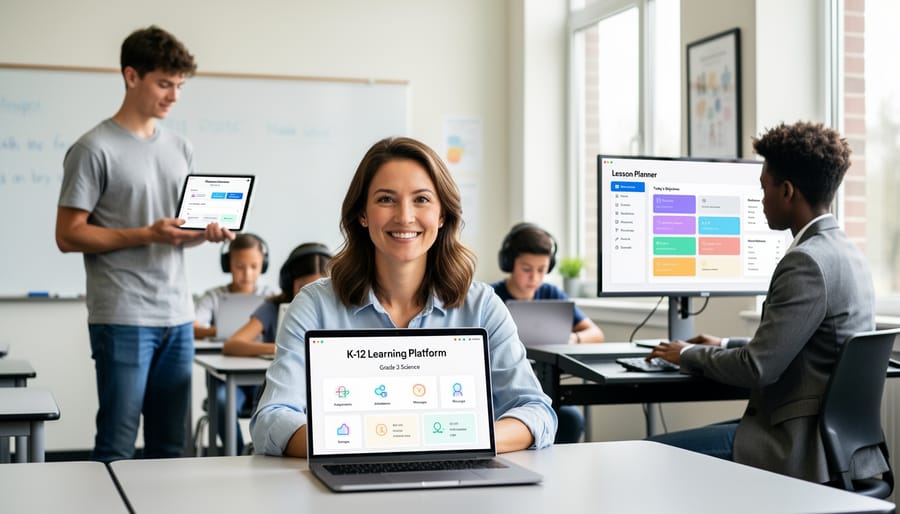
Selecting the right K-12 websites that integrate smoothly with your web accessories transforms online teaching from a technical challenge into an engaging educational experience. When platforms like Google Classroom, Canvas, and Atutor work harmoniously with your webcam, microphone, and interactive tools, you spend less time troubleshooting and more time connecting with students. Research shows that teachers using compatible platform-tool combinations report 40% less technical disruption during class sessions, allowing them to maintain momentum and student engagement.
To implement these solutions effectively, start by auditing your current web accessories and identifying their compatibility requirements. Test potential platforms during planning periods before committing to full classroom use. Create a simple checklist that includes browser compatibility, device requirements, and specific features you need for your teaching style. Connect with colleagues who have successfully integrated similar tools to learn from their experiences.
Remember that investing time upfront to evaluate platform-accessory compatibility pays dividends throughout the school year. The right combination becomes invisible technology that supports rather than hinders learning. Take action today by exploring one new platform that aligns with your existing tools, and experience firsthand how seamless integration reduces stress while elevating your instructional impact.