



Controlling classroom noise requires a layered approach that combines physical tools, behavioral routines, and real-time monitoring. The most effective strategy establishes clear sound expectations before lessons begin, uses visual cues to redirect attention without raising your own voice, and empowers students to self-regulate their volume through structured reflection. Teachers who implement these methods typically see noticeable improvements in classroom acoustics within the first two weeks, creating space for better focus and comprehension across all learning activities.
The connection between noise levels and student performance is well-documented. When sound becomes constant or unpredictable, students struggle to process spoken instructions, leading to repeated questions, off-task behavior, and frustration for everyone in the room. A fifth-grade teacher in Portland found that her students missed key assignment details during whole-class discussions simply because peer chatter created overlapping soundscapes. After introducing a tiered voice-level system and acoustic panels, her students began completing tasks with fewer clarifying questions and greater independence.
Noise control doesn’t mean silence. A productive classroom hums with collaboration, movement, and discovery. The goal is managing sound so it supports learning rather than undermining it. This requires understanding where noise originates, which activities generate the most disruption, and how your physical space either absorbs or amplifies sound. A middle school science teacher discovered that lab days became chaotic not because students misbehaved, but because hard surfaces and close table arrangements created an echo effect that made normal conversation sound like shouting.
The strategies that follow offer a complete framework: from selecting the right materials to troubleshooting persistent challenges. Each technique has been tested in real classrooms and can be adapted to your grade level, subject area, and student needs.
What You’ll Need to Get Started
You don’t need expensive equipment to manage classroom noise effectively. Most successful noise control systems combine simple visual aids with strategic physical materials and optional technology tools you can introduce gradually.
Start with visual aids that communicate expectations without adding to the noise. Create or purchase a noise level chart showing different acceptable volumes, silent, whisper, normal conversation, presentation voice. Laminated hand signal posters help students remember non-verbal cues you’ll use to redirect attention. A visible timer (analog clock, digital countdown, or sand timer) gives students clear endpoints for activities without constant verbal reminders.
For physical classroom improvements, soft materials absorb sound and reduce echo. Consider these essential materials organized by category:
- Visual tools: noise level charts, hand signal posters, visual timers, attention-getting chime or bell
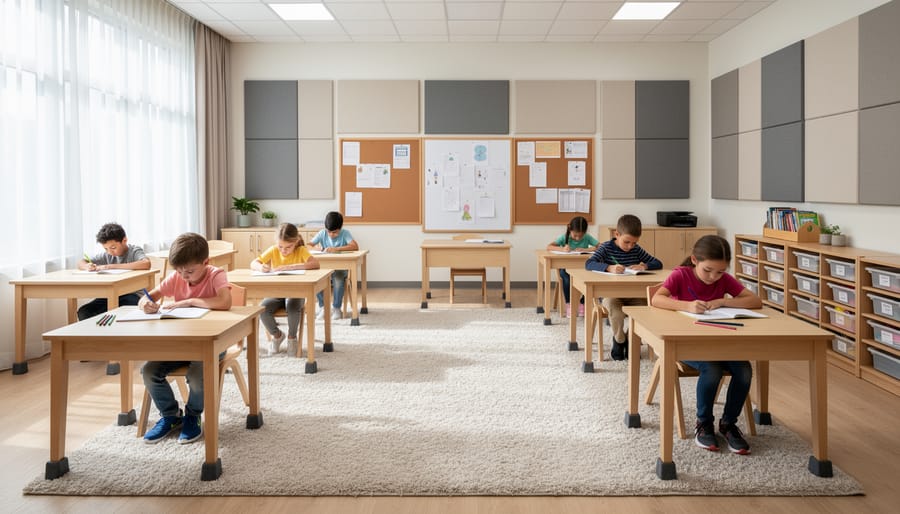
- Physical materials: area rugs or carpet squares, fabric wall hangings, acoustic foam panels or DIY fabric-wrapped boards, tennis balls for chair legs
- Monitoring tools: free sound meter smartphone apps, kitchen timer, stopwatch for transition timing
- Behavior management resources: reward tokens or tickets, class points tracking system, student self-assessment checklists
Technology can enhance your efforts but isn’t required. Free sound meter apps turn your phone into a decibel monitor, helping students visualize their volume. Some teachers use classroom management apps with noise monitoring features, though these work best after you’ve established foundational expectations through simpler methods.
The most critical resource costs nothing: your consistency. Materials support your strategies, but your follow-through determines whether noise management takes hold. Start with basic visual aids and one or two physical improvements, then add tools as you identify specific needs in your classroom.
Important Considerations Before You Begin
Before implementing any noise control strategy, recognize that children and adolescents have developmentally appropriate noise levels, what sounds chaotic may actually reflect healthy collaboration and engagement. The goal is managing disruptive sound, not creating a silent classroom that stifles natural learning interactions.
Avoid punitive approaches that shame students for normal exuberance or penalize them for participating actively. Consequences that humiliate or isolate students damage classroom climate and undermine the trust required for effective management. Instead, frame noise control as a shared responsibility that helps everyone learn better.
Some students have sensory sensitivities, auditory processing challenges, or hearing difficulties that make them particularly vulnerable to loud environments or sudden sound changes. An inclusive classroom accommodates these needs through flexible seating, noise-canceling headphones for individual work, and advance warning before high-volume activities. Students with ADHD may struggle with auditory distractions while also benefiting from movement and talk opportunities, effective ADHD classroom tips balance structure with necessary breaks.
Finally, assess your own tolerance and biases. What registers as too loud often reflects teacher stress levels, time of day, or personal preferences rather than objective disruption. Monitor whether noise genuinely interferes with learning or just feels uncomfortable to you.
7 Step-by-Step Strategies to Control Classroom Noise
Strategy 1: Establish Clear Noise Level Expectations
Start by defining four distinct noise levels your students can easily recognize and apply. Level 0 means complete silence for independent work and testing. Level 1 allows whisper voices for partner collaboration, students should only be heard by their immediate neighbor. Level 2 permits normal conversation voices for small group discussions where everyone at the table can participate. Level 3 is presentation voice, loud enough for the whole class to hear clearly.
Create a visual chart displaying these levels with simple icons: a finger to lips for Level 0, two heads close together for Level 1, a small circle of students for Level 2, and a student at the front for Level 3. Post this chart prominently and reference it before each activity. Instead of saying “quiet down,” you can simply state “We need Level 1 voices now” or point to the appropriate level.
Practice these distinctions explicitly during the first week. Have students demonstrate each level, then self-assess whether their current voice matches the posted expectation. This concrete framework eliminates ambiguity about what “inside voice” or “not too loud” actually means, giving students clear targets they can monitor themselves.
Strategy 2: Use Non-Verbal Signals and Cues

Non-verbal signals let you redirect student attention without raising your own voice above the noise you’re trying to reduce. Start with a simple raised hand, when you lift yours, students mirror the gesture and quiet down. This cascading effect typically brings a class to silence within 10-15 seconds once students know the routine.
Visual timers create urgency without verbal reminders. Project a countdown on your board during transitions or independent work, and students learn to self-regulate their volume as time runs low. Pair this with finger countdowns (holding up five fingers, then four, three, two, one) to signal the final moments before an activity ends.
Light systems work particularly well for younger students. A three-color approach mirrors traffic lights: green for group discussion volume, yellow for partner talk, red for silent work. Toggle between colors as activities change, and students adjust their voices accordingly.
Attention-getting chimes, a single bell ring or rain stick, cut through chatter more effectively than shouting. The novelty captures focus, and because the sound is pleasant rather than harsh, students respond positively rather than defensively. Teach students that when they hear the chime, they freeze their current action and look at you for the next instruction.
Strategy 3: Design Your Physical Space for Sound Control
Your classroom’s physical layout directly affects how sound travels and accumulates. Strategic furniture arrangement acts as your first line of defense against noise escalation.
Start by positioning desks in clusters rather than rows to contain conversation within small groups instead of letting it spread across the room. Place bookshelves, filing cabinets, and other tall furniture perpendicular to walls to break up sound waves before they bounce back amplified. Create a dedicated quiet zone in one corner with a rug, bean bags, and partitions where students can work without distraction.
Soft materials absorb sound that hard surfaces reflect. Add area rugs under group work spaces, hang fabric panels or student artwork on walls, and place tennis balls on chair legs to eliminate scraping noise. Position noisy activity centers like building blocks, science stations, and collaborative project areas away from the quiet zone and reading corner.
One third-grade teacher transformed her classroom by moving her reading area to the far corner with a bookshelf barrier, adding carpet squares under each desk cluster, and designating the back table for hands-on activities. Students could immediately feel the difference, and she noticed conversations stayed contained within their intended groups rather than spreading across the room. The key is testing your layout and adjusting based on where noise builds up during actual lessons.
Strategy 4: Implement Structured Transition Routines
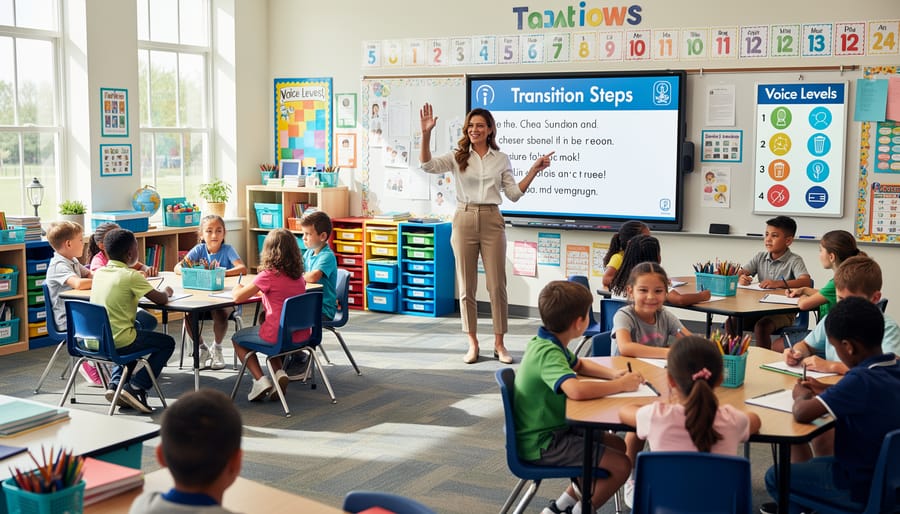
Transitions between activities generate predictable noise spikes, shuffling papers, moving chairs, students calling out questions about what comes next. A structured transition protocol eliminates this chaos by giving students clear, sequential steps to follow.
Start by teaching your 5-minute transition routine explicitly before using it. Project or post the steps: stop current work, put materials away quietly, check the board for next instructions, gather needed supplies, move to new location or arrangement. Practice each step separately, then string them together.
During actual transitions, set a visible timer showing remaining time. This creates urgency without you raising your voice. Use non-verbal cues, pointing to the timer, holding up fingers for minutes left, rather than verbal reminders that add to noise.
Build in buffer time between activities so students who finish early wait quietly instead of filling silence with chatter. A thirty-second breathing exercise or silent reading while others complete the transition keeps the room calm and focused, preventing volume from escalating during these vulnerable moments.
Strategy 5: Teach Active Listening and Voice Modulation
Many students genuinely don’t realize how loud they sound during discussions or group work. Teaching voice modulation begins with helping them identify different volume levels through demonstration. Show students what a “whisper voice” sounds like versus a “table talk voice” (audible only to nearby partners) versus a “whole class voice.” Have students practice each level, then ask them to self-assess which voice they’re using during activities.
Active listening instruction is equally important. Teach specific behaviors: eyes on the speaker, bodies still, waiting three seconds before responding, and paraphrasing what they heard before adding their own thoughts. Practice these skills through structured partner conversations where students take turns speaking and listening, then reflect on what made the exchange successful.
Create simple self-monitoring tools students can use independently. A desktop “voice level reminder” card with color-coded levels (green for whisper, yellow for partner talk, red for presentation voice) helps students check themselves without teacher intervention. During collaborative work, pause periodically and ask students to rate their own voice level and listening quality on a scale of one to three. This builds metacognitive awareness that carries over even when you’re not actively monitoring, transforming noise management from teacher enforcement into student skill development.
Strategy 6: Schedule Intentional Noise Breaks
Strategic noise breaks work because they give students controlled outlets for natural energy instead of letting volume gradually escalate throughout the day. Schedule five-minute movement breaks every 45-60 minutes during intensive instruction, simple activities like stretching sequences, quick walks around the building perimeter, or silent dance parties with headphones allow physical release without disrupting learning momentum.
Designated talk periods serve a different purpose. Build in three to five minutes after sustained quiet work where students can freely discuss topics, share ideas, or simply chat with neighbors at normal conversation levels. This prevents the whisper creep that occurs when students suppress the urge to communicate for too long. One middle school teacher schedules “pressure valve moments” before transitions, allowing brief social interaction that actually reduces hallway noise because students aren’t bottling up conversation needs.
Outdoor time provides the highest-impact noise break when available. Even ten minutes outside gives students space to use full voices, run, and reset their internal volume calibration before returning to classroom expectations. When weather prevents outdoor breaks, designate a corner of your room or use the gymnasium for brief high-energy intervals that acknowledge students’ developmental need for movement and louder interaction.
Strategy 7: Use Positive Reinforcement Systems
Positive reinforcement shifts the focus from punishment to recognition, creating intrinsic motivation for students to maintain appropriate noise levels. This approach celebrates cooperation rather than penalizing enthusiasm.
Implement a simple visual tracking system where the class earns recognition when everyone maintains target noise levels during work periods. A marble jar, sticker chart, or digital counter provides immediate feedback. When the class reaches a milestone, celebrate with a preferred activity, extra recess, music during independent work, or choice reading time.
Individual acknowledgment works alongside class-wide systems. Quietly thank specific students who model appropriate voice levels: “I noticed your group used inside voices during that discussion, that helped everyone concentrate.” This specific praise reinforces desired behavior without singling out strugglers.
A middle school teacher uses “noise level champions” who rotate weekly. These student monitors observe and recognize peers who demonstrate excellent voice control, reporting positive examples during closing circle rather than policing violations.
Tie recognition to effort and improvement, not perfection. A class that reduces their typical volume shows progress worth celebrating, even if they haven’t achieved silent work yet. This growth mindset approach sustains motivation and builds community ownership of the learning environment.
How to Know If Your Strategies Are Working
Measuring progress requires both objective observation and student input. Track noise levels across different times of day and activities using simple tallies or decibel meter apps. Notice whether students can maintain focus during independent work, transition smoothly between activities without volume spikes, and engage in discussions without shouting over each other. These behavioral indicators often reveal more than sound measurements alone.
Create a simple observation checklist covering specific moments when noise typically builds, morning arrival, after recess, group work sessions, pack-up time. Note whether your established signals work on the first attempt or require repetition. Pay attention to how quickly students return to appropriate volume levels after high-energy activities. If you’re consistently needing multiple reminders or raising your own voice, your current approach needs adjustment.
Student feedback provides essential perspective. Ask directly: “Do you feel like you can concentrate when you need to?” or “What helps you remember to use your inside voice?” Their answers reveal whether your strategies feel supportive or restrictive. Watch for improvements in work completion rates and quality, fewer complaints about classmates being too loud, and students self-correcting their volume without prompting.
If you’re not seeing progress after two weeks of consistent implementation, examine whether expectations are developmentally appropriate, signals are clear and consistently used, and positive behaviors receive genuine recognition. Sometimes the strategy itself works fine, but timing or delivery needs refinement. Adjust one variable at a time so you can identify what actually drives improvement in your specific classroom context.
Common Questions About Classroom Noise Control
Managing classroom noise raises practical questions for educators at every level. Here are answers to the challenges teachers encounter most often.
What are appropriate noise levels for different classroom activities?
Silent independent work should allow students to hear themselves think, partner discussions should be audible only to the pair, and small group collaboration can involve normal conversation volumes that don’t carry across the room. Whole-class discussions naturally involve louder voices, while presentations require one voice to be clearly heard above background silence.
How do I handle students who resist noise management strategies?
Meet with resistant students individually to understand their perspective, some may struggle with impulse control, others might not grasp why noise matters. Involve them in creating solutions, assign leadership roles in monitoring noise levels, and recognize improvement rather than expecting perfection immediately.
Can these strategies work in open classroom layouts or shared spaces?
Yes, though they require coordination with neighboring teachers on shared signals and transition times. Use portable room dividers, strategic furniture placement, and headphones for individual work to create acoustic boundaries even without walls.
What if I have limited resources for materials like noise monitors or sound-absorbing panels?
Start with free solutions, hand signals, designated quiet zones, and structured routines cost nothing. Repurpose classroom items like tennis balls on chair legs, fabric wall hangings for sound absorption, and student-created visual cue cards instead of purchasing specialized equipment.
The distinction between productive and disruptive noise matters significantly. Engaged discussion, collaborative problem-solving, and enthusiastic learning often involve higher volumes, that’s healthy. Disruptive noise lacks purpose, prevents others from working, or continues after redirection. Trust your judgment about whether sound indicates engagement or distraction.
For educators managing an online classroom noise control shifts to microphone management and teaching students to mute when not speaking. Clear protocols for online collaboration prevent the chaos of multiple unmuted participants while preserving opportunities for interaction.
Give new strategies at least two weeks of consistent implementation before judging their effectiveness. Students need time to internalize expectations, and you need time to refine your approach for your specific group.
Controlling classroom noise isn’t about creating silence, it’s about fostering an environment where learning thrives alongside healthy interaction. The seven strategies outlined here work together to reduce disruptive sound while preserving the vibrant energy that makes classrooms engaging spaces.
Start small. Choose one or two techniques that fit your teaching style and classroom dynamics, then implement them consistently for several weeks. Observe what changes, what challenges emerge, and how your students respond. As these strategies become routine, layer in additional approaches until you’ve built a comprehensive noise management system that feels natural rather than forced.
Remember that students are your partners in this process, not obstacles to overcome. When you involve them in setting expectations, teach them the skills they need to self-regulate, and acknowledge their efforts, they become invested in maintaining a productive sound environment. Consistency matters more than perfection, stick with your chosen strategies even when progress feels slow, and trust that incremental improvements compound over time into lasting change.