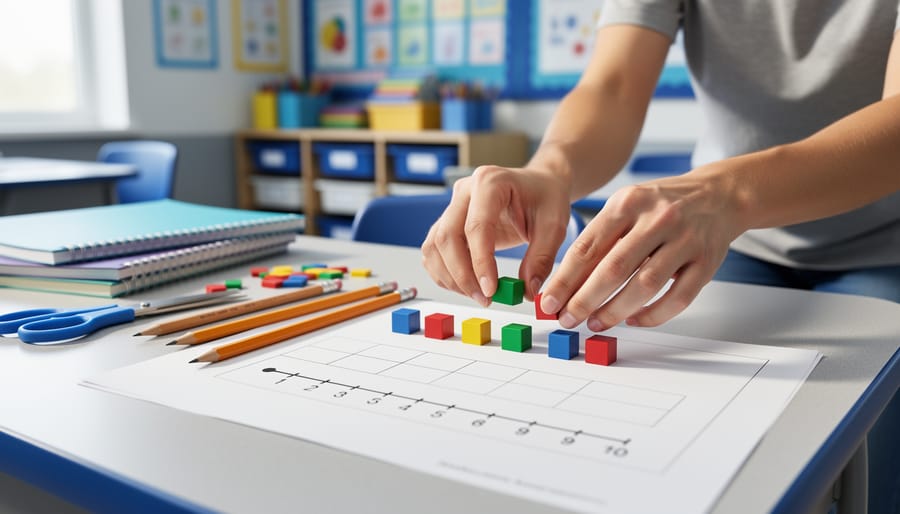



Teaching place value effectively begins with concrete manipulatives and systematic progression through ones, tens, hundreds, and beyond, paired with consistent formative assessment to catch misconceptions before they calcify. The concept forms the backbone of every later mathematical operation students will encounter, from multi-digit addition to decimal operations and algebraic thinking.
Most elementary classrooms already contain the essential tools: base-ten blocks, place value charts, and number lines. The challenge lies not in accessing materials but in sequencing instruction so students grasp why 23 means two groups of ten plus three ones, not just two numbers side by side. When a second-grader reads 47 as “forty-seven” but writes 407 for the same number, they’ve memorized language without understanding positional structure.
Current resource systems like BC Learning Pathways and the Coast Metro Elementary Math Project now provide educators with structured assessment tools, math games, and instructional routines that address the full cycle of planning, teaching, classroom assessment, and reporting. These platforms include material filters for activities, games, and teaching strategies sorted by grade band, whether you’re working with lower primary students just encountering two-digit numbers or upper elementary learners wrestling with decimals.
The instruction that works moves deliberately from physical objects students can touch and group to pictorial representations and finally to abstract numerals. Throughout this progression, the teacher’s role centers on asking the right questions at the right time: “How many tens do you see? What happens if we trade ten ones for one ten? Can you show me this number a different way?” These prompts reveal whether a student truly understands place value or simply follows procedural steps.
Essential Materials and Resources for Place Value Instruction
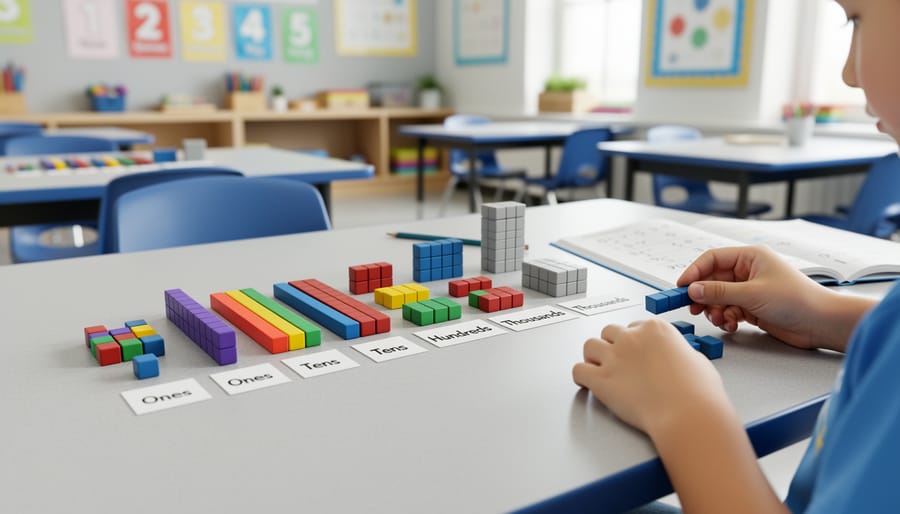
Effective place value instruction starts with the right toolkit. You need physical manipulatives that students can touch and rearrange, digital resources that engage different learning modes, and curriculum-aligned materials that connect directly to your provincial framework. Rather than assembling random worksheets, focus on comprehensive resource systems that support the entire instructional cycle.
The BC Learning Pathways series provides ongoing resources specifically designed to help teachers develop students’ numeracy skills across all learning areas. These resources demonstrate how numeracy connects with the entire K-12 curriculum, classroom assessment, and student reporting. They support you through planning, teaching, assessing, and reporting student learning, ensuring coherence across your instructional approach.
For elementary educators, the Coast Metro Elementary Math Project offers a well-organized hub with dedicated sections for math games, assessment tools, instructional routines, practice questions, and children’s literature connections. The project includes Indigenous connections and French resources, making it adaptable for diverse classroom contexts.
When selecting materials, consider these essential categories:
- Physical manipulatives such as base-ten blocks, place value charts, and number lines
- Digital tools including interactive apps and web-based activities aligned with your curriculum
- Assessment resources for formative evaluation and progress monitoring
- Instructional routine guides that provide consistent frameworks for daily practice
- Practice question banks organized by concept and difficulty level
- Children’s literature connections that introduce place value through stories and real-world contexts
Resource Bank search systems let you filter by material type, choosing among activities, assessments, games, lessons, and teaching strategies. You can narrow by educational use, curriculum instruction, formative assessment, or professional development. Grade-level filters organize materials for Lower Primary (K-2), Upper Primary (3-5), Middle School (6-8), and High School (9-12), ensuring age-appropriate content. Language filters accommodate English and French instruction.
Start with your grade level, then select material types that match your current instructional phase. If you are planning new lessons, filter for activities and teaching strategies. When monitoring understanding, choose formative assessment resources. This targeted selection prevents overwhelm and helps you find exactly what you need for each stage of instruction.
When to Pause or Adjust Your Instruction
Effective place value instruction requires constant observation and willingness to adjust course when students show confusion. Watch for these checkpoint signals: students consistently writing numbers incorrectly (347 as “three hundred forty-seven” in digits but placing digits out of order), inability to compare values within the same place (thinking 60 is smaller than 9), or relying solely on memorized procedures without conceptual understanding. When three or more students in a class struggle with the same concept, pause whole-group instruction and return to concrete representations using visual manipulatives before moving forward.
Formative assessment serves as your primary decision-making tool for pacing adjustments. Quick checks, asking students to represent a number three different ways, explain why 203 differs from 230, or identify the value of a specific digit, reveal whether foundational understanding exists. If students cannot justify their reasoning or default to procedural answers without explaining the underlying concept, they need more time with hands-on exploration and verbal explanation before written practice. Assessment tools available through resources connected to K-12 curriculum help identify these gaps systematically, allowing you to differentiate support while maintaining instructional momentum for students who demonstrate readiness to advance.
Step-by-Step Process for Teaching Place Value
Planning with Curriculum-Aligned Resources
Start by identifying resources that connect directly with your grade-level curriculum outcomes. BC Learning Pathways offers materials demonstrating how numeracy connects across K-12 subjects, classroom assessment, and student reporting. These resources support the complete instructional cycle: planning, teaching, assessing, and reporting student learning.
When searching resource banks, use filters to narrow your selection. Filter by material type, activities, assessments, games, lessons, and by educational use such as curriculum instruction or formative assessment. Grade-level filters (K-2, 3-5, 6-8, 9-12) ensure age-appropriate materials. The Coast Metro Elementary Math Project provides organized tabs for math games, assessment tools, instructional routines, and practice questions specifically designed for elementary instruction.
Match resources to your lesson planning steps by reviewing what each tool offers. An instructional routine might anchor your direct teaching, while practice questions provide independent work. Assessment tools help you monitor understanding before moving forward. Choose resources that align with your learning outcomes rather than collecting materials without clear purpose. This targeted approach builds coherent lessons where each component supports your specific place value objectives.
Implementing Instructional Routines and Practice

Daily instructional routines form the backbone of effective place value teaching. Start each session with a five-minute number talk focused on place value relationships, ask students to represent the same number using different arrangements of tens and ones, or to compare two three-digit numbers and explain their reasoning. These brief, consistent openings activate prior knowledge and build fluency without requiring extensive preparation.
Math games provide repeated practice while maintaining student engagement. Rotate through two or three games each week, allowing students to become comfortable with the structure while working with different numbers. Games work particularly well during small group instruction where you can observe student strategies and address misconceptions immediately. Keep games brief, ten to fifteen minutes, so they complement rather than replace direct instruction.
Practice questions should appear throughout your lessons, not just at the end. After introducing a new concept, pose a question for students to solve independently, then discuss multiple solution methods. This approach reveals different thinking strategies and helps students recognize that place value problems can be solved in various ways. Maintain consistency by using similar question types across several sessions before introducing variations, giving students time to develop confidence with each format.
Assessment and Progress Monitoring
Assessment connects directly with teaching decisions through observation and evidence collection during instruction. Watch for students’ ability to decompose numbers, explain digit values in their own words, and apply concepts across different problem contexts rather than relying solely on memorization.
The Coast Metro Elementary Math Project provides assessment tools that align with curriculum expectations, helping you gauge where students are in their understanding and what support they need next. These tools work alongside your classroom observations to build a complete picture of student progress. Use assessment strategies that capture both procedural fluency and conceptual understanding, such as exit tickets showing multiple representations of the same number or short explanations of why regrouping works.
BC Learning Pathways resources demonstrate how classroom assessment connects with provincial frameworks and supports student reporting. This connection ensures your assessment data serves multiple purposes: informing your next lesson, identifying students who need intervention, and providing evidence for reporting periods. Keep assessment frequent and low-stakes so you can adjust instruction before misconceptions solidify, using the feedback loop to refine your approach rather than waiting for summative tests to reveal gaps.
Verifying Student Understanding and Planning Next Steps
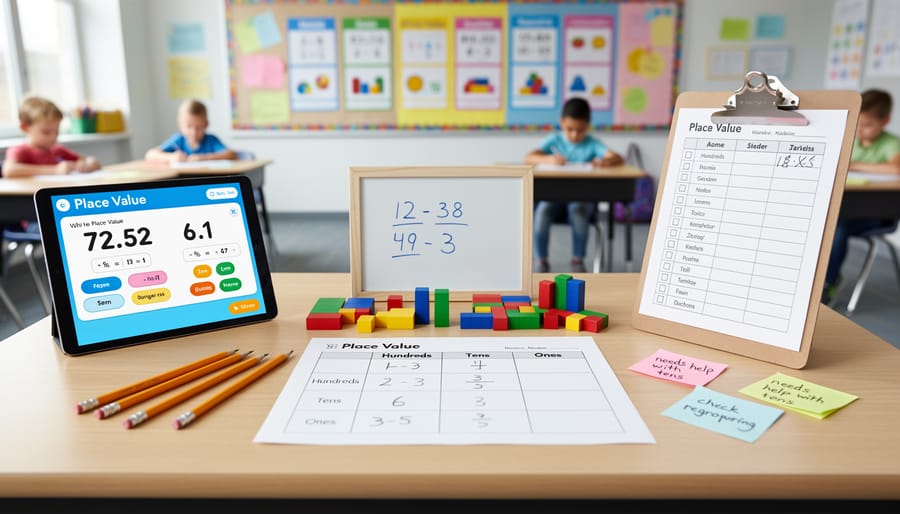
Genuine mastery of place value shows when students can apply concepts flexibly across different contexts, not just complete isolated worksheets. Look for evidence that learners can explain their reasoning, represent numbers in multiple ways, and identify errors in place value work. A student who truly understands can articulate why 245 is different from 254, decompose numbers using various strategies (200 + 40 + 5 or 24 tens + 5 ones), and justify their approach to solving problems.
Classroom assessment provides the data you need to make instructional decisions. Rather than relying on a single test score, gather evidence through observations during instructional routines, analysis of student work samples, and targeted questioning that reveals thinking processes. Assessment tools available through curriculum-aligned resource collections can help you identify specific areas where students demonstrate confidence or struggle.
Connect your classroom assessment findings directly to student reporting by documenting observable skills. When you report that a student “understands place value to thousands,” base that statement on evidence such as consistent accurate performance with manipulatives, written representations, and problem-solving tasks. This documentation creates a clear progression path and helps you determine appropriate next steps.
Decide to advance when students demonstrate consistent understanding across multiple representations and can transfer their knowledge to new situations. If assessment reveals gaps, revisit foundational concepts using different instructional approaches rather than simply repeating the same activities. For students who show early mastery, differentiate by introducing applications that connect place value to estimation, rounding, or operations with larger numbers. Your formative assessment cycle, plan, teach, assess, report, guides these decisions and ensures instruction matches where students actually are in their learning progression.
Common Questions About Teaching Place Value
What grade level should I start teaching place value concepts?
Place value instruction begins in kindergarten with foundational counting and grouping activities, then progresses through grade 12 as students apply these concepts to increasingly complex numbers and operations. Use Resource Bank filters for Lower Primary (K-2), Upper Primary (3-5), Middle School (6-8), and High School (9-12) to find grade-appropriate materials that match your students’ current developmental stage.
How do I choose between physical manipulatives and digital resources?
Both serve valuable purposes at different instructional stages. Physical manipulatives work best for initial concept introduction and hands-on exploration, while digital tools can provide immediate feedback and varied practice opportunities. The BC Learning Pathways resources include both formats, and you can filter by material type, Activity/Lab, Game, or Teaching/Learning Strategy, to match your instructional need.
What should I do when students continue struggling with place value despite repeated instruction?
Return to more concrete representations and slower pacing, using formative assessment to identify specific misconceptions. The Coast Metro Elementary Math Project provides assessment tools and instructional routines designed to support struggling learners, and you can access professional development resources through Resource Bank filters to strengthen your own instructional approaches.
How does place value instruction connect with broader numeracy skills across the curriculum?
Place value understanding supports estimation, measurement, data interpretation, and proportional reasoning in all subject areas. BC Learning Pathways resources demonstrate these connections with the entire K-12 curriculum and show how numeracy skills apply beyond mathematics class, helping you integrate place value concepts into science, social studies, and other learning areas.
These questions reflect the most common implementation challenges educators face when teaching place value. Your specific context, grade level, student population, available resources, will shape which questions become most relevant in your practice.
When selecting resources to address these questions, use the available filters strategically. The Resource Bank’s educational use categories help you distinguish between materials for direct instruction, formative assessment, and your own professional learning. If you teach in a French immersion program, language filters ensure you find appropriate materials without searching through English-only resources.
The connection between classroom assessment and student reporting matters here. As you answer questions about student progress and next steps, the assessment tools available through these resource systems align with provincial frameworks, giving you consistent language and criteria for documenting learning. This alignment simplifies the reporting process while maintaining focus on genuine understanding rather than surface-level task completion.
Effective place value instruction does not require inventing new techniques from scratch. The foundation is straightforward: choose resources appropriate for your grade level, establish consistent instructional routines, and use formative assessment to understand what students know and what they need next. The literacy and numeracy resources connected to K-12 curriculum provide practical support throughout the planning, teaching, assessment, and reporting cycle, making it easier to implement evidence-based practices in your classroom. Teaching place value well means matching your instruction to where students are, not where you hope they should be, and adjusting as their understanding develops.