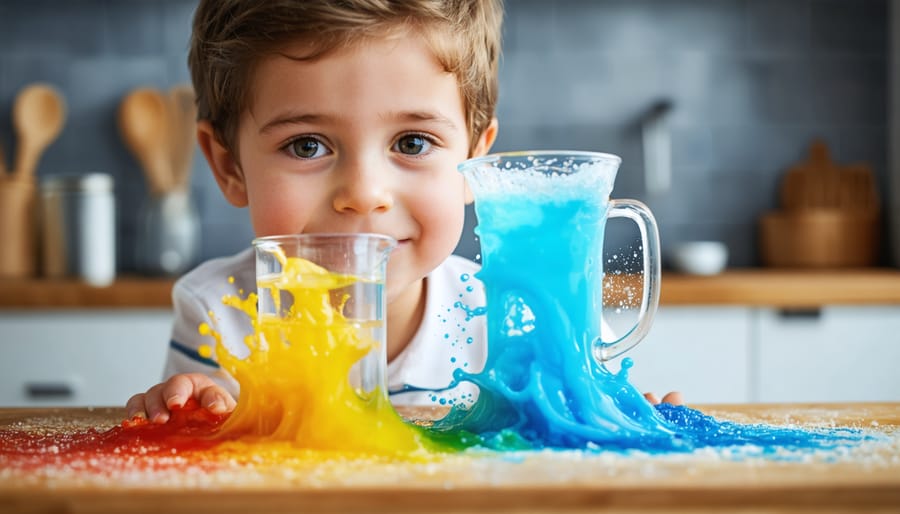



Transform your preschooler’s natural curiosity into scientific discovery with simple, engaging experiments that spark wonder and develop critical thinking skills. Young children are natural scientists, constantly questioning and exploring their world, and implementing age-appropriate STEM activities during these formative years lays the foundation for lifelong learning.
These early experiences with science don’t require complex equipment or extensive preparation – just everyday materials and an enthusiastic guide. Whether you’re a parent looking to enhance weekend playtime or an educator designing lesson plans, these activities combine fun with fundamental scientific concepts that three-to-five-year-olds can grasp and enjoy.
From observing color-changing chemical reactions in the kitchen to exploring simple physics with ramps and balls, these hands-on experiments capture young minds while developing essential skills like prediction, observation, and cause-and-effect understanding. Each activity has been carefully selected to match preschoolers’ developmental capabilities while challenging them to think, question, and discover.
Safe Kitchen Science Adventures
Colorful Chemical Reactions
Introducing young children to chemical reactions can be both exciting and educational when done safely with common household ingredients. The classic baking soda and vinegar experiment becomes even more engaging with the addition of food coloring, creating a colorful, fizzy spectacle that captivates young minds.
Start by setting up several clear containers on a protected surface. Add 2-3 drops of different food colors to separate containers. Pour about 1/4 cup of vinegar into each container and watch as the colors swirl. Now comes the exciting part – let your child add a teaspoon of baking soda to each container and observe the rainbow of fizzy reactions!
For added engagement, try these variations:
– Use plastic bottles instead of containers for contained “eruptions”
– Create a color-mixing experiment by combining different food colorings
– Add dish soap for extra bubbles and longer-lasting reactions
– Use pipettes or droppers for fine motor skill practice
While supervising the activity, encourage children to describe what they see, hear, and observe. Ask questions like “What happens when we mix the ingredients?” and “Which color makes the biggest bubbles?” This helps develop scientific thinking and vocabulary.
Remember to wear old clothes or aprons, as food coloring can stain. Always supervise children closely and remind them not to touch or taste the mixtures.
Floating and Sinking Fun
Exploring why objects float or sink is one of the most engaging water-based experiments for young children. This activity introduces basic concepts of density while keeping little scientists entertained and curious.
Start by gathering simple household items like plastic toys, metal spoons, wooden blocks, and cork. Fill a clear container with water and invite children to make predictions about which objects will float or sink. Before testing each item, encourage them to feel its weight and texture, developing their observational skills.
Create a simple chart using pictures where children can sort objects into “floaters” and “sinkers.” This visual aid helps reinforce their learning and introduces basic data collection. To extend the activity, try adding salt to water to demonstrate how changing water density affects floating objects.
Safety tip: Always supervise children during water activities and use break-resistant containers. Keep towels nearby for spills and ensure the floor isn’t slippery.
For added fun, introduce boats made from aluminum foil. Children can experiment with different shapes and discover how design affects flotation. This hands-on experience helps develop fine motor skills while teaching fundamental scientific principles in an age-appropriate way.
Remember to ask open-ended questions like “What do you notice?” and “Why do you think that happened?” to encourage critical thinking and scientific discussion.
Nature Explorer Activities

Weather Watch Station
Turn your young scientists into meteorologists with this engaging weather observation station. Using simple materials like a clear jar, construction paper, and basic craft supplies, children can create their own weather tracking center that makes learning about weather patterns fun and interactive.
Start by helping children set up a daily weather chart using pictures to represent different weather conditions – sunny, cloudy, rainy, or windy. Each morning, encourage them to look outside and mark the day’s weather. This activity develops observation skills and helps them recognize weather patterns over time.
Create a simple wind sock using tissue paper and a paper tube to observe wind direction and strength. Hang it outside where children can easily see it move with the breeze. For rainfall observation, place a clear plastic container with straight sides outside during rainy weather and help children mark the water level with a marker.
Make weather predictions part of your daily routine by asking questions like “What do you think the weather will be like today?” and “Why do you think that?” This encourages critical thinking and helps children connect visual clues with weather outcomes.
Remember to keep the activities simple and observation-based. Young children learn best through direct experience, so focus on what they can see and feel rather than complex weather concepts. Celebrate their discoveries and encourage them to share their weather observations with family and friends.
Plant Growth Investigation
Young children are naturally curious about how things grow, making basic gardening experiments perfect for introducing scientific concepts. Start by having children plant bean seeds in clear plastic cups with damp paper towels pressed against the sides. This allows them to observe the entire germination process, from root development to sprout emergence.
Create a simple investigation by planting identical seeds in different conditions. Use three cups: one in sunlight, one in shade, and one in darkness. Help children make daily observations and record changes through simple drawings. This hands-on experience teaches them about plant needs while developing their observation skills.
Another engaging activity involves growing carrot tops in shallow water. Place the cut top of a carrot in a shallow dish with water, and watch as new greens sprout. Children can measure growth using building blocks or their fingers, introducing basic measurement concepts.
For a sensory-rich experience, plant herbs like mint or basil. Children can smell, touch, and eventually taste their growing plants, making connections between gardening and food. Remember to use child-safe tools and non-toxic plants, supervising all activities closely.
These plant investigations help develop fine motor skills, patience, and an early understanding of scientific processes while fostering a connection with nature.

Sensory Science Exploration

Touch and Texture Tests
Touch and texture exploration is a fundamental way for young children to understand the physical world around them. Create a sensory bin filled with different materials like uncooked rice, dried beans, cotton balls, and smooth stones. Encourage children to describe how each item feels using simple words like “soft,” “hard,” “rough,” or “smooth.”
Set up a texture sorting activity using everyday items with distinct surfaces. Include sandpaper, felt, bubble wrap, aluminum foil, and fabric scraps. Ask children to group similar textures together and explain their choices. This helps develop vocabulary while strengthening observation skills.
Create texture rubbings by placing various textured items under plain paper and rubbing with crayons. Items like leaves, coins, or brick surfaces work well. This activity combines scientific observation with artistic expression, making it especially engaging for young learners.
Make “mystery bags” containing different objects, and have children guess what’s inside using only their sense of touch. This builds prediction skills and helps children understand that objects can be identified by more than just sight.
For a more advanced activity, introduce temperature sensing by providing safe items at different temperatures (room temperature water bottle, cool ice pack, warm sock filled with rice). Always ensure materials are at safe temperatures and supervise closely during these explorations.
Remember to encourage discussion and questioning throughout these activities, as this helps develop critical thinking and scientific vocabulary.
Sound Science Games
Sound exploration offers exciting opportunities for young children to discover the fascinating world of acoustics through play. Start with simple sound-making activities using household items like rice-filled plastic containers to create homemade shakers. Encourage children to experiment with different materials like beans, pasta, or small pebbles to compare sounds.
Create a DIY xylophone using water-filled glass jars. Fill each jar with different amounts of water and let children gently tap them with a spoon to discover how water levels affect pitch. This activity combines scientific observation with musical exploration.
Set up a sound investigation station where children can explore various materials and their sound properties. Include items like rubber bands stretched over boxes, metal pots and wooden spoons, or paper towel tubes as speaking trumpets. Guide children to notice how different materials create unique sounds when tapped, plucked, or blown into.
Introduce simple rhythm games that combine movement with sound creation. Have children stomp, clap, or tap in patterns, helping them understand how sounds can be organized and repeated. Use everyday objects to create a “sound wall” where children can explore different textures and materials that make interesting noises when touched or manipulated.
Remember to discuss sound safety, teaching children about appropriate volume levels and protecting their ears from loud noises. These activities develop scientific thinking while nurturing musical creativity and sensory awareness.
Safety and Support Tips
When conducting simple science activities with young children, safety should always be your top priority. Start by creating a dedicated workspace that’s well-ventilated and easy to clean. Use a sturdy table at an appropriate height, and ensure children have stable seating that allows them to focus on the activities.
Always supervise children closely during experiments, especially when using water, small objects, or any materials that could potentially be hazardous. Keep materials like baking soda, vinegar, and food coloring in clearly labeled containers, and store them out of children’s reach when not in use.
Before starting any activity, establish clear rules and boundaries. Teach children basic lab safety habits, such as not touching their face during experiments, keeping materials away from their mouth, and washing hands before and after activities. Make wearing protective equipment fun by calling safety goggles “scientist glasses” and aprons “lab coats.”
Supporting children’s learning during these activities is equally important. Use open-ended questions to encourage critical thinking: “What do you think will happen next?” or “Why do you think that happened?” Allow children to make predictions and test their hypotheses, even if they’re incorrect. This builds confidence and develops scientific thinking skills.
Be prepared to adapt activities based on individual needs and attention spans. Some children may need more time to explore, while others might require additional guidance. Keep extra materials handy for unexpected spills or if children want to repeat an experiment.
If an activity isn’t going as planned, remain positive and use it as a learning opportunity. Sometimes “failed” experiments can lead to the most valuable discussions and discoveries. Remember to document activities through photos or simple drawings, allowing children to reflect on their experiences and share them with others.
Maintain a first aid kit nearby and familiarize yourself with any allergies or sensitivities children may have. Choose non-toxic, child-safe materials whenever possible, and always read product labels carefully before use. If multiple adults are present, establish clear roles and communication channels to ensure smooth activity flow and proper supervision.
Introducing young children to science during their formative years creates a strong foundation for lifelong learning and curiosity. Through simple experiments and hands-on activities, children aged 3-5 develop critical thinking skills, improve their observation abilities, and begin to understand basic scientific concepts that will serve them throughout their academic journey.
The activities we’ve explored not only make science fun and accessible but also help children develop important skills like problem-solving, prediction, and communication. When children engage in scientific exploration at an early age, they learn to ask questions, make connections, and develop a natural enthusiasm for discovery that can shape their future relationship with learning.
Parents and educators play a crucial role in fostering this scientific curiosity. By providing safe, age-appropriate activities and encouraging questions, we create an environment where young minds can flourish. Remember that science doesn’t require expensive equipment or complicated setups – many meaningful experiments can be conducted with everyday household items.
Start small, be consistent, and celebrate every discovery. Whether it’s watching ice melt, growing plants, or exploring simple chemical reactions, each activity builds confidence and understanding. The wonder in a child’s eyes when they make their first scientific discovery is truly priceless, and it’s never too early to begin this exciting journey of exploration and learning.