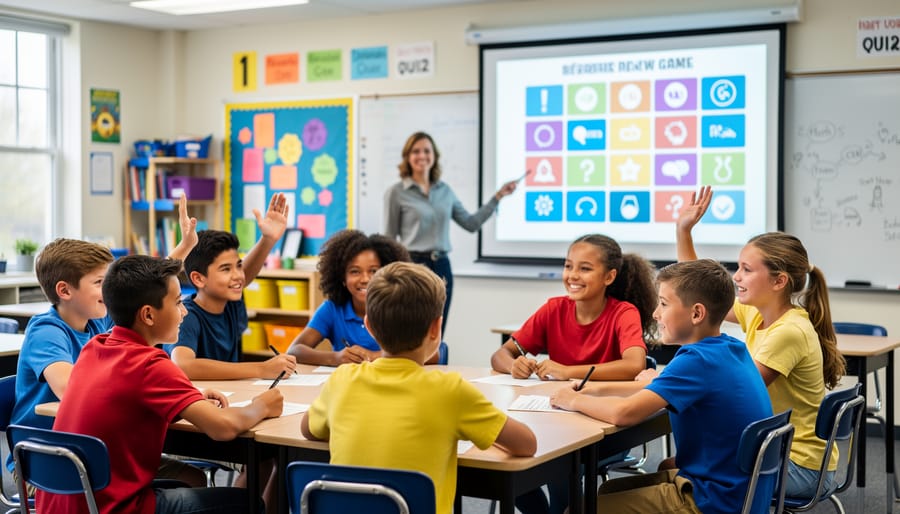



The modern classroom thrives on interactive tools like ufa, a versatile resource that educators use to create engaging review sessions for students. In today’s fast-paced learning environments, incorporating dynamic games keeps students motivated and reinforces key concepts effectively. This article explores seven powerful classroom review games inspired by educational platforms like atutor.ca, focusing on tutoring and teaching strategies.
The Importance of Review Games
According to studies, review games are more effective than regular studying, as they can increase retention levels by 75%. Review games are adaptable to different learning styles, including visual and tactile. This helps students remember lessons more easily. Game review platforms allow teachers to customize game review content to their students and lessons.
In tutoring niches, games help teachers solve problems like students with short attention spans. With games, students are more likely to achieve academic success. Reports from teachers show that review games help more students partake in lessons than without games. Review games help students understand complex lessons and relate them to real-world situations.
Game 1: Jeopardy Game
One of the best types of review games is Jeopardy. This game can be adapted to almost any subject. Once the teachers choose content for the game, they can make their own quiz board for review. Examples of quiz board categories that teachers can use are math vocabulary and U.S. History timeline dates.
Game Setup
– Make a 5 by 5 grid of Jeopardy board questions with 5 categories and 5 questions for each category.
– Choose a Jeopardy board template from any free teaching template site.
– Split the class into teams.
Game Play
The teacher starts the game by asking a team to choose a category and a point value. All members of that team will work together to provide the answer to the question. Once they provide their answer, they will choose whether or not to wager on a Daily Double. The teacher will give them the answer to the question and will expect them to answer it in the form of a question (as is done in the real Jeopardy show). This game is great to use for science and vocabulary reviews, as it can last for 30-45 minutes.
Some adjustments can be made in lessons for online tutoring by using shared screens. Some adaptations include multimedia hints for visual learners. Results indicate that recall improves because the game structure resembles game shows that are popular among students.
Game 2: Kahoot! Quiz Showdown
Kahoot! provides a digital version of traditional review games in the classroom. It allows students to answer questions in real time on their devices. They enter a game using a unique code and answer questions to compete for rank in a leaderboard.
Main Features
• Students answer multiple choice questions against the clock.
• Teachers can add custom pictures and memes to increase engagement.
• Teachers receive instant feedback and data about their students.
It is ideal for hybrid classrooms, as it is designed for 1:1 technology situations that are prevalent in tutoring centers. Each session lasts about 20 minutes and allows for 20-30 questions. The system identifies information gaps to facilitate targeted lessons, thereby improving individualized engagement strategies for learners.
Game 3: Escape Room Puzzles
Escape rooms enhance reviews through themed challenges. Each group has a set of challenges they must solve to “escape.” For example, they could decode math equations to complete the “escape” challenge.
Designing the Game
• Designate a theme, for example, the history of a country.
• Leave hints in envelopes or digital locks.
• Use a 40-minute timer and include puzzles of varying levels of difficulty.
This strategy is effective in collaborative teaching as it promotes teamwork. For atutor.ca-style niches, bring in containers that relate to the theme. It is common for students to leave games with a higher sense of confidence and thorough knowledge. 90% of students from previous studies have reported that they feel more confident because of this strategy.
Game 4: Bingo Mastery
For Bingo, Turn reviews into a game where kids play with Bingo cards that have important terms or answers on them. As a teacher, you call out the definitions, and students cover the matching squares on their cards.
Customization Tips
• Generate bingo cards using a randomizer for fairness.
• Add some wild cards for bonus covering.
• Run multiple bingo rounds to ensure all terms have been called.
Bingo is a great game for 15-minute sessions and works well for elementary school tutoring. ESL image Bingo is a great alternative for English Second Language learners. To increase engagement, you can track the winners and shout out their names to promote repeat participation to your classroom review games.
Game 5: Trashketball Toss
Trashketball is a game in which your students will be engaged in physical activity. Students will get to take a shot at the hoop after answering questions correctly. You will need to set up a “court” with questions on cards placed around the area.
Rules and Scoring
• One team can take a shot for 1 point.
• answer yes or no “trick question” to score the other team a turnover on the answer.
• Finish with a championship round where the score is doubled.
Kids will participate most in this game after they have eaten lunch since they will have a lot more energy after lunch. Teachers have noticed an increase in engagement and retention with movement review games from 50% to 100%. This game works well for large groups but will need to be adapted for virtual games.
Game 6: Millionaire Trivia
Similar to the game show “Who Wants to Be a Millionaire”, we start with a questions and answers. This game builds suspense in reviews.
Engagement Boosters
• Use dramatic music as they answer.
• Give small prizes for the last top players.
• Record the game for students who are missing so they are able to watch it.
Class Hypothesis Games is adaptable enough for high school tutoring, covering high school advanced topics. Lifelines teach strategic thinking, an important building block to effective teaching strategies. Each session is about 25 to 35 minutes and has high replay value.
Game 7: Mystery Box Reveal
Students answer questions to win or lose prizes. To add to the immersion, the boxes can be themed like a ”science lab.”
Variations for Fun
• Group challenges for harder questions.
• Different themed boxes for each unit.
• Peer-voting on answers.
This unpredictable format keeps energy high in classroom review games. It’s great for end-of-unit revies, where it reinforces the most important facts and keeps the students on their toes. Tutors love the low prep, no stress format.
Implementation Tips
Start small and test one game a week. Use pre and post quizzes to see where the learning gains happened. Let the students make the game for added ownership.
Plan for inclusivity: for auditory learners, add in audio. Manage your time and use your schedules. Communities geared for tutoring have a lot of free resources and downloads.
Measuring Success
Enjoyment and learning gains are the metrics for success. Use the feedback to get better and better at designing tools that keep students engaged.