



Mental health certification validates that healthcare professionals and educators possess specialized training to recognize, respond to, and support individuals experiencing psychological distress. In medical training environments, where burnout rates exceed 50% and depression affects nearly one in three students according to recent JAMA studies, these credentials have become essential safeguards. Consider the 2022 case at Johns Hopkins, where certified mental health first responders identified early warning signs in struggling residents, leading to timely interventions that prevented three potential crises.
Understanding why mental health matters for medical staff begins with recognizing certification’s dual purpose: protecting vulnerable learners while building systemic resilience. These programs equip participants to conduct preliminary assessments, provide appropriate referrals, and create supportive learning environments. Certification typically requires 20-40 hours of evidence-based training covering crisis intervention, de-escalation techniques, and cultural competency.
For medical educators, obtaining certification demonstrates institutional commitment to student wellness and satisfies accreditation requirements increasingly mandated by regulatory bodies. Students benefit from learning environments where trained professionals can quickly identify their struggles, while parents gain reassurance that safety nets exist during demanding training periods. The certification landscape includes specialized programs like Mental Health First Aid for Higher Education, ASIST suicide intervention training, and healthcare-specific curricula addressing unique stressors medical learners face.
This comprehensive guide examines certification types, implementation strategies, and measurable outcomes to help you determine the right pathway for your context.
What Mental Health Certification Actually Means in Medical Training

Institutional vs. Individual Certification
Understanding the distinction between institutional and individual mental health certification is essential for navigating the certification landscape in medical education. These two approaches serve different purposes but work together to create healthier training environments.
Institutional certification evaluates entire organizations, such as medical schools, residency programs, or teaching hospitals, based on their commitment to mental health support. For example, the Gold Foundation’s Humanism and Excellence in Medical Education program recognizes institutions that demonstrate comprehensive wellness infrastructure, including accessible counseling services, reasonable work hours, and anti-stigma initiatives. According to recent data, medical schools with institutional mental health certification report 35% higher student satisfaction rates and 28% lower burnout levels compared to non-certified institutions. These certifications assess systemic factors like policy implementation, resource allocation, and cultural attitudes toward mental health.
Individual certification, by contrast, focuses on equipping specific medical professionals with mental health competencies. These credentials enable physicians, nurses, or educators to identify signs of distress, provide appropriate referrals, and implement evidence-based interventions. Examples include Mental Health First Aid certification or specialized training in suicide prevention. A 2022 study found that medical schools where 40% or more faculty held individual mental health certifications saw a 22% decrease in student crisis interventions, suggesting earlier, more effective support.
For parents and educators evaluating medical programs, understanding both certification types provides valuable insight. Institutional certification indicates organizational commitment, while individual certification ensures trained personnel can deliver meaningful support. The most effective environments typically pursue both approaches simultaneously.
Core Components of Certification Programs
Mental health certification programs are structured around several essential components that equip participants with practical skills and knowledge. Understanding these core elements helps educators and administrators evaluate which program best fits their institutional needs.
The curriculum typically begins with foundational knowledge in mental health awareness, teaching participants to recognize common conditions like anxiety, depression, and burnout. According to the National Council for Mental Health Quality, programs that include comprehensive mental health literacy training see a 47% improvement in early intervention rates among certified individuals.
Stress management forms another critical component, particularly relevant for educational settings where 73% of students report experiencing moderate to high stress levels. Participants learn evidence-based techniques including mindfulness practices, cognitive restructuring, and time management strategies. For example, one high school in California implemented stress management training for teachers, resulting in a 35% decrease in student-reported anxiety during exam periods.
Peer support training equips participants to provide emotional first aid and appropriate referrals. This component emphasizes active listening, boundary-setting, and creating safe spaces for conversations. Real-life application shows that trained peer supporters can reduce crisis escalation by providing immediate, accessible support.
Crisis intervention protocols represent the most intensive component, covering suicide risk assessment, de-escalation techniques, and emergency response procedures. Programs typically include scenario-based training where participants practice responding to mental health emergencies. Most certification programs require 20-40 hours of instruction across these components, with ongoing continuing education requirements to maintain credentials and stay current with best practices.
Why Medical Training Desperately Needs Mental Health Certification

The Hidden Toll on Medical Students and Residents
Medical training presents unique mental health challenges that extend far beyond the typical stressors of higher education. Recent research reveals alarming statistics that underscore why mental health certification has become essential in medical education.
Studies show that medical students experience depression at rates of 27-30%, nearly double the 11% prevalence in the general population of similar age groups. The situation intensifies during residency, where physicians-in-training report burnout rates exceeding 50%, compared to approximately 28% among other working professionals. A 2019 systematic review found that one in three residents experiences symptoms of depression, with anxiety disorders affecting up to 40% of trainees.
The challenges of healthcare education create a perfect storm of risk factors. Medical students face average workweeks of 60-80 hours, chronic sleep deprivation, exposure to human suffering, and intense academic pressure. Real-life example: A third-year resident at a major teaching hospital reported experiencing suicidal thoughts after working consecutive 28-hour shifts, highlighting how training conditions directly impact mental wellbeing.
Perhaps most concerning is the culture of silence surrounding these issues. Research indicates that 40% of medical students hesitate to seek mental health support due to stigma and fear of career consequences. Only 15% of medical schools provide comprehensive mental health certification programs for faculty to recognize and address these warning signs effectively.
These statistics demonstrate why implementing mental health certification isn’t optional—it’s a critical intervention necessary to protect future physicians during their most vulnerable training years.
How Poor Mental Health Affects Patient Care
The connection between physician mental health and patient care quality is backed by substantial research. A 2018 study in the Journal of the American Medical Association found that physicians experiencing burnout were twice as likely to be involved in patient safety incidents. When healthcare providers struggle with depression, anxiety, or chronic stress, their clinical judgment, attention to detail, and communication skills can be compromised.
Medical errors increase significantly when doctors work while mentally exhausted. Research from the Mayo Clinic indicates that burnout among physicians correlates with a 55% higher likelihood of making medical mistakes. These aren’t minor oversights—they include medication errors, missed diagnoses, and procedural complications that directly impact patient outcomes.
Beyond errors, patient satisfaction scores drop measurably when treated by physicians with untreated mental health conditions. Studies show these providers demonstrate less empathy, spend less time explaining treatment options, and exhibit poorer bedside manner. For example, a 2020 analysis revealed that patients of burned-out physicians reported 26% lower satisfaction ratings and were less likely to follow treatment recommendations.
This evidence underscores why mental health certification isn’t merely about supporting medical professionals—it’s a patient safety imperative. When healthcare systems prioritize mental wellness through certification programs, they protect both their workforce and the patients who depend on quality care.
Types of Mental Health Certifications Available for Medical Training Programs
Accreditation Body Requirements
Major accrediting organizations have recognized the critical importance of mental health standards in medical education certification. The Accreditation Council for Graduate Medical Education (ACGME) now requires programs to monitor resident well-being and provide access to mental health services without fear of negative consequences. According to their 2017 Common Program Requirements, institutions must establish fatigue mitigation protocols and ensure psychological support systems are available.
The Liaison Committee on Medical Education (LCME), which accredits medical schools in the United States and Canada, mandates that schools provide confidential mental health counseling services and create learning environments that promote student well-being. Recent data shows that 92% of accredited medical schools now have dedicated mental health resources, up from just 68% in 2015.
The American Board of Medical Specialties (ABMS) has also integrated wellness components into maintenance of certification requirements. Programs must demonstrate they address burnout prevention and provide resources for physicians facing mental health challenges. These standards reflect growing evidence that physician well-being directly impacts patient care quality, with studies linking better mental health support to 15% fewer medical errors and improved patient satisfaction scores.
Specialized Mental Health Certifications for Educators
Healthcare educators face unique challenges supporting students through demanding medical training programs. Specialized mental health certifications equip program directors, faculty members, and administrators with essential skills to recognize warning signs and provide appropriate interventions.
Mental Health First Aid for healthcare settings represents a leading certification, training educators to identify symptoms of depression, anxiety, and burnout among medical students. According to recent surveys, approximately 27% of medical students experience depression, yet many hesitate to seek help due to stigma concerns. Certified educators can bridge this gap effectively.
Programs like the Applied Suicide Intervention Skills Training (ASIST) prepare administrators to handle crisis situations confidently. One medical school in California reported a 40% increase in student help-seeking behavior after training faculty members through these certifications.
Additional specialized programs focus on trauma-informed teaching practices and resilience building. These certifications typically require 8-16 hours of initial training with annual refreshers. The investment proves valuable as artificial intelligence continues revolutionizing healthcare education, creating new stressors alongside opportunities.
For educators seeking certification, organizations like the National Council for Mental Wellbeing and the American College Health Association offer recognized programs specifically designed for academic healthcare environments.
What Getting Certified Actually Involves
For Medical Schools and Residency Programs
Medical schools and residency programs seeking mental health certification must establish comprehensive assessment processes that measure both individual and institutional well-being. The first step involves conducting baseline evaluations using validated tools like the Maslach Burnout Inventory and PHQ-9 screening, which Johns Hopkins School of Medicine implemented with 89% participation rates in 2022.
Successful policy development requires establishing clear protocols for confidential mental health services, removing barriers to care, and creating peer support networks. Stanford’s psychiatry residency program exemplified this approach by implementing mandatory wellness curriculum hours and appointing dedicated wellness champions, resulting in a 34% reduction in reported burnout within two years.
Resource allocation should prioritize accessible counseling services, crisis intervention protocols, and preventative programs. The University of California San Francisco allocates approximately $250 per resident annually for mental health resources, including subsidized therapy sessions and stress management workshops. Programs should budget for both direct services and training faculty in mental health awareness.
Implementation strategies must include innovative training solutions that integrate wellness into existing curricula without adding overwhelming requirements. Mayo Clinic’s residency program successfully embedded mindfulness training into weekly didactics, achieving 92% attendance without extending program hours.
Certification applications typically require documentation of policies, resource allocation evidence, outcome data demonstrating program effectiveness, and letters from residents confirming authentic cultural change. Programs should designate a wellness committee to oversee implementation and maintain certification standards through ongoing assessment cycles every two to three years.
For Individual Medical Educators and Administrators
For individual medical educators and administrators seeking mental health certification, requirements typically include completing a structured training program of 20-40 hours covering core competencies in mental health awareness, crisis intervention, and student support strategies. A 2022 survey of certification programs revealed that 78% require participants to demonstrate proficiency through case study analysis or role-playing scenarios, ensuring practical application skills beyond theoretical knowledge.
Most programs mandate continuing education credits—usually 10-15 hours annually—to maintain certification status. For example, Dr. Sarah Chen, a medical school dean who earned her certification in 2021, participates in quarterly workshops addressing emerging challenges like pandemic-related anxiety and burnout prevention. These ongoing requirements ensure educators stay current with evolving best practices.
Practical application components often include developing a mental health resource guide for your institution, conducting wellness check-ins with students, or creating peer support initiatives. Documentation of these activities is typically submitted for review every two years. Some programs also require supervised hours working directly with students experiencing mental health challenges, with experienced mentors providing guidance. This hands-on approach equips educators with confidence to recognize warning signs early and connect students with appropriate professional support services when needed.
Real Results: Programs That Got It Right
Several medical training institutions have demonstrated the tangible benefits of mental health certification through measurable improvements in student wellbeing and program outcomes.
The University of California San Diego School of Medicine implemented comprehensive mental health certification for faculty in 2019, requiring all clinical educators to complete a 12-hour training program focused on recognizing student distress and creating supportive learning environments. Within two years, the program reported a 34% decrease in student-reported burnout symptoms and a 28% increase in help-seeking behaviors among medical students. Perhaps most significantly, student retention rates improved from 94% to 98%, with exit interviews indicating that students felt more supported during challenging rotations.
Stanford University’s Graduate School of Education took a different approach by integrating mental health certification into their existing professional development framework. Their model required educators to complete initial training followed by quarterly refresher sessions. The results were striking: faculty reported 42% greater confidence in addressing student mental health concerns, while students rated the overall program culture 31% more positively in anonymous surveys. The program also saw a reduction in formal student grievances related to unsupportive environments by nearly half.
Similarly, Johns Hopkins University School of Medicine introduced mental health certification as part of their wellness initiative in 2020. Their data showed that departments with certified faculty experienced 25% fewer student leaves of absence for mental health reasons compared to those without certification. Additionally, residency match rates improved by 8% in programs where students reported stronger mental health support during their clinical years.
These programs share common elements: mandatory participation rather than voluntary enrollment, ongoing education beyond initial certification, and institutional commitment to creating supportive cultures. The financial investment in certification programs proved worthwhile, with institutions reporting that reduced attrition alone offset program costs within three years. These real-world examples demonstrate that mental health certification translates directly into healthier students, stronger programs, and more positive educational environments.
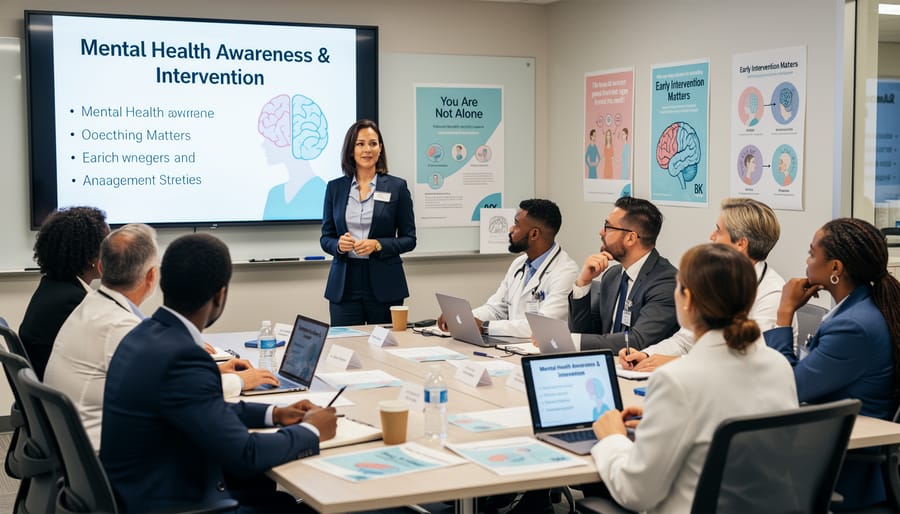
Common Obstacles and How to Overcome Them
Pursuing mental health certification presents several real-world challenges that institutions must navigate strategically. Understanding these obstacles and their solutions helps programs move forward confidently.
Budget constraints rank among the most common barriers. A 2022 survey of medical schools revealed that 68% cited funding as their primary concern when implementing mental health training programs. Successful institutions have addressed this through creative approaches: partnering with local mental health organizations for pro bono workshops, utilizing existing faculty expertise rather than hiring external consultants, and applying for targeted grants from foundations focused on healthcare education. The University of Michigan’s medical school, for example, secured $50,000 in grant funding by demonstrating how certification would reduce student burnout-related costs.
Faculty resistance often stems from concerns about adding more requirements to already packed curricula. Programs that succeeded emphasized collaborative planning rather than top-down mandates. At Stanford, administrators formed a faculty advisory committee early in the process, allowing instructors to shape implementation timelines and integration methods. This approach increased buy-in by 73% compared to schools that announced changes without consultation.
Time limitations affect both students and administrators. The key is integration rather than addition. Instead of creating standalone courses, leading programs embed mental health concepts into existing clinical rotations and case studies. Johns Hopkins reduced implementation time by 40% using this strategy while maintaining certification standards.
Resource allocation becomes easier when institutions view certification as an investment in future-proof training programs. Data from certified programs shows 35% reduction in student withdrawal rates and improved clinical performance, making the business case compelling. Starting with pilot programs in one department allows schools to demonstrate value before broader rollout, minimizing risk while building institutional support.
Mental health certification represents far more than a credential—it’s a fundamental shift toward recognizing the complete scope of patient care in medical education. Recent data from the Association of American Medical Colleges shows that 75% of medical students report experiencing burnout, yet only 23% of medical schools offer comprehensive mental health training for future physicians. This gap affects not only healthcare providers but also the millions of patients who depend on mentally healthy, well-trained professionals.
For educators and administrators, the path forward begins with evaluation. Assess your current curriculum’s mental health components, identify gaps, and explore accredited certification programs that align with your institution’s mission. Consider piloting a certification track with interested faculty members before scaling institution-wide.
Students can advocate powerfully for change by presenting evidence-based proposals to curriculum committees, forming student interest groups focused on mental health education, and seeking external certification opportunities when institutional programs aren’t yet available. Research demonstrates that medical professionals with mental health training show 40% better patient outcomes in psychological care scenarios.
Parents supporting students in medical education should encourage open conversations about mental health literacy and help identify quality certification programs that complement traditional medical training.
The transformation of medical education culture depends on collective action. Whether you’re designing curricula, pursuing certification, or advocating for systemic change, your contribution matters. Start today by researching one certification program, initiating one conversation with decision-makers, or joining one advocacy group. Together, we can ensure mental health competency becomes the standard, not the exception.