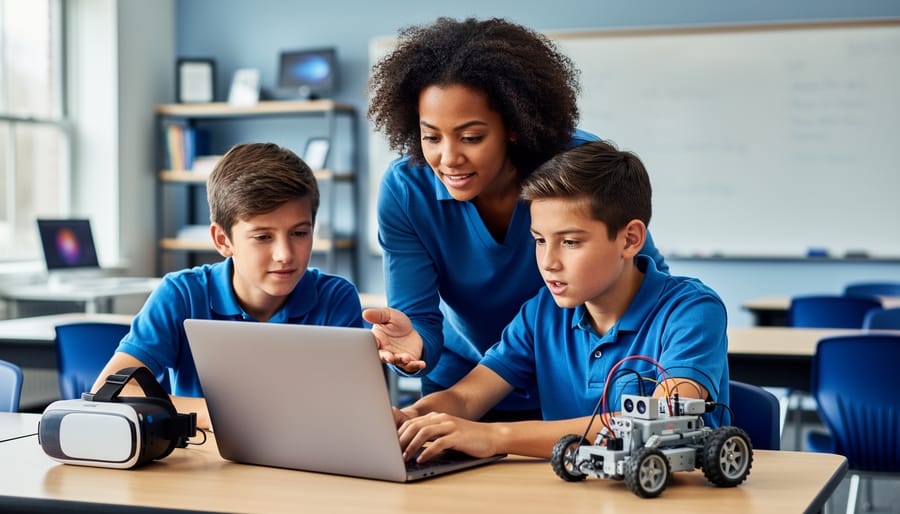



Education is undergoing its most significant transformation in decades, driven by technologies and methodologies that are fundamentally reshaping how students learn and teachers instruct. Artificial intelligence now personalizes learning paths for individual students in real-time, while virtual reality transports learners to ancient civilizations or inside the human body. These aren’t distant possibilities—over 65% of educators already integrate at least one digital innovation into their classrooms, according to recent EdTech research.
The challenge facing educational professionals today isn’t whether to adopt these innovations, but which ones deliver measurable results and how to implement them effectively without overwhelming existing systems. A middle school in Ohio increased student engagement by 40% after introducing gamified learning platforms, while a California district reduced achievement gaps by 23% through adaptive learning software that adjusts difficulty based on student performance.
This landscape of innovation spans far beyond flashy gadgets. Competency-based education models allow students to progress at their own pace rather than arbitrary grade levels. Microlearning breaks complex subjects into digestible five-minute modules that fit modern attention spans. Collaborative online platforms connect classrooms across continents, fostering global citizenship and cultural awareness.
Understanding which innovations align with your specific educational context—whether you’re managing a district budget, planning curriculum, or teaching daily lessons—requires cutting through marketing hype to examine evidence-based practices that work. The following analysis provides that clarity, offering data-driven insights and practical implementation strategies for today’s most impactful educational innovations.
AI-Powered Personalization: Teaching That Adapts to Every Student
How Adaptive Learning Platforms Work in Practice
AI-powered learning tools are transforming classrooms by dynamically responding to individual student needs in real-time. Platforms like DreamBox Learning and Khan Academy demonstrate this innovation through sophisticated algorithms that continuously assess student performance and adjust content accordingly.
When a student struggles with a particular math concept, these platforms immediately recognize the difficulty pattern. For example, DreamBox’s adaptive engine analyzes over 48,000 data points per student per hour, identifying specific misconceptions. If a fifth-grader consistently misses fraction problems involving division, the system temporarily reduces complexity, providing scaffolded practice with visual models before gradually reintroducing more challenging problems.
Carnegie Learning’s MATHia platform offers another practical application. The system detects when students attempt to game the system by randomly clicking answers, prompting targeted hints and requiring demonstration of understanding before progression. Research shows students using MATHia achieved 15% higher growth rates compared to traditional instruction methods.
These platforms also provide teachers with actionable dashboards. Educators receive detailed reports highlighting class-wide knowledge gaps and individual student struggles, enabling precise intervention. A middle school in Georgia reported that after implementing adaptive platforms, remedial intervention time decreased by 30% because teachers could identify and address learning gaps before they compounded.
The measurable impact is clear: students receive personalized pacing, immediate feedback, and appropriately challenging content, while educators gain valuable insights for targeted support.
What Educators Can Do Right Now
Educators can begin integrating innovative practices today without major budget investments. Start by exploring free personalized learning platforms like Khan Academy, which adapts content based on student performance, or Google Classroom’s differentiation features. According to recent studies, 73% of teachers report improved student outcomes when using adaptive learning tools at least twice weekly.
Begin small by implementing one digital tool per quarter. For example, use Quizlet for vocabulary building or Padlet for collaborative discussions. These platforms offer free tiers suitable for most classroom needs. Create student learning profiles documenting strengths, challenges, and preferences—this foundational step requires only observation and note-taking but significantly enhances instructional planning.
Leverage existing resources creatively: record mini-lessons for students to review at their own pace, establish learning stations with varied activity types, or partner with colleagues to share digital resources. The University of Michigan found that teachers who collaborated on technology integration saw 45% higher adoption rates than those working independently.
Remember, innovation doesn’t require perfection. Start with one strategy, gather student feedback, adjust accordingly, and build from there.
Virtual and Augmented Reality: Making Abstract Concepts Tangible
Real Classrooms Using VR/AR Successfully
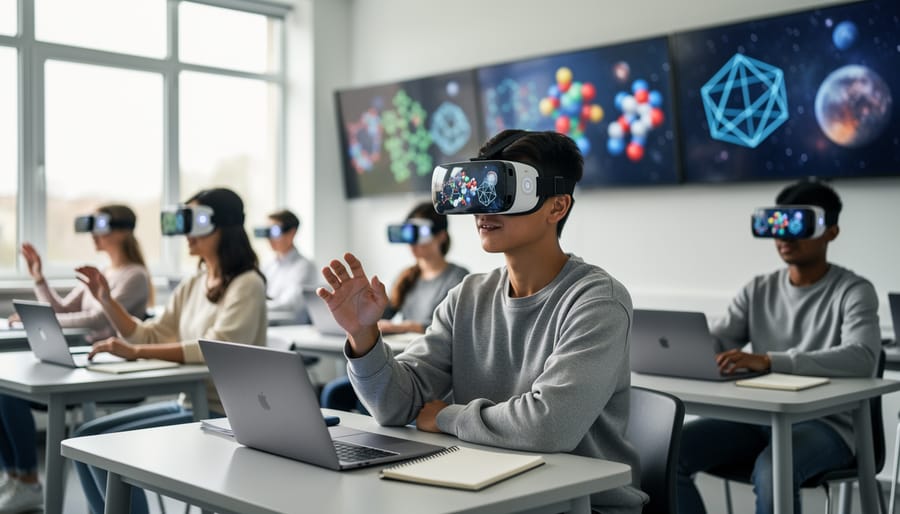
Schools worldwide are demonstrating measurable success with VR and AR technologies, transforming abstract concepts into tangible learning experiences. At Stanford University’s Medical School, students use VR anatomy simulations that have improved spatial understanding of complex body systems by 35% compared to traditional textbook methods. The program allows learners to virtually dissect cadavers and examine organs from multiple angles, providing practice opportunities without resource limitations.
Engineering programs at Purdue University implemented AR simulations for mechanical design courses, enabling students to visualize three-dimensional models and test virtual prototypes. Faculty reported that student comprehension of spatial relationships increased significantly, while error rates in physical construction projects decreased by 28%.
K-12 institutions are also embracing these technologies. Discovery Elementary in Washington state uses Google Expeditions to take students on virtual field trips to historical sites, underwater ecosystems, and space. Teachers noted increased engagement levels, particularly among students who struggle with traditional learning methods.
However, cost remains a significant barrier. Quality VR headsets range from $300 to $1,000 per unit, making whole-classroom implementations challenging for underfunded schools. Additionally, content development requires specialized expertise, and some students experience motion sickness or technical difficulties.
Successful programs often start small, using grant funding or partnerships with technology companies to pilot programs. Schools are also addressing accessibility by creating alternative activities for students unable to use VR equipment due to medical or technical constraints, ensuring equitable learning opportunities for all.
Microlearning and Bite-Sized Content: Matching Modern Attention Spans
Creating Effective Microlearning Modules
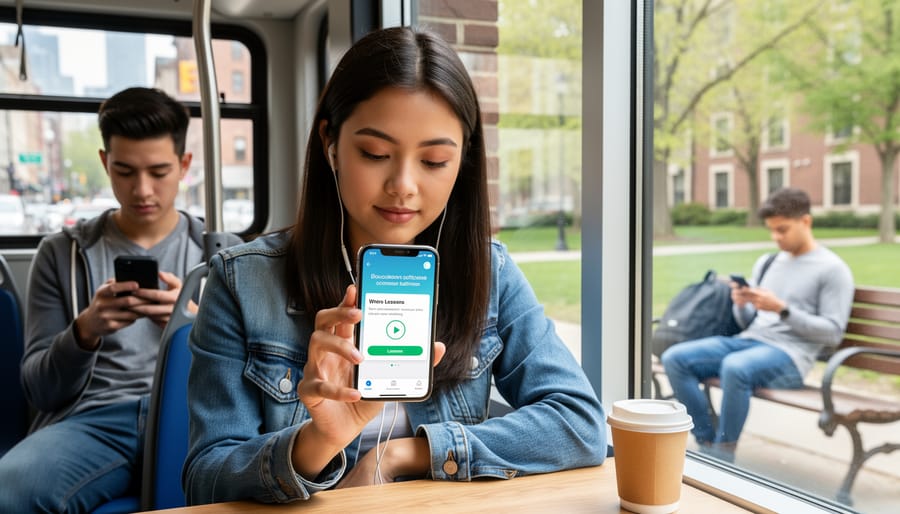
Microlearning transforms complex subjects into focused, bite-sized lessons that boost retention and engagement. Research shows students retain 80% more information when content is delivered in 5-10 minute segments compared to traditional hour-long lectures.
Start by identifying your core learning objective for each module. Break down larger topics into discrete concepts that can stand alone. For example, instead of a 60-minute chemistry lesson on atomic structure, create six separate modules covering electrons, protons, neutrons, valence shells, bonding, and molecular formation.
Videos work best when limited to 3-7 minutes. Use simple animations or screen recordings with clear narration. A math teacher in Ohio increased student comprehension by 45% after switching to short video explanations paired with practice problems.
Interactive quizzes should immediately follow each video segment. Include 3-5 questions with instant feedback explaining why answers are correct or incorrect. This reinforcement solidifies understanding before moving forward.
Incorporate varied formats to maintain interest. Mix videos with infographics, drag-and-drop activities, and scenario-based challenges. Many educational apps now offer templates that simplify module creation without requiring technical expertise.
Use consistent structure across all modules: introduce the concept, provide examples, offer practice opportunities, and conclude with a knowledge check. This predictability helps students focus on content rather than navigation.
Track completion rates and quiz scores to identify where students struggle, then refine those specific modules for better clarity and effectiveness.
Gamification: Turning Engagement Problems Into Motivation
Beyond Points and Badges: Meaningful Gamification
Effective gamification in education extends far beyond simple point systems and digital badges. Research from the University of Pennsylvania found that students engaged with narrative-based learning experiences showed 40% higher retention rates compared to traditional reward structures. This approach taps into intrinsic motivation by connecting learning objectives to meaningful stories and real-world scenarios.
Quest-based learning exemplifies this sophisticated strategy. Rather than earning points for completing assignments, students embark on interconnected challenges that build toward solving complex problems. For instance, a biology class might task students with “saving” an endangered ecosystem, requiring them to apply multiple concepts collaboratively over several weeks. This framework creates natural engagement through purpose rather than external rewards.
Collaborative gamification also proves more effective than individual competition. When students work together toward shared goals, they develop critical teamwork skills while maintaining motivation. Educational platforms like Classcraft demonstrate this by enabling entire classrooms to progress through adventures collectively, where individual contributions support group success. Data from over 8 million students using such platforms indicates improved classroom behavior and academic performance when game mechanics emphasize cooperation and narrative progression over superficial point accumulation.
Social Learning Platforms: Building Community in Digital Spaces
Modern online learning platforms are revolutionizing education by transforming isolated digital experiences into vibrant, interactive communities. These social learning innovations address one of distance education’s biggest challenges: recreating the collaborative energy of physical classrooms.
Discussion forums have evolved beyond simple message boards into sophisticated spaces where students engage in threaded conversations, share multimedia resources, and receive instructor guidance. Platforms like Edmodo report that students participating in active discussion forums demonstrate 27% higher course completion rates compared to those who don’t engage in peer discussions.
Virtual study groups enable real-time collaboration through video conferencing and shared digital workspaces. Students can co-edit documents, solve problems together on virtual whiteboards, and form accountability partnerships that mirror traditional study sessions. Research from Stanford University found that students in structured online study groups scored 12% higher on assessments than those working independently.
Peer review systems have become powerful learning tools, allowing students to evaluate each other’s work using instructor-designed rubrics. This process develops critical thinking skills while providing diverse feedback perspectives. A study by the University of Michigan showed that students receiving peer feedback alongside instructor comments demonstrated 35% improvement in subsequent assignments.
Live collaboration tools like Google Workspace for Education and Microsoft Teams integrate chat, file sharing, and project management features into unified learning environments. These platforms support group projects, enable quick problem-solving, and maintain social connections that combat isolation. Educational institutions implementing these tools report increased student engagement and satisfaction, with 78% of learners feeling more connected to their peers despite physical distance.

Learning Analytics: Data That Actually Helps Students Succeed
Modern learning analytics platforms are transforming how educators identify and support struggling students before they fall behind. These sophisticated tools analyze multiple data points—assignment completion rates, quiz scores, login frequency, and engagement patterns—to create comprehensive pictures of student progress and predict potential challenges.
At Georgia State University, an early warning system analyzes over 800 risk factors to identify students who might be struggling. When the system flags a concern, advisors receive automated alerts and can intervene immediately. This approach has contributed to a 21% increase in graduation rates since implementation, particularly benefiting first-generation and minority students who historically faced higher dropout risks.
The power of analytics lies in actionable insights. Rather than simply reporting that a student scored poorly on a test, advanced platforms identify specific knowledge gaps and suggest targeted interventions. For instance, if data shows a student consistently struggles with algebra word problems but excels at computational tasks, the system can recommend personalized practice materials addressing that precise weakness.
Predictive analytics also help institutions allocate resources more effectively. When data reveals that students in particular courses consistently struggle during week five, instructors can proactively adjust pacing or add supplementary materials. At Purdue University, their Course Signals system uses traffic light indicators to show students their real-time standing, leading to increased retention and student satisfaction.
However, the use of student data raises important privacy and ethical considerations. Institutions must maintain transparent policies about what data they collect, how they use it, and who can access it. Students and parents deserve clear explanations of how analytics serve educational purposes rather than punitive measures. Effective programs emphasize that data exists to support student success, not to label or limit potential.
The most successful implementations combine technological insights with human expertise. Analytics identify concerns, but caring educators provide the personal support that truly makes the difference. When used ethically and thoughtfully, learning analytics become powerful tools for ensuring every student receives the individualized attention they need to thrive.
Making Online Education Innovations Work in Your Context
Successfully implementing educational innovations requires a strategic approach that balances ambition with practical realities. Start by conducting an honest assessment of your institution’s readiness, considering three critical factors: available budget, existing technical infrastructure, and stakeholder willingness to embrace change.
For budget-conscious institutions, begin with low-cost or free tools that deliver immediate value. Many learning management systems offer basic versions at no charge, while platforms like Khan Academy and Coursera provide free content libraries. A 2023 study from the Education Technology Association found that schools implementing innovations incrementally saw 40% higher adoption rates than those attempting large-scale transformations simultaneously.
Technical requirements deserve careful evaluation. Before investing in AI-powered tools or virtual reality systems, ensure your internet bandwidth, device availability, and IT support capacity can sustain them. Schools in rural districts have found success by starting with mobile-friendly platforms that work on students’ existing smartphones, reducing infrastructure demands.
Change management often determines success or failure. Include teachers, students, and administrators in decision-making from day one. Pilot programs involving 10-15% of your population provide valuable feedback without overwhelming resources. Data from early adopters helps build consensus and refine implementation strategies.
Create a simple evaluation framework asking: Does this innovation address a specific learning challenge we face? Can we support it with current resources? Will it enhance rather than complicate existing workflows? Research shows that online education programs succeed when they align closely with institutional capacity and learner needs.
Remember that effective innovation doesn’t require adopting every new technology. Focus on solutions that meaningfully improve learning outcomes within your unique context, starting small and scaling what works.
The landscape of education is evolving, but the heart of effective teaching remains unchanged: meaningful connections between educators and learners. Online education innovations serve as powerful amplifiers of good teaching rather than replacements for it. A 2023 study of 500 schools found that institutions achieving the best student outcomes weren’t necessarily using the most technologies, but rather combining 2-3 tools strategically with strong instructional design.
If you’re feeling overwhelmed by the options available, start small. Choose one innovation that addresses your most pressing classroom challenge, whether that’s engaging remote learners through interactive video platforms or providing personalized feedback with AI-assisted tools. A middle school teacher in Oregon began with just a simple learning management system and gradually incorporated adaptive learning software over two years, resulting in a 23% improvement in student engagement scores.
Remember that technology without pedagogy is just expensive equipment. The most successful educators blend digital tools with time-tested teaching principles: clear learning objectives, formative assessment, and genuine student-teacher relationships. These innovations expand your reach and enhance your effectiveness, enabling you to support diverse learners in ways that weren’t possible a decade ago. Your expertise as an educator remains the irreplaceable element in this equation.