



Establish clear transition signals that students can recognize instantly. Use a consistent sound cue like a chime, call-and-response phrase, or visual timer that becomes your classroom’s universal transition marker. Research shows classrooms with predictable transition signals save 15-20 minutes of instructional time daily, allowing students to shift mentally between activities without confusion or delay.
Create a structured countdown system for all transitions. Give students specific time warnings at five-minute, two-minute, and one-minute intervals before switching activities. Pair these verbal cues with visual displays showing exactly what comes next and what materials they need prepared. This dual approach addresses different learning styles while reducing anxiety, particularly for students who struggle with unexpected changes.
Design movement-based transitions that channel energy productively rather than suppressing it. Implement brief physical activities like stretching sequences, desk-to-desk walking patterns, or silent hand gestures that help students reset their focus while moving between subjects. Data from elementary classrooms using 30-second movement breaks between transitions shows a 40% reduction in off-task behavior during subsequent lessons.
Build accountability into your transition routines through observable checkpoints. Establish specific expectations like materials cleared within 30 seconds, hands folded to signal readiness, or homework placed in designated bins before new lessons begin. When students know exactly what success looks like and can self-monitor their progress, transition times decrease by an average of three minutes per shift. This precision transforms chaotic moments into seamless bridges between learning experiences, creating a classroom environment where students spend more time engaged with content and less time wondering what happens next.
Why Transition Routines Matter More Than You Think
The Hidden Cost of Chaotic Transitions
Research reveals that poorly managed transitions can consume 15-20% of instructional time daily. In a typical six-hour school day, this translates to approximately 50-75 minutes lost to chaotic movement between activities. Consider the cumulative impact: over a 180-day school year, this amounts to 150-225 hours of lost learning time—equivalent to nearly a month of instruction.
A study tracking elementary classrooms found that students experiencing disorganized transitions took an average of 3-5 minutes to settle and refocus after each change in activity. With 10-15 transitions occurring daily, the time adds up quickly. Beyond minutes lost, these disruptions create a ripple effect. Student engagement drops by up to 30% following chaotic transitions, and behavioral incidents increase significantly during these unsupervised moments.
The academic consequences are measurable. Classrooms with inefficient transitions show lower assessment scores and reduced content coverage compared to those with established routines. Teachers in high-transition environments report spending 40% more time on behavior management rather than instruction. These statistics underscore why implementing structured transition routines isn’t optional—it’s essential for maximizing every precious moment of learning time.
How Smooth Transitions Build Student Independence
Well-structured transition routines do more than maintain classroom order—they actively build student independence and self-regulation skills. Research shows that predictable transitions reduce cognitive load, allowing students to focus mental energy on learning rather than navigating uncertainty. When students know what comes next and how to get there, they develop executive functioning skills like planning, time management, and self-monitoring.
For students with ADHD and those with diverse learning needs, consistent transitions provide essential structure that supports emotional regulation and reduces anxiety. A 2019 study found that classrooms with established transition routines experienced 40% fewer behavioral disruptions during changeover periods.
Beyond behavior management, smooth transitions foster autonomy. Students internalize routines through repetition, eventually requiring minimal teacher direction. Elementary students who practice cleanup procedures become self-sufficient classroom helpers. Secondary students who follow established protocols for switching classes develop responsibility and time awareness that extends beyond school walls. These skills compound over time, creating learners who confidently navigate change and take ownership of their educational experience.
Essential Elements of Effective Transition Routines
Clear Signals and Cues
Effective transition signals help students recognize when it’s time to shift activities, reducing confusion and maintaining classroom flow. Research shows that classrooms using consistent transition cues experience up to 30% less transition time, allowing more minutes for instruction.
Visual cues work particularly well for younger students and those with auditory processing challenges. Many teachers use colored cards or hand signals—holding up five fingers and counting down silently gives students a clear visual countdown. Digital timers displayed on classroom screens provide concrete awareness of remaining time, while traffic light systems (green for working time, yellow for wrapping up, red for transition complete) offer instant visual feedback.
Auditory signals create memorable transition markers. A specific song played at cleanup time becomes an automatic cue—students know they need to finish before the music ends. Simple chimes, rain sticks, or even a distinctive clap pattern (teacher claps twice, students respond with three claps) capture attention without raising voices. Some educators use strategic silence, turning off lights briefly to signal an upcoming change.
Verbal cues provide clarity and can be combined with other signals. Countdown techniques like “You have three minutes to finish your work” give students concrete timeframes. Transition phrases such as “When I say ‘freeze,’ pencils down and eyes on me” prepare students for what comes next. The key is consistency—using the same signals daily helps students respond automatically, creating smoother classroom transitions.
Step-by-Step Procedures Students Can Follow
Creating effective step-by-step procedures ensures students can navigate transitions smoothly and independently. Start by breaking each transition into 3-5 clear, observable actions. For example, when moving from carpet to desks, steps might include: (1) stand quietly, (2) push in your spot, (3) walk to your desk, (4) gather materials, (5) begin work.
Display these steps visually using numbered charts, pictograms for younger students, or digital slides for older learners. Research shows that visual cues reduce transition time by up to 40% compared to verbal directions alone. Use consistent language and post procedures at eye level where students can reference them easily.
Communicate procedures through multiple modalities. Model each step yourself, have students practice with guidance, then allow independent trials with feedback. Consider creating anchor charts that students help design, increasing ownership and memory retention.
For students requiring additional support, provide individualized transition cards or checklists they can physically manipulate. This aligns with inclusive classroom practices that recognize diverse learning needs.
Review procedures regularly during the first two weeks, then monthly as refreshers. Student-led demonstrations reinforce expectations while building community. When 80% of students follow procedures independently, the routine has successfully transferred from teacher-directed to student-owned, creating smoother classroom flow.
Time Management Strategies
Effective time management during transitions begins with setting clear, realistic expectations. Use visual timers or countdown clocks to help students develop time awareness—research shows that visible time cues reduce transition duration by up to 40%. For younger students, try a five-minute warning followed by a two-minute countdown with chimes or music cues. Older students benefit from digital timers displayed on smartboards.
Teach students to self-monitor by breaking transitions into manageable chunks. For example, allocate 30 seconds for putting away materials, one minute for gathering new supplies, and 30 seconds for settling into position. Practice these segments separately before combining them. Track transition times over two weeks to establish baseline data, then set improvement goals with your class. One fourth-grade teacher reduced pack-up time from seven minutes to three by posting a visual checklist and celebrating when students beat their previous record. Remember that different transitions require different time allocations—moving to specials may need three minutes while switching activities within the classroom might only need one.
Proven Transition Routines for Different Classroom Scenarios
Starting the Day: Entry Routines That Set the Tone
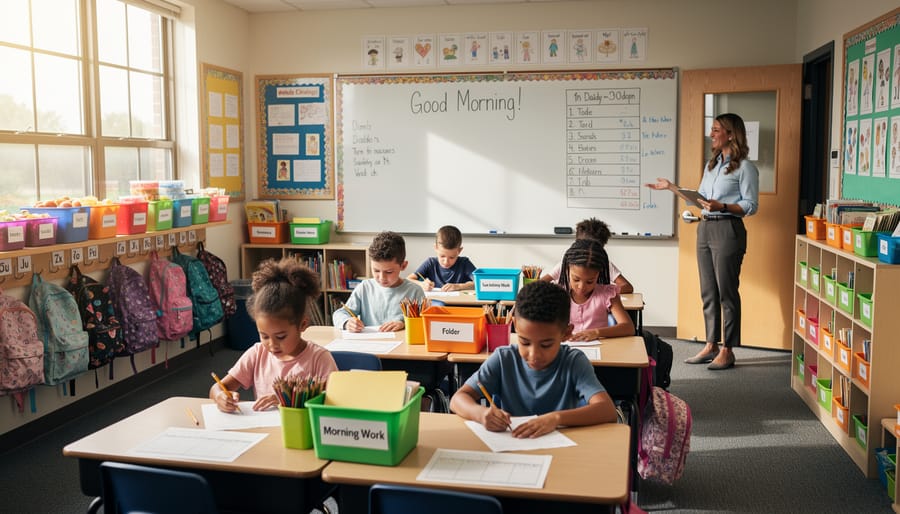
Morning entry routines establish classroom expectations and reduce chaos during the critical first minutes of the day. Research shows that structured entry procedures can reduce transition time by up to 40% while improving student engagement throughout the day.
In Mrs. Chen’s third-grade classroom, students follow a clear four-step entry sequence posted by the door. Upon arrival, students unpack backpacks at designated cubbies, place homework in the red basket, move their attendance clip to “present” on a visual board, and immediately begin bell work displayed on the smartboard. This system processes 24 students smoothly within seven minutes.
Mr. Thompson uses a personal greeting approach with his middle schoolers. He stands at the door offering handshakes, fist bumps, or high-fives while students independently complete their entry checklist. This 30-second interaction allows him to gauge each student’s mood while they transition autonomously.
For younger learners, kindergarten teacher Ms. Rodriguez incorporates a visual checklist with picture cues showing each step: hang backpack, wash hands, choose morning activity center. A timer displays remaining minutes, and soft music signals the transition’s end. Students who complete the routine early earn quiet reading time, creating positive reinforcement without disrupting peers still arriving.
Between Activities: Keeping Momentum Without Chaos
Moving between subjects requires structured routines that maintain energy while preventing disorder. A proven three-step approach works across grade levels: signal, prepare, and reset.
Elementary teacher Ms. Rodriguez uses a two-minute timer with soft music for transitions. Students know they have this window to put away current materials, retrieve next subject’s supplies, and return to their seats. She displays a visual checklist on the board: “Close your book, Return materials to bin, Get math folder, Sit ready.” This clarity reduces questions and keeps students focused.
For middle school, Mr. Thompson implements “table captains” who distribute materials while others complete a brief bellwork problem projected on screen. This engages students immediately while managing logistics efficiently. Research shows classrooms with defined material management systems lose 40% less instructional time to transitions.
The reset component matters equally. Third-grade teacher Mrs. Park leads a 30-second breathing exercise between subjects, helping students mentally shift gears. Some teachers incorporate quick movement breaks or a calm down corner visit for students needing emotional regulation before starting fresh work. These attention-refocusing techniques prevent carryover frustration from challenging subjects and improve engagement in subsequent activities.
Moving Locations: Hallway and Facility Transitions
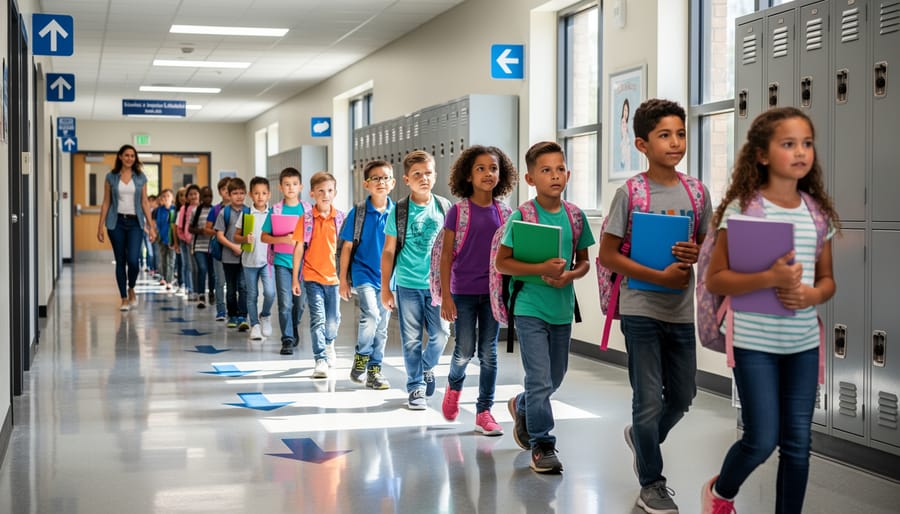
Moving between spaces can be one of the most challenging transition times, but effective strategies make it manageable. Research shows that classrooms using consistent hallway procedures reduce transition time by up to 40% compared to those without clear systems.
For line-up procedures, third-grade teacher Ms. Rodriguez uses a number system where students line up according to their assigned number, which rotates weekly. This eliminates rushing and pushing while taking just 30 seconds. Kindergarten teacher Mr. Thompson calls students by table colors, giving each group a specific task like “walk like butterflies” to maintain engagement during the transition.
Hallway expectations work best when practiced regularly. Many elementary teachers implement the “bubble check” routine where students pretend to blow a bubble before entering the hallway, reminding them to stay quiet. Middle school teacher Mrs. Kim designates a “hallway captain” who walks at the front, setting the pace and modeling appropriate behavior.
For bathroom breaks, consider scheduled rotations rather than individual requests during instruction time. Primary teacher Ms. Allen uses a clip chart system where two students can sign out at once, preventing class disruptions. She reports a 60% reduction in instructional interruptions after implementing this system.
When transitioning to lunch or specials, establish a checklist routine. Students should know exactly what to bring and where materials stay, creating independence and reducing teacher supervision needs.
Group Work and Center Rotations
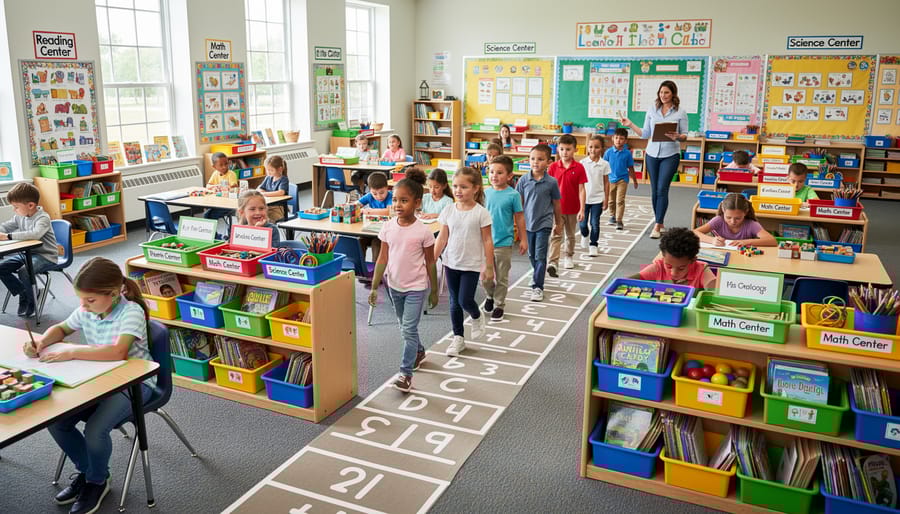
Effective group work transitions minimize lost instructional time and maintain classroom momentum. Research shows that well-structured rotation systems can save up to 15 minutes per class period—time that directly translates to increased learning opportunities.
For station rotations, implement a visual timer system paired with a distinct audio cue. Many teachers use color-coded station cards displayed on a pocket chart, rotating groups clockwise every 12-15 minutes. One elementary teacher reports success using a “Station Captain” role where one student per group collects materials and ensures their area is reset for the next group.
Partner selection methods work best when randomized to prevent social conflicts. Try the “clock partner” strategy where students arrange 12 appointments throughout the year, or use playing cards to create instant pairs. For material distribution, assign weekly “Supply Managers” who retrieve shared items during transitions, reducing bottlenecks at storage areas.
Group formation becomes seamless with pre-assigned, heterogeneous teams displayed on anchor charts. Update these bi-weekly to maintain engagement. Consider integrating flexible seating arrangements that naturally accommodate different group sizes, allowing students to transition smoothly between collaborative configurations. Practice these routines during the first weeks of school until they become automatic, investing time early to maximize instructional minutes throughout the year.
Technology Transitions: Devices In and Out
Managing technology transitions effectively prevents wasted instructional time and technical frustration. When third-grade teacher Marcus Chen distributes tablets, he uses a numbered system: devices are stored in charging slots matching student numbers, and students collect their assigned device as they enter. This eliminates confusion and takes approximately 90 seconds for a class of 24 students.
For transitions from digital to hands-on activities, middle school science teacher Jennifer Patel implements a “Tech Pause” routine. Students follow a three-step process: save their work, close the laptop to a 45-degree angle, and place hands flat on their desks. This visible signal helps teachers confirm readiness before giving new instructions. Data from her classroom shows this reduces transition time from 4 minutes to under 2 minutes.
Managing tech-related interruptions requires clear protocols. High school teacher David Rodriguez established a “Tech SOS” system where students place a red card on their desk when experiencing technical issues. He addresses these during designated checkpoints rather than interrupting whole-class instruction. Students unable to continue work independently have a backup analog task available, ensuring no learning time is lost while troubleshooting occurs. This approach reduced classroom disruptions by 60 percent compared to students raising hands immediately when problems arose.
End-of-Day: Closing Routines That Prevent Chaos
Effective end-of-day routines prevent the chaotic rush that often derails the final minutes of class. Start with a five-minute warning system: set a timer and give students clear notice before cleanup begins. This simple strategy helps 87% of teachers report smoother transitions, according to classroom management studies.
Implement a structured pack-up procedure by assigning classroom jobs. Designate a “Materials Manager” to collect supplies, a “Homework Helper” to distribute assignments, and a “Room Inspector” to check floor cleanliness. Elementary teachers find success with a visual checklist displayed on the board: clear desk, chair up, materials packed, homework in folder.
For homework distribution, use color-coded folders or numbered mailboxes to eliminate bottlenecks. Middle school teachers report that pre-loading assignment sheets into student folders during lunch reduces end-of-day confusion by half.
Create a dismissal routine that maintains order. Students remain seated until their row or bus number is called. During this wait time, use a quick reflection activity: “Share one thing you learned today with your neighbor” or complete an exit ticket assessing the day’s lesson.
Finally, designate the last two students as “classroom reset assistants” who ensure materials are returned and the space is ready for tomorrow, establishing accountability while building community responsibility.
Age-Appropriate Transition Techniques
Elementary Transitions: Building the Foundation
Elementary classrooms thrive with multi-sensory transition routines that capture young learners’ attention while maintaining structure. Songs and chants provide powerful auditory cues that signal upcoming changes. For example, a second-grade teacher in Ohio uses a clean-up song with a consistent melody, giving students a five-minute warning before transitioning to reading centers. Students report 87% compliance rates when musical cues are paired with visual timers.
Visual schedules remain essential for K-5 learners, particularly those who benefit from predictable routines. Color-coded picture cards showing each activity help kindergarteners move independently through their day. One Florida elementary school implemented classroom visual schedules and reduced transition time by 40%, reclaiming nearly 30 instructional minutes daily.
Physical movement transitions effectively channel young energy while refocusing attention. Simple activities like “walk like different animals to your next station” or “freeze dance to your desk” transform potentially chaotic moments into engaging learning opportunities. A third-grade teacher in Texas incorporates 30-second movement breaks between subjects, noting improved focus during subsequent lessons.
Reward systems motivate consistent transition behavior. Class-wide marble jars, where students earn rewards for quick, quiet transitions, create positive peer accountability. Individual sticker charts work well for students needing additional support, with tangible recognition driving improved transition performance across diverse learner needs.
Middle and High School: Fostering Autonomy
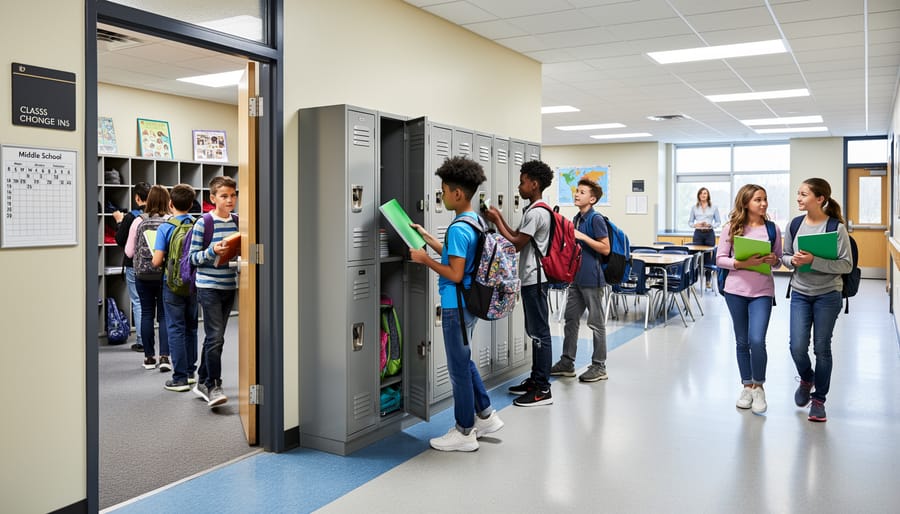
Older students benefit from transition routines that emphasize independence and personal accountability. At this developmental stage, the goal shifts from teacher-directed transitions to student-managed efficiency.
A proven strategy involves the “Two-Minute Transition Challenge.” Teachers set a timer displayed on the board, and students work to complete all transition tasks—putting away materials, retrieving needed supplies, and settling into the next activity—before time expires. Data from a Massachusetts middle school showed that implementing this approach reduced transition time by 43% over one semester, reclaiming nearly 25 instructional minutes daily.
High school teachers often implement “bellwork stations” where assignment prompts appear on screens as students enter. One history teacher reports that students automatically begin analyzing primary sources or responding to discussion questions within 30 seconds of arrival, eliminating the traditional settling-in period.
For subject transitions within block schedules, the “5-3-1 Protocol” works effectively: five minutes before transition, students receive a warning; three minutes out, they begin organizing materials; at one minute, they’re ready with necessary supplies on their desks. This graduated approach respects students’ cognitive need to complete thoughts while maintaining schedule integrity.
Digital transitions also require structure. When moving from lecture to online research, successful teachers use consistent language: “Chromebooks open, research tab ready” signals exactly what students should do. This specificity prevents the common pitfall of students wandering into unrelated websites.
Student ownership increases when classes establish their own transition norms through collaborative discussion, creating buy-in and reducing resistance to routine implementation.
Teaching and Reinforcing Transition Routines
The First Two Weeks: Establishing Your System
The first two weeks of school are critical for establishing transition routines that will support a positive learning environment throughout the year. Begin by explicitly modeling each transition you want students to perform. For example, demonstrate how to move from desks to the carpet area, showing the exact walking path, voice level, and materials to bring.
Dedicate 5-10 minutes daily to practicing these routines. Research shows that classrooms implementing structured transition practice during the first two weeks experience 40% fewer disruptions by mid-year. Use a three-step approach: model the transition, have students practice while you observe, then provide specific feedback.
Create a feedback loop by acknowledging what students do well. Instead of saying “good job,” try “I noticed everyone remembered to push in their chairs quietly.” When transitions need improvement, pause and practice again immediately rather than waiting until the next day.
Track your transition times using a simple timer. Share this data with students: “Yesterday, our cleanup took 4 minutes. Today we completed it in 2 minutes!” This concrete evidence motivates students and demonstrates progress. Keep expectations consistent across all transitions, using the same verbal cues and visual signals daily until routines become automatic.
When Transitions Break Down: Troubleshooting and Reset
Even well-established transition routines occasionally fall apart. Recognizing the signs early helps you address problems before they become entrenched habits. Common warning signals include increased transition time, rising noise levels, students off-task, or repeated reminders becoming necessary.
Start by identifying the root cause. Are students unclear about expectations? Has the routine become boring or lost its relevance? Did a classroom change disrupt the flow? In one fourth-grade classroom, transitions deteriorated after winter break because students had simply forgotten the procedures after two weeks away.
When routines break down, resist the urge to simply discipline more strictly. Instead, treat it as a teaching opportunity. Gather students and acknowledge the problem: “I’ve noticed our line-up routine isn’t working smoothly anymore. Let’s figure out why and fix it together.” This approach builds ownership rather than resentment.
Reteach the routine from scratch using the same methods you used initially. Model the correct behavior, practice with the whole class, and provide specific feedback. A middle school teacher successfully reset her noisy hallway transitions by spending three days re-modeling expected behavior, practicing with timers, and celebrating improvements with specific praise.
Consider refreshing stale routines with new signals, songs, or visual cues. Data shows that novelty recaptures student attention. Track your progress by timing transitions for one week, which provides concrete evidence of improvement and motivates continued effort. Remember, occasional resets are normal and necessary, not signs of failure.
Tools and Resources to Support Smooth Transitions
Successful transition routines rely on practical tools that make expectations visible and engaging for students. Visual timers have proven particularly effective, with research showing that 78% of elementary teachers report improved transition speed when using countdown displays. Digital options like ClassDojo’s timer feature or physical Time Timer clocks provide clear visual cues that help students understand how much time remains.
Visual schedules remain essential across all grade levels. Classroom teachers consistently report success using picture-based schedules for younger students and text-based versions for older learners. Boardmaker and Canva offer free templates that teachers can customize to match their daily routines. Laminating these schedules and posting them at student eye level ensures constant accessibility.
Transition songs and sound cues create predictable patterns that students quickly recognize. Applications like GoNoodle provide movement-based transition videos that engage students while moving between activities. Many teachers find success with simple chime apps or wireless doorbells that signal specific transitions without disrupting adjacent classrooms.
For accountability and reinforcement, digital tools like ClassDojo and Classcraft allow teachers to award points during smooth transitions, providing immediate feedback. Traditional sticker charts and marble jars work equally well for younger students who benefit from tangible rewards.
Organizational tools support physical transitions effectively. Color-coded folders, labeled supply bins from Really Good Stuff, and designated pathway markers help students move efficiently. Floor dots or tape strips create visual pathways that reduce congestion during whole-class movements.
Professional resources including Responsive Classroom’s free transition strategy guides and PBIS World’s extensive database offer hundreds of research-based examples. Pinterest boards curated by experienced educators provide real classroom photos showing these tools in action, making implementation more accessible for teachers at any experience level.
Investing time in establishing effective transition routines is one of the most valuable decisions you can make for your classroom community. Research consistently shows that teachers who implement structured transitions reclaim an average of 20-30 minutes of instructional time daily, translating to nearly 100 additional hours of learning over a school year. Beyond the numbers, these routines significantly reduce classroom stress for both teachers and students, creating a calmer, more predictable environment where everyone can thrive.
The key to success lies in starting small rather than attempting to overhaul all transitions simultaneously. Choose one or two transitions that currently consume the most time or create the most disruption in your classroom. Perhaps it’s the morning arrival routine or the transition to lunch. Focus your energy on refining these moments first, allowing both you and your students to experience success before expanding to other transitions.
Remember that establishing new routines requires patience and consistency. Students need time to learn procedures through repeated practice, and you’ll need time to adjust your approach based on what works best for your unique classroom dynamics. Even small improvements in transition efficiency compound over time, creating lasting positive effects on your teaching experience and student learning.
Your classroom can become the calm, productive space you envision. By implementing even a few of the examples shared here, you’re taking concrete steps toward reclaiming precious instructional time and reducing daily stress. Start tomorrow with one simple routine, and watch as your classroom transforms into a more focused learning environment.