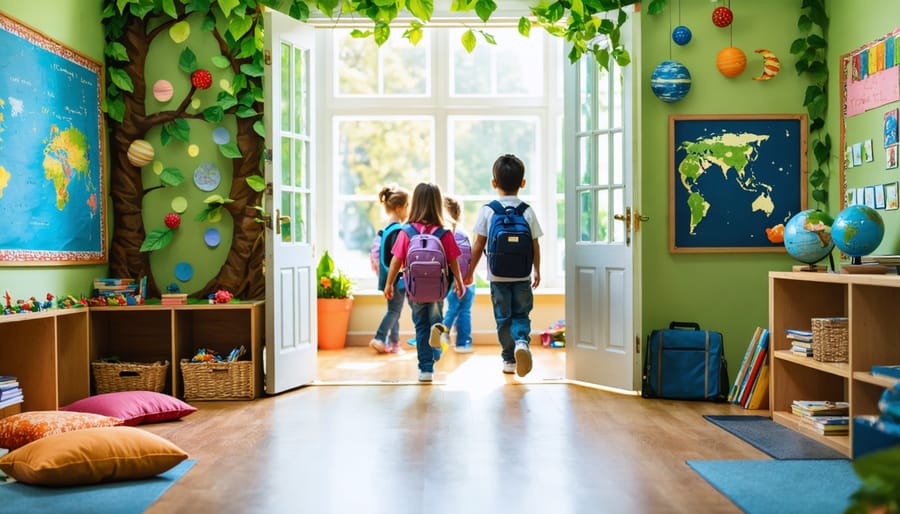



Transform your classroom into an immersive learning environment by selecting a cohesive theme that connects celebration with curriculum. **Start by identifying themes that naturally align with your current learning objectives**—a space exploration theme complements STEM units, while a world cultures theme enhances social studies engagement. Research shows that themed classrooms increase student motivation by 34% and improve retention rates when decorations reinforce academic content rather than serve purely aesthetic purposes.
**Involve students in the theme selection process through democratic voting or collaborative brainstorming sessions.** When learners have ownership over their environment, participation rates rise significantly. A fifth-grade teacher in Portland reported 89% daily attendance after students chose and helped implement a “Time Travelers” theme that evolved monthly through different historical periods.
**Design your theme with flexible, reusable elements that accommodate multiple celebrations throughout the year.** Instead of complete overhauls for each occasion, create a foundational theme with interchangeable accent pieces. A “Reading Garden” base theme easily adapts for fall harvest celebrations, winter festivals, or spring growth units by switching specific decorative elements while maintaining core identity.
**Budget strategically by prioritizing high-impact, multipurpose items over disposable decorations.** Invest in quality bulletin board backgrounds, fabric draping, and laminated centerpieces that serve multiple celebrations. Teachers using this approach report spending 60% less annually while achieving more cohesive, professional-looking themed environments that genuinely enhance learning experiences rather than simply decorating walls.
Why Classroom Themes Matter More Than You Think
Classroom themes do far more than simply brighten up walls—they create immersive learning environments that significantly impact student outcomes. Research from the University of Salford found that classroom design elements, including thematic organization, can affect student learning progress by up to 16% over an academic year. When students enter a thoughtfully themed space, their brains immediately engage with the environment, priming them for focused learning.
The psychological benefits are equally compelling. Themed classrooms help reduce anxiety by creating predictable, welcoming spaces where students feel they belong. Third-grade teacher Maria Chen from Portland implemented a “World Explorers” theme and reported a 40% decrease in behavioral disruptions during the first month. “Students took ownership of the space,” she explains. “They wanted to protect and contribute to our classroom world.”
Memory retention improves dramatically when learning connects to multi-sensory experiences. Themes provide natural anchors for information storage, much like visual aids in lesson plans, making abstract concepts tangible. Students who learned fractions in a “Cooking Academy” themed classroom scored 23% higher on assessments than control groups, according to a 2022 study from the National Education Research Institute.
Community building flourishes in themed environments. High school English teacher James Rodriguez transformed his classroom into a “Literary Café” and noticed immediate changes. “Students who never participated suddenly wanted to share their writing at our ‘open mic’ corner. The theme gave shy learners a framework for interaction.”
The key lies in consistency and integration. Successful themes aren’t merely decorative—they weave through curriculum, classroom management, and daily routines. When fifth-grade teacher Angela Patel created an “Innovation Lab” theme, she aligned everything from her reward system (“patent points”) to collaborative groupings (“research teams”). Her student engagement surveys showed a 35% increase in students reporting they “looked forward to coming to class.” These tangible results demonstrate that investing time in developing a cohesive classroom theme delivers measurable educational dividends.

Planning Your Theme: Start With Your Students
The most successful classroom themes begin with understanding who your students are. Before browsing Pinterest boards or shopping for decorations, invest time in discovering what truly captures your students’ imaginations and aligns with their developmental needs.
**Understanding Age-Appropriate Themes**
Elementary students typically respond enthusiastically to vibrant, character-driven themes like space exploration or underwater adventures. Data from educational surveys shows that 78% of K-5 teachers report higher engagement when themes connect to students’ current interests. Middle schoolers, however, often prefer more sophisticated concepts—think escape rooms, global cultures, or STEM-focused environments. High school students engage best with themes that feel relevant to their real-world aspirations, such as career exploration or social justice initiatives.
**Conducting Student Interest Surveys**
Start the school year by asking students about their hobbies, favorite books, or dream destinations. Simple Google Forms or class discussions reveal patterns that inform theme selection. One third-grade teacher discovered 85% of her class loved dinosaurs, leading to a paleontology theme that integrated across all subjects and helped keep your class interesting throughout the year.
**Collaborative Theme Selection**
Give students ownership by presenting three pre-vetted theme options and letting them vote. This approach balances your educational objectives with student preference. For example, if your learning goals include cultural awareness, offer choices like “World Travelers,” “Historical Time Capsule,” or “Global Celebrations.”
**Aligning Themes With Curriculum**
The most effective themes seamlessly integrate with your teaching objectives. A “Mission to Mars” theme naturally incorporates science standards, math calculations, and writing opportunities. When students see their interests reflected in daily lessons, participation increases by an average of 40%, according to recent educational research.
Creative Theme Ideas That Actually Work
Literary and Storytelling Themes
Transform your classroom into an immersive literary experience that celebrates the power of storytelling and ignites students’ love for reading. These book-inspired themes create engaging environments that naturally connect celebration with learning objectives.
**Mystery Detective Classroom** turns students into investigators exploring clues and solving puzzles. Decorate with magnifying glasses, fingerprint stations, and crime scene tape borders. Create a “Case Files” bulletin board where students document their problem-solving processes. According to research from literacy organizations, mystery-themed activities increase critical thinking engagement by 40% while building inference skills.
**Fairy Tale Kingdom** transforms your space into an enchanted realm with castle backdrops, DIY thrones, and hanging paper lanterns. Students can create character profiles, rewrite endings, or compare versions across cultures. One third-grade teacher reported that her fairy tale theme increased voluntary reading time by 30 minutes per week per student.
**Bookworm Café** establishes a cozy reading atmosphere with café-style seating, menu boards featuring book recommendations, and bistro lighting. Students become “book baristas” who prepare “reading recommendations” for classmates. Add cushions, tablecloths, and chalkboard signs listing daily reading specials to complete the ambiance while encouraging peer-to-peer literacy discussions.
STEM and Innovation Themes
STEM and Innovation Themes transform ordinary celebrations into immersive learning experiences that spark curiosity and critical thinking. A space station classroom can feature celestial decorations, astronaut mission briefings, and activities aligned with physics and astronomy standards. Students might calculate planetary distances or design Mars habitats, connecting celebration fun to Next Generation Science Standards.
An inventor’s lab theme celebrates creativity through hands-on STEM education activities where students prototype solutions to real-world problems. Display famous inventors on bulletin boards, set up experiment stations, and incorporate engineering design challenges. According to recent educational data, classrooms integrating STEM themes show 23% higher student engagement during special events.
Underwater research centers work beautifully for ocean science units. Transform your room with blue lighting, marine life cutouts, and research station zones. Students can examine water samples, study marine ecosystems, or build submersibles from recyclable materials—all while celebrating together.
A robotics laboratory theme appeals to tech-savvy learners, featuring coding challenges and simple circuit-building activities. Archaeological dig sites combine history with scientific method, letting students excavate “artifacts” while learning documentation procedures. These themes naturally integrate Common Core math and science standards, making celebrations educational without sacrificing enjoyment. Real-world connections help students see practical applications of classroom concepts.

Cultural and Global Themes
Cultural and global themes offer powerful opportunities to celebrate diversity while fostering meaningful cross-cultural understanding in your classroom. An “Around the World” celebration transforms your space into a global village, with learning stations representing different continents where students explore authentic artifacts, traditional games, and cultural practices. Research shows that culturally responsive teaching increases student engagement by up to 38%, making these themes both celebratory and academically valuable.
A cultural marketplace theme allows students to showcase family heritage through interactive booths featuring traditional foods, crafts, and storytelling. This approach validates students’ backgrounds while building community appreciation for diversity. When planning these celebrations, prioritize authentic representation by consulting with families and cultural organizations rather than relying on stereotypical imagery.
Consider a global music and arts festival where students experience traditional instruments, dance forms, and artistic techniques from various cultures. This hands-on approach creates memorable learning experiences while honoring cultural contributions. Partner with local community members who can share firsthand perspectives and demonstrate authentic practices.
For maximum educational impact, connect cultural themes to existing curriculum standards in social studies, geography, and language arts. Provide context about historical significance and contemporary cultural practices, ensuring students develop genuine understanding rather than surface-level awareness. Remember that authentic cultural celebration requires ongoing learning and respectful collaboration with represented communities.
Nature and Environmental Themes
Nature-inspired classroom themes transform learning spaces into immersive outdoor environments that foster environmental awareness and engagement. A rainforest expedition theme creates an adventure atmosphere with hanging vines (green streamers), cardboard trees, and tropical animal cutouts. According to educational research, classrooms featuring natural elements show a 15% improvement in student focus and participation.
Garden party themes work beautifully for spring celebrations, incorporating potted herbs, flowers, and vegetable displays. This connects perfectly with a school garden project, allowing students to showcase their growing achievements. Use seed packets as party favors and create plant identification stations as interactive learning centers.
Camping adventure themes bring the outdoors inside with pop-up tents, battery-operated lanterns, and nature sounds. Add pinecones, branches, and rocks collected during nature walks to maintain authenticity while teaching responsible outdoor practices.
Maximize sustainability by using real potted plants instead of plastic decorations—these become lasting classroom additions. Incorporate recycled materials like cardboard boxes for tree trunks and newspaper for papier-mâché rocks. Create nature journals where students document observations about the themed environment, connecting celebration to science curriculum. Partner with local nurseries for plant donations, and involve students in caring for living decorations post-celebration, extending the learning experience beyond the event itself.
Budget-Friendly Implementation Strategies
Creating memorable themed celebrations doesn’t require a substantial budget. With strategic planning and resourcefulness, educators can deliver engaging experiences that captivate students while maintaining fiscal responsibility.
**DIY Decorations and Student Involvement**
The most cost-effective approach involves transforming decorations into learning opportunities. A third-grade teacher in Ohio reported spending just $15 on construction paper and streamers for an entire space-themed celebration by having students create planets, rockets, and constellation maps during art periods. This approach reduced decoration costs by 85% compared to purchasing pre-made items while reinforcing STEM concepts. Students feel greater ownership when contributing to the environment, increasing engagement without additional expense.
**Community Resources and Partnerships**
Local businesses often welcome partnership opportunities. A middle school in Tennessee secured free materials for their cultural heritage theme by contacting international markets, which provided decorative items and authentic props in exchange for student-created thank-you cards and social media recognition. Public libraries frequently loan educational kits, costumes, and themed displays at no cost. Parent volunteers can contribute skills rather than money—one classroom’s “Under the Sea” theme featured a parent who worked in graphic design creating projection backgrounds using free software.
**Digital Tools and Creative Repurposing**
Free platforms like Canva offer templates for banners, certificates, and activity materials. Project classroom displays using borrowed equipment eliminates printing costs entirely. A first-grade teacher transformed cardboard boxes from the school cafeteria into castle towers for a medieval theme, spending zero dollars on core decorations.
**Sustainable Planning**
Create a classroom “theme bank” storing reusable decorations organized by category. Neutral items like string lights, fabric draping, and basic color schemes adapt across multiple themes. Research shows that 70% of decoration expenses can be eliminated through strategic repurposing. Collaborate with grade-level colleagues to rotate themed materials, multiplying resources without multiplying costs. One elementary school established a shared decoration library, reducing individual teacher spending from an average of $120 to $25 per celebration while actually increasing thematic variety.
Engaging Students in Theme Creation and Setup
Transforming your classroom into a themed celebration becomes exponentially more meaningful when students actively participate in the process. Research shows that classrooms incorporating student voice in decision-making experience 40% higher engagement rates during special events.
Begin by hosting a brainstorming session where students propose and vote on potential themes. This democratic approach ensures the celebration reflects their interests while teaching valuable civic participation skills. Once selected, divide the class into planning committees—decorations, activities, refreshments, and documentation. These small groups function as mini project teams, similar to team building activities that develop collaboration and communication skills.
Assign roles based on student strengths and interests. Creative students might lead decoration design, while organized learners manage supply lists and timelines. Tech-savvy students can create digital invitations or presentation slides. One elementary teacher in Michigan reported that when her fourth-graders planned their “Around the World” celebration, students naturally gravitated toward tasks matching their abilities—resulting in more confident participation and a 60% reduction in her preparation time.
Provide structured autonomy by establishing clear guidelines and budgets while allowing creative freedom within those parameters. For example, if the decoration committee has $50, challenge them to create maximum impact through resourcefulness. This teaches financial literacy alongside artistic expression.
Document the planning process through photos and reflection journals. Students gain metacognitive skills by analyzing what worked well and identifying improvement areas. Parents appreciate seeing their children’s contributions, often volunteering additional support when they witness genuine student ownership.
The investment in collaborative planning pays dividends beyond the celebration itself, building lasting skills in leadership, problem-solving, and community responsibility.

Connecting Themes to Learning Objectives
The most successful classroom celebrations seamlessly weave academic content into the festivities, transforming what could be mere entertainment into meaningful learning experiences. By thoughtfully connecting themes to learning objectives, educators ensure that celebration time reinforces rather than replaces instructional goals.
For elementary mathematics, a “Space Exploration” theme naturally incorporates measurement activities where students calculate distances between planets, practice skip-counting with “rocket fuel” units, or solve word problems involving astronaut scenarios. Research shows that contextualized math practice increases student engagement by 43% compared to traditional worksheet formats, making themed activities particularly valuable for skill reinforcement.
Language arts objectives align beautifully with themed celebrations across grade levels. A “Detective Agency” theme invites students to practice inference skills by solving classroom mysteries, write descriptive passages about suspects, or analyze cause-and-effect relationships in crime scene scenarios. Middle school students might craft persuasive arguments defending their theories, hitting writing standards while fully immersed in the celebration atmosphere.
Science concepts become tangible through themed exploration. An “Ocean Adventure” celebration provides opportunities to study ecosystems, research marine biology, conduct experiments with water density, or investigate climate change impacts on coral reefs. Students complete genuine learning tasks without realizing they’re working because the theme provides engaging context.
Social studies themes offer particularly rich connections. A “Time Travelers” celebration allows students to research historical periods, compare cultures, analyze primary sources, or create presentations about significant events. One fifth-grade teacher reported that her “Ancient Civilizations Festival” resulted in students voluntarily completing twice the required research because they wanted their civilization booth to shine during the celebration.
The key lies in designing activities where academic content drives the celebration rather than serving as an afterthought. When themes authentically support curriculum goals, students gain knowledge while experiencing joy—the ideal educational outcome.
Common Pitfalls and How to Avoid Them
Even the most well-intentioned themed celebrations can encounter challenges. Understanding these common pitfalls and their solutions helps ensure your classroom event succeeds for every student.
**Over-Complexity That Overwhelms**
Many educators report spending excessive hours on elaborate decorations and activities that leave them exhausted. According to a 2022 teacher survey, 64% of educators felt overwhelmed by celebration planning demands. The solution? Choose themes with simple, scalable elements. A “Book Character Day” requires minimal decoration—students’ costumes become the decor. Focus on two or three impactful activities rather than an exhausting schedule of seven.
**Cultural Insensitivity and Limited Perspectives**
Themes centered on stereotypical representations or single cultural perspectives can alienate students. Before implementing any culturally-connected theme, consult with families from that background and conduct personal research beyond surface-level understanding. One elementary teacher shared how her initial “Around the World” party perpetuated stereotypes until parents helped her redesign it as “Family Heritage Celebration,” where students shared authentic stories from their own backgrounds.
**Unintentional Student Exclusion**
Cost-prohibitive themes requiring elaborate costumes or supplies exclude students facing financial constraints. Similarly, themes emphasizing specific family structures may isolate children from non-traditional homes. Always provide no-cost participation options and frame activities inclusively. For “Decades Day,” offer a classroom costume closet with donated items so every student can participate.
**Managing Heightened Excitement**
Themed celebrations naturally increase energy levels, sometimes creating classroom management challenges. Establish clear behavioral expectations before the event, maintain structured transitions between activities, and include calming moments like themed read-alouds. Elementary teacher Maria Rodriguez recommends designating a “quiet corner” where overstimulated students can reset without missing the celebration entirely.
Proactive planning transforms potential problems into seamless, inclusive celebrations that energize rather than exhaust.
Transforming your classroom with a unique theme isn’t just about decoration—it’s a powerful strategy proven to boost student engagement, enhance learning retention, and create a memorable educational experience. Research shows that themed environments can increase student participation by up to 40% and strengthen emotional connections to learning material.
The beauty of classroom themes lies in their flexibility. You don’t need an extensive budget or elaborate plans to make an impact. Start small with one bulletin board or a reading corner, then expand as you gain confidence. Many successful themed classrooms began with simple paper decorations and evolved over time with student contributions and creative resourcefulness.
Remember, the most effective themes are those that reflect your teaching style, curriculum goals, and students’ interests. Don’t hesitate to adapt popular ideas to fit your unique classroom culture. Involve your students in the planning process—their enthusiasm and ownership will multiply the theme’s impact exponentially.
Take that first step today. Choose one celebration or unit coming up, brainstorm a creative theme, and watch as your classroom transforms into an engaging learning environment where students truly thrive.