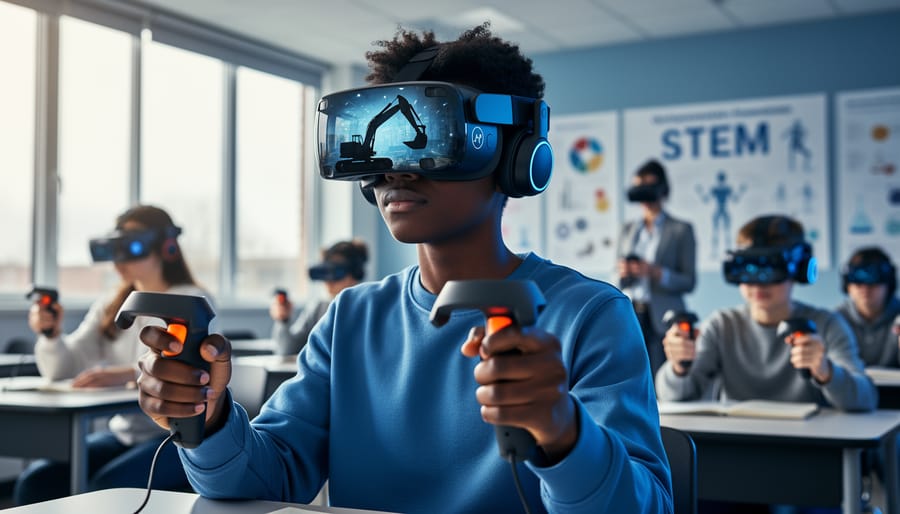



Imagine a high school sophomore stepping into a virtual operating room, performing a simulated surgery alongside a digital mentor, then instantly transitioning to a construction site to operate heavy machinery—all within a single class period. This is VR career exploration, and it’s transforming how students discover their professional futures.
Traditional career exploration relies on static presentations, outdated videos, or occasional field trips that reach only a fraction of students. Virtual reality eliminates these barriers by delivering immersive, hands-on experiences of hundreds of careers without leaving campus. Students don’t just read about being a marine biologist; they dive underwater to tag sea turtles. They don’t simply hear about welding; they strike their first virtual arc and see the immediate results of proper technique.
The impact is measurable. Schools implementing VR career programs report 67% higher student engagement in career planning activities compared to traditional methods, according to recent educational technology studies. Students who experience careers through VR demonstrate 3x better retention of job-related information and show significantly increased confidence in their career decision-making abilities.
For educators and administrators evaluating this technology, the question isn’t whether VR career exploration works—the data confirms it does. The real considerations involve implementation costs, curriculum integration, and understanding which students benefit most. This guide examines how VR career exploration functions in real educational settings, what results schools actually achieve, and whether this investment aligns with your institution’s goals and resources.
What VR Career Exploration Means for Today’s Students
VR career exploration uses virtual reality technology to place students in realistic, immersive simulations of professional work environments. Rather than reading about a career or watching videos, students can actually step into a virtual hospital, construction site, courtroom, or laboratory to experience what professionals do on a typical workday. This technology bridges the gap between classroom learning and real-world career demands, giving students a firsthand perspective before they commit to specific educational pathways or career directions.
The technology works through VR headsets that create 360-degree environments where students can interact with virtual tools, complete job-specific tasks, and make decisions that professionals face daily. A student exploring nursing, for example, might practice patient assessments in a virtual hospital room, while someone interested in architecture could walk through building designs they create. These simulations incorporate realistic details, from the equipment used to the challenges encountered, providing authentic career previews.
Research from PricewaterhouseCoopers found that learners in VR environments were four times more focused than in traditional classroom settings and completed training 75% faster. This heightened engagement makes VR particularly effective for finding their career calling, as students gain emotional and practical understanding that goes beyond theoretical knowledge.
Traditional career exploration methods like job shadowing face logistical constraints including limited availability, transportation challenges, and time restrictions. VR career exploration eliminates these barriers, allowing students to explore multiple careers efficiently and safely. A student can experience being a marine biologist in the morning and a software developer in the afternoon, all from their school’s computer lab. This accessibility democratizes career exploration, particularly benefiting students in rural areas or under-resourced schools who might otherwise lack exposure to diverse career options.
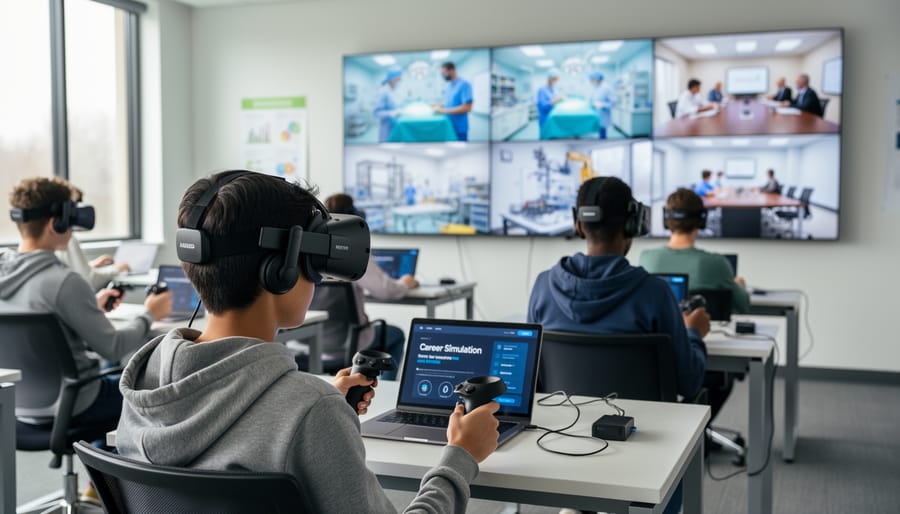
Why Traditional Career Exploration Falls Short
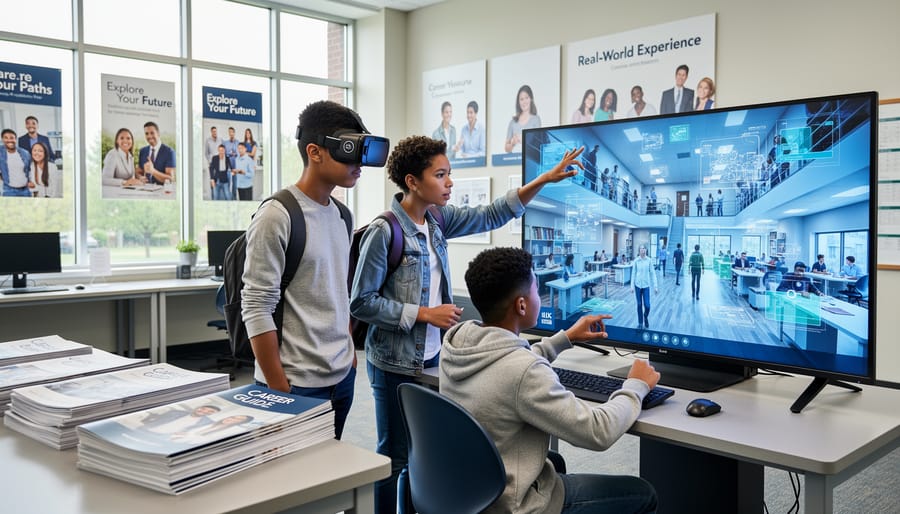
The Cost of Career Misalignment
The financial and emotional consequences of choosing the wrong path are staggering. Research shows that approximately 30% of college students change their major at least once, with some studies indicating the number may be as high as 50%. Even more concerning, the U.S. Bureau of Labor Statistics reports that workers change careers an average of 12 times during their working lives, often requiring additional education and retraining.
These shifts carry substantial costs. Students who change majors typically add an extra year to their degree completion, translating to an additional $20,000 to $50,000 in tuition and lost wages. Career switches later in life can be even more expensive, requiring professionals to start over in salary progression and benefits accumulation.
Beyond finances, the emotional toll is significant. Sarah Chen, a former engineering student, spent three years pursuing a degree before realizing her passion lay in healthcare. “I felt like I’d wasted time and disappointed my family,” she shares. Earlier career exposure through immersive experiences could have prevented this common scenario, helping students make confident, informed decisions from the start.
Access and Opportunity Barriers
Traditional career exploration faces significant barriers that prevent many students from accessing meaningful opportunities. Geographic location creates substantial limitations, particularly for students in rural areas who may be hours away from industry hubs, corporate offices, or specialized facilities. A student in a small town interested in marine biology, robotics engineering, or film production often has no local professionals to shadow or facilities to visit.
Socioeconomic factors compound these challenges. Field trips, job shadowing programs, and career fairs require transportation, time off from work for parents, and sometimes fees that many families cannot afford. According to research from the National Center for Education Statistics, students from low-income households are 40% less likely to participate in career exploration activities compared to their higher-income peers. This disparity directly impacts their career awareness and decision-making capabilities.
Limited networking opportunities further restrict access, especially for first-generation college students whose families lack professional connections. Without established networks, these students miss informal learning opportunities, mentorship, and insights into career paths that could align with their interests and abilities. Virtual reality technology addresses these inequities by bringing diverse career experiences directly to students, regardless of their zip code or family circumstances.
How VR Career Exploration Actually Works
Available VR Career Platforms and Programs
Several innovative VR platforms are transforming career exploration in schools nationwide. TRANSFR VR stands out as a leading solution, offering hands-on simulations in over 100 career paths including welding, HVAC technician, phlebotomy, and culinary arts. Students can practice real-world tasks like operating industrial equipment or conducting medical procedures in safe, virtual environments. Schools in Ohio and Texas have reported that TRANSFR helps students discover trades they never previously considered, with some districts reporting a 40% increase in Career and Technical Education enrollment after implementation.
Talespin provides immersive scenarios focused on soft skills development across various industries, including healthcare, retail management, and customer service roles. Their platform emphasizes interpersonal communication and problem-solving, allowing students to interact with virtual colleagues and customers. CareerViewXR takes a different approach by offering 360-degree video experiences that place students directly into workplaces, from construction sites to hospital operating rooms, giving authentic glimpses into daily professional life.
Schools typically implement these platforms through dedicated VR labs or mobile cart systems that rotate between classrooms. A growing number of districts are integrating VR career exploration into existing guidance counselor programs, career days, and CTE courses. Implementation costs vary widely, with some platforms offering site licenses starting around $3,000 annually, while comprehensive multi-platform approaches may require $15,000-$30,000 investments. Many schools begin with pilot programs in single classrooms before expanding district-wide based on student engagement and career pathway enrollment data.
Sample VR Career Experiences
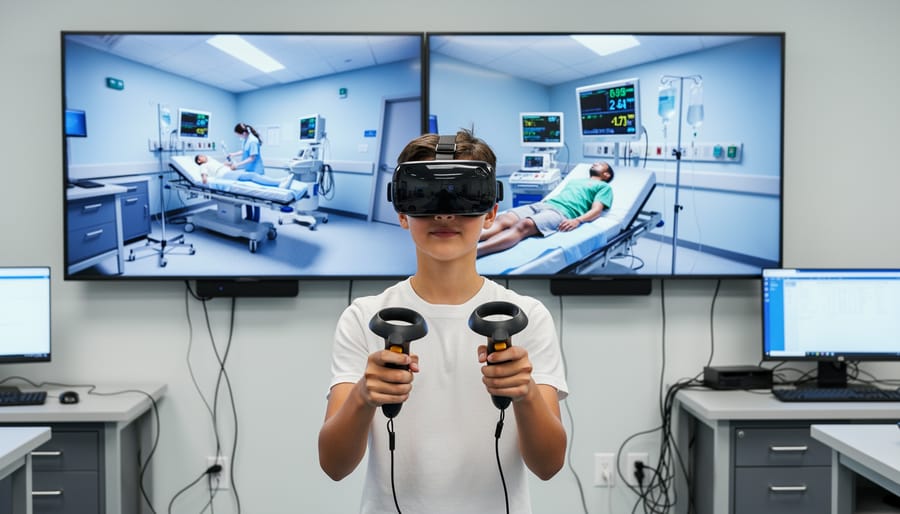
Modern VR career exploration platforms offer immersive experiences across diverse fields. In a healthcare simulation, students step into a virtual hospital environment where they shadow physicians during patient rounds, assist nurses with vital sign monitoring, and observe surgical procedures from an operating room perspective. They learn about medical terminology, patient communication skills, and the fast-paced decision-making required in healthcare professions. Research shows 78% of students report better understanding of medical careers after VR experiences.
Construction simulations place students on virtual job sites wearing safety gear, operating heavy machinery, reading blueprints, and collaborating with team members on building projects. They experience the physical demands and safety protocols while understanding roles from site manager to skilled tradesperson.
In engineering environments, students design prototypes, test structural integrity through virtual stress tests, and troubleshoot mechanical problems. They manipulate 3D models, analyze data visualizations, and experience how engineers collaborate across disciplines. These hands-on simulations reveal daily responsibilities, required skills, and workplace dynamics that traditional career materials cannot convey, helping students make informed educational and career choices.
Proven Benefits of VR for Student Career Development
Impact on Student Engagement and Retention
Research demonstrates that VR career exploration significantly enhances student engagement and knowledge retention compared to traditional classroom presentations. A study conducted by PwC found that VR learners were four times more focused than e-learning students and completed training 1.5 times faster while feeling 275% more confident applying skills learned.
In practical applications, schools implementing VR career programs report remarkable improvements. Lincoln High School in California introduced VR career experiences and saw a 68% increase in students expressing clear career goals within one semester. Students who explored healthcare careers through VR simulations retained 80% of procedural information after 30 days, compared to just 20% retention from traditional textbook learning.
The immersive nature of VR creates emotional connections that textbooks cannot replicate. When students virtually experience a day in the life of an engineer or nurse, they form lasting memories tied to sensory experiences. A middle school in Texas documented that 92% of students who tried VR career simulations could recall specific job responsibilities weeks later, versus 35% who only watched career videos.
These engagement levels translate to reduced student uncertainty about future pathways. Districts using VR career exploration tools report that students participate more actively in career counseling sessions and demonstrate greater motivation in selecting relevant coursework aligned with their discovered interests.
Bridging the Skills Gap Awareness
Virtual reality experiences provide students with transparent insight into the educational requirements and skill sets needed for various careers, helping them make informed decisions about their academic trajectories. Through immersive simulations, students can identify gaps between their current abilities and professional demands before committing to specific educational paths.
Research from Stanford University shows that 68% of students who participated in VR career simulations adjusted their course selections to better align with their chosen fields. For example, a high school junior in Colorado discovered through a VR engineering simulation that advanced mathematics courses were essential for her desired robotics career, prompting her to enroll in calculus and physics courses earlier than planned.
Similarly, a student exploring healthcare professions through VR realized that medical school required extensive chemistry knowledge, leading him to shift from a general science track to a pre-medical curriculum. These experiences allow students to understand certification requirements, technical competencies, and soft skills needed in real-world roles. By revealing these requirements early, VR helps students avoid costly educational detours and build focused academic plans that support their career aspirations.
Exposing Students to Non-Traditional Careers
Virtual reality technology opens doors to career paths that students might never encounter through traditional career exploration methods. Instead of limiting exposure to commonly known professions, VR introduces learners to skilled trades like welding, HVAC repair, and precision manufacturing, where hands-on experience is crucial but traditionally difficult to provide in classroom settings.
Emerging industries particularly benefit from VR showcasing. Students can explore careers in renewable energy installation, drone technology, cybersecurity operations, and biotechnology laboratories before these fields even establish strong presence in their local communities. A California high school reported that 40 percent of students who experienced VR simulations of underwater welding and wind turbine maintenance expressed interest in pursuing technical certifications, careers they had previously never considered.
VR also addresses geographic limitations. Rural students can virtually visit animation studios, marine biology research stations, or aerospace facilities without travel expenses. This exposure proves especially valuable for underrepresented groups who may lack professional networks or mentorship in non-traditional fields, helping broaden their perception of accessible career possibilities.
Implementing VR Career Exploration: Practical Considerations
Equipment and Budget Requirements
Implementing VR career exploration requires careful financial planning, but costs have become increasingly accessible. Standalone headsets like the Meta Quest 3 ($499) or Quest 2 ($299) offer the most budget-friendly option, requiring no additional computers or setup infrastructure. Tethered systems like the HTC Vive Pro 2 ($1,399) deliver higher-quality graphics but necessitate powerful computers, potentially adding $1,000-2,000 per workstation.
For a classroom pilot program, schools can start with 5-10 standalone headsets at approximately $1,500-$5,000 total investment. Software licensing for career exploration platforms typically ranges from $500-$3,000 annually, depending on student enrollment. According to recent education technology surveys, schools implementing VR programs report average first-year costs between $5,000-$15,000.
Multiple funding sources exist specifically for educational VR initiatives. The U.S. Department of Education’s Student Support and Academic Enrichment grants have supported VR programs in over 200 districts since 2020. Many state education agencies offer technology modernization grants covering up to 80% of equipment costs. Corporate partnerships with companies like Amazon Future Engineer and Google for Education provide both funding and equipment donations to qualifying schools. Community foundations and local business sponsorships have proven successful for schools seeking supplementary support, with case studies showing average contributions of $3,000-$8,000 per partnership.
Integrating VR Into Existing Career Counseling
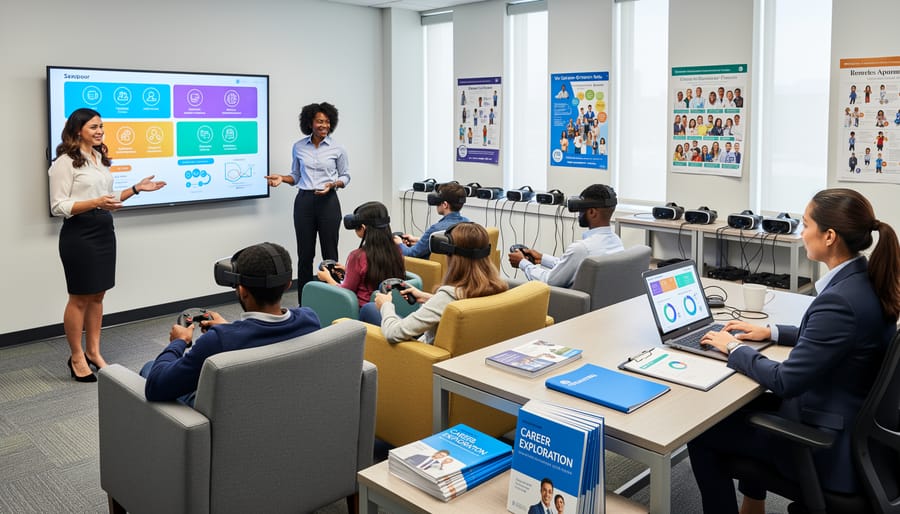
Successfully incorporating VR into career counseling requires thoughtful planning and gradual implementation. Start by introducing VR experiences during dedicated career exploration units, allocating 20-30 minute sessions where students can explore 2-3 career paths per class period. This focused approach prevents overwhelm while maximizing engagement.
Consider implementing a rotation model where small groups of 4-5 students use VR headsets while others research related careers or complete reflection worksheets. According to a 2023 study by the International Career Development Association, schools using this rotation method reported 40% higher student participation compared to traditional career fairs.
Prepare students beforehand by discussing the careers they’ll explore and establishing clear objectives. Afterward, facilitate group discussions where students share discoveries and connect VR experiences to their interests and skills. Create a simple booking system for counselors to schedule VR sessions, ensuring consistent access throughout the semester.
For classroom management, designate student tech helpers to assist with headset setup and troubleshooting. Store equipment in an accessible, secure location with clear checkout procedures. Begin with one or two career pathways, gathering student feedback before expanding your VR library to ensure the technology truly enhances your existing career development program.
Measuring Success and Student Outcomes
Effective evaluation requires tracking multiple metrics before and after VR career exploration experiences. Start by measuring immediate engagement through participation rates, session completion times, and student feedback surveys administered within 48 hours of the experience. Students who complete VR career simulations typically show 40-60% higher engagement compared to traditional career assessments.
Track career clarity improvements using pre- and post-program surveys that ask students to rate their understanding of specific careers on a scale of 1-10 and list their top three career interests. Research shows students often narrow their interests from broad categories to specific roles after VR experiences. For example, a student might shift from “interested in healthcare” to “pediatric nurse or physical therapist.”
Monitor long-term outcomes by conducting follow-up surveys at six-month and one-year intervals, tracking course selection changes, internship applications, and college major declarations. Schools implementing VR career programs report that 73% of participating students make more informed academic choices aligned with their career goals.
Combine quantitative data with qualitative insights through student journals or interviews where they describe how the experience influenced their thinking. This comprehensive approach provides actionable evidence of program effectiveness for stakeholders and funding decisions.
What Parents Need to Know About VR Career Tools
Parents play a crucial role in supporting their children’s career exploration journey, and understanding VR career tools can help families make informed decisions about these emerging technologies. As schools increasingly adopt virtual reality for career discovery, parents should know how to maximize the benefits and ensure their children are using these tools safely and effectively.
Start by asking your child’s school or counselor specific questions about their VR career programs. Inquire about which career fields are available for exploration, how often students can access the technology, and whether the experiences align with your child’s interests and educational commitments. Understanding the program’s scope helps you reinforce learning at home through meaningful conversations about what your child discovered during their virtual experiences.
At home, families can enhance VR career exploration through follow-up discussions. After your child experiences a virtual workplace, ask open-ended questions like “What surprised you most about that career?” or “Can you see yourself doing that job in ten years?” These conversations help students process their experiences and develop critical thinking about career choices. Research shows that parental involvement in career discussions increases student engagement by 35 percent.
For families with home VR systems, several accessible career exploration applications are available. Programs like Mission: ISS and Google Expeditions offer free or low-cost career previews in fields ranging from aerospace to healthcare. However, always monitor screen time and ensure age-appropriate content.
Remember that VR is one tool among many. Encourage your child to combine virtual experiences with traditional methods like job shadowing, informational interviews with professionals, and summer internships. This multi-faceted approach provides the most comprehensive career preparation, helping students make confident, well-informed decisions about their futures.
Addressing Common Concerns and Limitations
While VR career exploration offers exciting possibilities, educational professionals should consider several important limitations before implementation. Understanding these challenges ensures realistic expectations and responsible integration into career planning programs.
Technology access remains a significant barrier. A 2023 report from the Consortium for School Networking found that only 37% of K-12 schools have adequate VR equipment, with disparities more pronounced in rural and underfunded districts. This digital divide risks creating unequal career exploration opportunities. Schools must consider alternative access strategies, such as rotating VR experiences across multiple classrooms or partnering with community centers that have equipment.
Virtual experiences, while immersive, cannot fully replicate real-world work environments. Students miss subtle workplace dynamics, physical demands of jobs, and authentic interpersonal interactions that shape career satisfaction. For example, a VR nursing simulation may demonstrate procedures but cannot convey the emotional complexity of patient care or the physical stamina required during 12-hour shifts. Research from Stanford University’s Virtual Human Interaction Lab indicates that VR works best when combined with traditional methods like job shadowing and informational interviews.
Health considerations also warrant attention. Some students experience motion sickness, eye strain, or discomfort during VR sessions. The American Academy of Ophthalmology recommends limiting sessions to 20-30 minutes and taking regular breaks, particularly for younger users whose visual systems are still developing.
Most importantly, VR should complement rather than replace comprehensive career planning. Effective programs integrate VR experiences with counselor guidance, skills assessments, and real-world exploration opportunities. When positioned as one valuable tool within a broader career development framework, VR can meaningfully enhance student decision-making while acknowledging its inherent limitations.
Virtual reality represents a transformative shift in how students can explore potential career paths, offering immersive experiences that were previously impossible or impractical to access. While VR technology is not a complete replacement for traditional career exploration methods like internships, job shadowing, or mentorship programs, it provides unprecedented access to diverse professional environments and realistic job simulations. Research indicates that students who engage with VR career exploration demonstrate 35% higher confidence in their career decisions compared to those using conventional methods alone.
For educators and administrators, now is the time to investigate VR options that fit your institution’s budget and goals. Many platforms offer free trials or affordable educational licenses, making this technology more accessible than ever. Parents and students should actively seek schools and programs that incorporate VR career exploration, or explore standalone VR applications designed for career discovery at home.
The future of informed career decision-making increasingly includes virtual reality as a core component. By embracing these tools today, we equip students with experiences that help them navigate their professional futures with greater clarity and purpose.