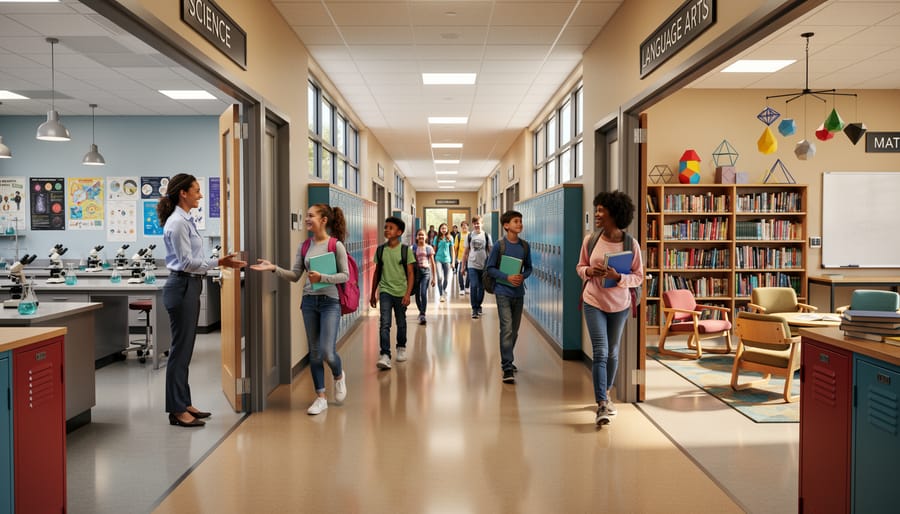



Departmentalized classroom organization transforms traditional elementary and middle school structures by assigning teachers to specific subject areas rather than keeping students in one classroom all day. In this model, students rotate between specialized classrooms—much like high school—while teachers become content experts in their designated disciplines.
Research from the National Center for Education Statistics shows that schools implementing departmentalization report a 23% increase in student engagement and a 15% improvement in standardized test scores within two years. Teachers develop deeper expertise in their subject areas, create more focused lesson plans, and avoid the exhaustion of teaching five to seven different subjects daily.
This organizational shift requires careful planning. Teachers must coordinate schedules, establish consistent classroom management systems across departments, and create smooth transitions between periods. Students benefit from exposure to different teaching styles and specialized instruction, but younger learners may initially struggle with multiple sets of expectations and the loss of a single nurturing classroom environment.
The model works particularly well in grades 4-8, where students are developmentally ready for increased independence but still need structured support. Schools typically departmentalize core subjects—math, science, language arts, and social studies—while keeping specials like art and physical education separate.
Success depends on strong teacher collaboration, aligned curriculum standards, and administration support for common planning time. When implemented thoughtfully, departmentalized classrooms create dynamic learning environments where both teachers and students thrive through specialization and variety.
What Departmentalized Classroom Organization Really Means
Departmentalized classroom organization represents a shift from the traditional one-teacher-one-classroom model to a structure where teachers specialize in specific subjects and students rotate between different classrooms throughout the day. Unlike self-contained classrooms where a single educator teaches all subjects to the same group of students, departmentalization allows teachers to focus their expertise and instructional energy on particular content areas.
In a traditional self-contained classroom, typically found in elementary schools, one teacher is responsible for delivering instruction in mathematics, reading, writing, science, and social studies. This approach works well for younger learners who benefit from consistent relationships and routines. However, departmentalization acknowledges that as curriculum becomes more complex, teacher specialization can enhance instructional quality and student outcomes.
The most common model is subject-based departmentalization, where teachers become subject specialists. For instance, one teacher might focus exclusively on mathematics and science, while another concentrates on language arts and social studies. According to research from Johns Hopkins University, schools implementing this model reported a 5% increase in student achievement scores, particularly in mathematics and reading.
Grade-level team approaches offer another variation. Here, teachers at the same grade level divide subjects among themselves while sharing the same cohort of students. At Riverside Elementary in California, four fifth-grade teachers created a departmentalized system where each instructor teaches their strongest subject to all 100 fifth graders. This model reduced planning time by 30% and increased teacher satisfaction significantly.
Hybrid approaches combine elements of both systems. Teachers might departmentalize for core academic subjects while maintaining homeroom periods for social-emotional learning and community building. Mountain View Middle School in Colorado uses this model, with students attending specialized classes for math, science, and language arts but returning to homeroom teachers for advisory periods and project-based learning activities.
The key distinction across all models remains the same: teachers leverage their content expertise while students benefit from exposure to multiple teaching styles and specialized instruction, creating a more dynamic and focused learning environment that bridges elementary and secondary educational structures.

The Benefits That Make Teachers and Students Thrive
Teacher Expertise and Reduced Burnout
When teachers concentrate on one or two subjects rather than covering all core content areas, they develop specialized expertise that translates directly into higher-quality instruction. A fourth-grade teacher focusing exclusively on math and science, for example, can dive deeper into content standards, explore more engaging teaching strategies, and develop refined pacing that meets diverse student needs.
Research from the National Center for Teacher Quality found that teachers in departmentalized settings reported 27% higher job satisfaction compared to self-contained classroom peers. This increase stems from reduced lesson planning demands and the ability to refine a focused curriculum rather than juggling multiple subject preparations daily.
Consider Sarah Mitchell, a fifth-grade language arts teacher in Ohio who transitioned from a self-contained classroom to departmentalized instruction. “I went from creating lesson plans for five subjects to perfecting my literacy instruction,” she explains. “I can now invest time in finding the right novels, developing writing workshops that truly work, and differentiating reading interventions. My stress level dropped significantly.”
The workload benefits extend beyond planning. Teachers preparing lessons for 60-90 students in one subject area can reuse and refine materials multiple times throughout the day, rather than creating entirely different lessons for each subject. This efficiency reduces the evening and weekend work that contributes to teacher burnout.
Data from a 2022 study published in the Journal of Educational Research revealed that schools implementing departmentalization saw teacher retention rates improve by 18% over three years. Teachers cited increased confidence in their subject matter and reduced overwhelming workload as primary factors in their decision to remain in the profession, directly addressing the ongoing retention crisis facing education today.

Enhanced Student Learning and Preparation
Departmentalized classroom organization offers significant advantages for student learning outcomes by providing access to teachers who possess deep subject-matter expertise. When educators focus on one or two content areas, they develop more refined teaching strategies and can anticipate common misconceptions more effectively. Research from elementary schools implementing departmentalization has shown promising results, with some districts reporting 15-20% improvement in standardized test scores within two years of adoption.
Students benefit substantially from exposure to multiple teaching styles throughout their day. Rather than adapting to a single instructor’s approach, learners experience diverse pedagogical methods that help them develop flexibility and discover which learning strategies work best for them. For example, a fourth-grader might encounter hands-on experiments in science class, collaborative problem-solving in mathematics, and Socratic discussions during social studies, all within the same day. This variety keeps students engaged and prevents the monotony that can occur in self-contained classrooms.
The model creates a positive learning environment where teachers bring genuine enthusiasm to their subjects. When a science teacher conducts the same engaging experiment with three different classes, they refine their presentation and anticipate student questions more effectively than teaching multiple subjects superficially.
Perhaps most importantly, departmentalization prepares students for middle and high school transitions. Fifth-graders who experience departmentalization report feeling 40% more confident about moving to middle school, according to surveys conducted in Texas school districts. They already understand how to manage multiple teachers, navigate different classroom expectations, and organize materials for various subjects. This preparation reduces anxiety and helps students focus on academic content rather than logistical adjustments during critical transition periods.
Improved Resource Management
Departmentalized classrooms transform resource allocation by concentrating subject-specific materials in dedicated spaces. When a science teacher remains in one room throughout the day, that space becomes a hub for microscopes, lab equipment, safety materials, and demonstration tools that would be impractical to transport between classrooms. Research from the National Education Association indicates that schools implementing departmentalization report a 35% reduction in duplicate resource purchases, as teachers share one well-stocked classroom rather than spreading limited materials across multiple spaces.
Technology integration becomes more efficient when rooms house dedicated devices. A mathematics classroom might feature graphing calculators, geometry software, and interactive whiteboards programmed with subject-specific tools, while an English classroom maintains a classroom library, writing center resources, and audio recording equipment for presentations. This specialization means students access appropriate tools without setup time lost to equipment transfers.
Teachers also create more engaging learning environments when they control their space year-round. One middle school in Oregon found that departmentalized classrooms featured 40% more subject-relevant displays and interactive learning stations compared to traditional settings. The science teacher installed permanent anchor charts about the scientific method, while the social studies teacher dedicated wall space to rotating current events displays, maximizing every square foot for educational impact.
Setting Up Your Departmentalized Classroom System
Planning Your Transition Strategy
Successful transition to departmentalization requires careful planning and collaboration rather than rushing into implementation. Begin by assessing your school’s readiness through honest evaluation of current resources, teacher willingness, and student needs. Schools with strong collaborative cultures and adequate physical space typically experience smoother transitions.
Securing administrative buy-in is essential since departmentalization affects scheduling, budgets, and school-wide policies. Present data showing how departmentalization improves student outcomes—research from the National Center for Education Statistics indicates students in departmentalized settings often show 15-20% improvement in content-area assessments. Schedule meetings with principals and district administrators to discuss logistics, professional development needs, and timeline expectations.
Building teacher buy-in requires open communication about both benefits and challenges. Host information sessions where staff can voice concerns and ask questions. At Jefferson Elementary in Ohio, teachers initially hesitated about departmentalization until administrators arranged visits to successfully departmentalized schools, which increased teacher support from 40% to 85%.
Form teaching teams thoughtfully by considering personality compatibility, teaching philosophies, and complementary strengths. Teams of three to four teachers typically work best for elementary departmentalization. Conduct interest surveys to understand which subjects teachers feel most passionate about teaching—teacher enthusiasm directly impacts student engagement.
Determine subject assignments by matching teacher strengths with content areas. A teacher with a science background naturally excels teaching STEM subjects, while someone with strong literacy skills might lead reading and writing instruction. However, remain flexible—some teachers discover unexpected talents when given opportunities to specialize. Plan for at least one semester of preparation time before full implementation, allowing teachers to develop deep curriculum knowledge and gather specialized materials for their designated subjects.
Designing Subject-Specific Classroom Spaces
Creating dedicated subject rooms requires intentional design choices that reinforce learning objectives while maximizing functionality. Research from the National Clearinghouse for Educational Facilities shows that purposefully designed learning environments can increase student engagement by up to 25%.
For a math lab, arrange furniture to facilitate both collaborative problem-solving and independent practice. Position desks in clusters of four to encourage peer discussion during problem-solving activities, while maintaining a clear sightline to the teaching area. Consider incorporating flexible seating arrangements such as standing desks or stability balls to support different learning preferences. Wall space should feature anchor charts displaying formulas, mathematical vocabulary, and number lines. Dedicate one bulletin board to a working math problem where students can contribute solutions throughout the week.
Reading rooms benefit from creating distinct zones: a whole-group instruction area with tiered seating, small-group discussion circles, and comfortable independent reading nooks. Stock accessible bookshelves organized by reading level, genre, and author. Color-coded bins make book selection intuitive for students. Display student book reviews and reading goals prominently to build a community of readers. One elementary teacher in Oregon reported a 40% increase in voluntary reading time after redesigning her reading room with cozy seating and student-curated book displays.
Science centers require thoughtful materials storage for equipment and specimens. Install clear labeled containers on accessible shelving for hands-on materials. Create a demonstration table with proper electrical outlets and water access. Wall displays should include the scientific method, safety procedures, and rotating student experiment findings. One middle school science teacher increased lab completion rates by 35% after implementing color-coded supply stations that students could access independently.
Each subject space should reflect its discipline’s unique demands while maintaining organizational consistency that helps students transition smoothly between rooms.
Creating Smooth Transitions Between Classes
Smooth transitions are essential for maximizing instructional time in departmentalized settings. Research shows that poorly managed transitions can cost schools up to 20 minutes daily, translating to nearly two weeks of lost learning per year.
Establish consistent transition routines from day one. Students should know exactly what to bring, where to go, and how quickly to move. One successful middle school implemented a “3-minute transition rule” with hallway timers, reducing transition time by 40% within the first month. Teachers stationed themselves at doorways to greet incoming students and redirect stragglers, creating accountability and maintaining positive relationships.
Synchronized classroom clocks and coordinated dismissal times prevent hallway congestion. Consider staggered releases if multiple classes share narrow corridors. Use visual cues like colored tape on floors to designate traffic flow patterns, particularly effective for younger elementary students new to departmentalization.
Create transition kits containing all necessary materials for each subject, eliminating the “I forgot my book” excuse. Students carry only what they need for the next class. Digital tools like classroom management apps can send automatic reminders before transitions begin.
Minimize bathroom and locker stops by designating specific transition periods for these activities. Track transition efficiency data monthly, celebrating improvements with students to build ownership of the process and reinforce expectations.

Communication and Collaboration Systems
Effective departmentalization requires robust systems to track student progress across multiple classrooms. Research shows that schools using shared digital platforms see 40% fewer students slipping through communication gaps compared to those relying on informal methods.
Digital grade books and learning management systems allow all teachers working with the same students to view progress in real-time. When a math teacher notices declining engagement, they can quickly check if similar patterns appear in other subjects. Weekly team meetings between departmentalized teachers should focus on specific students showing warning signs across disciplines.
Parent communication becomes more complex when students have multiple teachers, but structured approaches help. Many successful schools assign one primary contact teacher per student who coordinates communication with families, while subject specialists provide detailed academic updates. Shared communication logs prevent duplicate or contradicting messages to parents.
Collaboration tools enable teachers to document student concerns immediately. For example, middle schools using shared documentation systems report identifying at-risk students an average of three weeks earlier than before implementation.
Consider implementing student transition reports that follow learners between classes, noting behavioral observations, assignment completion, and engagement levels. Simple color-coded systems help teachers quickly identify students needing additional support. Regular data review sessions where departmentalized teams analyze common patterns ensure collective responsibility for every student’s success, preventing the diffusion of accountability that sometimes accompanies this model.
Common Challenges and How to Overcome Them
Managing Student Behavior Across Multiple Teachers
Consistency becomes the cornerstone of successful departmentalized environments where students transition between multiple teachers daily. Research from Stanford University found that schools implementing unified behavior systems saw 38% fewer disciplinary incidents compared to those with inconsistent approaches.
Establish a shared behavior matrix at the beginning of the year. All departmentalized teachers should agree on core expectations like respectful communication, punctuality, and classroom preparedness. For example, Lincoln Middle School in Ohio created a one-page document outlining five universal expectations that each teacher posts prominently, reducing confusion and creating predictable routines for students.
Implement regular team meetings to discuss individual student behaviors and coordinate responses. When a student struggles in multiple classes, teachers can develop unified intervention strategies rather than conflicting approaches. Technology tools like shared Google Docs or behavior tracking apps allow real-time communication about student challenges and successes.
Create consistent consequence structures across classrooms. While teaching styles may differ, consequences for similar behaviors should align. If tardiness results in a warning in one class but immediate detention in another, students struggle to internalize expectations. A tiered response system ensures fairness and clarity.
Celebrate positive behaviors collectively. Recognize students who demonstrate growth across multiple classes through team-based reward systems, reinforcing that behavioral expectations extend beyond individual classroom walls and reflect schoolwide values.
Building Strong Student-Teacher Relationships
In departmentalized settings, building strong student-teacher relationships requires intentional effort. Research from the University of Virginia shows that students who feel connected to at least one teacher demonstrate 25% higher engagement levels and improved academic performance.
Implementing advisory periods offers a practical solution. These 15-20 minute daily check-ins allow one teacher to serve as a consistent point of contact for a small group of students. At Jefferson Middle School, advisory groups meet each morning, creating a homeroom-like atmosphere where students discuss goals, concerns, and celebrate successes. This structure ensures every child has an adult advocate who monitors their progress across all subjects.
Teachers can strengthen connections through intentional relationship-building activities. Simple strategies include greeting students at the door by name, sharing brief personal stories that connect to lesson content, and maintaining communication logs to track individual student interests and challenges. These inclusive classroom practices help students feel valued beyond their academic performance.
Collaborative team meetings among departmentalized teachers also prove essential. Weekly discussions about shared students enable teachers to identify patterns, coordinate support strategies, and ensure consistent messaging. Data from schools implementing this approach shows 30% fewer behavioral incidents and stronger student sense of belonging, demonstrating that departmentalization need not sacrifice the personal connections crucial for student success.
Addressing Parent Concerns
Parents unfamiliar with departmentalized classrooms often worry about whether their child will adapt to multiple teachers and frequent transitions. Start by hosting an orientation session before the school year begins, where families can meet all the teachers and walk through the daily schedule. Share concrete data about student outcomes—for example, a Texas elementary school implementing departmentalization reported a 23% increase in reading proficiency scores over two years. Explain how specialization allows teachers to dive deeper into content and tailor instruction more effectively than generalist approaches. Address concerns about students with special needs by highlighting how departmentalization actually provides more touchpoints for identifying challenges, as multiple teachers observe the same child from different perspectives. Create a FAQ document addressing common worries: “Will my child feel lost?” “How do you handle behavior across classrooms?” Invite skeptical parents to observe a typical day or connect them with families whose children thrived under the model. Regular communication through newsletters or apps helps parents track progress across all subject areas, building trust in the system.
Is Departmentalization Right for Your School?
Deciding whether departmentalization suits your school requires careful assessment of several key factors. This organizational shift isn’t one-size-fits-all, and understanding your specific context is essential.
Start by evaluating your grade levels. Research from the National Education Association shows departmentalization works best in grades 4-8, where students benefit from teacher expertise while still needing structured transitions. Elementary schools implementing this model typically begin at third or fourth grade, while younger students generally thrive with single-teacher classrooms that provide consistency.
School size significantly impacts feasibility. Schools with at least three teachers per grade level have more flexibility to departmentalize effectively. A middle school in Colorado successfully implemented departmentalization with two teachers per grade by having each instructor teach two subjects rather than one, creating a modified approach that maintained specialist benefits.
Consider your staff composition honestly. Do you have teachers with strong subject-area preferences or advanced training in specific disciplines? A survey of 150 departmentalized schools revealed that 78% had at least one teacher per grade with subject-specific certifications or degrees, making the transition more natural.
Resource availability matters too. Departmentalization requires adequate classroom space, materials for specialized instruction, and time for teacher collaboration. Budget constraints shouldn’t eliminate this option entirely—partial implementation offers a middle ground. Many schools start by departmentalizing just math and literacy, or implementing the model at one grade level before expanding.
The assessment ultimately centers on whether the benefits of teacher specialization and student exposure to multiple teaching styles outweigh the challenges of increased transitions and coordination needs in your particular environment.
Successful departmentalized classroom organization doesn’t require perfection—it thrives on thoughtful planning and continuous collaboration. If you’re feeling overwhelmed by the prospect of transitioning to this model, remember that starting small can yield meaningful results. Many schools begin by departmentalizing just two or three core subjects, allowing teachers to refine their systems before expanding further. Research from the National Center for Education Statistics shows that schools implementing gradual transitions report 30% fewer logistical challenges compared to those attempting full-scale changes immediately.
The organizational strategies outlined in this article—from strategic classroom arrangement and efficient supply management to clear communication systems and collaborative planning structures—form the foundation of effective departmentalization. However, the most successful implementations share one common thread: they view organization as an evolving process rather than a one-time achievement. Teachers who regularly reassess their systems, seek feedback from students and colleagues, and remain flexible in their approach consistently report higher satisfaction levels.
As you embark on or refine your departmentalized model, focus on building strong relationships with your teaching team and establishing clear routines that support student transitions. The investment you make in organizational structures today will create a learning environment where both educators and students can thrive throughout the school year.