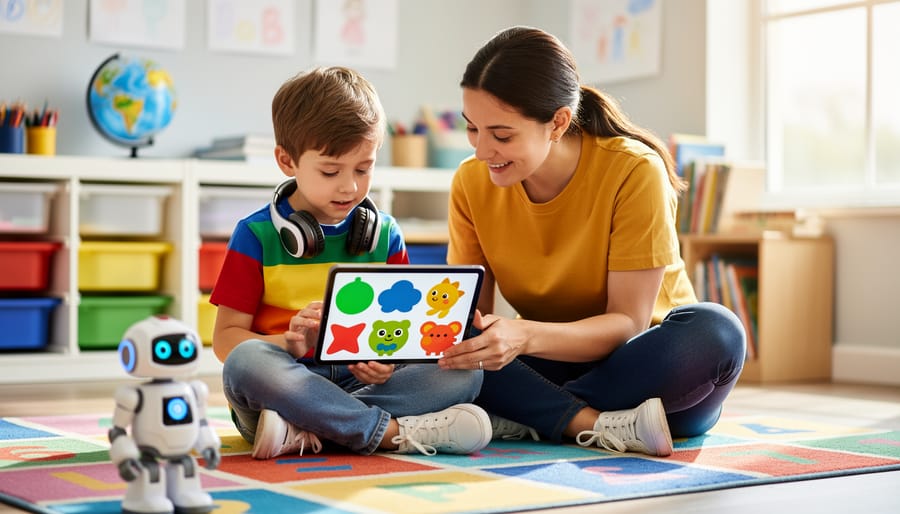



Kindergarten education apps have transformed early learning, with the global educational app market projected to reach $46.9 billion by 2027. Today’s most effective apps combine adaptive learning algorithms, multisensory engagement, and developmental milestone tracking to create personalized learning experiences that traditional methods cannot match.
Evaluate apps using three critical criteria: alignment with early childhood development standards, meaningful interactivity beyond passive screen time, and transparent data privacy policies. Research from Stanford University shows that apps incorporating spaced repetition and immediate feedback improve literacy skills by 31% compared to traditional worksheets. Apps like Khan Academy Kids and ABCmouse demonstrate this effectiveness through phonics games that adjust difficulty based on individual performance, while Endless Alphabet uses animation and sound to reinforce vocabulary retention.
Look for apps that encourage parent-child interaction rather than isolated screen time. The American Academy of Pediatrics emphasizes co-engagement, where adults participate in digital learning alongside children. Apps offering progress dashboards enable parents and educators to identify learning gaps and celebrate achievements with specific, actionable insights.
Current development trends emphasize inclusive design features like text-to-speech, adjustable difficulty levels, and multilingual support, ensuring accessibility for diverse learners. Quality apps now integrate STEM concepts through play-based exploration, preparing kindergarteners for future academic success while maintaining the joy and curiosity essential to early childhood. Understanding these innovations empowers you to select tools that genuinely enhance learning outcomes rather than simply entertaining young minds.
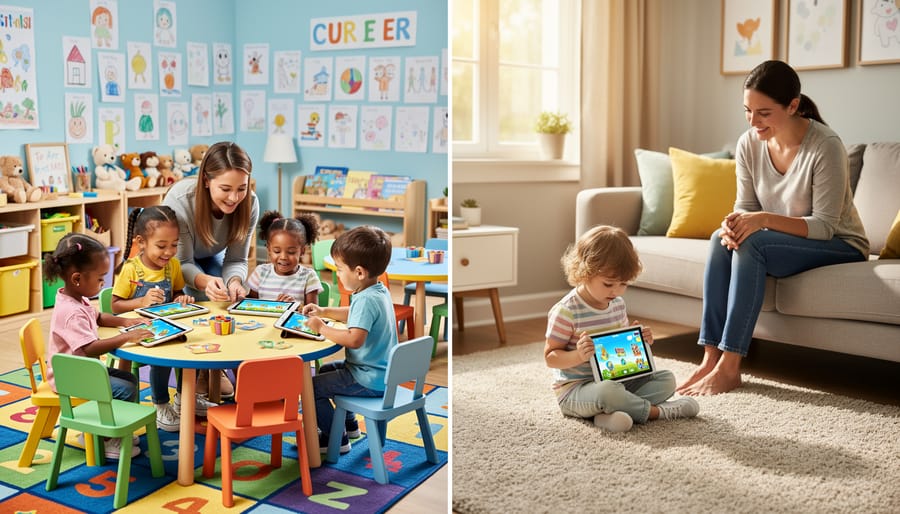
The Current State of Kindergarten Education Apps
Market Growth and Adoption Rates
The kindergarten education app market has experienced remarkable growth, with the global early childhood education app sector valued at approximately $3.2 billion in 2023 and projected to reach $8.5 billion by 2028. This represents a compound annual growth rate of 21.6%, reflecting widespread recognition of digital learning’s value in early education.
Adoption rates tell a compelling story. Recent surveys indicate that 68% of kindergarten classrooms now incorporate educational apps into their daily curricula, up from just 34% five years ago. Home usage shows even stronger penetration, with 78% of parents reporting they use at least one educational app with their kindergarten-aged children weekly.
Demographic trends reveal interesting patterns. Urban and suburban families show adoption rates exceeding 85%, while rural communities are catching up rapidly at 62%. Notably, schools serving diverse student populations report higher app usage, with educators citing these tools’ ability to provide personalized learning experiences and multilingual support.
A practical example comes from Lincoln Elementary School in Ohio, where kindergarten teachers reported that introducing literacy apps increased student engagement by 43% and improved letter recognition skills among 89% of students within three months. Such real-world outcomes continue driving adoption across educational settings nationwide.
Most Popular App Categories for Early Learners
The kindergarten app marketplace features several dominant categories, each addressing specific developmental needs. Literacy and reading apps consistently rank among the most downloaded, with programs like Homer Reading and Teach Your Monster to Read combining phonics instruction with interactive storytelling. These apps typically use scaffolded lessons that adapt to individual reading levels, making them particularly effective for diverse classrooms.
Math and numeracy apps form another popular category, with apps such as Moose Math and Todo Math offering hands-on activities that teach counting, pattern recognition, and basic arithmetic through playful interactions. Research shows that children using quality math apps demonstrate 15-20% improvement in number sense compared to traditional methods alone.
Creative expression apps, including Toca Boca series and Drawing Pad, encourage artistic exploration and imagination while developing fine motor skills. Social-emotional learning apps like Breathe, Think, Do with Sesame have gained significant traction, helping young learners develop self-regulation and emotional awareness through guided activities. Finally, STEM-focused apps such as ScratchJr introduce basic coding concepts through age-appropriate block programming, preparing children for future technology learning. Each category serves distinct educational purposes while maintaining the engagement necessary for effective early childhood learning.
Key Development Trends Shaping Kindergarten Apps
Personalized Learning Pathways
Modern kindergarten apps are revolutionizing early education through personalized learning pathways that adapt to each child’s unique needs. These sophisticated platforms use artificial intelligence and adaptive algorithms to continuously assess a child’s progress and automatically adjust difficulty levels, ensuring optimal challenge without frustration.
Apps like Khan Academy Kids demonstrate this technology effectively. The platform tracks student responses in real-time, identifying strengths and areas needing reinforcement. If a child excels at letter recognition but struggles with counting, the app increases math practice while maintaining appropriate literacy challenges. Similarly, ABCmouse adjusts its curriculum based on individual performance, creating customized lesson sequences that align with each learner’s pace.
Homer Reading employs AI-powered learning strategies that analyze thousands of data points, from response accuracy to time spent on activities, crafting truly individualized experiences. Research shows children using adaptive learning platforms demonstrate 30% faster skill acquisition compared to traditional one-size-fits-all approaches.
These intelligent systems also provide valuable insights for educators and parents through detailed progress reports. Teachers can identify learning gaps early and parents receive actionable recommendations for home support. This data-driven approach ensures every kindergartener receives instruction perfectly matched to their developmental stage, fostering confidence and sustained engagement throughout their educational journey.
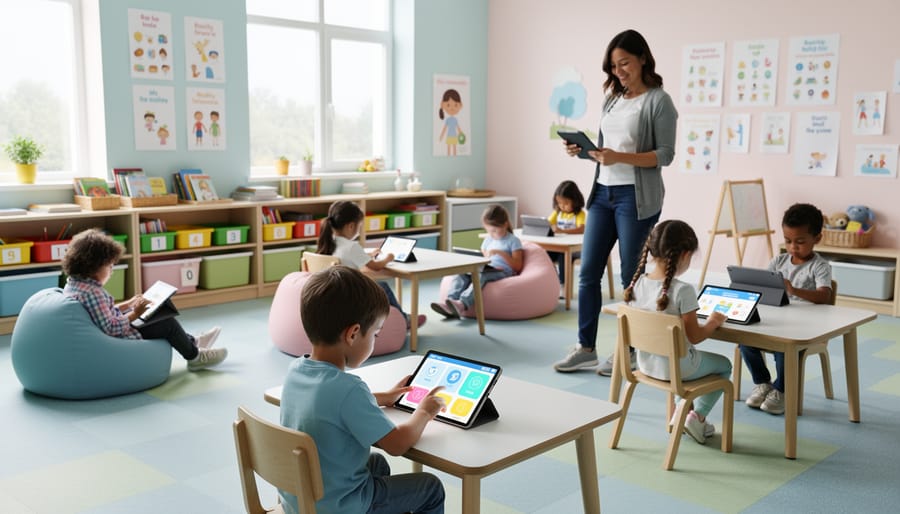
Gamification That Actually Teaches
Modern kindergarten education apps are moving beyond superficial rewards like stars and badges to create meaningful gamification that genuinely supports learning. The difference lies in how game elements connect to educational objectives rather than simply adding entertainment value.
Effective educational gamification integrates challenge levels that adapt to individual progress, ensuring children remain engaged without feeling frustrated or bored. Research from the Joan Ganz Cooney Center found that apps with embedded assessment and adaptive difficulty showed 27% better learning outcomes compared to those with fixed progression paths.
Apps like Prodigy Math demonstrate this approach by presenting mathematical concepts through narrative-driven gameplay where problem-solving directly advances the story. Rather than tacking on points systems, the game mechanics themselves reinforce mathematical thinking patterns. Similarly, Duolingo ABC uses progression that feels natural to young learners, where completing phonics activities unlocks new reading adventures.
The key indicator of quality gamification is whether removing the game elements would eliminate the learning structure itself. When game mechanics serve as the framework for understanding concepts—such as sorting games that teach classification or building challenges that develop spatial reasoning—children develop deeper comprehension. Parents and educators should look for apps where rewards emerge from mastery rather than mere participation, fostering intrinsic motivation that extends beyond screen time into real classroom and home learning environments.
Parent and Teacher Dashboards
Modern kindergarten education apps increasingly recognize that learning extends beyond the child’s independent interaction with technology. Today’s leading apps incorporate sophisticated parent and teacher dashboards that provide meaningful insights into each child’s educational journey.
These dashboards typically display progress metrics, time spent on various activities, and specific skills mastered. For example, apps like ABCmouse and Khan Academy Kids offer detailed reports showing which letter sounds a child has practiced, math concepts they’ve grasped, and areas needing additional support. This data-driven approach helps adults identify learning patterns and adjust their teaching strategies accordingly.
Research indicates that parental involvement significantly enhances app-based learning outcomes. When parents can see that their child struggled with number recognition but excelled at shape sorting, they can reinforce these concepts through everyday activities like counting stairs or identifying shapes during walks.
Many dashboards now include extension activity suggestions, bridging digital learning with hands-on experiences. A teacher might receive prompts to create classroom activities based on vocabulary words students encountered in the app, while parents get ideas for weekend projects that build on app lessons.
This transparency also helps educators coordinate between home and school learning, ensuring consistent support. The dashboard trend reflects a broader understanding that effective early childhood education requires collaboration between technology, educators, and families working together toward common developmental goals.
Screen Time Awareness and Built-In Limits
As concerns about excessive screen time continue to grow, kindergarten app developers are proactively integrating features that promote healthy digital habits. Many leading educational apps now include built-in timers that automatically pause after 15-20 minutes of continuous use, encouraging children to take breaks and preventing marathon sessions.
Popular apps like Khan Academy Kids and PBS Kids Games have implemented smart notification systems that remind young learners to rest their eyes and move their bodies. These gentle prompts often suggest specific offline activities related to what children just learned—such as drawing shapes they practiced digitally or counting household objects after a math lesson.
Research from Common Sense Media indicates that 72% of parents appreciate apps with parental controls allowing them to set daily time limits. Developers are responding by creating comprehensive dashboards where adults can monitor usage patterns and customize restrictions based on individual family needs.
Some innovative apps take this further by incorporating “digital wellness badges” that reward children for balanced device use. For example, Homer Reading offers sunset modes that gradually dim content and encourage story time with physical books as evening approaches.
These thoughtful design choices reflect a growing industry awareness that quality screen time involves not just educational content, but also teaching children self-regulation skills that will serve them throughout their digital lives.
What Makes a Kindergarten App Developmentally Appropriate
Age-Appropriate Interface Design
Successful kindergarten education apps prioritize interface design that matches young learners’ developmental abilities and limited reading skills. The most effective apps feature large, colorful buttons with generous touch targets—research indicates that buttons should be at least 44×44 pixels to accommodate small fingers and developing fine motor skills. This prevents frustration and accidental taps that can derail learning experiences.
Visual cues replace text-heavy instructions in quality kindergarten apps. Instead of written directions, these apps use animated characters, arrows, and image-based prompts to guide children through activities. For example, popular apps like Khan Academy Kids employ friendly animated mascots that demonstrate tasks through actions rather than words, making navigation intuitive even for pre-readers.
Voice guidance serves as another essential feature, providing verbal instructions and encouragement throughout the learning journey. Apps such as ABCmouse incorporate clear audio directions that explain what children should do next, eliminating confusion and enabling independent use. According to a 2023 study by Common Sense Media, kindergarteners using apps with voice guidance showed 40% higher task completion rates compared to text-based interfaces.
Simple navigation structures with minimal menu layers prevent cognitive overload. The best apps limit choices to 3-5 options per screen and use consistent icon placement, helping young children build confidence as they develop digital literacy skills alongside academic ones.
Balancing Challenge and Success
Quality kindergarten education apps create a delicate balance between challenge and achievability, ensuring young learners remain motivated without experiencing discouragement. Research shows that when difficulty levels align with a child’s current abilities while gradually introducing new challenges, engagement increases by up to 40% compared to apps with static difficulty settings.
Successful apps like Khan Academy Kids employ adaptive learning algorithms that automatically adjust question difficulty based on individual performance. When a child answers three consecutive questions correctly, the app introduces slightly more complex problems. Conversely, if a child struggles, the system provides additional scaffolding and simpler variations until confidence builds.
Endless Alphabet demonstrates another effective approach through its progressive unlock system. Children master basic three-letter words before accessing more complex vocabulary, creating a natural sense of achievement. Each successfully completed word triggers celebratory animations, reinforcing positive learning experiences.
PBS Kids Games incorporates multiple difficulty tiers within single activities, allowing children to choose their comfort level. This autonomy empowers young learners while preventing frustration. Data from classroom implementations shows that students using tiered-difficulty apps spend 25% more time engaged in learning activities compared to one-size-fits-all alternatives.
The most effective apps also include visual progress indicators, such as collecting stars or filling achievement meters, which help kindergarteners understand their growth and maintain motivation throughout their learning journey.
Privacy and Safety Considerations in App Development
When selecting kindergarten education apps, privacy and safety must be the top priority for parents and educators. Young children represent a particularly vulnerable population online, making it essential to understand the protective measures quality apps should incorporate.
The Children’s Online Privacy Protection Act (COPPA) serves as the cornerstone of child privacy protection in the United States. This federal regulation requires apps targeting children under 13 to obtain verifiable parental consent before collecting personal information, limit data collection to only what’s necessary for app functionality, and maintain secure data storage practices. According to a 2023 Common Sense Media study, approximately 72% of children’s apps still fail to meet basic COPPA compliance standards, highlighting the importance of thorough vetting before download.
Quality kindergarten apps should provide completely ad-free environments. Research from the University of Michigan found that children under six cannot distinguish between advertising and educational content, making them susceptible to manipulation. Apps like Khan Academy Kids and ABCmouse have set industry standards by eliminating all third-party advertisements and in-app purchases that could expose children to inappropriate content or unauthorized charges.
Parents and educators should expect robust safety features including secure login systems that prevent unauthorized access, no external links that allow children to leave the app environment unsupervised, and zero social networking capabilities that might enable contact with strangers. PBS Kids apps exemplify these practices by creating completely closed ecosystems where children can explore learning activities without external risks.
Before downloading any app, review the privacy policy for clear statements about data collection practices, verify COPPA certification badges, and check whether the app has received endorsements from recognized educational organizations like the Educational App Store or Children’s Technology Review. Taking these precautionary steps ensures children’s digital safety while they benefit from educational technology.
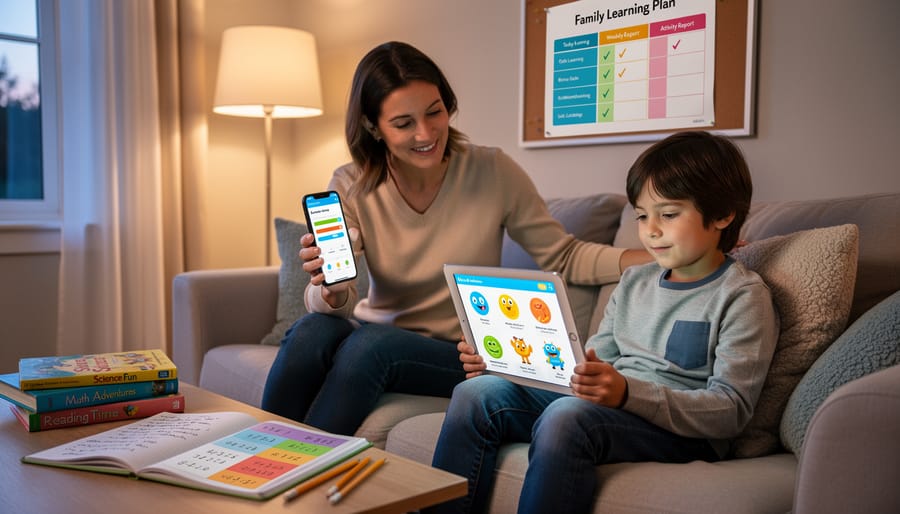
How Educators Can Evaluate and Integrate Apps Effectively
Selecting the right educational apps requires a systematic evaluation process that focuses on both pedagogical value and developmental appropriateness. Begin by examining whether an app aligns with your curriculum goals and state standards. Quality kindergarten apps should target specific learning objectives, whether literacy development, mathematical thinking, or social-emotional skills. Research from the Joan Ganz Cooney Center shows that apps with clear educational goals produce better learning outcomes than general entertainment apps.
When evaluating apps, consider the level of interactivity and child engagement. The best educational apps encourage active participation rather than passive consumption. Look for features like open-ended exploration, adaptive difficulty levels, and immediate feedback that supports learning. For example, apps that allow children to create stories or solve problems in multiple ways promote critical thinking more effectively than those with single-solution activities.
Integration into your classroom should position apps as supplements to hands-on learning, not replacements. Use apps during centers to reinforce concepts introduced through physical manipulatives and group activities. A kindergarten teacher in Oregon successfully integrated math apps by having students first work with counting blocks, then practice similar concepts on tablets for 10-15 minutes. This approach, similar to effective strategies in e-learning for early childhood, reinforces learning through multiple modalities.
Measure educational impact by tracking specific skills before and after app integration. Document observations of student engagement, completion rates, and accuracy within apps. Many quality apps provide teacher dashboards showing individual progress, helping you identify which students need additional support.
Finally, involve parents by sharing which apps you use and explaining their educational purpose. When families understand how apps support classroom learning, they can extend practice at home effectively. Consider creating a monthly newsletter highlighting recommended apps with tips for meaningful parent-child interaction during app use.
The landscape of kindergarten education apps continues to evolving rapidly, with personalized learning, gamification, and adaptive technologies leading current development trends. Research from the Joan Ganz Cooney Center shows that 80% of top-rated early learning apps now incorporate adaptive learning features that adjust to individual student progress, making them more effective educational tools than ever before.
When selecting apps for young learners, parents and educators should prioritize several key factors. Look for apps with strong curriculum alignment, age-appropriate content, and minimal advertising. Evidence-based apps that track learning progress and provide meaningful feedback offer the greatest educational value. Just as important is choosing quality education resources that balance screen time with hands-on activities and social interaction.
The future promises exciting developments in early childhood educational technology. Emerging trends include augmented reality experiences that blend physical and digital learning, AI-powered speech recognition for literacy development, and social-emotional learning modules addressing the whole child. Additionally, increased focus on data privacy and inclusive design will make apps safer and more accessible for diverse learners.
Moving forward, the most effective approach combines thoughtful app selection with intentional implementation. Educators should integrate apps as supplements to comprehensive teaching strategies, while parents can use them as tools for reinforcing concepts learned in school. By staying informed about quality indicators and emerging technologies, both groups can harness the power of educational apps to support kindergarteners’ developmental journeys while maintaining the human connection essential to early childhood education.