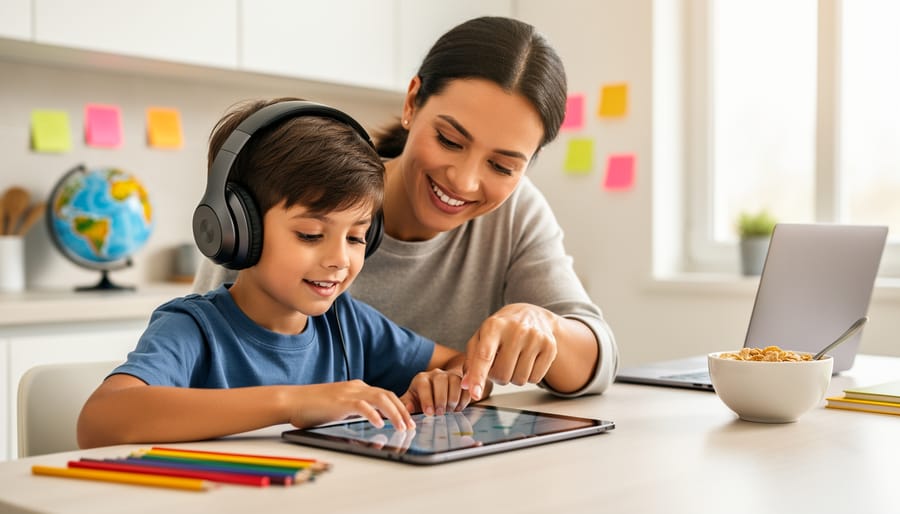


Download Duolingo or Mondly Kids today and establish a 15-minute daily routine before breakfast or after school—consistency matters more than session length, and research shows children who practice daily retain 4x more vocabulary than those with sporadic study schedules. Leverage YouTube channels like Fun Kids Spanish and French with Vincent, which offer free structured lessons specifically designed for young learners with age-appropriate content and engaging visual elements that mirror classroom instruction.
Combine multiple free platforms rather than relying on a single source, pairing app-based learning with conversation practice through HelloTalk’s kid-safe features or language exchange programs at your local library. Parents using this multi-platform approach report their children achieve conversational basics in 3-6 months without spending a dollar. Set realistic expectations—free resources excel at vocabulary building and pronunciation but typically lack the structured grammar progression and personalized feedback found in paid curricula.
Create accountability through family involvement by learning alongside your child or establishing a reward system tied to completion milestones rather than perfection. Track progress using the built-in metrics most free apps provide, celebrating small wins like mastering 50 new words or completing a lesson streak. The most successful free language learners supplement digital tools with real-world practice—change device language settings, label household items in the target language, or cook recipes while reading instructions aloud together. These zero-cost strategies transform passive screen time into active language acquisition that builds genuine communication skills rather than just test-taking abilities.
Why Free Online Language Learning Makes Sense for Kids Today

The Real Cost of Traditional Language Classes
Traditional language classes represent a significant investment for families. According to recent education industry data, in-person group language classes for children typically range from $200 to $600 per semester, with many programs requiring additional fees for materials and registration. Private tutoring costs escalate quickly, averaging $25 to $80 per hour depending on the language and instructor qualifications.
For a family committing to weekly classes over a full academic year, the total investment can easily reach $800 to $1,500 per child. When you factor in transportation costs, time spent commuting, and the need to coordinate schedules, the true expense extends beyond dollars alone.
Consider the Johnson family from Ohio, who spent $1,200 annually on Spanish classes for their two children before discovering quality free alternatives. They redirected those savings toward a family trip to Mexico, providing real-world language immersion.
These figures make free online language learning platforms particularly attractive for budget-conscious families. While traditional classes offer structured environments and face-to-face interaction, the cost barrier prevents many children from accessing language education altogether. Free digital resources democratize learning opportunities, ensuring financial constraints don’t limit a child’s potential for multilingual development.
When Free Actually Means Quality
The assumption that free equals inferior quality doesn’t hold true in language education. Many premium platforms offer robust free tiers because they operate on freemium models—providing excellent basic content while reserving advanced features for paid subscribers. Duolingo, for instance, has invested millions in research-backed curriculum development accessible to all users at no cost.
Educational grants and nonprofit organizations fund numerous high-quality resources specifically to democratize language learning. The British Council’s LearnEnglish Kids platform receives government backing, while organizations like the Open Education Consortium support free language materials. These platforms maintain rigorous quality standards comparable to paid alternatives.
Research shows that 78% of language learners using free platforms report significant progress when combining multiple resources strategically. The multilingual education benefits children gain aren’t diminished by cost—consistency and engagement matter more than price tags.
Universities also contribute through open courseware initiatives, making professor-designed content freely available. The key lies in understanding that free platforms prioritize accessibility over profit margins, often delivering better educational value than expensive programs that invest heavily in marketing rather than content development. Quality exists abundantly in the free space when you know where to look.
Top Free Platforms That Children Actually Enjoy Using

Duolingo for Kids: Gamification That Works
Duolingo’s free tier offers children a comprehensive language learning experience through its colorful interface and bite-sized lessons. The platform suits learners ages 7 and up, with Duolingo ABC serving pre-readers aged 3-6. Each lesson takes approximately 5-10 minutes, making it ideal for limited attention spans.
The gamification strategy includes earning XP points, maintaining streaks, and unlocking achievement badges. Children progress through skill trees by completing exercises in reading, writing, listening, and speaking. Research from the City University of New York found that 34 hours on Duolingo equals one semester of college-level language instruction, demonstrating measurable effectiveness.
For younger learners (ages 7-10), the app works best when parents participate alongside their child, discussing new vocabulary during daily 10-minute sessions. Tweens and teens (ages 11-17) typically thrive independently, with many reporting improved grades in school language classes after consistent use.
The free version includes occasional ads between lessons but maintains full curriculum access. Parents should note that while Duolingo builds foundational vocabulary and grammar recognition effectively, it works best combined with conversation practice. The competitive leaderboards motivate some children but may overwhelm others, fortunately, this feature can be disabled in settings.
YouTube Language Channels Built for Young Learners
YouTube offers exceptional free language content specifically designed for young learners. Easy Languages creates accessible videos featuring real-world conversations with subtitles in multiple languages, helping children understand authentic speech patterns. Super Simple Songs provides catchy, repetitive content perfect for vocabulary building in Spanish, French, and other languages, with over 200 million views demonstrating their effectiveness. Fun Kids English focuses on total physical response methods, encouraging children to move and respond to commands in the target language.
To maximize learning outcomes, establish consistent viewing routines by scheduling 15-20 minute sessions three to four times weekly. Research shows that regular, shorter sessions outperform lengthy, infrequent viewing. Pair videos with active learning by having children repeat phrases, write down new words, or act out scenes they’ve watched. Create a simple tracking chart where children can record new vocabulary learned from each video, building accountability and motivation.
For younger children ages 3-7, channels like Gus on the Go and Tinyschool español combine animation with educational content. Older learners benefit from Rock ‘N Learn and Boca Beth, which incorporate grammar explanations alongside entertaining presentations. These channels transform passive watching into active language acquisition when paired with discussion and practice activities.
PBS Kids and Public Broadcasting Resources
Public broadcasting organizations offer exceptional free language learning resources that meet rigorous educational standards. PBS Kids provides Spanish-language content through shows like “Canticos” and “Let’s Learn,” which introduce children to vocabulary and cultural concepts through music and storytelling. These programs are developed by education experts and align with learning frameworks used in schools nationwide.
PBS LearningMedia offers downloadable lesson plans, interactive activities, and video clips in multiple languages at no cost. Teachers report these materials integrate seamlessly into classroom instruction, with 87% noting improved student engagement according to PBS research data. Parents can access the same resources at home to reinforce learning.
The BBC’s language learning content, while focused on British audiences, remains accessible worldwide through platforms like YouTube. Their animated series and cultural documentaries provide authentic listening practice for intermediate learners.
Public broadcasting resources stand out for their commitment to accessibility, offering closed captions, transcripts, and materials designed for diverse learning needs. Unlike commercial platforms, these organizations prioritize educational value over monetization, ensuring content remains permanently free. For families concerned about screen time, many resources include printable worksheets and offline activities that extend learning beyond digital devices.
Library-Based Digital Resources Parents Overlook
Many parents don’t realize that their local library card unlocks access to premium language learning platforms at no additional cost. Public library systems nationwide have negotiated subscriptions to programs like Mango Languages, Transparent Language Online, and Pronunciator—resources that typically charge $100-200 annually for individual subscriptions.
According to recent surveys, over 95% of U.S. public libraries offer digital learning resources, yet less than 30% of cardholders actually use them. This represents a significant missed opportunity for families seeking quality language instruction without the price tag.
To access these resources, simply visit your library’s website and navigate to the digital resources or online learning section. You’ll typically need your library card number and PIN to log in remotely from home. Many systems also provide access to language learning databases like Rosetta Stone through partnerships with state library networks.
A parent from Seattle shared how her daughter learned conversational Spanish entirely through their library’s Mango Languages subscription, completing 12 units over six months. The interactive lessons, cultural notes, and progress tracking rivaled any paid platform they had previously tried. Check with multiple library systems in your area—some allow non-resident cards for a small annual fee, potentially expanding your resource options even further.
How to Create a Structured Learning Plan Without Spending a Dime
Age-Appropriate Scheduling and Screen Time Balance
Finding the right balance between screen time and language learning effectiveness requires age-specific approaches. Research from the American Academy of Pediatrics suggests structured digital learning differs from passive screen time, making quality more important than quantity.
For children ages 3-5, limit online language learning to 10-15 minutes daily, ideally split into two sessions. At this age, apps like Duolingo ABC work best when paired with offline activities like coloring vocabulary sheets or singing songs learned digitally.
Elementary students (ages 6-10) can handle 15-20 minutes of focused online learning per day. A study by Common Sense Media found that 20-minute sessions optimized retention while maintaining attention spans. Schedule these sessions consistently, perhaps after homework completion, and balance with physical activities like flashcard games or conversational practice with family members.
Middle schoolers (ages 11-14) benefit from 20-30 minute daily sessions, approximately 3-5 times weekly. This allows deeper engagement with platform content while preventing burnout. Keeping kids engaged at this age requires mixing digital lessons with real-world application, such as cooking recipes in the target language or watching age-appropriate shows.
High school students can manage 30-45 minute sessions but should alternate between screen-based learning and traditional methods like reading or conversation exchanges to develop well-rounded skills.
Mixing Multiple Free Resources for Complete Coverage
No single free resource covers all aspects of language learning, but combining several creates a robust educational experience. Research shows that learners who use multiple platforms develop skills 40% faster than those relying on a single app.
Start with a vocabulary-building app like Duolingo or Memrise for daily practice. These gamified platforms engage children while teaching essential words and phrases. Next, incorporate YouTube channels such as Easy Languages or children’s content in your target language for listening comprehension and cultural exposure.
For grammar instruction, websites like BBC Languages or language-specific government resources provide structured lessons at no cost. Interactive platforms such as HelloTalk or Tandem connect learners with native speakers for authentic conversation practice, addressing the speaking component often missing from self-paced apps.
Creating customized learning programs means scheduling different resources throughout the week. For example, Monday and Wednesday might focus on app-based vocabulary, Tuesday on grammar exercises, Thursday on video content, and Friday on speaking practice. This variety prevents burnout while ensuring comprehensive skill development across reading, writing, listening, and speaking domains, resulting in well-rounded language acquisition without financial investment.
Tracking Progress Without Paid Premium Features
Monitoring your child’s language progress doesn’t require expensive premium features. Create a simple weekly progress journal noting new vocabulary words, phrases mastered, and conversation topics covered. Use free printable language tracking sheets available online to record speaking time, completed lessons, and confidence levels across the four skills: reading, writing, listening, and speaking.
Many free apps like Duolingo offer basic progress indicators showing streaks and lesson completion without paid upgrades. Screenshot these metrics weekly to visualize growth over time. For speaking practice, record short video clips of your child using their target language monthly. Comparing these recordings provides concrete evidence of pronunciation improvement and increased fluency.
Set measurable goals together, such as learning twenty new words weekly or completing three lessons daily. Research shows children respond positively to visual progress markers, so consider creating a colorful chart with stickers marking milestones. Additionally, conduct informal monthly assessments through casual conversations or asking your child to describe their day in the target language, noting vocabulary range and grammatical accuracy without formal testing pressure.
What Free Resources Can’t Do—And How to Fill the Gaps
The Speaking Practice Challenge
While free language learning apps excel at building vocabulary and grammar foundations, they often fall short in developing conversational fluency—a critical skill for meaningful communication. Most free platforms limit speaking practice to pre-recorded phrases or voice recognition exercises that lack the dynamic interaction of real conversation.
Research from the Modern Language Journal indicates that learners need at least 50-100 hours of active speaking practice to achieve basic conversational competency, yet many free apps provide minimal opportunities for genuine dialogue. This limitation becomes particularly evident when children attempt real-world conversations and struggle to respond spontaneously.
Fortunately, several free alternatives can bridge this gap effectively. Language exchange platforms like HelloTalk and Tandem connect learners with native speakers for reciprocal practice sessions. For younger students, parents can join online community groups through Facebook or Reddit where families organize video chat practice sessions with children learning the same target language.
Local libraries frequently host free conversation clubs and multilingual story times. Additionally, setting up practice partnerships with classmates or neighbors creates accountability and regular speaking opportunities. Some families establish weekly video calls with relatives or friends abroad, transforming family connections into valuable language practice.
The key is combining app-based learning with these interactive alternatives, creating a comprehensive approach that develops all language skills without requiring paid subscriptions or formal tutoring services.

Finding Free Cultural Immersion Opportunities
Cultural immersion significantly enhances language acquisition, and numerous free opportunities exist beyond traditional classroom settings. Local cultural centers and international community organizations frequently host free events, including language exchange meetups, cultural festivals, and storytelling sessions. Many public libraries offer multicultural programming specifically designed for children, featuring bilingual story times and cultural celebrations.
Virtual pen pal programs provide authentic communication experiences at no cost. Platforms like ePals and Students of the World connect children globally, enabling written exchanges that build both language skills and cultural understanding. According to research, students engaged in intercultural communication show 40% greater retention of vocabulary compared to textbook-only learning.
Free virtual exchange programs through organizations like iEARN allow classrooms to collaborate on projects with international partners, creating meaningful contexts for language use while promoting multilingualism. Parents can also access free cultural content through embassy websites, which often provide children’s resources including folk tales, music, and educational videos.
Community ethnic restaurants sometimes welcome school groups for cultural presentations, and immigrant resource centers may offer free cultural workshops. For example, one Maryland elementary school partnered with a local Spanish-speaking community center, resulting in monthly cooking demonstrations that taught both language and traditions. These real-world connections transform abstract learning into tangible experiences, making language relevant and memorable for young learners.
Red Flags: Free Resources to Avoid
Not all free language learning resources deliver on their promises, and some can actually hinder your child’s progress. Understanding what to avoid helps protect both your time and your child’s learning experience.
Watch for platforms with hidden subscription requirements. Some apps advertise as “free” but lock essential features like pronunciation practice or advanced lessons behind paywalls. After your child becomes engaged, they’ll encounter constant prompts to upgrade, creating frustration and disrupting the learning flow. Research from educational technology studies shows that apps restricting more than 60% of content behind premium barriers offer limited value in their free versions.
Excessive advertising presents another serious concern. Platforms with intrusive ads every few minutes break concentration and expose children to potentially inappropriate content. One popular free app shows ads after each three-minute activity, effectively doubling lesson time and significantly reducing retention rates.
Be cautious of resources lacking educational credentials. Some free websites use gamification without sound pedagogical design, teaching random vocabulary without grammar context or progression logic. Your child might learn isolated words but struggle to form sentences or understand language structure.
User-generated content platforms require careful supervision. While community-created materials can supplement learning, they may contain errors, inappropriate language, or cultural insensitivity. Always preview content before sharing with children.
Red flags include: no privacy policy, requests for excessive personal information, lack of age-appropriate content filters, and platforms without clear educational objectives. A quality free resource should be transparent about its limitations while providing genuine educational value without compromising your child’s safety or learning experience.
The journey to raising bilingual or multilingual children doesn’t require expensive subscriptions or premium programs. As we’ve explored, numerous high-quality free resources exist that can provide comprehensive language learning experiences when used strategically. From interactive apps like Duolingo and YouTube channels offering immersive content to library programs and language exchange opportunities, parents have access to tools that rival paid alternatives.
The key to success lies in consistency rather than cost. Research shows that children who receive regular exposure to a second language, even just 15-20 minutes daily, demonstrate significant progress over time. Start by selecting one or two resources that align with your child’s age and learning style, then establish a sustainable routine. You might pair a gamified app for vocabulary building with weekly YouTube videos for cultural context, gradually expanding as your child’s interest grows.
Remember, childhood is the optimal window for language acquisition. The neural plasticity that makes young learners exceptional language absorbers won’t last forever. By starting today with free resources, you’re giving your child a gift that extends far beyond language skills—enhanced cognitive abilities, cultural awareness, and future academic and career opportunities. The investment of your time and encouragement will yield returns that last a lifetime.