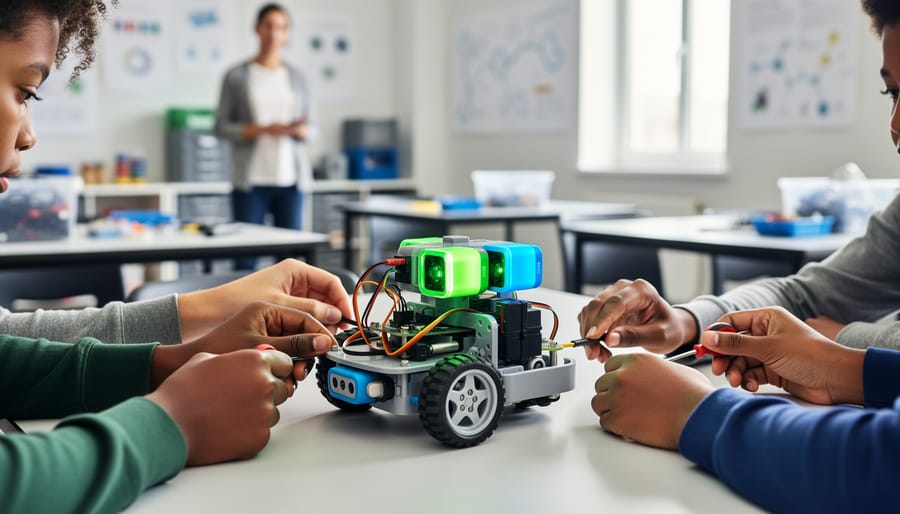



Robotics in classroom settings transforms abstract STEM concepts into hands-on learning experiences that boost student engagement by up to 60%, according to recent educational research. Teachers successfully integrate robotics into their curriculum by starting with age-appropriate platforms, allocating 30-60 minutes of weekly instruction time, and leveraging free or low-cost resources that require no prior programming experience.
The educational value is clear and measurable. Students working with classroom robotics demonstrate improved problem-solving abilities, stronger collaboration skills, and higher retention rates in science and math subjects. A 2025 study tracking 3,200 students across 47 schools found that robotics instruction increased computational thinking scores by 34% compared to traditional teaching methods alone.
Implementation doesn’t demand extensive technical expertise or massive budgets. Many educators begin with simple platforms designed specifically for classroom use, costing between $150 and $800 per kit that serves groups of 3-4 students. Districts report successful programs running on annual budgets under $2,000, often supplemented through STEM grants, parent-teacher organizations, or local business partnerships.
The practical benefits extend beyond individual student achievement. Robotics projects naturally make learning fun while teaching real-world skills like iterative design, debugging, and teamwork. Teachers consistently report that robotics sessions generate the kind of focused enthusiasm that’s rare in traditional lessons, with students voluntarily staying after class to refine their projects.
Whether you teach elementary learners just discovering cause and effect or high school students ready for complex programming challenges, robotics offers scalable options that fit your classroom reality.
Why Robotics Belongs in Today’s Classroom
Robotics transforms abstract concepts into tangible experiences students can touch, build, and debug. When a seventh-grader troubleshoots why her robot won’t follow a line correctly, she’s applying computational thinking, testing hypotheses, and learning that failure is data rather than defeat. This hands-on approach addresses a persistent challenge in education: keeping students engaged with STEM subjects that often feel disconnected from their lives.
The case for classroom robotics rests on simultaneous skill development across multiple domains. Students writing code to control a robot aren’t just learning programming syntax. They’re practicing logical sequencing, experimenting with cause-and-effect relationships, and translating abstract instructions into physical outcomes. Research consistently shows that educational robotics boosts learning outcomes, particularly in fostering problem-solving abilities and increasing student motivation.
Collaboration emerges naturally in robotics projects. Teams must divide responsibilities, communicate technical details, negotiate design choices, and integrate individual contributions into a functioning whole. A student strong in mechanical design learns from a peer who excels at coding, while both discover that real-world engineering requires diverse expertise. These social skills prove just as valuable as the technical competencies students build.
Robotics also bridges the gap between classroom theory and practical application. Physics concepts like friction, momentum, and gear ratios stop being textbook abstractions when students see how they affect robot performance. Math becomes the tool for calculating turn angles and optimizing movement patterns. Language arts skills get exercised through technical documentation and project presentations. This cross-curricular integration helps students understand why they’re learning what they’re learning.
The accessibility of current platforms has lowered entry barriers significantly. Programs like FIRST LEGO League serve students ages 5 to 16 with age-appropriate challenges, while micro:bit-powered kits bring coding and robotics to classrooms without requiring extensive technical infrastructure. Teachers no longer need engineering backgrounds to guide meaningful robotics experiences. What they need is willingness to learn alongside students and structure projects that balance guidance with student-directed exploration.
Age-Appropriate Robotics Programs and Platforms
Elementary and Middle School Solutions
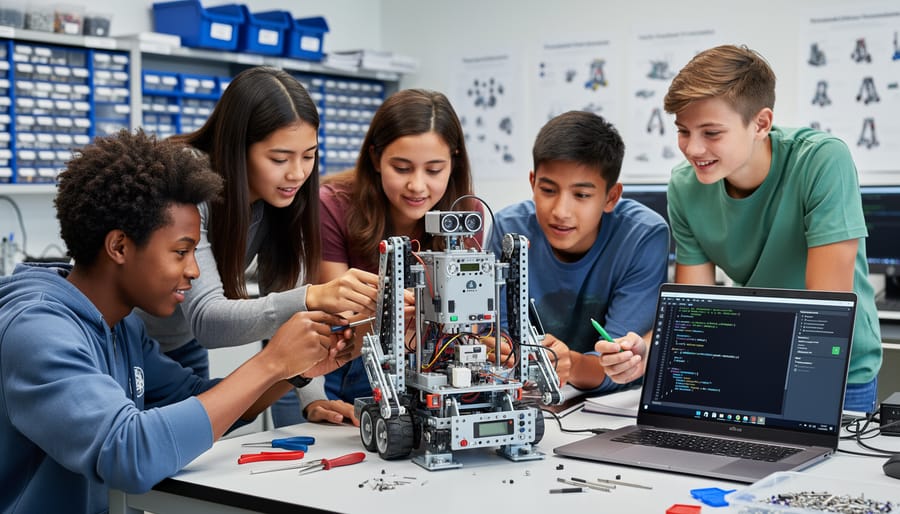
For younger students just beginning their journey with robotics, the right platform can make the difference between intimidation and excitement. Programs designed for elementary and middle schoolers prioritize tactile, visual learning experiences that feel more like play than programming, yet build genuine computational thinking skills.
FIRST LEGO League stands out as one of the most established beginner-friendly options, serving students from ages 5-16 through hands-on challenges that combine robotics with real-world problem-solving. Students work in teams to build LEGO-based robots, program them to complete missions, and research solutions to current global issues. The program scales beautifully across development stages, offering age-specific divisions that grow with learners.
Another accessible entry point comes from micro:bit-powered kits like those from Forward Education, which bring hands-on coding, robotics, and AI literacy directly into the classroom. These systems use the credit-card-sized micro:bit computer as their foundation, allowing students to see immediate results from their code through lights, sounds, and movement. The physical feedback loop helps younger learners grasp abstract programming concepts faster than screen-only interfaces.
Both approaches share a critical feature: they don’t require teachers to be robotics experts before starting. Most platforms include structured lesson libraries, tutorials, and educator resources that guide instructors through initial implementation, making it possible for any motivated teacher to launch a robotics program regardless of prior technical experience.
High School and Advanced Programs
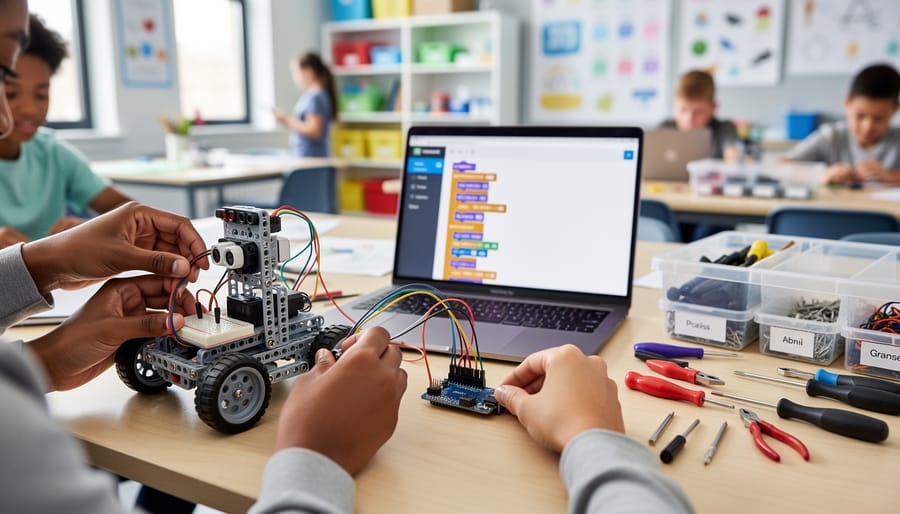
High school robotics programs move beyond basic building blocks to focus on engineering challenges that mirror real-world technical problems. These platforms combine mechanical design, advanced programming, and collaborative project management, preparing students for post-secondary STEM pathways while addressing curriculum requirements.
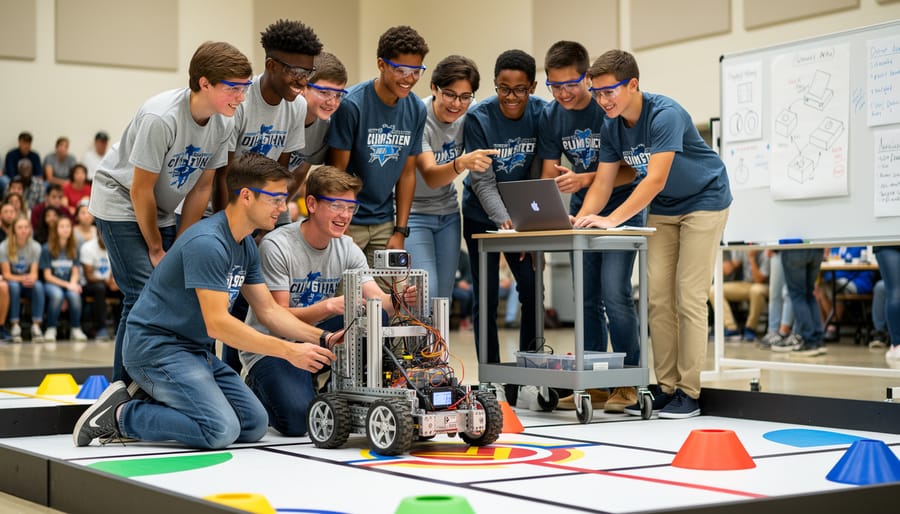
Competitive robotics teams like FIRST Robotics Competition challenge students to design, build, and program full-scale robots within strict time frames and resource constraints. Teams work on everything from CAD modeling and metal fabrication to autonomous navigation systems and strategic gameplay. This format develops professional skills: deadlines, documentation, team roles, and iterative problem-solving under pressure.
In Ontario, high school students face a mandatory technology credit (TAS10), creating both an opportunity and a challenge for schools. FIRST Robotics Canada offers teacher training specifically designed to help educators deliver this credit through robotics instruction, providing upskilling support so teachers can confidently lead technical coursework even without prior robotics experience.
Advanced platforms also allow deeper exploration of emerging technologies. Students can work with sensors, data logging, wireless communication, and even artificial intelligence concepts, moving from guided tutorials to open-ended engineering projects. These experiences build portfolios that matter for university applications and scholarship opportunities.
The key difference at this level is student ownership. Rather than following step-by-step instructions, high schoolers identify problems, research solutions, test prototypes, and defend their design decisions, developing the critical thinking and technical communication skills that define professional engineering work.
Practical Implementation: Getting Started with Classroom Robotics
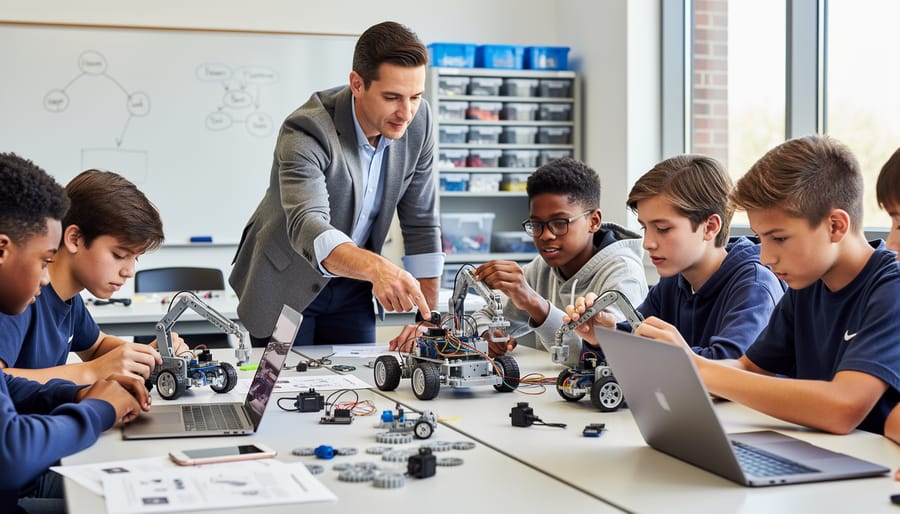
Teacher Training and Professional Development
Most educators worry they lack the technical background to lead robotics instruction, but dedicated professional development programs are designed specifically for teachers with no prior experience. Organizations like FIRST Robotics Canada offer teacher training that upskills educators to confidently guide students through building and programming their first robotics lab projects. In Ontario, these training sessions even support teachers in meeting the province’s TAS10 mandatory technology credit requirement.
Beyond initial workshops, platforms like Forward Education provide ongoing support through educator courses, lesson libraries, and extensive knowledge bases. Teachers can access step-by-step tutorials, standards-aligned curriculum materials, and project repositories that eliminate the need to create everything from scratch. This ecosystem of professional development resources means you’re never figuring things out alone, there’s always a tested lesson plan, troubleshooting guide, or fellow educator’s insight available when you need it. The investment in your training pays immediate dividends in classroom confidence and student engagement.
Funding and Resource Access
Funding shouldn’t stop educators from bringing robotics into their classrooms. Multiple pathways exist to make programs financially viable, starting with targeted grant opportunities. Organizations often provide dedicated funding streams for STEM initiatives, check your district’s technology budget and state-level education grants that prioritize hands-on learning tools.
In Ontario, FIRST Robotics Canada’s Affiliated School Board program offers a practical model: participating boards gain access to exclusive programs, resources, discounts, and increased grants specifically for robotics implementation. This partnership approach reduces per-school costs while providing centralized support infrastructure.
Beyond grants, consider budget-friendly entry points. Providers like Forward Education list grants and funding as part of their educator resources, alongside knowledge bases that help navigate financial planning. Start small with a single classroom kit rather than a full-scale program, many platforms offer scalable pricing that grows with your needs.
Partner with local businesses, tech companies, and parent organizations who may sponsor equipment or provide in-kind support. Community stakeholders often recognize robotics programs as workforce development investments. Document your funding applications with clear learning objectives and expected outcomes; specificity increases approval rates and demonstrates accountability for educational expenditures.
Real Classroom Success Stories
When educators introduce robotics into their classrooms, the results often exceed initial expectations. The impact shows up in everything from improved collaboration skills to renewed enthusiasm for subjects students previously found abstract or intimidating.
At an Ontario elementary school, a grade 5 teacher integrated micro:bit-powered robotics kits into her science curriculum. Students who had struggled with traditional physics lessons suddenly grasped concepts like force and motion by programming small robots to navigate obstacle courses. The class completion rate for related assessments jumped 23 percent, but the real change appeared in how students approached problems. They stopped asking for answers and started testing solutions.
The shift happened within weeks, students who used to shut down when faced with a challenge started saying ‘let me try one more thing’ instead of ‘I can’t do this.’
A high school in rural Canada took a different approach, using robotics to meet Ontario’s TAS10 mandatory technology credit requirement. The teacher, new to robotics herself, leaned on the professional development resources and lesson libraries available through her board’s partnership with FIRST Robotics Canada. Students designed automated systems to solve real community problems, like a prototype for sorting recyclables at the local transfer station. Three students who had been considering dropping out stayed engaged enough to graduate, citing the robotics project as what kept them connected to school.
In a middle school classroom serving students ages 11-14, participation in FIRST LEGO League competitions created unexpected academic ripple effects. Math scores improved across the participating group, not just in geometry but in areas like ratio and proportion that students applied while calibrating their robots. Teachers noted students were voluntarily staying after school to refine their builds and troubleshoot code, time they previously spent disengaged or on devices.
These examples share a common thread: robotics transformed passive recipients of information into active problem-solvers who could see the purpose behind what they were learning.
Supporting Resources for Sustained Success
The transition from initial robotics implementation to long-term success hinges on ongoing support. Educators need more than a one-time setup, they need a sustainable ecosystem of resources that grows with their program and evolves with their students’ skills.
Comprehensive learning platforms provide the backbone for sustained classroom robotics. Forward Education, for example, offers a complete infrastructure including a Lesson Library, Projects repository, and Tutorials that guide both teachers and students through progressively challenging activities. Their platform also features a Career Profile Library that connects classroom work to real-world applications, helping students see themselves as future problem-solvers and innovators in technology fields.
Standards alignment tools prove particularly valuable for busy educators. These resources map robotics activities directly to curriculum expectations, eliminating guesswork about how a robot-building session addresses specific learning outcomes. This alignment documentation helps justify program continuation to administrators and demonstrates educational rigor to parents.
Knowledge bases and FAQ sections address technical troubleshooting, classroom management questions, and activity modifications. When a sensor fails mid-lesson or students finish early, these resources provide immediate answers rather than forcing teachers to improvise or abandon the activity.
Professional development resources extend beyond initial training. Educator courses, ongoing webinars, and peer discussion forums help teachers refine their approach based on classroom experience. This continued learning matters because robotics instruction improves with practice, the same lesson taught in year three looks quite different from the first attempt.
Grant and funding resources centralize information about financial support, making it easier for schools to sustain programs beyond pilot phases. Knowing where to find next year’s budget removes a significant barrier to program longevity.
Common Challenges and How to Overcome Them
Introducing robotics into the classroom often feels overwhelming, but most obstacles have practical workarounds. The most common challenges educators face, and how to tackle them, come down to preparation, flexibility, and leveraging available support systems.
Technical difficulties top the list for many teachers. Robots malfunction, software updates break lesson plans, and connectivity issues can derail a carefully planned session. The solution isn’t to become an IT expert; it’s to build troubleshooting routines into your classroom culture. Assign student tech leads who help with basic setup, keep spare batteries and charging stations organized, and maintain a “tech issues” checklist that students can work through before asking for help. Organizations like Forward Education provide knowledge bases and educator resources specifically designed to support teachers through common technical roadblocks, so you don’t have to solve every problem alone.
Time constraints present another significant hurdle. Between curriculum demands and standardized testing, finding room for robotics feels impossible. Start by embedding robotics into existing lessons rather than treating it as an add-on. A math class studying angles can use robots to demonstrate geometry in motion. Science students learning about sensors can program robots to collect environmental data. This integration approach satisfies multiple learning objectives simultaneously without requiring separate class periods.
Varying student skill levels can create classroom management challenges. Some students arrive with coding experience while others have never touched a robot. Structured team roles solve this: assign jobs like programmer, builder, tester, and documenter so every student contributes meaningfully regardless of their technical background. Platforms like FIRST LEGO League intentionally design challenges that require collaboration across different skill sets, making mixed-ability groups an asset rather than a problem.
Limited budgets remain a persistent concern, though less prohibitive than many teachers assume. Exploring technology pros/cons helps clarify where robotics delivers the most value for your investment. Look into grant programs, FIRST Robotics Canada offers increased grants and discounts through its Affiliated School Board program for Ontario educators. Forward Education maintains grants and funding resources specifically for Canadian schools. Starting with a single classroom kit and rotating it between classes costs less than equipping every room immediately.
Teacher confidence often presents the biggest barrier. You don’t need a computer science degree to teach robotics effectively. Professional development resources, educator courses, and teacher training programs exist specifically to upskill educators. Ontario teachers can access FIRST Robotics Canada support designed for the mandatory TAS10 technology credit. The lesson libraries and tutorials available through platforms like Forward Education’s Learning Platform mean you’re implementing tested curriculum, not inventing lessons from scratch.
Bringing robotics into your classroom isn’t about mastering complex technology before you begin, it’s about opening the door to deeper student engagement and hands-on discovery. The support systems exist to guide you through every step, from lesson libraries and tutorials to professional development courses designed specifically for educators. Whether you’re starting with elementary students using micro:bit-powered kits or guiding high schoolers through competitive robotics, the barrier to entry is lower than you might think.
What matters most is taking that first step. Start small, lean on the resources available through platforms and programs already supporting thousands of Canadian educators, and watch how quickly students respond when learning becomes tangible. Robotics doesn’t replace your teaching, it amplifies it, turning abstract concepts into concrete experiences and creating a positive environment where curiosity drives progress. The transformation in student engagement isn’t a distant promise; it’s happening in classrooms across Ontario and beyond, led by teachers who simply decided to begin.