



Artificial intelligence in education has evolved through four distinct stages: reactive machines that respond to specific inputs, limited memory systems that learn from recent data, theory of mind AI that understands context and intent, and self-aware AI that possesses independent reasoning (still theoretical). Understanding these stages helps educators and students choose the right tools for different learning tasks, from basic flashcard apps at stage one to advanced tutoring systems at stage two that adapt to individual learning patterns.
The educational landscape in 2026 shows widespread adoption of stage two AI tools, while stage three capabilities are emerging in select platforms. This matters because matching the AI stage to your learning goal determines effectiveness. A student memorizing vocabulary needs different AI capabilities than one developing critical thinking skills or receiving personalized feedback on essays.
Research from educational technology firms shows that 73% of educators now use AI tools regularly, yet many don’t recognize the fundamental differences between these stages. This knowledge gap leads to mismatched expectations and underutilized technology. For instance, expecting a basic quiz generator (stage one) to provide adaptive learning pathways (stage two capability) creates frustration.
The four-stage framework also addresses growing concerns about privacy, academic integrity, and appropriate AI use in classrooms. Each stage carries different risks and safeguards. Stage one tools typically process data locally with minimal privacy concerns, while stage two systems require careful oversight of student data collection and usage.
This guide walks through each AI stage with specific examples of educational tools, implementation steps for classrooms and independent study, verification methods to ensure learning outcomes improve, and practical AI study strategies aligned with each capability level. You’ll learn exactly which stage of AI serves which educational purpose, how to deploy these tools safely, and how to measure their impact on actual learning retention and skill development.
Understanding the 4 Stages of AI Framework

The four stages of AI framework originated from research examining how artificial intelligence systems process information and interact with their environment. Understanding these stages helps you select the right study tools for your learning goals.
Stage 1: Reactive Machines represent the most basic AI. These systems respond to specific inputs with predetermined outputs but can’t learn from past experiences or store memories. In education, this includes simple quiz generators that check answers against a database or basic flashcard apps that flip cards on command. The AI doesn’t adapt to your performance, it just reacts to what you ask it to do.
Stage 2: Limited Memory AI builds on reactive capabilities by storing temporary data to inform current decisions. These systems track your past interactions and adjust accordingly. Modern adaptive learning platforms use this technology: they remember which problems you struggled with yesterday and serve similar questions today at adjusted difficulty levels. The “memory” is limited because the system focuses on recent patterns rather than comprehensive long-term analysis.
Stage 3: Theory of Mind AI represents systems that can understand emotions, intentions, and individual needs. While fully realized theory of mind AI remains largely developmental, current educational tools approximate this through conversational interfaces that recognize frustration in your responses, adjust explanation styles based on your questions, and provide encouragement at strategic moments. These AI tutors simulate understanding your mental state to offer more personalized support.
Stage 4: Self-Aware AI describes hypothetical systems with consciousness and independent goal-setting abilities. This stage remains theoretical and isn’t available in any current educational technology. Despite marketing claims, no study tool in 2026 possesses true self-awareness or autonomous consciousness.
Most AI-powered study tools you’ll encounter operate at Stages 1 or 2, with some Stage 3 capabilities emerging in premium tutoring platforms. Recognizing these distinctions prevents overhyping simple tools while helping you appreciate genuinely sophisticated learning systems.
Tools and Materials You’ll Need
Before diving into the four stages, you’ll need access to specific tools and a compatible setup. Most AI-powered study platforms work on smartphones, tablets, or computers with a stable internet connection, plan for at least 10 Mbps for smooth operation of adaptive platforms and conversational AI. You’ll also need an active email address for account creation, though many tools offer limited free trials before requiring payment.
The basic requirements are straightforward: a device running iOS 15+, Android 12+, Windows 10+, or macOS 12+ ensures compatibility with modern AI study apps. Browser-based platforms work best on Chrome, Safari, or Edge updated to their 2026 versions. For conversational AI tutors, a microphone and speakers enhance the experience but aren’t mandatory since text-based interaction works equally well.
Tool categories align with the four AI stages:
- Reactive AI tools: Anki, Quizlet, Brainscape (free and premium tiers; basic flashcard and quiz generation)
- Limited Memory AI platforms: Khan Academy, Duolingo, Memrise, Coursera adaptive courses (mostly free with premium options; track your progress and adjust difficulty)
- Theory of Mind AI tutors: Khanmigo, Socratic by Google, Tutor AI, Ello (subscription-based $10-30/month; conversational interfaces that respond to context)
- Emerging self-directed systems: Century Tech, Squirrel AI (institutional licenses or pilot programs; design personalized learning paths)
Free versions typically impose usage limits, Quizlet caps advanced features, Khan Academy offers full access with optional donations, and Khanmigo provides limited monthly queries. Premium subscriptions range from five dollars monthly for basic adaptive apps to thirty dollars for full-featured AI tutoring platforms.
Account setup takes five to fifteen minutes per tool. You’ll confirm your email, set learning goals, and complete a brief assessment so adaptive systems can calibrate to your current knowledge level. Keep login credentials organized since you might use three to five different platforms simultaneously. Some schools provide institutional access to premium tools, so check with your educator before purchasing individual subscriptions.
Important Considerations Before You Begin
Before implementing AI tools in your study routine, understand the boundaries and potential pitfalls. These technologies offer powerful benefits, but they come with responsibilities and limitations that students, educators, and parents must recognize.
Data privacy should be your first concern. Many AI platforms collect information about your study habits, performance data, and even the content you’re learning. Read privacy policies carefully before creating accounts, especially for tools requiring uploads of assignments or personal notes. Free platforms often monetize user data, so consider whether premium options with stronger privacy protections are worth the investment for sensitive academic work.
Choose age-appropriate tools that match cognitive development stages. Elementary students need simple, supervised AI interactions, while high school and college students can handle more autonomous platforms. Verify that tools comply with children’s privacy laws if working with learners under 13.
Over-reliance on AI poses a serious risk. These tools should supplement, not replace, critical thinking and genuine understanding. If you find yourself unable to complete assignments without AI assistance or skipping the thinking process entirely, you’re undermining your learning. Set boundaries: use AI for explanation and practice, not as a shortcut to avoid burnout through reduced effort.
Maintain human interaction in your learning journey. Teachers, tutors, study groups, and mentors provide irreplaceable social learning, accountability, and nuanced feedback that current AI cannot match. Schedule regular check-ins with instructors to ensure AI tools are enhancing rather than distorting your understanding of course material.
Stage 1: Implementing Reactive AI Study Tools

Reactive AI represents the foundation of AI-enhanced studying. These tools respond to your input without storing information about your past performance or adapting to your learning patterns. Think of them as sophisticated calculators for your brain, you ask, they answer, but they don’t remember what you struggled with yesterday.
Digital flashcard apps like Anki and Quizlet exemplify reactive AI at its simplest. You create a card asking “What is photosynthesis?” and the tool flips to reveal your answer. The AI doesn’t track whether you missed this card three times last week; it just presents whatever you programmed. Basic quiz generators work similarly, converting your notes into multiple-choice questions through pattern recognition without building any profile of your knowledge gaps.
Getting started with reactive AI tools requires just three things: a device with internet access, your study material in digital format, and fifteen minutes for initial setup. Here’s the systematic approach that works:
- Select one reactive tool that matches your subject, Anki for memorization-heavy subjects like languages or anatomy, or a simple quiz generator for conceptual subjects like history.
- Input your study material by typing key terms and definitions, or upload your notes if the tool accepts document scanning.
- Create a daily practice schedule, dedicating specific 15-minute blocks to reviewing the generated flashcards or quizzes.
- Track your progress manually using a simple spreadsheet noting correct versus incorrect answers, since reactive tools won’t remember this for you.
Emma, a tenth-grader preparing for her biology midterm, used Anki to master 200 vocabulary terms in two weeks. She created digital flashcards every evening after class, setting her phone to notify her three times daily for five-minute review sessions. Because Anki’s reactive AI simply cycled through her cards without adapting, Emma manually moved cards she knew well into a “weekly review” deck and kept challenging terms in daily rotation. She scored 94% on terminology sections, up from her usual 78%, by maintaining this consistent, manual tracking system alongside the reactive tool.
The limitation here is clear: you’re the intelligence directing the system. Reactive AI won’t notice you’re struggling with mitosis specifically or suggest focusing there. That’s Stage 2 territory.
Stage 2: Leveraging Limited Memory AI for Personalized Learning
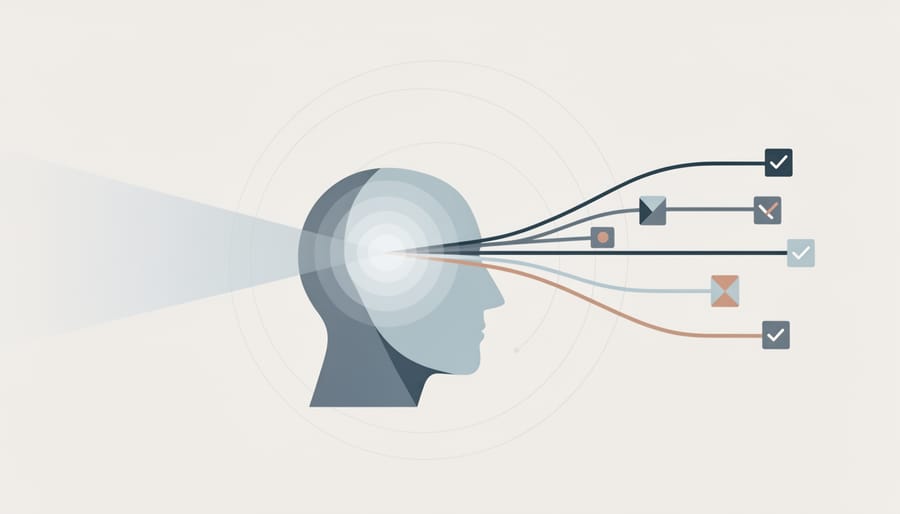
Limited Memory AI represents a significant leap from basic reactive tools. These platforms track your performance over time, building a profile of your strengths and weaknesses to deliver personalized learning experiences that adapt to your unique needs. Think of platforms like Khan Academy, Duolingo, or Quizlet Plus, they remember which concepts you’ve mastered, where you struggle, and when you’re most likely to forget material.
Research from the 2025 Journal of Educational Technology found that students using adaptive AI platforms showed a 40% improvement in long-term retention compared to those using static study materials. The AI’s ability to space review sessions and adjust difficulty based on your demonstrated mastery creates a more efficient learning path.
To effectively leverage Limited Memory AI, follow this systematic approach:
- Complete an initial diagnostic assessment on your chosen platform to establish a baseline. Most adaptive tools begin with a placement test or skills evaluation that takes 15-30 minutes.
- Use the platform consistently for at least two weeks to allow the AI to build an accurate learner profile. During this phase, answer feedback prompts honestly about difficulty level and confidence.
- Review the AI-generated recommendations that appear in your dashboard. Look for patterns in suggested practice areas, optimal study times, and predicted weak points.
- Adjust your study path based on the platform’s insights, but apply your own judgment, if the AI suggests skipping material you feel uncertain about, override the recommendation.
- Check your progress analytics weekly to identify trends. Most platforms show metrics like mastery percentages, time-to-proficiency, and retention curves that reveal whether the adaptive approach is working.
For AI-powered note-taking apps like Notion AI or Microsoft OneNote with AI features, the limited memory capability manifests differently. These tools learn your note-taking patterns, suggest organizational structures based on previous notes, and can summarize or expand content according to your established preferences. They recognize when you’re studying for an exam versus taking lecture notes and adjust their assistance accordingly.
The key advantage is that Limited Memory AI eliminates the one-size-fits-all approach. A concept you grasp quickly receives less emphasis, while challenging material gets reinforced through varied practice until you demonstrate consistent mastery. This creates a study experience tailored specifically to your learning trajectory, making your study sessions more productive and better note-taking habits easier to maintain.
Start with one adaptive platform in your weakest subject. Let it gather data for three weeks before evaluating effectiveness, since the AI needs sufficient information to make accurate adjustments.
Stage 3: Engaging with Theory of Mind AI Tutors
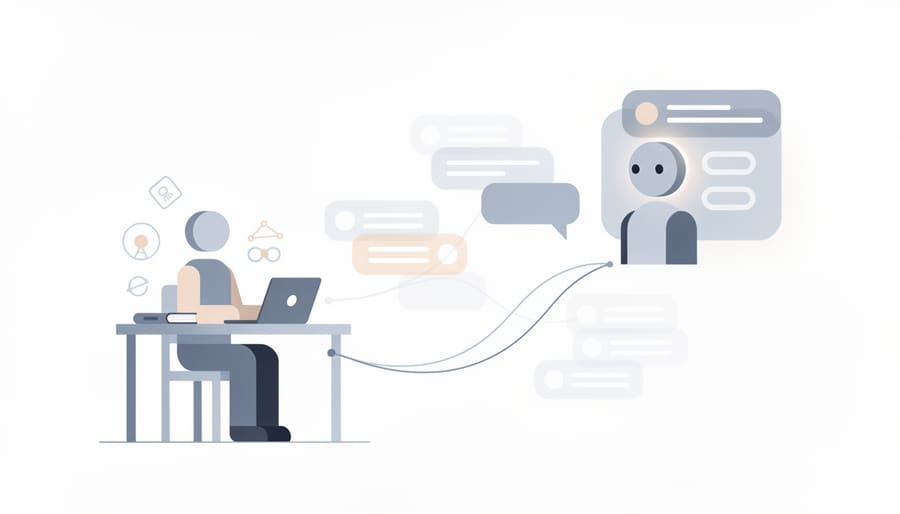
Theory of Mind AI represents a significant leap in conversational capability. These tools don’t just retrieve stored information, they interpret your frustration when you say “I still don’t get it,” recognize confusion in your phrasing, and adjust their explanations accordingly. The best platforms in 2026 engage in genuine dialogue rather than one-directional information delivery.
Start with platforms designed for educational conversation. Khan Academy’s AI guide, Khanmigo, offers personalized tutoring that adapts to emotional cues and question patterns. Similarly, platforms like Socratic by Google and specialized subject tutors such as Carnegie Learning’s MATHia provide context-aware assistance. These tools work best when you treat them as study partners rather than search engines.
To maximize your sessions with conversational AI tutors, follow this deliberate approach:
- Formulate specific questions that include what you’ve already tried: “I understand derivatives conceptually but keep making errors when applying the chain rule to nested functions, can you walk me through one example step-by-step?”
- Engage in genuine back-and-forth dialogue by responding honestly when explanations don’t click: “That makes sense until the third step, why did you factor out the coefficient there?”
- Request explanation adjustments based on your learning preference: “Can you explain this using a real-world physics example instead of abstract notation?”
- Use the AI to create concept maps by asking it to show connections: “How does this calculus concept relate to the limits we covered last week?”
- Recognize limitations and escalate to human instruction when patterns emerge, repeated confusion on foundational concepts signals when to get a tutor who can diagnose deeper gaps.
Sarah, a sophomore engineering student, struggled with implicit differentiation despite watching lectures twice. She turned to an AI tutor and explained her specific confusion: she could follow examples but froze on new problems. The AI recognized her pattern-recognition issue and created five progressively different problems, each time asking Sarah to verbalize her approach before showing the solution. Within three sessions, Sarah’s confidence jumped, not because the AI taught differently than her professor, but because it patiently addressed her exact sticking points through dialogue.
The key difference from Stage 2 tools is conversational depth. These AI tutors remember your struggle from five exchanges ago and reference it when introducing related material. They detect hedging language that signals uncertainty and probe deeper rather than moving forward.
Stage 4: Exploring Self-Aware AI Study Systems (Emerging)
Stage 4 represents the most advanced theoretical category of AI, but it remains largely aspirational in 2026. Self-aware AI would possess genuine consciousness, autonomously understanding its own learning processes and independently creating personalized educational journeys without human oversight. No consumer education tool currently operates at this level, despite some marketing claims suggesting otherwise.
What students can access today are semi-autonomous study planners that combine elements from the earlier stages. These platforms analyze your past performance, predict knowledge gaps, and generate study schedules, but they still require your input to refine goals and adjust approaches. Tools like advanced learning management systems can suggest which topics to review next and estimate how long mastery will take, creating the impression of autonomous planning.
The practical application for students right now involves using these sophisticated planning tools while maintaining realistic expectations. Set up a platform that tracks your progress across subjects, let it recommend study sequences based on your performance patterns, and review its suggestions weekly to ensure they align with your actual needs. Think of these systems as highly capable assistants rather than independent tutors.
The distinction matters because over-relying on current tools as if they were truly self-aware can lead to gaps in your learning. These platforms cannot yet recognize when you are struggling with motivation versus comprehension, or adapt to sudden changes in your circumstances without you explicitly telling them. They enhance your planning capabilities but cannot replace your judgment about what works for your unique situation.
How to Verify Your AI-Enhanced Study System Is Working
Measuring whether your AI tools actually improve learning requires more than gut feeling. Start by establishing baseline metrics before introducing AI: record your current grades, how long it takes to master new material, and your retention rates on practice tests a week after studying.
Track grade improvements across at least three assessment cycles. A working AI system should show measurable progress, typically 10-15% grade improvement within four to six weeks for reactive tools, and 20-30% for adaptive systems that personalise content. Compare test scores in subjects where you use AI tools against similar subjects where you don’t as a control.
Test retention by quizzing yourself on material one week and one month after your initial study session. Effective AI-enhanced learning should boost long-term retention, not just short-term cramming success. If you score well immediately but forget everything two weeks later, your AI tools are creating surface-level familiarity rather than deep understanding.
Time-to-mastery is a revealing metric. Log how many hours you need to reach proficiency with new concepts. Stage 1 reactive tools might reduce study time by 15-20%, while Stage 2 adaptive platforms can cut it by 30-40% according to research from Stanford’s educational technology lab. If you’re spending more time wrestling with AI interfaces than actually learning, the tool isn’t serving you.
Use this verification checklist regularly:
- Grades improving by 10% or more within six weeks
- Retention test scores above 70% after one week
- Study time decreasing while comprehension increases
- Growing confidence when explaining concepts to others
- Warning sign: increased dependency without understanding
- Warning sign: grades plateauing or declining
- Adjustment trigger: no improvement after four weeks of consistent use
Self-assessment matters too. Can you explain concepts without referring to AI outputs? Do you understand the reasoning, or just the answers? Strong AI-enhanced learning builds independent thinking skills. If you can’t solve problems without the AI present, scale back and focus on Stage 1 tools until fundamentals solidify.
Success looks different at each stage. With reactive tools, expect faster memorisation and better organisation. Limited memory systems should deliver personalised difficulty adjustments you notice working. Theory of mind AI should help you grasp difficult concepts through dialogue. If these outcomes aren’t happening, try different tools within the same stage before advancing.
Adjust your approach when metrics stagnate for three consecutive weeks. Switch tools, reduce AI reliance temporarily, or return to a simpler stage. Progress isn’t always linear, sometimes stepping back produces better long-term results than pushing forward with ineffective technology.
Next Steps and Advanced Applications
Once you’ve mastered individual AI stages, the real power comes from combining them strategically. Start by using Stage 1 flashcard apps for memorization while simultaneously running Stage 2 adaptive platforms for practice problems. This layered approach addresses different learning needs without overwhelming your routine.
Integrate AI tools with proven traditional methods rather than replacing them entirely. Use AI-generated practice questions, then review them with a study group. Take handwritten notes during lectures, then use AI tools to create quizzes from those notes. Research from 2025 educational studies shows students who blend AI assistance with active recall and peer discussion score 25% higher than those using either approach alone.
For progression, spend two weeks at each stage before advancing. Master basic tools completely before adding adaptive features. Don’t jump to conversational AI tutors until you’re comfortable with how adaptive platforms track your progress.
Educators can start by piloting Stage 1 tools in homework assignments, then gradually introduce adaptive platforms as students demonstrate responsible use. Create clear guidelines about when AI assistance is appropriate versus when independent work is required. Share approved tool lists and usage protocols with parents.
Parents should co-explore these tools with younger students, setting time limits and reviewing what the AI is teaching. Check that children understand the material rather than just copying AI-generated answers.
Join educational technology communities on forums and social media groups focused on AI-enhanced learning. Many platforms offer educator-specific training modules and implementation guides. Your school’s instructional technology department can provide additional support and approved resource lists.
Common Questions About AI Study Stages
Which AI stage should beginners start with?
Start with Stage 1 reactive tools like digital flashcards and basic quiz apps, regardless of age. These require minimal setup, work offline, and help you build comfort with AI-enhanced learning before moving to more complex adaptive systems.
How much do AI study tools cost across the different stages?
Stage 1 tools often have robust free versions (Quizlet, Anki), Stage 2 adaptive platforms typically range from free to $15 monthly (Khan Academy is free, Duolingo Plus costs around $13), and Stage 3 conversational tutors vary from $10-50 monthly depending on features and subject depth.
Can I combine tools from multiple AI stages?
Yes, combining stages creates a comprehensive study system. You might use Stage 1 flashcards for vocabulary memorization, a Stage 2 adaptive platform for problem practice, and a Stage 3 tutor for conceptual explanations, each serves a distinct purpose in your learning workflow.
Which stage works best for different age groups?
Elementary students (ages 6-11) benefit most from supervised Stage 1-2 tools with parental controls. Middle schoolers (12-14) can handle Stage 2 adaptive platforms independently. High school and college students gain the most from Stage 3 conversational tutors that support complex reasoning and subject depth.
How much time should I invest in learning these tools?
Expect 15-30 minutes to set up and learn Stage 1 tools, 1-2 hours for Stage 2 platforms (including initial assessments), and 2-3 study sessions to become comfortable with Stage 3 conversational interfaces and their question-answering patterns.
Do AI study stages work for all learning styles and subjects?
Visual learners thrive with Stage 1-2 tools that use diagrams and spaced repetition, while verbal learners prefer Stage 3 conversational tutors. STEM subjects benefit from all stages, while humanities work best with Stage 2-3 tools that handle nuanced writing feedback and discussion.
What happens if a tool isn’t improving my grades?
Give any new tool 2-3 weeks of consistent use before judging effectiveness. If you see no improvement, verify you’re using it as intended, check that the AI stage matches your learning goal, or try a different tool within the same stage, not all platforms suit every student.
The most common concern students raise is whether they need premium subscriptions to benefit from AI study tools. The reality is that free versions of Stage 1 and Stage 2 tools provide substantial value. Quizlet’s free tier handles most flashcard needs, Khan Academy offers full adaptive learning at no cost, and many schools provide institutional access to premium platforms. Consider paid subscriptions only when you’ve exhausted free options and identified specific features you genuinely need.
Age-appropriate selection matters more than choosing the most advanced stage. A fifth-grader using a well-designed Stage 1 flashcard app will learn more effectively than struggling with a Stage 3 tutor designed for college-level abstract reasoning. Match the tool’s complexity to the student’s cognitive development, not their tech-savviness.
Time investment varies by stage, but none require extensive training. If you’re spending more than an hour learning how to use a study tool, it’s probably too complicated for your current needs. The best AI study tools feel intuitive within a few minutes, they should reduce cognitive load, not add to it.
Essential Insights for AI-Enhanced Learning Success
Start with tools that match your current needs rather than jumping to the most advanced AI available. A reactive flashcard app perfectly suits memorization tasks, while adaptive platforms work better for building conceptual understanding over time. The stage framework helps you choose appropriate technology for specific learning goals instead of adopting tools simply because they’re cutting-edge.
Human teachers, tutors, and mentors remain irreplaceable for motivation, accountability, and nuanced feedback that AI cannot yet provide. Use AI tools to handle repetitive practice, personalized pacing, and immediate feedback, freeing up human interaction time for deeper discussion, creative problem-solving, and social-emotional support. Students who combine AI efficiency with regular human check-ins consistently outperform those relying on either approach alone.
Protect your learning data by understanding what information each tool collects and how it’s used. Read privacy policies for educational platforms, avoid sharing personally identifiable details unnecessarily, and recognize that free AI tools often monetize your data. Academic integrity matters equally, use AI to enhance understanding and practice, never to complete assignments that should demonstrate your own thinking.
Set realistic expectations about what AI can deliver today. Current tools excel at personalized practice, instant explanations, and tracking progress patterns, but they can’t replace genuine effort, critical thinking, or the struggle that builds deep understanding. The most effective learners view AI as a study partner that makes their work more efficient, not a shortcut that eliminates the work itself.
The 4 stages of AI give you a practical roadmap for upgrading your study habits without getting lost in complexity. You don’t need to master every cutting-edge tool at once. Instead, start with Stage 1’s straightforward reactive tools, digital flashcards and simple quiz generators that respond reliably to your input. As you get comfortable, move to Stage 2’s adaptive platforms that remember your performance and personalize practice. Later, explore Stage 3’s conversational tutors that understand context and can guide you through difficult concepts.
What matters most isn’t reaching the most advanced AI stage, but finding the right tools for your actual learning goals. A well-used spaced repetition app often beats an underutilized advanced platform. Think of AI as your study partner, not your replacement teacher. The technology should make your existing study habits more effective, help you identify weak spots faster, and free up mental energy for deeper understanding.
Start simple, measure what works, and advance when you’re ready. The most successful students aren’t necessarily those using the most sophisticated AI, they’re the ones who thoughtfully match their tools to their needs and maintain consistent effort alongside the technology.