



Teachers spend countless hours shaping young minds, often using their own money to stock classrooms and staying late to support students who need extra help. Recognizing their dedication doesn’t require an enormous budget or months of planning. Effective teacher appreciation combines thoughtful gestures that address real needs with celebrations that make educators feel genuinely valued, whether that’s funding a classroom wish list, organizing a catered breakfast, or creating personalized video tributes from students and families.
The most successful PTA appreciation efforts blend practical support with emotional recognition. While a handwritten thank-you note costs nothing, a modest classroom supply grant can eliminate out-of-pocket expenses teachers routinely absorb. Similarly, digital tools and technology upgrades teachers request can streamline their workflow far more than generic gift baskets.
Timing matters too. Spacing recognition throughout the school year, rather than concentrating everything during Teacher Appreciation Week in May, sustains morale when educators need it most. Back-to-school support in August, midyear encouragement in January, and end-of-year celebrations create a culture of ongoing gratitude. The best initiatives also scale to your school’s size and resources. A small elementary PTA can execute yard sign campaigns and potluck lunches just as effectively as larger organizations tackling catered events or grant programs.
The following ideas span zero-cost options to modest-budget initiatives, each designed for straightforward implementation. Whether your PTA has two volunteers or twenty, limited funds or healthy reserves, you’ll find concrete strategies to show teachers they’re valued members of your school community.
What Makes a Great PTA Teacher Appreciation Initiative
The ideas in this guide were chosen based on criteria that distinguish genuinely meaningful gestures from token efforts. While many schools default to coffee mugs or generic gift cards, teachers consistently report that personalized recognition and practical support matter far more.
Each initiative in this list meets at least three of these standards:
- Personalization that acknowledges individual teachers’ contributions and preferences
- Involvement of the broader school community, including students and families
- Thoughtful timing that respects teachers’ schedules and workload cycles
- Budget-conscious options with clear cost breakdowns and scalability
- Inclusivity that reaches all staff members, not just classroom teachers
Generic appreciation fails because it feels transactional rather than authentic. A mass-produced “World’s Best Teacher” mug carries less weight than a video where a struggling student explains how that teacher helped them grasp a difficult concept. Similarly, ideas that create useful PDF resources or supply restocking address real classroom needs instead of adding clutter.
The most effective initiatives balance emotional recognition with tangible support, require sustainable volunteer effort rather than one-time heroics, and can adapt to different school sizes and budgets.
1. Personalized Video Tribute from Students and Families

A personalized video tribute captures authentic moments of impact that teachers rarely hear. Coordinate this by creating a shared Google Drive folder where families upload 30-60 second clips of their children answering simple prompts: “What’s something Mrs. Johnson taught you this year?” or “Tell about a time Mr. Davis helped you.” Keep it unscripted, genuine reactions matter more than polish.
One elementary PTA organized this with 45 families by sending a simple email template with filming tips (hold phone horizontally, film in good lighting, keep it short) and a two-week deadline. They used WeVideo’s free tier to compile clips, adding the teacher’s name and a thank-you slide between segments. The three-minute final videos were shared privately via unlisted YouTube links.
The logistics are manageable: assign one tech-comfortable volunteer as editor, send reminder emails at the one-week mark, and have a backup plan if participation is lower than expected (teachers appreciate even five heartfelt clips). Teachers consistently describe these videos as keepsakes they revisit during challenging moments, making this a zero-cost initiative with outsized emotional impact.
2. Classroom Supply Restocking Drive

Teachers routinely purchase classroom essentials from their own wallets, making a supply restocking drive one of the most practical forms of appreciation. Start by sending a confidential digital survey (Google Forms works well) asking teachers to list five to ten items they need or frequently buy themselves. Frame it as “help us support your classroom” rather than charity.
Teachers spend unreimbursed money on everything from tissues and hand sanitizer to markers, construction paper, folders, pencils, and organizational bins. Other commonly requested items include sticky notes, laminating pouches, book bins, and classroom library additions. Compile responses into a master list, then divide it among PTA families based on what they can contribute.
Coordinate donation drop-offs over two weeks at school or a central location. Sort supplies by teacher, then present them in labeled boxes or bags with a simple thank-you note from the PTA. Skip elaborate wrapping; teachers care about the contents. One PTA collected $600 in supplies from 30 families this way, directly offsetting what teachers would have spent and signaling that their real needs matter.
3. ‘Take a Break’ Station in the Teachers’ Lounge
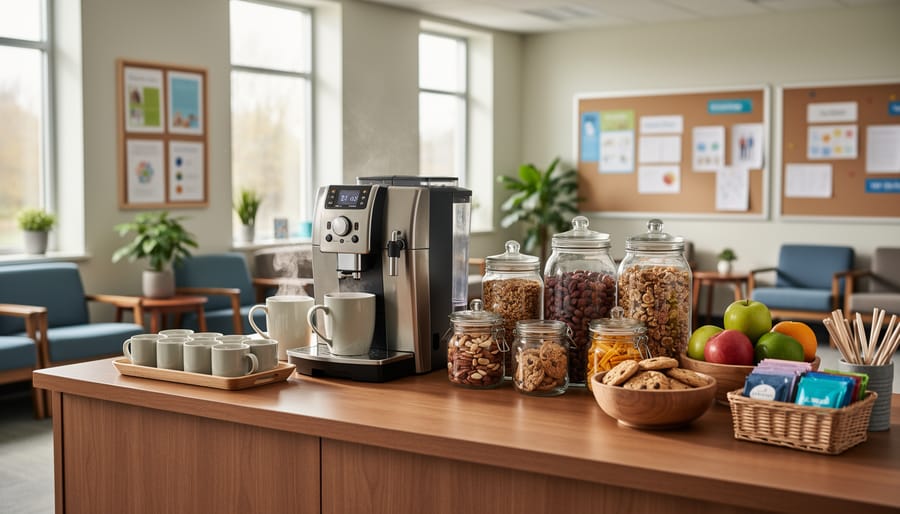
A dedicated appreciation station transforms the teachers’ lounge into a genuine respite space during hectic school days. Set up a cart or corner table with fresh coffee (regular and decaf), tea selections, and a rotating mix of healthy snacks like fruit, granola bars, trail mix, and dark chocolate. Add stress-relief items such as hand lotion, lip balm, puzzle books, and a small plant or fresh flowers.
The real impact comes from handwritten notes. Place blank cards and pens nearby so parents and students can leave specific thank-you messages throughout the week. Teachers consistently report that personal notes recognizing a particular lesson or moment matter more than any gift.
Keep the station stocked by assigning different PTA members to refresh items every two to three days. A basic setup costs under $50: a $12 coffee maker from a discount store, $15 for coffee and tea, $12 for mixed snacks, and $8 for lotion and small items. One elementary PTA maintained their station for a full month by having five volunteers each contribute $10 and cover one week of restocking.
Rotate themes weekly, Monday might feature energizing items (coffee, citrus), while Friday offers comfort treats (cookies, herbal tea). This variety prevents the station from becoming background noise and shows sustained thoughtfulness rather than a one-day gesture.
4. Duty-Free Lunch Coverage by Parent Volunteers

Teachers rarely get a true break during the school day. Cafeteria monitoring, recess supervision, and hallway duties often fill the minutes meant for decompression. Offering duty-free lunch coverage through trained parent volunteers gives teachers back something genuinely valuable: uninterrupted time to eat, plan, or simply breathe.
Start by coordinating with your principal and school secretary to identify which duty slots create the most burden, typically lunch periods and outdoor recess. Most schools require background checks for anyone supervising students, so work with administration to ensure volunteers complete necessary screenings well in advance. Some districts also mandate brief training sessions covering supervision protocols and emergency procedures.
Create a rotating schedule that doesn’t overburden individual parents. One elementary PTA in North Carolina organized this quarterly, recruiting eight volunteers per session who each committed to one lunch period weekly for six weeks. This gave 25 teachers three to four duty-free lunches per quarter without creating volunteer fatigue. Build in backup coverage since parent schedules shift.
Provide volunteers with clear, written guidelines covering where to position themselves, what to watch for, and whom to contact for issues. A simple one-page reference sheet and a school staff badge help volunteers feel confident and ensure consistency. Recognize that this isn’t a social hour for parents, emphasize that their role is active supervision so teachers can truly disconnect.
5. Local Business Partnership for Teacher Discounts

Partner with local restaurants, coffee shops, bookstores, gyms, and service providers to offer teachers exclusive year-round discounts. Start by identifying 10-15 businesses within a few miles of school, then send a brief email or make personal visits explaining how their support helps teachers who often spend personal funds on classroom needs. Most local owners appreciate community connection and will offer 10-20% discounts.
Create simple wallet-sized discount cards listing all participating businesses, their offers, and contact details. Many PTAs use free design templates, though photo editing tools can help customize cards with school branding. Print cards inexpensively at local copy shops or through online services, then distribute them during a staff meeting with a master list of partners.
One Texas PTA secured partnerships with 12 businesses, including three coffee shops, two bookstores, a pizza restaurant, a nail salon, an auto repair shop, and a gym, by emphasizing mutual benefit: teachers gain savings while businesses earn loyal customers. Refresh partnerships annually and promote new additions through staff emails.
6. Themed Appreciation Weeks with Daily Surprises
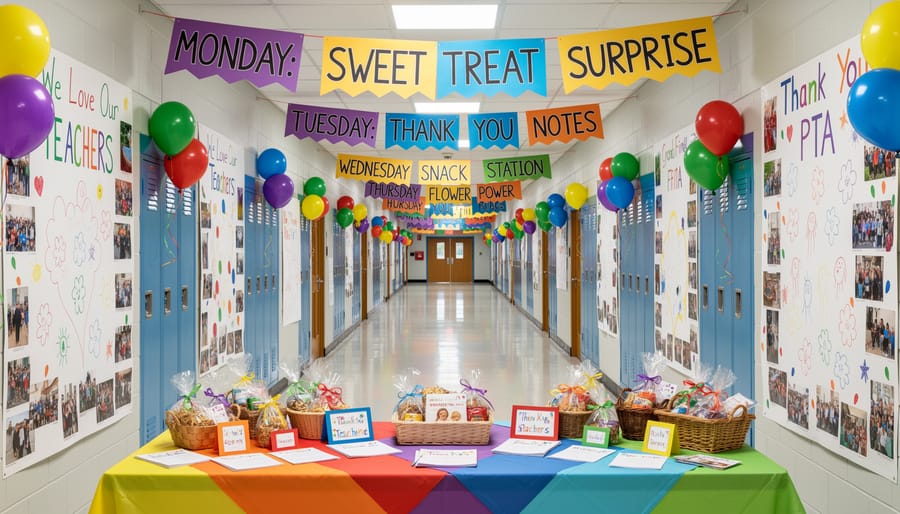
A themed appreciation week spreads recognition across five days while keeping individual efforts manageable for PTA volunteers. This approach maintains momentum and reaches different teacher preferences without requiring anyone to coordinate a large single event.
Monday focuses on wellness. Set up a morning station with herbal teas, fresh fruit, and stress balls or hand lotion. One PTA member handles setup before school starts, spending roughly $40 for supplies that serve 25-30 teachers. Include printed mindfulness cards or stretching guides teachers can use during breaks.
Tuesday brings treats. Coordinate a bake-off among parent volunteers or purchase variety packs from a local bakery. Budget $50-75 for purchased treats or collect homemade contributions. Presentation matters, arrange items on real plates with handwritten labels noting any allergens.
Wednesday centers on handwritten notes. Distribute colorful notecards to families two weeks ahead, requesting specific memories or gratitudes. Collect and sort by teacher, then place bundles in staff mailboxes. This zero-cost effort delivers high emotional impact.
Thursday features catered lunch or build-your-own sandwich bar. Pool resources for $150-200 total or partner with a local restaurant for discounted pricing. Handle dietary restrictions by surveying staff beforehand.
Friday celebrates school spirit with themed dress-up and an afternoon social hour featuring drinks and simple snacks. Assign one day to different PTA committee members so no single volunteer carries the entire week.
7. Personalized Appreciation Yard Signs

Personalized yard signs bring teacher appreciation directly to educators’ neighborhoods, creating public recognition that extends beyond the school campus. This visible gesture lets teachers’ families and neighbors see the community’s gratitude while reinforcing that their work matters beyond classroom walls.
Start by requesting teacher permission and home addresses through a private form, emphasizing that participation is optional. Most teachers appreciate the gesture, though some may prefer privacy. For design, use free templates from Canva or similar platforms, incorporating school colors, the teacher’s name, and a specific appreciation message like “Ms. Rodriguez: Thank You for Inspiring Future Scientists” rather than generic text. Local print shops typically charge between $15 and $30 per corrugated plastic sign, with bulk orders reducing per-unit costs. Alternative budget options include printing on poster board and laminating for weather resistance, reducing costs to under $5 per sign.
Install signs early morning or evening when teachers are less likely to be outside, coordinating with two-person teams for efficiency. Use wire stakes that won’t damage lawns, and photograph each installation for social media or newsletters. Leave signs up for three to five days, then collect them for teachers to keep as mementos. One suburban PTA reported that yard signs generated unexpected community conversations, with neighbors stopping to thank teachers at the grocery store, an ripple effect that amplified the original gesture’s impact.
8. Professional Development Book Club Fund

A professional development book fund demonstrates that you value teachers as lifelong learners while giving them agency over their growth. Rather than selecting titles for them, allocate $25-30 per teacher and let them choose books that align with their interests, classroom challenges, or grade-level needs.
Set up a simple selection process: create a shared spreadsheet where teachers can add their chosen title and a brief note about why it interests them. This transparency builds community as teachers discover what colleagues are reading and often leads to organic book studies support teacher voice and shared learning. Some PTAs partner with local bookstores for bulk discounts or use online retailers with gift receipts.
Present books meaningfully, not just as mail-room deliveries. One PTA wrapped each book with a personalized note acknowledging the teacher’s dedication to growth and included a bookmark listing the month’s other selections. Others organize a casual “book reveal” gathering with coffee where teachers receive their orders and can discuss upcoming reads.
The beauty of this initiative is its dual impact: teachers feel appreciated through the tangible gift while also receiving practical tools they’ve personally selected for their professional journey.
9. Classroom Makeover or Refresh Project
A classroom makeover transforms a teacher’s workspace while demonstrating tangible PTA investment in their daily environment. This initiative works by selecting one classroom each quarter for a comprehensive refresh, new paint, organizational systems, storage solutions, or updated decor that the teacher specifically requests.
Start with a nomination process where teachers submit requests describing their classroom needs and vision. A small PTA committee reviews submissions and selects one per quarter, rotating through different grade levels and departments to ensure fairness. Work directly with your school’s facilities manager to confirm what modifications are permitted, schedule painting around school breaks, and coordinate volunteer access.
The Riverside Elementary PTA completed three classroom makeovers in one school year by dedicating one Saturday per quarter. For their first project, they repainted a kindergarten classroom in calming blues, installed mobile storage carts, and added a reading nook with donated cushions. Total cost ran $180 for paint and materials, with eight parent volunteers completing the work in four hours.
Budget $150-300 per classroom depending on scope. Recruit volunteers with specific skills, painting, carpentry, sewing, and establish a project manager for each makeover. Photograph the before and after results to celebrate the transformation and inspire future fundraising support.
10. Student-Created Appreciation Art Gallery
A student-created art gallery transforms abstract appreciation into tangible, personal recognition that resonates long after the event ends. Students create artwork, poetry, or handwritten letters celebrating specific teachers, then display them in a dedicated hallway, entrance area, or digital gallery accessible to the entire school community.
Coordinate with art teachers or classroom instructors to integrate the project into existing lesson plans rather than adding extra work. Elementary students might draw portraits or illustrate favorite classroom moments, while middle and high schoolers can write reflective essays, create mixed-media pieces, or design digital art. Give students two to three weeks for creation, providing prompts like “A time Mrs. Johnson helped me understand something difficult” or “What makes Mr. Chen’s class special.”
Ensure every teacher receives multiple tributes by assigning students strategically, if you have 25 teachers and 400 students, each teacher should receive around 16 pieces. Create a simple spreadsheet tracking which students are honoring which teachers to avoid gaps. Display work with teacher names clearly labeled, grouped by educator or mixed throughout the gallery to encourage browsing.
For lasting impact, photograph the gallery and compile images into a digital book or slideshow teachers can revisit, similar to how many educators treasure their teacher planners filled with student notes throughout the year. The physical gallery can remain up for several weeks, reminding teachers daily that their work genuinely matters to the students they serve.
11. End-of-Year Survival Kit with Summer Essentials
End-of-year survival kits recognize teachers as they head into summer break while providing items they’ll actually use. These kits work especially well because they combine immediate enjoyment with practical value during the months ahead.
For a $15 budget tier, include sunscreen, a cold drink insulated sleeve, travel-size hand sanitizer, and a handwritten note. The $25 tier adds a popular beach read (survey teachers beforehand for genre preferences), a beach towel clip set, and a local coffee shop gift card. At $40, incorporate a quality reusable water bottle, poolside reading pillow, subscription to a streaming service or audiobook platform, and specialty snacks or local treats.
Host an assembly party where PTA volunteers gather to build kits together. Set up stations for each budget tier with pre-counted items and decorative bags. One Massachusetts PTA assembled kits for 30 teachers in under two hours by assigning five volunteers to each station and rotating through packing tasks.
Personalize kits by attaching student-created thank-you cards or matching items to teacher interests gathered through a simple survey. Teachers who coach might appreciate athletic accessories, while those passionate about cooking could receive specialty spices or kitchen gadgets. The combination of thoughtful planning and practical items ensures teachers start their break feeling genuinely valued.
12. Reserved Parking Spot Rotation
Reserved parking spots in crowded school lots offer daily relief that teachers genuinely appreciate. A spot near the entrance saves time during rushed mornings and provides welcomed convenience after long teaching days. PTAs can coordinate with administration to designate two to four premium spots that rotate among staff monthly.
The rotation ensures fairness and spreads recognition throughout the year. Selection methods vary by school culture: random monthly drawings work well for complete equity, while some schools rotate by department or grade level. Other PTAs use milestone recognition, honoring teachers reaching service anniversaries or completing professional achievements. Clearly define the criteria upfront so the process feels transparent and inclusive.
Create simple, professional signage for each designated spot. Weather-resistant yard signs or laminated placards displaying “Teacher Appreciation Parking, Reserved for [Name]” work well and cost under $15 per spot. Update signs on the first Monday of each month to minimize confusion.
Address practical logistics early. Confirm available spots with administration, considering accessibility needs and existing reserved spaces. Ensure the rotation includes all staff who park on site, not just classroom teachers. Communicate the schedule through staff meetings and email reminders. This low-cost initiative, typically under $100 annually, delivers consistent, visible appreciation that teachers encounter twice daily.
13. ‘Why I Teach’ Spotlight Campaign
A “Why I Teach” spotlight campaign personalizes appreciation by letting teachers share their own voices and stories with the school community. Rather than generic recognition, this approach highlights individual motivations, memorable classroom moments, and what keeps each educator committed to their students.
Start by sending a gentle invitation email explaining the spotlight’s purpose and format. Offer flexibility: teachers can respond to 3-4 guiding questions via email, participate in a brief recorded conversation, or submit a photo with a short written caption. Sample questions might include “What moment this year reminded you why you teach?” or “What do you hope students remember from your classroom?” Keep it conversational, not interview-style.
Create simple, visually consistent posts featuring the teacher’s photo, their response (100-150 words), and their name and role. Share these on school social media, in monthly newsletters, and on a dedicated bulletin board near the main office. Maintain a regular schedule spotlighting 2-3 teachers monthly so the campaign becomes an anticipated tradition rather than a one-time event.
Make participation comfortable by offering to draft responses from verbal conversations, allowing teachers to review and edit before posting, and never pressuring reluctant participants. Some teachers shine in written reflection; others prefer casual chat. Rotate through grade levels and departments to ensure all staff, including specialists and support teachers, receive recognition throughout the year.
14. Catered Staff Breakfast or Lunch
A quality catered meal removes the mental load of packing lunch and offers teachers uninterrupted time to eat and connect. Schedule the meal during an existing staff meeting, professional development day, or extended planning session when teachers are already gathered, never add an extra time commitment to their day.
Budget the meal at $10-15 per person by partnering with local restaurants willing to offer educator discounts or package deals. Many chains provide breakfast platters or sandwich trays at reduced rates for educational events. Parent-cooked options can cut costs further: coordinate a potluck-style catered meal where parent volunteers prepare signature dishes at home and deliver them hot, reducing expenses to $3-5 per person while adding personal touch.
Survey staff discreetly about dietary restrictions weeks in advance, allergies, vegetarian, vegan, gluten-free, and ensure the caterer accommodates all needs without calling attention to individuals. Include variety: breakfast should offer both sweet and savory; lunch needs protein options beyond sandwiches.
Handle logistics completely: arrange delivery timing, set up serving stations, provide disposable plates to eliminate cleanup, and coordinate with office staff so teachers simply arrive, eat, and leave refreshed. The convenience factor matters more than the meal’s extravagance.
15. Appreciation Grant for Classroom Innovation
Appreciation grants empower teachers to pursue creative classroom ideas they might otherwise fund themselves. These mini-grants, typically $50 to $200, give teachers autonomy to experiment with new materials, technology, or projects that enhance student learning.
Keep the application simple: a one-page form asking teachers to describe their project, explain how it benefits students, and outline the budget. Review applications with a small committee of PTA members and administrators, selecting based on innovation, student impact, and alignment with school goals. Avoid overly competitive processes; if funds allow, approve multiple worthy proposals.
One PTA raised $1,500 through their spring fundraiser and offered ten grants of $150 each. Teachers funded classroom libraries featuring diverse voices, hands-on science kits, flexible seating options, and materials supporting inclusive teaching approaches. The PTA celebrated funded projects by featuring them in newsletters and at a spring assembly where teachers shared results with families.
This approach shows genuine investment in teachers’ professional creativity while directly benefiting students. Teachers appreciate both the financial support and the trust placed in their expertise to identify meaningful classroom enhancements.
Making Appreciation Efforts Sustainable and Inclusive
Sustainable appreciation starts with spreading efforts across the calendar rather than concentrating everything in May. Designate small monthly moments alongside larger quarterly events to maintain steady recognition without overwhelming volunteers or creating expectation fatigue. Rotate responsibilities among PTA members so no single person burns out coordinating every initiative.
Involve diverse parent voices in planning to ensure appreciation reflects your school community’s full cultural range and avoids assumptions about what teachers value. Send brief surveys asking teachers directly what forms of recognition matter most to them. Some prefer public celebration, others value private gestures, and many prioritize practical support over symbolic gifts.
Create repeatable traditions like quarterly breakfast rotations or monthly parking spot awards that require minimal replanning each time. Document your processes, volunteer lists, vendor contacts, supply checklists, so future PTA leaders can sustain initiatives without starting from scratch.
Avoid appreciation fatigue by prioritizing quality over quantity. Three thoughtful, well-executed efforts throughout the year create more impact than weekly token gestures that feel obligatory. Listen when teachers express they need practical relief more than another mug, and adjust accordingly.
Common Questions About PTA Teacher Appreciation
How much should a PTA budget for teacher appreciation annually?
Most PTAs allocate 5-15% of their annual budget to appreciation efforts, typically ranging from $15-50 per staff member depending on fundraising success and school size. Start with what’s feasible and build traditions around sustainable efforts rather than overextending financially in one year.
How can working parents participate in appreciation efforts?
Offer flexible contribution options like monetary donations, evening assembly parties, digital participation (video clips, online cards), or providing supplies rather than requiring daytime volunteering. Many successful PTAs create sign-up systems where families choose their preferred involvement level and timing.
Should we concentrate efforts during Teacher Appreciation Week or spread them throughout the year?
Both approaches have merit, Teacher Appreciation Week provides concentrated visibility and community participation, while year-round gestures prevent burnout and show sustained commitment. Consider anchoring major events to the official week while maintaining smaller monthly touchpoints.
Do we need administrative approval for appreciation initiatives?
Always coordinate with your principal before launching efforts, especially those involving school facilities, student participation, or schedule changes. Most administrators enthusiastically support well-planned appreciation but need advance notice for logistics, security protocols, and calendar coordination.
Remember that different school sizes require different approaches. Small schools with 10-15 teachers can execute more personalized, hands-on efforts like classroom makeovers or individually tailored gifts. Larger schools with 50+ staff members benefit from scalable initiatives like supply drives, discount partnerships, or rotating recognition spotlights that don’t require simultaneous coordination for everyone. Adapt the ideas from this list to match your volunteer capacity, not an idealized version of what appreciation should look like.
Include all staff members in your definition of teachers, specialists, paraprofessionals, librarians, and support staff all contribute to student success and deserve recognition alongside classroom teachers.
Meaningful teacher appreciation isn’t a one-day event, it’s an ongoing commitment that shapes school culture and directly influences teacher morale and retention. When PTAs move beyond generic gestures to create recognition that combines tangible support with genuine personal acknowledgment, they address both the practical challenges teachers face and the emotional need to feel valued in their profession.
Start where your PTA is right now. A small group organizing personalized notes and covering one lunch duty creates more lasting impact than an elaborate, unsustainable event that exhausts volunteers. Listen directly to your teachers about what would genuinely help them, then build traditions around those needs. The ideas in this guide work because they respect teachers’ time, acknowledge their financial sacrifices, and treat them as the skilled professionals they are.
Your PTA holds unique power to organize collective appreciation that individual parents can’t coordinate alone. By creating sustainable systems that recognize teaching as the vital, demanding profession it is, you strengthen the entire school community and give teachers tangible reasons to stay and thrive in your building. That investment pays forward to every student who benefits from experienced, supported, appreciated educators.