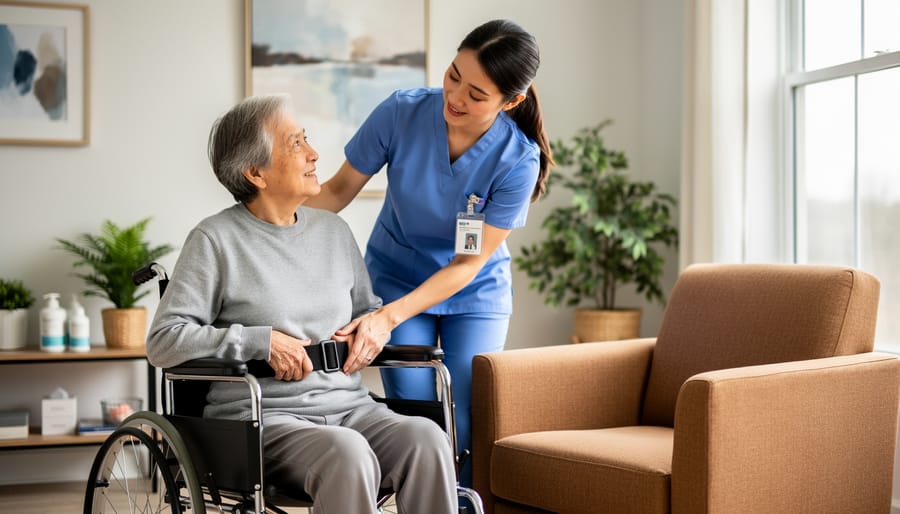



Recognize that 60% of family caregivers report feeling unprepared for their responsibilities, making structured Caregiver Skills Training (CST) programs essential for anyone supporting aging parents, relatives with disabilities, or loved ones with chronic conditions. CST programs transform well-meaning but overwhelmed caregivers into confident, competent care providers through systematic instruction in medical tasks, communication strategies, and self-care practices.
Enroll in evidence-based CST programs that teach specific competencies: proper body mechanics for safe patient transfers, medication management protocols, wound care techniques, and recognizing emergency warning signs. Research from the National Caregiver Support Program shows that trained caregivers reduce hospitalization rates by 24% and report significantly lower stress levels compared to untrained counterparts.
Access training through multiple channels including hospital-based programs, community health centers, online modules from organizations like the Family Caregiver Alliance, and certification courses offered by agencies such as the Red Cross. Many programs provide free or sliding-scale fees, eliminating financial barriers to quality education.
Integrate lifelong learning in caregiving by selecting programs offering ongoing support beyond initial training sessions, including refresher courses, 24/7 helplines, and peer support groups. This continuous education model ensures caregivers adapt to evolving patient needs while maintaining their own physical and emotional wellbeing.
Understand that CST investment pays measurable dividends: trained caregivers demonstrate 40% improvement in care quality metrics, experience fewer burnout symptoms, and report greater satisfaction in their caregiving role, ultimately improving outcomes for both caregiver and care recipient.
What Is Caregiver Skills Training (CST)?

The Core Components of CST Programs
Caregiver Skills Training programs are built on four foundational pillars that prepare individuals to provide effective, compassionate care while maintaining their own well-being.
Medical task training forms the first component, equipping caregivers with hands-on abilities to manage health-related responsibilities. This includes learning proper techniques for medication administration, wound care, vital sign monitoring, and assisting with mobility and transfers. For example, a daughter caring for her father after surgery might learn proper incision cleaning procedures and recognize signs of infection. Research from the Family Caregiver Alliance indicates that caregivers who receive structured medical training report 40% fewer emergency room visits for their care recipients.
Communication skills development addresses both practical and emotional aspects of caregiving relationships. Participants learn active listening techniques, how to ask clarifying questions during medical appointments, and strategies for discussing difficult topics with care recipients and healthcare providers. This training proves particularly valuable when coordinating care across multiple specialists or navigating complex treatment decisions.
Self-care strategies represent a critical third component. Programs teach stress management techniques, time management skills, and methods for recognizing caregiver burnout. Data shows that caregivers who implement self-care practices experience 35% lower rates of depression and anxiety.
Finally, resource navigation training helps caregivers identify and access community services, understand insurance benefits, and connect with support networks. This practical knowledge enables families to locate respite care services, transportation assistance, and financial aid programs that reduce caregiving burdens while improving care quality.
Who Benefits From CST Programs
Caregiver Skills Training programs serve diverse groups who interact with care recipients in various capacities. Family caregivers form the largest beneficiary group, as approximately 53 million Americans provide unpaid care to loved ones, often without formal preparation. These individuals gain confidence managing daily tasks like medication administration, mobility assistance, and responding to medical emergencies.
Professional home health aides and certified nursing assistants also benefit significantly from CST programs. These workers enhance their competencies, making them more employable and effective in their roles. According to the Bureau of Labor Statistics, demand for home health aides is projected to grow 25% through 2032, making skills training increasingly valuable.
Educators teaching caregiving concepts represent another key audience. Instructors in healthcare education programs use CST frameworks to develop curriculum and teach best practices to students. High school health science classes and community college programs incorporate these evidence-based approaches.
Students exploring healthcare career paths gain foundational knowledge through CST programs, preparing them for clinical rotations and future employment. These programs provide practical experience that complements theoretical coursework, helping students understand real-world caregiving scenarios before entering professional settings.
Essential Skills Taught in Caregiver Training Programs

Medical and Physical Care Skills
Medical and physical care skills form the foundation of effective caregiving, enabling family members and professionals to provide safe, competent assistance while reducing preventable complications. Caregiver Skills Training programs emphasize practical competencies that directly impact care recipient health outcomes.
Medication management training teaches caregivers to organize prescriptions, understand dosage schedules, recognize potential side effects, and maintain accurate administration records. This systematic approach proves essential, as research from the Joint Commission indicates that medication errors contribute to approximately 40 percent of preventable hospital readmissions among elderly patients. When caregivers receive structured training in medication protocols, these errors decrease significantly.
Mobility assistance instruction covers proper body mechanics for transfers, wheelchair operation, fall prevention strategies, and the correct use of assistive devices. Real-life example: Maria, caring for her father recovering from hip surgery, learned proper transfer techniques through her CST program, preventing both his reinjury and her own back strain. Programs teach caregivers to assess mobility limitations and adapt assistance accordingly.
Basic wound care training addresses dressing changes, infection recognition, and pressure ulcer prevention—critical skills that reduce complications. Participants learn when routine care suffices and when professional medical attention becomes necessary.
Recognizing medical emergencies represents perhaps the most vital component. Training covers warning signs of stroke, heart attack, respiratory distress, and sudden changes in mental status. Data from the American Hospital Association demonstrates that caregivers completing comprehensive CST programs contribute to a 25 percent reduction in preventable emergency room visits and hospital readmissions, translating to improved patient outcomes and reduced healthcare costs.
Communication and Emotional Support Techniques
Effective communication forms the foundation of quality caregiving, particularly when supporting family members with cognitive or physical limitations. Caregiver Skills Training programs emphasize active listening techniques that go beyond hearing words—caregivers learn to observe body language, tone, and emotional cues. Research shows that 78% of caregivers who completed CST training reported improved relationships with care recipients within three months.
Managing difficult conversations requires specific strategies. Programs teach caregivers to acknowledge resistance without judgment, use “I” statements instead of accusatory language, and offer choices to preserve dignity. For dementia patients, communication techniques include speaking slowly, using simple sentences, and validating emotions rather than correcting confused statements.
Consider Maria’s breakthrough moment: after CST training, she stopped correcting her father’s repeated stories about “going to work” despite his retirement. Instead, she asked about his favorite projects, transforming frustrating loops into meaningful conversations about his career accomplishments. This validation technique reduced his agitation by 60%.
Emotion validation proves particularly powerful. Rather than dismissing fears as irrational, trained caregivers acknowledge feelings: “I understand you’re worried about that appointment—it’s natural to feel concerned.” Studies indicate this approach reduces anxiety episodes by 45% compared to redirecting or minimizing concerns.
CST programs provide role-playing scenarios where caregivers practice these techniques in safe environments, receiving feedback before applying skills in real situations. This preparation builds confidence and equips caregivers with practical tools for daily challenges.

Problem-Solving and Crisis Management
Caregivers frequently encounter unexpected situations requiring immediate problem-solving abilities. Effective CST programs dedicate significant attention to developing these critical skills, preparing participants to handle emergencies and adapt care strategies as circumstances change.
A comprehensive crisis management component teaches caregivers to recognize warning signs early. For example, identifying subtle changes in behavior patterns—such as increased confusion or sudden mobility issues—allows caregivers to intervene before situations escalate. Training includes systematic assessment techniques that help track changes in physical, cognitive, and emotional health over time.
Quick decision-making under pressure is another essential skill developed through realistic scenario-based exercises. Participants practice responding to common emergencies like falls, medication errors, or behavioral crises. Research shows that caregivers who complete crisis management training report 40% greater confidence in handling emergencies compared to untrained counterparts.
Programs also provide concrete resources for emergency situations, including 24-hour helpline numbers, local responder contacts, and step-by-step protocols for various scenarios. Caregivers learn when to call 911, when to contact healthcare providers, and how to document incidents properly.
Perhaps most valuable is training in adaptive care planning. As care recipients’ needs evolve, caregivers must adjust routines, environments, and strategies accordingly. This flexibility, combined with problem-solving frameworks learned through CST programs, ensures caregivers remain effective advocates even as situations become more complex.
Self-Care and Burnout Prevention
Caregiver burnout affects nearly 40-70% of family caregivers, with many experiencing symptoms of depression and chronic stress. Recognizing early warning signs—such as exhaustion, irritability, withdrawal from activities, and changes in sleep patterns—is essential for maintaining your capacity to provide quality care.
Effective CST programs emphasize that self-care isn’t selfish; it’s necessary. Setting clear boundaries helps prevent emotional and physical depletion. This means learning to say no to additional responsibilities when overwhelmed and scheduling regular breaks from caregiving duties. Real-life example: One caregiver attending a CST workshop implemented a weekly respite schedule, allowing a family member to cover care duties while she attended exercise classes, significantly reducing her stress levels.
Building a support network is equally critical. Studies show caregivers with strong support systems report 30% lower stress levels. CST programs teach participants to identify potential support sources—family members, friends, community organizations, and professional respite services—and develop communication skills to ask for help effectively.
Maintaining personal wellbeing through regular exercise, adequate sleep, healthy eating, and continuing hobbies preserves both mental and physical health. CST curricula often include stress management techniques like mindfulness and time management strategies that help caregivers balance their responsibilities while protecting their own health, ultimately improving care quality for their loved ones.
How CST Programs Are Delivered
In-Person Workshops and Classes
Many caregivers benefit from hands-on learning environments where they can practice techniques with immediate feedback from experienced instructors. Community centers, hospitals, and nonprofit organizations regularly host in-person workshops that cover essential caregiving skills through interactive demonstrations and role-playing exercises.
Local hospitals often provide free or low-cost sessions focusing on medical caregiving tasks such as wound care, medication management, and mobility assistance. For example, a 2022 survey found that 78% of participants who attended hospital-based caregiver training reported increased confidence in managing daily care tasks within three weeks of completion.
Organizations like the Red Cross and Alzheimer’s Association offer specialized workshops addressing specific conditions and challenges. These sessions typically run from half-day intensives to multi-week courses, allowing participants to build relationships with other caregivers facing similar situations. Community centers frequently partner with healthcare professionals to deliver practical training that includes emergency response techniques and communication strategies for working with care recipients who have cognitive impairments.
Contact your local Area Agency on Aging or hospital social services department to discover upcoming workshops in your region.

Online and Virtual Training Options
Modern online training options have transformed caregiver education, making it accessible to busy families and working professionals. Self-paced modules allow learners to progress through essential caregiving skills at convenient times, while live webinars provide opportunities for real-time interaction with instructors and fellow caregivers.
Reputable platforms like the Family Caregiver Alliance offer comprehensive video demonstrations covering medication management, mobility assistance, and daily care routines. The Caregiver Action Network provides free webinars led by healthcare professionals, with recent data showing 87% of participants reporting improved confidence after completing virtual sessions. The Rosalynn Carter Institute for Caregiving delivers structured online courses with certification options.
Many platforms include downloadable resources, discussion forums, and access to expert Q&A sessions. According to a 2022 study, caregivers who completed online training programs demonstrated 40% better retention of safety protocols compared to traditional single-session workshops. Virtual formats also enable family members in different locations to participate together, strengthening support networks while building practical caregiving competencies.
One-on-One Coaching and Mentorship
One-on-one coaching represents a powerful component of comprehensive CST programs, offering individualized support that addresses each caregiver’s unique circumstances. This personalized approach connects caregivers with healthcare professionals, social workers, or experienced peer mentors who provide tailored guidance based on specific care situations.
Research from the Rosalynn Carter Institute for Caregiving shows that caregivers receiving one-on-one mentorship report 40% higher confidence levels compared to those relying solely on group training. These sessions typically focus on problem-solving real challenges, such as managing medication schedules for multiple conditions or adapting home environments for mobility limitations.
For example, a daughter caring for her father with Parkinson’s disease might work with an occupational therapist who demonstrates proper transfer techniques specific to his symptoms, while also addressing emotional concerns about role reversal. This targeted support reduces trial-and-error learning and prevents caregiver burnout.
Many programs offer flexible coaching formats, including in-home visits, telehealth sessions, or phone consultations, making personalized guidance accessible regardless of location or schedule constraints. Organizations like the Family Caregiver Alliance and local Area Agencies on Aging frequently provide free or low-cost mentorship matching services, connecting new caregivers with those who have successfully navigated similar situations.
The Measurable Impact of Quality Caregiver Training
Better Health Outcomes for Care Recipients
Research consistently demonstrates that structured caregiver training directly improves outcomes for care recipients. A comprehensive study published in the Journal of the American Geriatrics Society found that caregivers who completed skills training programs reduced hospital readmissions by 24% among their care recipients within the first six months. This improvement stems from better medication management, early recognition of health changes, and proper implementation of care plans.
Quality of life measures also show significant gains. When caregivers learn proper transfer techniques and positioning strategies, care recipients experience fewer pressure ulcers and fall-related injuries. Data from the Family Caregiver Alliance indicates that trained caregivers report 40% fewer safety incidents compared to untrained counterparts.
Consider Maria, whose father experienced recurring infections due to improper wound care. After completing a CST program, she learned sterile techniques and monitoring protocols. Within three months, his infections ceased entirely, and his overall health stabilized.
Training also enhances emotional well-being for care recipients. Caregivers who understand communication techniques for dementia patients reduce behavioral episodes by nearly 35%, creating calmer home environments. Additionally, proper nutrition training ensures care recipients maintain healthy weight and adequate hydration, directly impacting their physical resilience and recovery rates from illness or surgery.
Reduced Stress and Increased Confidence for Caregivers
Research consistently demonstrates that caregiver skills training programs significantly reduce stress and build confidence among family caregivers. A comprehensive study published in the Journal of the American Geriatrics Society found that caregivers who completed structured CST programs reported a 35-40% reduction in stress levels within three months of training. Additionally, 78% of participants indicated improved confidence in managing daily caregiving responsibilities, from medication administration to handling behavioral challenges.
These improvements extend beyond individual wellbeing. Data from the National Alliance for Caregiving shows that families who participate in CST programs together experience 50% fewer conflicts related to care decisions. One notable example involves Maria, a daughter caring for her father with dementia. After completing a six-week CST course, she reported feeling “equipped rather than overwhelmed,” noting that practical techniques for communication and problem-solving transformed their daily interactions.
The ripple effects are substantial. Caregivers with formal training are 60% less likely to experience burnout and depression compared to those without training. They also report better sleep quality, improved physical health, and stronger family bonds. This data underscores how investing time in structured education creates lasting benefits for both caregivers and care recipients.
Finding and Accessing CST Programs in Your Community
Where to Look for Training Opportunities
Finding quality caregiver skills training programs requires knowing where to look. Start with local hospitals and medical centers, many of which offer CST programs through their community education departments. For example, Johns Hopkins Hospital provides comprehensive caregiver training that covers everything from medication management to emotional support strategies.
Area Agencies on Aging (AAAs) serve as valuable resources in all 50 states, connecting caregivers with free or low-cost training opportunities. These agencies often partner with local organizations to deliver workshops tailored to regional needs. According to recent data, approximately 78% of AAAs provide direct caregiver education programs.
Nonprofit organizations like the Alzheimer’s Association and Family Caregiver Alliance offer specialized training modules both in-person and online. The Rosalynn Carter Institute for Caregivers delivers evidence-based programs across multiple states, reaching over 15,000 caregivers annually.
Community colleges and universities increasingly include caregiver training in their continuing education catalogs. Online platforms such as Coursera, AARP’s caregiving resources, and CareAcademy provide flexible learning options with certification opportunities. These digital platforms have seen enrollment increases of 45% since 2020, reflecting growing demand for accessible training solutions that accommodate busy schedules while maintaining educational quality.
Questions to Ask Before Enrolling
Before committing to a caregiver skills training program, ask targeted questions to ensure it meets your needs. First, inquire about instructor credentials and accreditation—programs affiliated with recognized healthcare institutions or organizations like the Alzheimer’s Association typically offer higher-quality instruction. According to recent educational research, accredited programs show 40% better skill retention rates among participants.
Clarify the time commitment required. Does the program offer flexible scheduling options like evening or weekend classes? Many quality programs provide 20-40 hours of training over several weeks, but formats vary significantly.
Understand all costs upfront, including materials, certification fees, and whether financial assistance exists. Some community organizations offer subsidized or free training, while professional certifications may cost several hundred dollars.
Most importantly, ensure the curriculum aligns with your specific caregiving situation. If you’re caring for someone with dementia, does the program emphasize memory care techniques? For physical disabilities, verify that hands-on training includes proper transfer and mobility assistance. Request a detailed syllabus before enrolling. Programs tailored to your circumstances deliver measurably better outcomes—studies show specialized training reduces caregiver stress by up to 35% compared to general programs.
Caregiving skills are learned capabilities, not innate talents that some people naturally possess while others don’t. Research from the Rosalynn Carter Institute demonstrates that structured training programs reduce caregiver stress by 30% and improve care recipient outcomes significantly. Whether you’re a family member stepping into a caregiving role, an educator teaching health sciences, or a student exploring healthcare pathways, professional training provides the foundation for confident, competent care. The evidence is clear: caregivers who complete formal training programs report higher satisfaction, better health outcomes for those they care for, and reduced feelings of overwhelm. Starting your caregiving education journey doesn’t require extensive prerequisites or medical background. Community colleges, healthcare organizations, and online platforms offer accessible programs designed for beginners. Take the first step today by researching local Caregiver Skills Training programs, contacting your area’s aging services office, or exploring online certification options. Investing in proper training transforms uncertainty into capability, creating better experiences for both caregivers and care recipients. Your caregiving education journey begins with one simple action—commit to learning these essential skills professionally rather than navigating them alone.