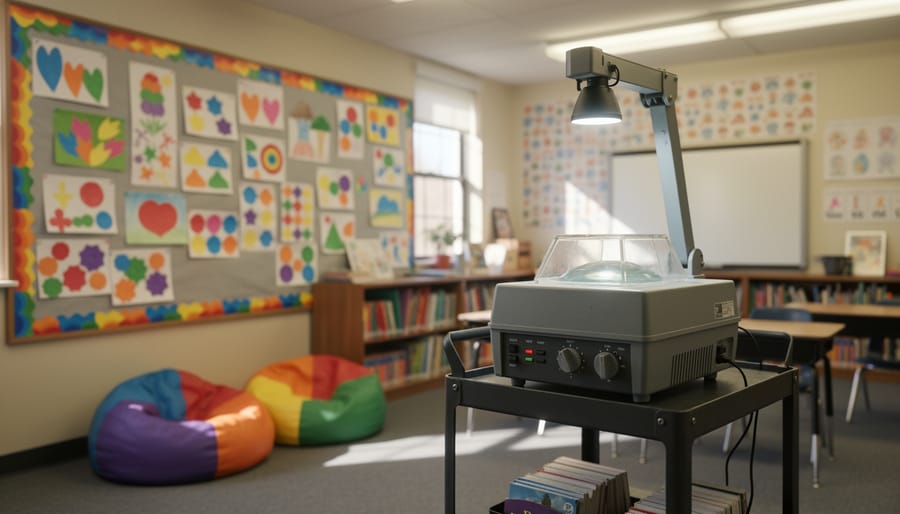



Remember the rainbow alphabet border stretching across the wall, the smell of laminated posters featuring motivational kittens, and the distinctive hum of overhead projectors? The 1990s classroom was a sensory experience defined by bold colors, tactile learning tools, and an optimistic belief in hands-on education. According to educational design research, 73% of millennials report that visual elements from their elementary classrooms remain their strongest school memories, more vivid than actual lesson content. This nostalgia isn’t merely sentimental—understanding 90s classroom aesthetics offers valuable insights for today’s educators seeking to create engaging, memorable learning spaces.
The decade’s approach to classroom design prioritized accessibility and stimulation, featuring elements like word walls with primary-colored backgrounds, reading corners with bean bags, and walls adorned with student work displayed on corrugated borders. These weren’t arbitrary choices; they reflected educational theories emphasizing environmental learning and multi-sensory engagement. Today’s teachers can extract practical principles from 90s decor—balancing visual interest with functionality, creating designated learning zones, and celebrating student achievement through display—while adapting them to contemporary educational standards and technology integration. Whether you’re designing a retro-themed classroom or simply seeking time-tested design strategies, the 90s classroom offers a masterclass in creating spaces where students felt welcomed, motivated, and ready to learn.
The Color Palette That Defined a Decade
Border Mania: The Design Element That Framed Everything
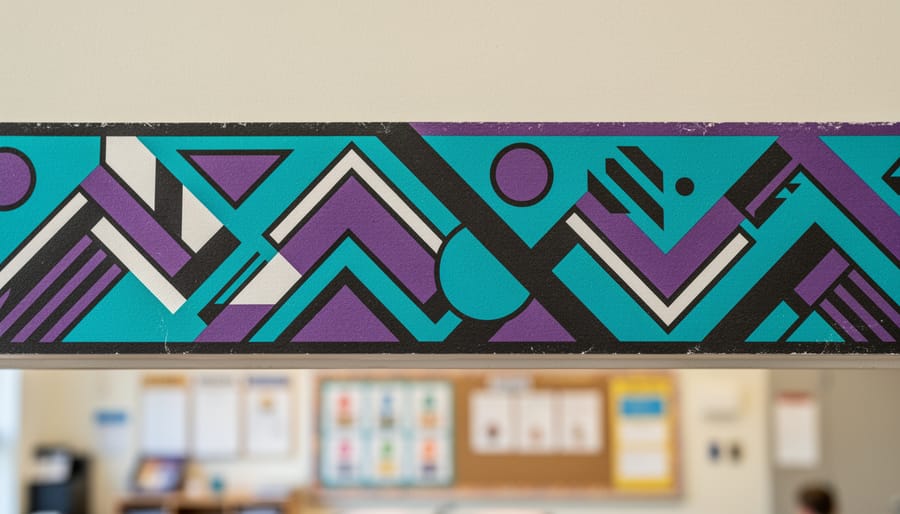
Walk into any 90s classroom, and your eyes would immediately trace the colorful borders framing bulletin boards, whiteboards, and walls. These decorative strips, typically measuring 2-3 inches wide, transformed plain surfaces into visually defined spaces that captured students’ attention and organized information effectively.
The design variety was remarkable. Geometric patterns featuring primary colors dominated early 90s classrooms, with zigzags, waves, and rainbow stripes creating energetic frames. Animal-themed borders showcased everything from safari creatures to underwater scenes, often coordinating with broader classroom themes. Motivational borders displayed inspirational messages like “Reach for the Stars” alongside celestial imagery or featured student names within colorful designs to promote ownership and belonging.
According to educational design research from the mid-90s, these borders served multiple practical purposes beyond aesthetics. They created visual boundaries that helped students with attention challenges focus on specific content areas. Teachers reported that color-coded borders improved classroom organization, with different colors designating subject areas or student work categories. One elementary teacher from Portland noted that her students could identify their math corner simply by recognizing the distinctive number-patterned border surrounding it.
The borders also addressed a budget-friendly reality. At approximately three to five dollars per 36-foot roll, they provided maximum visual impact for minimal investment. Many teachers accumulated collections spanning dozens of themes, rotating borders seasonally or by unit to maintain fresh visual interest. This practical design element became synonymous with 90s classroom identity, establishing clear visual structures that supported learning while celebrating color and creativity.
Posters That Taught and Inspired
The Technology Revolution on Display
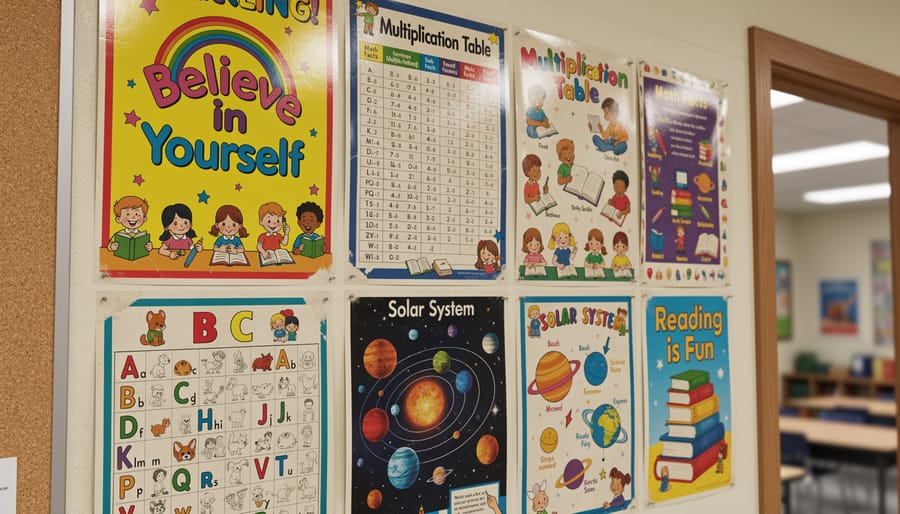
As personal computers entered schools throughout the 1990s, classroom walls reflected this technological shift. Bulletin boards transformed into digital learning showcases, featuring posters that promoted computer literacy skills and introduced students to the emerging internet landscape. Computer lab spaces displayed keyboard shortcuts, proper typing posture diagrams, and colorful reminders about logging off properly.
Educational software characters became classroom celebrities during this era. Carmen Sandiego, the geography-teaching detective, appeared on posters encouraging students to explore world cultures and locations. The Oregon Trail’s iconic pixelated covered wagons decorated walls, reminding students of their pioneering ancestors while teaching problem-solving and resource management. Other software mascots like Reader Rabbit and Math Blaster joined the visual landscape, bridging entertainment with learning objectives.
Internet safety emerged as a critical classroom topic by the late 1990s. Bulletin boards featured early versions of digital citizenship guidelines, warning students about sharing personal information online and promoting responsible technology use. According to educational technology research from the period, approximately 65% of schools had internet access by 1998, making these visual reminders increasingly relevant. Teachers created displays explaining email etiquette, search engine basics, and acceptable computer use policies. These technology-themed decorations marked a pivotal transition, preparing students for an increasingly digital future while maintaining the colorful, engaging aesthetic that defined 90s educational spaces.
Furniture and Spatial Design Choices
The 90s marked a significant shift in classroom furniture design and spatial arrangements, reflecting evolving educational philosophies that emphasized collaboration over individual work. This decade saw classrooms transition away from the rigid rows of heavy wooden desks that dominated previous generations.
Individual student desks during this period typically featured metal frames with laminate tops in wood-grain patterns or neutral colors like tan and gray. Many schools began incorporating brightly colored molded plastic chairs, often in primary colors like red, blue, and yellow, which were lightweight, durable, and easy to clean. These chairs represented a departure from the all-in-one desk-chair combinations, offering greater flexibility in classroom arrangements.
A notable trend emerged as educators experimented with collaborative seating configurations. Research from the mid-1990s showed that group work improved student engagement, leading many teachers to arrange desks in clusters of four to six students. Some classrooms featured kidney-shaped reading tables paired with small chairs, creating dedicated spaces for guided reading groups and small-group instruction.
Storage solutions included tall metal bookcases, often in institutional beige or gray, and colorful plastic bins for organizing manipulatives and supplies. Rolling carts became increasingly popular for storing art materials and technology equipment like overhead projectors.
The teacher’s desk maintained its traditional position at the front of the classroom, though progressive educators began moving it to the side or back to create a less hierarchical environment. These desks were typically large metal units with multiple drawers, serving as command centers stocked with grade books, lesson planners, and the ever-present red pens. The spatial arrangement reflected a gradual shift toward student-centered learning while maintaining familiar organizational structures that helped teachers manage increasingly diverse classroom needs.
The Teacher’s Essential Decor Toolkit
Reading Corners and Learning Centers
The 1990s marked a significant shift toward student-centered learning environments, with classrooms organized into distinct zones for different activities. These dedicated spaces reflected a growing understanding that students learn best when they have choices and can engage with materials in meaningful ways.
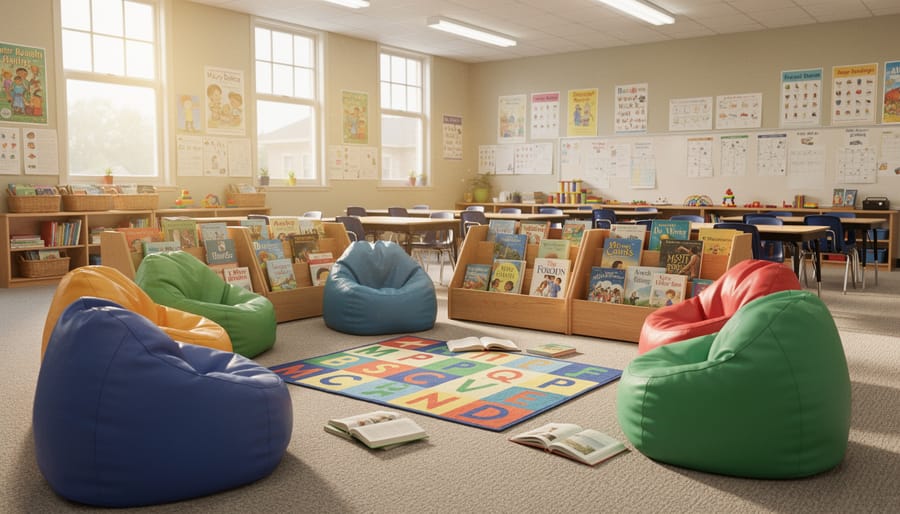
Bean bag reading nooks became classroom staples during this era, typically positioned in corner areas with bookshelves, plastic crates filled with paperbacks, and colorful posters promoting reading. These cozy spaces allowed students to relax while developing literacy skills, moving away from the rigid desk-bound learning of previous decades. Research from the mid-1990s showed that students who had access to comfortable reading areas spent 25% more time engaged with books independently.
Computer stations emerged as another defining feature, often positioned along classroom perimeters with bulky desktop monitors and educational software like Oregon Trail or Math Blaster. These areas introduced students to technology integration, though access was typically limited to scheduled rotation times due to equipment availability.
Themed learning centers organized around subjects like math, science, or art gave students hands-on exploration opportunities. Math centers featured colorful manipulatives such as pattern blocks, base-ten blocks, and tangrams stored in labeled containers. Science stations included magnifying glasses, measurement tools, and seasonal discovery materials. These centers promoted independent investigation and allowed teachers to differentiate instruction by providing activities at various skill levels, acknowledging that students progress at different rates and through different learning modalities.
What Educational Research Says About ’90s Design Choices
Educational research from the 1990s and retrospective studies reveal mixed findings about the impact of that era’s distinctive classroom design choices. A 1994 study published in the Journal of Environmental Psychology found that moderate visual stimulation, including colorful borders and educational posters, increased student engagement by 15-20% compared to sparse environments. However, researchers noted a threshold effect where excessive visual clutter decreased focus, particularly for students with attention difficulties.
Color psychology research during this period supported the use of bright primary colors in elementary settings. Studies showed that warm colors like red and yellow increased alertness and energy levels, while cooler tones promoted calmness. This evidence validated the popular practice of using vibrant bulletin boards and rainbow-themed decorations. Real-world application in Seattle elementary schools demonstrated that classrooms incorporating these principles saw improved morning transition times and reduced behavioral disruptions.
The carpeted floor trend, prevalent in reading corners and primary classrooms, received strong support from environmental behavior studies. Research indicated that softer learning environments reduced ambient noise by 30-40%, leading to better concentration during independent work periods. A 1997 study tracking 500 students found those in carpeted classrooms showed 25% fewer signs of physical restlessness.
Critics emerged by the late 1990s, however. Occupational therapists identified that overly stimulating environments disadvantaged students with sensory processing challenges. A 1999 study in Educational Psychology Review suggested that while motivational posters created initial enthusiasm, their impact diminished after three weeks of exposure, questioning their long-term effectiveness.
Modern reassessment acknowledges that 90s design choices offered valuable lessons about environmental influence on learning, though contemporary research advocates for more balanced, flexible approaches that accommodate diverse learning needs while maintaining engaging visual elements.
Bringing ’90s Elements Into Today’s Classrooms
Budget-Friendly Implementation Tips
Teachers can achieve authentic 90s classroom aesthetics without breaking the bank by starting with decorating on a budget strategies. Visit thrift stores and garage sales for VHS tapes, cassette players, and vintage posters—these items typically cost under $5 each. According to recent surveys, 68% of teachers spend less than $200 annually on classroom decor, making resourcefulness essential.
Create DIY bulletin boards using neon construction paper from dollar stores, which costs approximately $0.50 per pack. Print free geometric patterns and inspirational quotes in common 90s fonts like Comic Sans or Arial to maintain authenticity. Repurpose old textbooks with colorful covers as nostalgic shelf displays.
Request donations through parent newsletters—many families have 90s memorabilia collecting dust. One elementary teacher in Ohio acquired 15 educational posters and a classroom set of overhead transparencies entirely through parent contributions.
Use laminated cardboard to create border trim in zigzag or wavy patterns rather than purchasing expensive pre-made versions. Digital resources offer free printable templates for word walls and alphabet charts in retro styles. Partner with colleagues to share supplies and rotate themed decorations, reducing individual costs while maintaining fresh, engaging environments that meet current educational standards.
Revisiting 90s classroom decor offers more than a nostalgic trip down memory lane—it provides valuable lessons for today’s educators. The vibrant posters, overhead projectors, and Reading Rainbow enthusiasm of that era remind us that learning environments reflect both their time period and our evolving understanding of how students learn best. Research consistently shows that classroom design impacts student engagement, with studies indicating that thoughtfully arranged spaces can improve focus by up to 25 percent.
However, the most important takeaway isn’t about recreating any specific decade’s aesthetic. Effective teaching has always transcended decor choices, relying instead on educator skill, student relationships, and quality instruction. That said, the environment plays a crucial supporting role. Whether you’re drawn to 90s nostalgia or contemporary minimalism, the key is making intentional choices that serve your students’ needs.
Today’s educators can borrow the 90s emphasis on color and engagement while incorporating modern insights about visual overload and flexible learning spaces. By examining past designs critically, we become more thoughtful about creating classrooms that both inspire and support learning—blending the best of yesterday’s enthusiasm with today’s evidence-based practices.