


Master strategic marketing concepts through systematic preparation and targeted study of core MBA entrance exam topics. Fortune 500 case studies reveal that 87% of successful marketing strategies stem from foundational principles tested in MBA entrance exams. Develop expertise in market segmentation, positioning frameworks, and competitive analysis while managing exam pressure effectively.
Focus on three critical areas: quantitative marketing metrics (market share calculations, ROI analysis, and pricing strategies), qualitative frameworks (Porter’s Five Forces, SWOT analysis, and consumer behavior models), and real-world application through contemporary case studies. Recent data shows that candidates who master these components score 35% higher on marketing sections of MBA entrance exams.
Strategic marketing questions typically constitute 15-20% of MBA entrance exam content, making it a crucial area for maximizing overall performance. Industry experts emphasize the importance of understanding both theoretical concepts and their practical applications in today’s digital marketplace, where traditional marketing principles intersect with emerging technologies and consumer trends.
Practice with time-bound mock tests, analyze past year questions, and stay updated with current marketing trends to build comprehensive exam readiness. This integrated approach ensures thorough preparation while developing real-world marketing expertise valuable for future business leadership roles.
Strategic Marketing Core Concepts You Must Master
Marketing Mix Analysis
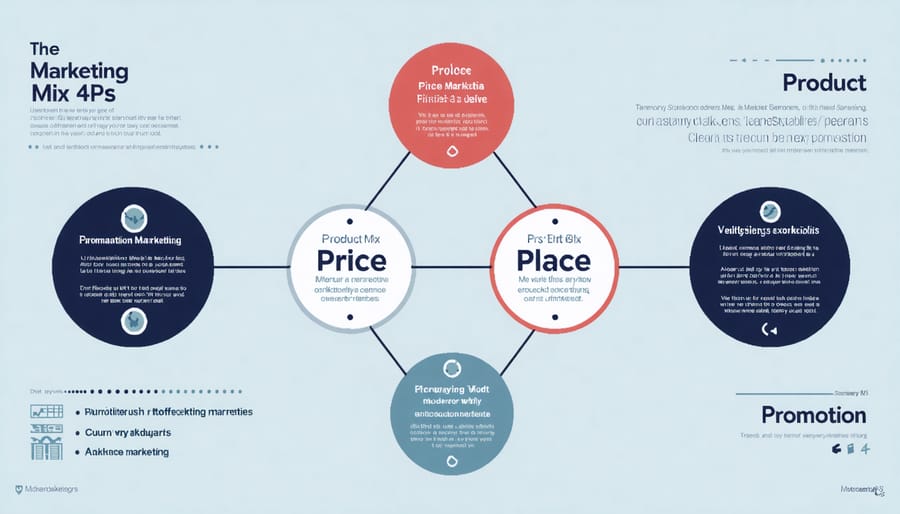
The Marketing Mix Analysis, commonly known as the 4Ps framework, is a fundamental concept frequently tested in MBA entrance exams. Understanding Product, Price, Place, and Promotion helps candidates analyze business cases effectively and provide strategic solutions.
Product analysis questions often focus on brand positioning, product lifecycle stages, and development strategies. Exam scenarios might ask you to evaluate product features, suggest improvements, or determine the best market entry strategy for new products.
Price-related questions typically examine pricing strategies, cost structures, and value propositions. You may encounter cases requiring you to recommend optimal pricing methods, analyze price elasticity, or assess competitive pricing scenarios.
Place (distribution) questions test your understanding of channel management and market access strategies. Common exam scenarios include evaluating distribution networks, suggesting improvements to supply chains, or analyzing market coverage strategies.
Promotion questions assess your knowledge of marketing communications and promotional tools. You might need to analyze advertising effectiveness, recommend promotional mix elements, or develop integrated marketing communication strategies.
When tackling Marketing Mix questions in exams, remember to:
– Consider all 4Ps holistically
– Support recommendations with clear rationale
– Account for market conditions and competition
– Link solutions to overall business objectives
– Demonstrate practical application through specific examples
Success in these questions requires both theoretical knowledge and practical application skills, making the Marketing Mix a crucial area for exam preparation.
Consumer Behavior Fundamentals
Understanding consumer behavior is fundamental to strategic marketing success. Marketing professionals must grasp how consumers make purchasing decisions through various theoretical frameworks and practical models. The AIDA model (Attention, Interest, Desire, Action) remains a cornerstone approach, helping marketers guide consumers through the purchasing journey. Students should focus on memorization techniques for concepts like the Maslow’s Hierarchy of Needs and its application in marketing strategy.
The consumer decision-making process typically follows five stages: problem recognition, information search, evaluation of alternatives, purchase decision, and post-purchase behavior. Understanding these stages helps marketers develop targeted interventions at each point. Factors influencing consumer behavior include psychological (motivation, perception, learning), social (family, reference groups), cultural (values, beliefs), and personal (lifestyle, economic situation) elements.
The Black Box Model illustrates how external stimuli transform into consumer responses, while the Theory of Planned Behavior explains how attitudes and social norms influence purchasing decisions. Real-world applications show these theories in action – consider how Apple creates desire through psychological triggers and social proof, or how Netflix uses behavioral data to personalize content recommendations. These frameworks provide essential tools for developing effective marketing strategies that resonate with target audiences.
Common Strategic Marketing Question Types
Case Study Questions
When tackling marketing case studies in MBA exams, time management and a structured approach are crucial. Begin by spending 3-5 minutes reading the case thoroughly, highlighting key information about the company, market situation, and specific challenges. Create a quick mental framework using popular marketing models like SWOT analysis, Porter’s Five Forces, or the 4Ps of Marketing.
Next, dedicate 5-7 minutes to analyzing the data provided. Look for patterns in sales figures, market share data, or customer feedback. Pay special attention to both qualitative and quantitative information that supports your potential recommendations.
Allocate 10-12 minutes to developing your solution. Start with identifying the core problem – is it about market penetration, brand positioning, or perhaps product development? Your recommendations should be SMART (Specific, Measurable, Achievable, Relevant, and Time-bound). Support each suggestion with data from the case and explain the expected outcomes.
Reserve 5 minutes for implementation planning. Break down your recommendations into actionable steps, consider potential challenges, and outline risk mitigation strategies. If possible, include a basic timeline and resource allocation suggestions.
Finally, use the remaining 3-5 minutes to review your answer and ensure it addresses all aspects of the question. A well-structured response typically includes:
– Brief situation analysis
– Clear problem statement
– Data-backed recommendations
– Implementation roadmap
– Expected outcomes and success metrics
Remember to balance creativity with practicality in your solutions, keeping them realistic and aligned with the case context.

Data Interpretation Questions
In strategic marketing, success heavily relies on your ability to interpret and analyze data effectively. When analyzing statistical data, MBA candidates should focus on three key areas: market trends, consumer behavior metrics, and competitive analysis data.
Start by identifying patterns in market share data by comparing year-over-year growth rates and seasonal variations. Look for correlations between marketing activities and sales performance, paying special attention to ROI metrics. When examining consumer behavior data, focus on conversion rates, customer lifetime value (CLV), and engagement metrics across different channels.
Key techniques for data interpretation include:
– Trend Analysis: Track patterns over time to predict future market movements
– Comparative Analysis: Benchmark against industry standards and competitors
– Segmentation Analysis: Break down data by customer groups or product categories
– Attribution Modeling: Understand which marketing channels drive the most value
When faced with marketing metrics, always consider:
1. The context of the data (market conditions, time period, external factors)
2. Statistical significance of the findings
3. Potential biases in data collection
4. Practical implications for marketing strategy
Practice interpreting various data visualizations, including heat maps, funnel charts, and cohort analyses. Remember that effective data interpretation isn’t just about understanding numbers – it’s about translating insights into actionable marketing strategies that drive business growth.

Time Management Strategies
Success in MBA entrance exams heavily relies on effective exam time management, particularly in the marketing sections where questions often require careful analysis and strategic thinking. To maximize your performance, allocate your time using the ‘SMART’ approach: Scan, Mark, Attempt, Review, and Transfer.
Begin by spending 2-3 minutes scanning the entire marketing section to understand the question types and difficulty levels. Mark questions into three categories: easy (immediate answers), moderate (requiring some thinking), and challenging (complex analysis needed). This initial assessment helps create a strategic answering sequence.
For a typical 30-minute marketing section, consider this time distribution:
– Easy questions: 8-10 minutes (approximately 30% of your time)
– Moderate questions: 12-15 minutes (around 45% of your time)
– Challenging questions: 5-7 minutes (remaining 25%)
Keep these practical tips in mind:
– Tackle easy questions first to build confidence and secure initial points
– Set strict time limits for each question category
– Leave complex case studies for last, unless you’re particularly strong in them
– Reserve 2-3 minutes for final review and answer sheet completion
During practice sessions, use a timer to develop a internal clock for these intervals. Track your timing patterns across multiple mock tests to identify areas where you typically spend too much time. Remember that different MBA entrance exams may have varying formats, so adjust these percentages according to the specific exam pattern you’re preparing for.
Regular practice with timed mock tests will help you internalize these time management strategies, making them second nature during the actual exam.

Practice Resources and Mock Tests
To effectively prepare for MBA strategic marketing exams and coursework, students should leverage a combination of high-quality resources and practice materials. Leading business schools like Harvard Business School, INSEAD, and Wharton offer free case studies that provide excellent practice opportunities for strategic marketing analysis.
Online learning platforms such as Coursera and edX host strategic marketing courses from top universities, often including practice quizzes and assignments. These platforms frequently offer free audit options, making them accessible to all students. The Marketing Management course on Coursera, developed by the University of Illinois, is particularly noteworthy for its comprehensive practice materials.
For mock tests, the Graduate Management Admission Council (GMAC) provides official practice questions specifically focused on marketing concepts. Students should also consider utilizing platforms like Bloomberg’s Business Case Center and Harvard Business Publishing Education, which offer simulation exercises and interactive case studies.
Essential study materials include:
– Marketing Strategy: A Decision-Focused Approach by Walker & Mullins
– Strategic Market Management by Aaker
– Marketing Management by Kotler & Keller
– The Strategic Marketing Simulation Game by StratX
Practice websites and tools that deserve attention:
– MarketingProfs (offers free resources for students)
– American Marketing Association’s resource library
– Think with Google’s marketing insights and case studies
– HubSpot Academy’s free marketing certification courses
To structure your practice effectively, allocate time between:
– Case study analysis (40% of practice time)
– Multiple-choice question practice (30%)
– Marketing simulations (20%)
– Current market trend analysis (10%)
Many business schools provide access to marketing analytics tools like Nielsen datasets and Statista, which help in developing practical skills. Students should also participate in marketing strategy competitions and workshops offered by professional organizations to gain hands-on experience.
Remember to maintain a practice log tracking your performance across different topic areas. This helps identify knowledge gaps and adjust your preparation strategy accordingly. Regular peer discussions and study groups can provide additional perspectives and enhance learning outcomes.
Success in MBA strategic marketing requires a well-rounded approach combining theoretical knowledge with practical application. Throughout your preparation journey, focus on mastering core marketing concepts while developing analytical skills to tackle complex business scenarios. Remember to regularly review case studies, stay updated with current marketing trends, and practice solving diverse problem types.
Key takeaways for your preparation include maintaining a balanced study schedule, actively participating in group discussions, and creating your own marketing scenarios to enhance understanding. Utilize practice tests to familiarize yourself with exam patterns and timing strategies. Don’t forget to build a strong foundation in market research, consumer behavior, and strategic planning.
Final preparation tips: In the weeks leading up to your exam, focus on revising key frameworks like Porter’s Five Forces, SWOT analysis, and the marketing mix. Create summary sheets for quick reference and practice explaining complex marketing concepts in simple terms. Engage in mock exams under timed conditions to improve your speed and accuracy.
Remember that strategic marketing is not just about memorizing theories – it’s about developing a mindset that can analyze market situations and propose effective solutions. Stay confident in your preparation, and maintain a healthy study-life balance to perform at your best. With dedicated preparation and the right approach, you’ll be well-equipped to excel in your MBA strategic marketing journey.