



Quick healthcare certifications typically take between four weeks and twelve months to complete and provide direct entry into roles such as certified nursing assistant, phlebotomy technician, medical administrative assistant, or emergency medical technician. These accelerated programs condense essential training, clinical practice, and credentialing into focused timelines that allow students to begin working in healthcare settings within a matter of months rather than years. For educators advising students exploring career options and parents supporting these decisions, understanding which certifications are genuinely accelerated, what prerequisites apply, and how the application and completion process works is essential to making informed choices.
The appeal is straightforward: healthcare facilities consistently need entry-level professionals, and these certifications meet that demand without requiring multi-year degree commitments. Students can complete training through community colleges, vocational schools, hospital-based programs, or online education paths that blend virtual instruction with hands-on clinical requirements. Yet the speed of these programs does not mean they lack rigor. Each certification maintains specific eligibility requirements, mandates supervised clinical hours, and requires passing national or state examinations before candidates can work in the field. This guide walks through the process step by step, clarifying what qualifies as a quick certification, who is eligible, how to apply and complete training, what rights and obligations students hold, and where to find reliable guidance throughout the journey.
What Quick Healthcare Certifications Are
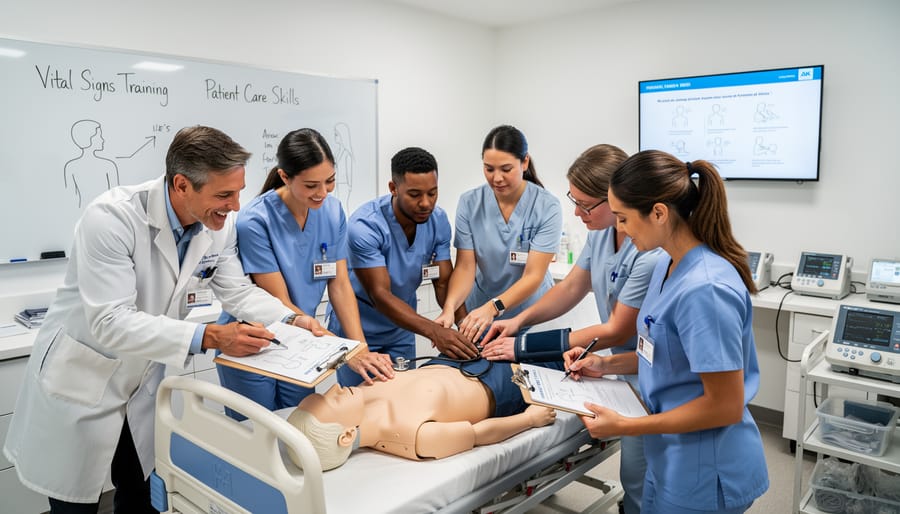
Quick healthcare certifications are short-term training programs designed to prepare students for specific entry-level positions in healthcare settings. Unlike associate or bachelor’s degree programs that span two to four years, these accelerated pathways typically require four to twelve weeks of focused instruction. They concentrate on the practical skills and knowledge needed for a particular role rather than providing broad academic education.
The most common quick certification programs include Certified Nursing Assistant (CNA), which trains students to provide basic patient care under nursing supervision. Phlebotomy technicians learn blood collection techniques and specimen handling. Medical assistants gain skills in both clinical procedures and administrative tasks for medical offices. Home health aides receive training in personal care and support services for patients in residential settings. EKG technicians specialize in cardiac monitoring and diagnostic testing procedures.
These programs differ fundamentally from degree pathways in their scope and credential type. A quick certification validates competency in a defined set of tasks rather than conferring an academic degree. Students complete only the training directly relevant to their target job role, which explains the compressed timeline. This focused approach makes certifications accessible to career changers, recent high school graduates, and working adults seeking healthcare entry points without extended time commitments.
Program delivery formats vary by institution and certification type. Many CNA and medical assistant programs require substantial in-person attendance for hands-on clinical practice in labs and healthcare facilities. Phlebotomy and EKG programs typically combine classroom theory with supervised clinical hours. Some programs now incorporate online learning formats for didactic content while maintaining in-person requirements for skill demonstrations and patient care practice.
Accreditation standards protect program quality and student outcomes. Reputable certification programs hold approval from state health departments, regional accrediting bodies, or national organizations specific to the credential type. Accredited programs meet minimum standards for curriculum content, instructor qualifications, clinical placement hours, and student assessment. Graduates of accredited programs can sit for certification exams and qualify for state registry or licensure where required. Students should verify accreditation status before enrolling, as employers and state licensing boards may not recognize credentials from unapproved programs.
Who Qualifies for Quick Healthcare Certification Programs
Eligibility requirements for quick healthcare certifications vary by program type and state, but most follow a core set of criteria that ensure students can safely handle clinical responsibilities. Understanding these requirements upfront helps prospective students determine which programs match their current qualifications and what preparation they might need.
Nearly all quick certification programs require applicants to have completed high school or earned a GED. This educational foundation ensures students can handle program coursework, follow written care protocols, and communicate effectively in healthcare settings. Some programs accept students still enrolled in high school if they can provide proof of imminent graduation.
Age requirements typically set the minimum at 18, though certain programs admit students at 16 or 17 with parental consent and additional documentation. State regulations influence these thresholds, particularly for certifications involving direct patient contact or controlled substances. Medical assistant and EKG technician programs usually maintain stricter 18-plus requirements due to the nature of clinical tasks.
Health clearances form another standard requirement across most programs. Students must provide proof of immunizations (hepatitis B, MMR, varicella, tetanus, and annual flu shots), pass tuberculosis screening, and sometimes complete a physical exam confirming their ability to perform the physical demands of healthcare work. These requirements protect both students and the patients they will encounter during clinical training.
Standard eligibility criteria include:
- High school diploma or GED, with transcripts or official documentation
- Age minimum of 18 years, or 16-17 with guardian consent where state law permits
- Current immunization records and negative TB test results
- Criminal background check clearance, with felony restrictions varying by state
- Drug screening, typically within 30 days of program start
- Basic reading and math skills assessment, with remediation options if needed
Background checks and drug testing have become near-universal requirements since healthcare workers access vulnerable populations and medications. Most states bar individuals with certain felony convictions from certification, though review boards sometimes grant exceptions for older offenses. Programs disclose these restrictions during the application process, and some states maintain online tools where prospective students can check their eligibility before investing time and money in training.
How to Complete a Quick Healthcare Certification
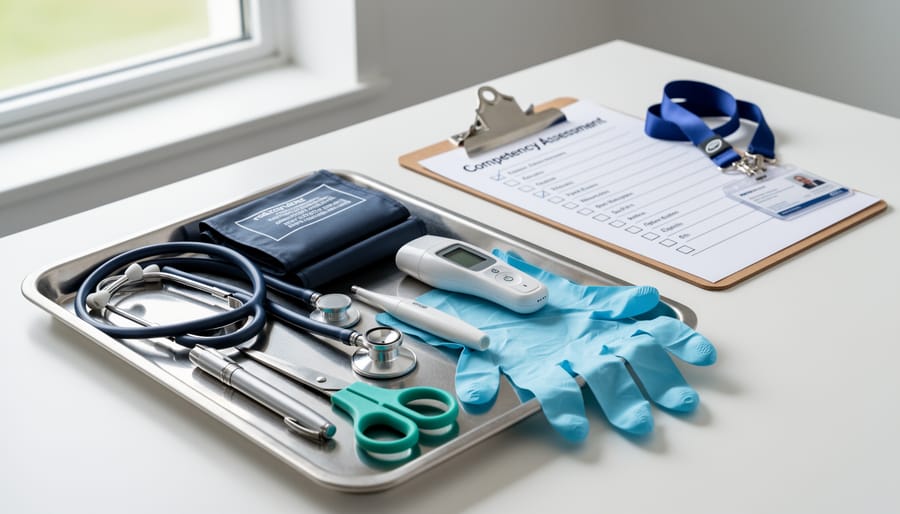
Completing a quick healthcare certification follows a clear sequence that takes most students between four and twelve weeks. Understanding each phase helps you plan your time and gather what you need before starting.
Start by identifying accredited programs in your area or available online. Check that the program holds approval from your state health department or relevant accrediting body, this matters for both employment eligibility and whether the certification transfers if you move. Compare program schedules, costs, and clinical placement locations. Community colleges, vocational schools, and healthcare facilities often offer these programs. Contact several to ask about their pass rates, clinical site partnerships, and job placement support.
Once you select a program, submit your application along with required documents. You’ll typically need proof of high school completion or GED, government-issued identification, and any prerequisite health records. Many programs require a physical exam, immunization records (particularly hepatitis B, MMR, and tuberculosis screening), and a background check. Budget two to four weeks for these clearances before your start date, as clinical sites won’t accept students without completed health documentation.
Attend all scheduled classroom sessions, which cover foundational knowledge like anatomy basics, infection control, patient safety, and role-specific skills. Programs structure this training in concentrated blocks, often three to five days per week for several hours. You’ll practice hands-on skills in a lab setting before moving to clinical rotations. Take classroom competencies seriously; most programs require passing scores on unit tests and skill demonstrations before you can progress to patient care settings.
Clinical hours put classroom learning into practice under supervision. Expect to complete 40 to 100 clinical hours depending on your certification type, usually in hospitals, nursing homes, or clinics. Arrive on time, follow dress codes, and treat these rotations as job interviews, many students receive employment offers from their clinical sites. Document your completed hours carefully; you’ll need this record for certification applications.
After finishing coursework and clinical requirements, you’ll take a certification exam. Most include both written and practical components. The written test covers theoretical knowledge, while the practical portion requires you to demonstrate specific skills (taking vital signs, proper handwashing, patient transfers) in front of an examiner. Programs typically provide exam preparation materials and practice sessions. Schedule your exam soon after program completion while material remains fresh.
Finally, apply for state licensure if your role requires it. Certified Nursing Assistants must appear on their state’s registry; other certifications may need state approval before you can work. Submit your passing exam scores, completed application, and any additional state-specific requirements. Processing usually takes two to three weeks. Once approved, you’re ready to begin your healthcare career.
Program Costs and Financial Aid Options

Program costs for quick healthcare certifications vary widely based on the credential type, program location, and whether you attend a community college, vocational school, or private training center. Understanding the full financial picture helps students plan realistically and identify available assistance.
Tuition for most quick certifications ranges from a few hundred dollars to several thousand, depending on program length and complexity. A basic home health aide program might cost $400-$800, while more involved certifications like medical assisting or phlebotomy typically run $1,200-$4,000. These figures cover classroom and clinical instruction but rarely include everything needed to complete the program.
Additional expenses add up quickly. Budget for textbooks and workbooks (often $150-$300), uniforms and clinical attire ($100-$200), background checks and drug screenings ($50-$150), required immunizations and health screenings ($100-$300 if not covered by insurance), and certification exam fees ($100-$200). Some programs also require liability insurance during clinical rotations. Total out-of-pocket costs beyond tuition can easily reach $500-$800.
| Certification Type | Typical Tuition Range | Common Financial Aid Sources |
|---|---|---|
| Home Health Aide | $400-$800 | State workforce grants, employer sponsorship |
| Certified Nursing Assistant | $800-$1,500 | Pell grants, Medicaid training programs, community college aid |
| Phlebotomy Technician | $1,200-$2,500 | Pell grants, workforce development funds, payment plans |
| Medical Assistant | $2,000-$4,000 | Pell grants, healthcare employer tuition assistance, scholarships |
Financial assistance exists through multiple channels. Students attending community colleges can often qualify for federal Pell grants if they meet income requirements and are pursuing eligible programs. State workforce development boards frequently fund healthcare training for qualifying residents, sometimes covering tuition entirely. Many healthcare employers offer tuition reimbursement or upfront sponsorship in exchange for employment commitments after certification.
Community colleges sometimes provide institutional grants or scholarships specifically for healthcare students. Professional associations and healthcare foundations also offer modest scholarships, though these tend to be competitive. Payment plans through training programs allow students to spread costs over the program duration rather than paying upfront.
Start by checking your state workforce agency website for healthcare training grants, then contact the financial aid office of your chosen program to explore all options. Combining multiple aid sources can significantly reduce your personal financial burden.
What Students Can Expect: Rights and Responsibilities
Students entering quick healthcare certification programs receive specific protections and assume clearly defined obligations that shape their educational experience and readiness for patient care.
You have the right to learn from instructors who meet state-approved qualifications for your certification track. Programs must assist with clinical placement arrangements, provide reasonable accommodations for documented disabilities, and disclose their program completion rates, certification exam pass rates, and graduate employment outcomes. If your program fails to provide required clinical hours or uses unqualified instructors, you can file complaints with your state’s workforce education board or the program’s accrediting body.
Your responsibilities start with attendance. Most programs require 90 to 95 percent attendance for both classroom and clinical sessions because healthcare skills demand repetition and supervised practice. You must maintain professional conduct standards, arriving punctually, wearing appropriate attire, and communicating respectfully with patients, instructors, and clinical site staff. Patient confidentiality is non-negotiable: any HIPAA violation during clinical training typically results in immediate dismissal from the program.
Clinical hour completion represents a measurable requirement. If your certification requires 80 clinical hours, you must document every shift with supervisor signatures. Programs increasingly include telehealth training components, adding virtual patient interaction skills to traditional hands-on competencies.
Satisfactory progress means passing skills checkoffs on schedule, scoring at least 75 percent on written exams (thresholds vary by program), and demonstrating clinical competency as evaluated by site supervisors. Falling behind on these benchmarks triggers academic probation. Continued non-compliance, whether academic, behavioral, or attendance-related, results in program dismissal without tuition refund. Understanding these boundaries from day one helps you plan accordingly and protect your investment.
Career Outcomes and Next Steps in Healthcare Pathways
Quick healthcare certifications open doors to immediate employment while establishing a foundation for career advancement. Most newly certified professionals find positions in settings that value hands-on patient care experience: hospitals, nursing homes, assisted living facilities, outpatient clinics, home health agencies, and rehabilitation centers. Entry-level roles typically involve direct patient interaction, taking vital signs, assisting with daily activities, collecting specimens, or supporting clinical procedures under supervision.
These initial positions serve a strategic purpose beyond immediate employment. Healthcare employers consistently value practical experience when evaluating candidates for advanced training programs. A certified nursing assistant who works in a hospital setting gains exposure to different units, medical terminology, and patient care protocols that strengthen applications for licensed practical nurse programs. Similarly, phlebotomists and medical assistants develop clinical skills and professional networks that smooth transitions to specialized technician roles or nursing education.
The career ladder approach allows professionals to earn while they learn. Many hospitals and healthcare systems offer tuition reimbursement or scholarship programs for employees pursuing additional credentials. Some employers structure shift schedules to accommodate class attendance, and online continuing education formats make advanced coursework accessible without leaving the workforce entirely. This progression model reduces financial barriers and builds credentials incrementally rather than requiring years of full-time study upfront.
Successful advancement requires intentional planning. Identify the next credential that aligns with your career goals, research program requirements early, and maintain strong performance records in your current role. Supervisors often provide references for advancement programs, and documented experience hours count toward licensure requirements in many states. Online nursing education programs have expanded options for working professionals seeking registered nurse credentials while maintaining employment.
Where to Get Help and Reliable Information
Finding trustworthy guidance matters when navigating certification requirements and choosing programs. Start with your state’s health department certification office, which maintains official requirements for healthcare credentials, issues licenses, and verifies program approval status. These offices provide the definitive information on what’s required to practice in your state.
Several authoritative resources offer specialized help throughout the certification process:
- Community college advising centers provide program comparisons, enrollment guidance, and financial aid assistance specific to healthcare training pathways
- State workforce development boards offer career counseling, training grants, and connections to employer-sponsored certification opportunities
- Program accreditation bodies verify institutional quality and confirm whether a program meets certification exam eligibility standards
- Professional associations for specific credentials (such as state CNA registries or phlebotomy organizations) maintain candidate requirements and exam information
- State nurse aide registries track certification status, verify credentials for employers, and process applications for certification transfers between states
Before enrolling in any program, verify its accreditation status directly with the relevant accrediting body rather than relying solely on the school’s website. Confirm that completing the program makes you eligible for the certification exam in the state where you plan to work. Requirements vary by state, and some credentials earned in one state require additional steps for reciprocity elsewhere. Taking these verification steps protects your investment and ensures your training leads to valid certification.
How to Apply or Complete the Process
The application process for quick healthcare certifications follows a consistent pattern across most programs, though specific requirements vary by state and certification type.
Start by contacting your chosen accredited program directly, community colleges, vocational schools, or healthcare training centers. Request their current application packet and enrollment deadlines. Most programs admit students on a rolling basis or at set intervals throughout the year.
Submit your application with required documentation: high school diploma or GED, government-issued ID, and completed health forms. Many programs require proof of immunizations (hepatitis B, MMR, varicella, flu, Tdap) before clinical training begins. Schedule these with your healthcare provider early, as the series can take several weeks.
Complete any mandated background check and drug screening through the program’s designated vendor. Processing typically takes one to three weeks, so submit these promptly after acceptance.
Attend any required orientation sessions where you’ll receive your clinical placement assignment, uniform requirements, and schedule. Pay all fees, tuition, exam registration, supplies, by posted deadlines to secure your spot.
Throughout training, maintain the attendance threshold set by your program (commonly 90 percent or higher) and complete all clinical hours as scheduled. Most programs report absences directly to state certification boards.
After completing coursework and clinical requirements, register for your certification exam through the appropriate testing organization (Prometric, Pearson VUE, or state-specific bodies). Your program coordinator will provide registration instructions and exam dates.
Frequently Asked Questions
Can I work while completing a quick healthcare certification?
Many programs offer evening or weekend schedules specifically designed for working students, though clinical hours typically require daytime availability. Check with individual programs about scheduling flexibility and expect to commit 15-30 hours per week depending on the program format.
Do quick certifications expire or require renewal?
Most healthcare certifications require renewal every one to two years through continuing education hours or competency evaluations. State nurse aide registries, for example, typically mandate employers report that you’ve worked at least eight hours for pay during the renewal period.
What happens if I fail the certification exam?
You can retake most certification exams, though policies vary by certifying body, some allow immediate retesting while others require waiting periods or additional training. Check your program’s exam policies and pass-rate disclosure before enrolling.
Will my certification transfer if I move to another state?
Some certifications have reciprocity agreements between states, but requirements vary significantly. Contact the health department or certification board in your destination state before relocating to understand any additional testing, documentation, or training you might need.
These questions address the practical concerns students face when planning their certification path. If you have questions not covered here, contact the program directly or reach out to your state’s health department certification office for guidance specific to your situation and location.
Quick healthcare certifications provide a practical pathway into healthcare careers for students willing to meet program requirements and complete the training process. Success starts with two essential steps: verifying that programs hold proper accreditation from recognized bodies, and confirming the specific certification requirements in your state. State health departments, community college advisors, and workforce development offices offer reliable guidance throughout the process. Whether you’re an educator helping students explore options, a student evaluating your next career move, or a parent supporting someone’s healthcare ambitions, understanding eligibility criteria and completion steps helps you make informed decisions. These certifications aren’t shortcuts, they’re structured entry points that demand commitment but offer tangible results for those who follow through.