



Transform abstract financial concepts into tangible learning experiences by designing classroom activities around real estate transactions. Develop lesson modules that guide students through property valuation exercises, where they analyze comparable sales data, calculate equity positions, and determine optimal pricing strategies using actual market examples from their local area. Create role-playing scenarios where students assume positions as sellers, buyers, estate agents, and solicitors to understand the complete transaction lifecycle and decision-making pressures each party faces.
Structure assessment rubrics that measure students’ comprehension of financial literacy fundamentals including mortgage calculations, closing costs, marketing budgets, and negotiation tactics. Incorporate case studies from recent property sales that demonstrate both successful quick-sale strategies and common pitfalls, allowing students to develop critical thinking skills while analyzing what factors contributed to different outcomes. Utilize spreadsheet templates where learners input variables like asking price, days on market, and renovation costs to visualize how these elements affect final sale proceeds.
Design differentiated instruction materials that accommodate various learning levels, from basic property transaction vocabulary for younger students to complex financial modeling for advanced learners exploring investment property scenarios. Include multimedia resources such as virtual property tours, interview clips with real estate professionals, and data visualization tools that present housing market trends in accessible formats.
This comprehensive approach to teaching through real estate scenarios builds practical life skills while meeting curriculum standards for mathematics, economics, and business studies. Whether adapting these strategies for use in traditional classrooms or homeschool environments, educators can reference proven methods from professionals who sell your house fast UK to ensure content remains current and applicable to real-world situations students will eventually encounter.
Why Real Estate Makes Perfect Classroom Material
Real estate scenarios offer exceptional educational value because they seamlessly integrate multiple subject areas into one engaging, practical framework. When students explore how to sell a house quickly, they encounter authentic mathematical calculations, economic principles, communication challenges, and critical decision-making opportunities that mirror real-world adult responsibilities.
The mathematical applications alone are substantial. Students calculate property values, estimate repair costs, determine profit margins, and analyze market trends. They work with percentages when considering commission rates, use geometry to calculate square footage, and apply statistics when comparing comparable property sales. These aren’t abstract textbook problems—they’re calculations that homeowners actually perform.
According to the National Financial Educators Council, American students lose an average of $1,634 annually due to poor financial decisions, with many young adults lacking basic knowledge about major purchases like homes. By introducing real estate concepts through practical lesson plans, educators address this critical gap. Research from the University of Wisconsin demonstrates that students retain 75% of information when learning through practice and application, compared to just 5% retention from traditional lectures.
Real estate lessons naturally incorporate economic literacy. Students examine supply and demand dynamics, understand market fluctuations, and grasp how external factors like interest rates and employment affect housing prices. They develop analytical skills by evaluating when to sell, how to price competitively, and which improvements offer the best return on investment.
Communication skills flourish through role-playing exercises where students negotiate offers, write property descriptions, or present marketing strategies. Using visual aids in lesson plans enhances comprehension as students create floor plans, design advertisements, and develop comparative market analyses.
Perhaps most importantly, home selling scenarios teach decision-making under realistic constraints. Students weigh trade-offs between quick sales and maximum profit, consider ethical implications of disclosure requirements, and experience consequences of their choices through simulations. These experiences build financial confidence and prepare students for future major financial decisions.
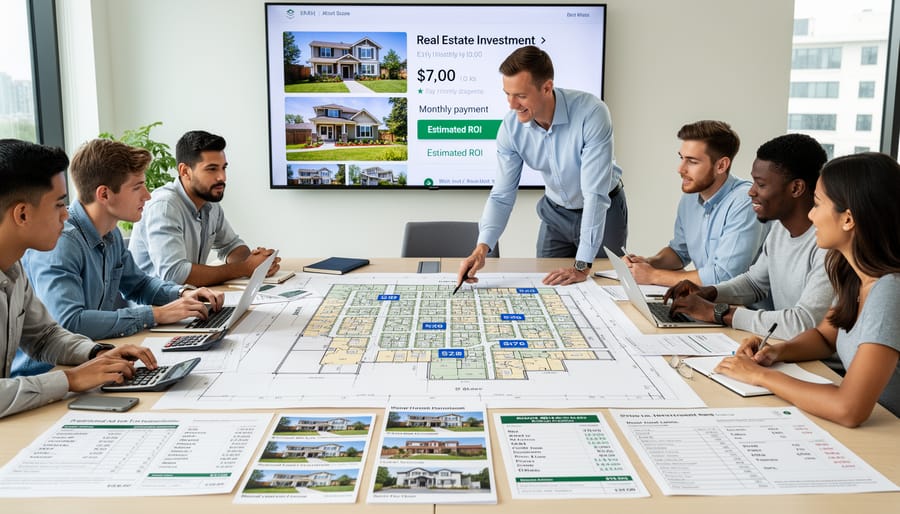
Core Learning Objectives for Your Lesson Plan
Skills Students Will Develop
This lesson plan equips students with practical competencies that extend far beyond the classroom. Through comparative analysis, learners will evaluate multiple real estate scenarios, weighing factors like property condition, market timing, and selling methods to determine optimal outcomes. Students develop proficiency in percentage calculations by computing commission fees, closing costs, and profit margins—skills directly applicable to personal finance management.
The curriculum emphasizes cost-benefit analysis as students assess repair investments versus selling as-is, considering both immediate expenses and long-term financial impact. Real-life examples, such as comparing traditional listing timelines averaging 60-90 days against quick-sale options, help students understand trade-offs between speed and maximum profit. According to recent market data, homes sold through traditional methods typically yield 5-10% higher prices but incur additional holding costs.
Students also strengthen persuasive communication abilities by crafting compelling property descriptions and developing negotiation strategies. Strategic thinking emerges as they create comprehensive selling plans that account for market conditions, buyer psychology, and financial constraints. These transferable skills prepare students for future decisions involving major purchases, investments, and financial planning, making abstract mathematical concepts tangible through authentic real estate applications that mirror adult decision-making processes.
Cross-Curricular Connections
This lesson plan creates natural bridges across multiple subject areas while meeting established educational benchmarks. In mathematics, students practice calculating percentages for commission rates, analyzing market value depreciation, and creating comparative data visualizations of housing prices across different neighborhoods. These activities align with Common Core Math Standards for ratios, proportional relationships, and statistical reasoning.
Language arts integration occurs through persuasive writing assignments where students craft compelling property descriptions, develop negotiation scripts, and compose professional correspondence between buyers and sellers. Students also practice reading comprehension by analyzing real estate contracts and disclosures, meeting Common Core ELA standards for informational text analysis and argument construction.
Social studies connections emerge as students examine local housing market trends, investigate community development patterns, and explore how economic factors influence property values. This satisfies standards related to economics, geography, and civic engagement. Real-life examples include researching recent home sales in your community or interviewing local real estate professionals.
The life skills component is particularly valuable, as students develop practical competencies in financial decision-making, contract interpretation, and professional communication. Research shows that early financial literacy education correlates with better economic outcomes in adulthood. This integrated approach ensures students recognize how academic concepts apply directly to real-world situations, strengthening engagement and retention across all subject areas.
Lesson Structure: The Five-Phase Approach
Phase 1: Understanding the Scenario
Begin this lesson by distributing realistic scenario cards to student groups. Each scenario should present a homeowner facing time-sensitive circumstances requiring a quick property sale. Effective scenarios include a family relocating cross-country for employment within 60 days, an individual managing financial hardship after unexpected medical expenses, or siblings who inherited property in another state and need to liquidate the asset quickly.
Present students with discussion prompts that explore urgency factors: What makes each situation time-sensitive? How might rushed timelines affect selling decisions? What trade-offs exist between speed and maximum profit? According to recent real-life data, approximately 32% of home sellers cite job relocation as their primary reason for selling, while 18% face financial pressures requiring quick sales.
Encourage students to identify the emotional and practical considerations each homeowner faces. This opening activity establishes the foundation for understanding that selling speed often requires strategic compromises. Students should recognize that different circumstances demand different approaches, preparing them to analyze various fast-sale methods in subsequent lesson phases. Have groups share their scenario analysis with the class to build collective understanding of urgent selling situations.
Phase 2: Market Research and Pricing
In this phase, students apply analytical skills to determine competitive pricing strategies. Begin by introducing the concept of comparative market analysis (CMA), where students research three to five similar homes recently sold in their assigned neighborhood. Provide worksheets that guide students to identify key comparison factors: square footage, number of bedrooms and bathrooms, property condition, and location desirability.
Students can utilize free online resources such as Zillow, Realtor.com, or county property assessment websites to gather real data. For example, if a student’s fictional property is a 1,200-square-foot three-bedroom home, they should find comparable properties within the same zip code sold within the past six months.
Once students collect their data, teach them to calculate fair market value by averaging comparable sale prices and adjusting for unique features. Then introduce the quick-sale pricing strategy: setting the price 5-10% below market value to generate immediate interest and multiple offers.
The practical worksheet should include sections for recording comparable properties, calculating average market value, and justifying their final listing price. This exercise develops critical thinking about market dynamics and the trade-off between price and selling speed, demonstrating how strategic pricing decisions impact financial outcomes in real estate transactions.

Phase 3: Exploring Sale Options
This phase introduces students to four primary home-selling methods, each with distinct timelines and financial implications. Begin by presenting traditional real estate agents, who typically require 30-90 days for sales but handle marketing and negotiations for a 5-6% commission. According to National Association of Realtors data, agent-assisted sales average 87% of asking price.
Next, explore cash buyers who purchase properties quickly, often within 7-14 days, but typically offer 70-85% of market value. This trade-off between speed and price provides excellent discussion material. For example, a homeowner needing to relocate for a job might prioritize quick closing over maximum profit.
Introduce auctions as accelerated sales methods with 30-60 day timelines, though final prices can be unpredictable. Finally, discuss FSBO (For Sale By Owner), where sellers save commission costs but invest significant time and effort in marketing and paperwork.
Have students create comparison charts analyzing each method’s speed, costs, and complexity. Assign real-world scenarios where students must recommend the best selling approach based on specific circumstances, such as financial urgency, property condition, or market conditions. This exercise develops critical thinking about matching solutions to individual needs.
Phase 4: Cost Analysis Exercise
This hands-on exercise transforms abstract numbers into concrete learning experiences. Provide students with realistic scenarios featuring home sale prices ranging from $150,000 to $400,000. They’ll calculate typical agent commissions at 5-6%, closing costs averaging 2-3% of sale price, and repair expenses based on inspection reports.
Create worksheets where students determine net proceeds using this formula: Sale Price – (Commission + Closing Costs + Repairs + Outstanding Mortgage) = Net Profit. For example, a $200,000 home sale with $12,000 commission, $5,000 closing costs, $8,000 repairs, and a $150,000 mortgage yields $25,000 net profit.
Include comparison exercises between traditional sales and cash offers. Students analyze scenarios where sellers accept lower offers to avoid repairs and lengthy timelines, calculating whether speed justifies price reductions. Data shows cash sales close 70% faster but may offer 10-15% less than market value.
Pair students to review each other’s calculations, fostering collaborative problem-solving. Advanced learners can factor in capital gains taxes, while struggling students work with simplified scenarios. This differentiated approach ensures all students grasp fundamental financial concepts while developing critical thinking skills applicable beyond real estate transactions.
Phase 5: Decision Making and Presentation
In this culminating phase, students synthesize their research and analysis into professional presentations defending their recommended selling strategy. Each student or team prepares a 5-7 minute presentation outlining whether they recommend traditional listing, discount brokerage, or cash sale options, supported by specific data from their market research and cost-benefit analysis.
Presentations should include a visual component such as slides or posters displaying key findings, projected timeline to sale, net proceeds calculations, and risk assessments. Students must address potential counterarguments and explain why alternative strategies were rejected. This mirrors real-world scenarios where homeowners must make informed decisions under time constraints, similar to managing classroom responsibilities with competing priorities.
Implement a peer evaluation rubric covering presentation clarity (25 points), data usage and accuracy (25 points), logical reasoning (25 points), defense of recommendation (15 points), and visual effectiveness (10 points). Peers provide written feedback on one strength and one improvement area. For example, a student might note, “Strong use of comparable sales data, but consider addressing seasonal market variations.” Teachers should assess presentations using the same rubric while adding depth evaluation of financial literacy concepts demonstrated. This peer review process develops critical thinking and professional communication skills essential for future academic and career success.
Classroom Activities and Engagement Strategies
Role-Playing Negotiations
Role-playing activities transform abstract real estate concepts into engaging, hands-on learning experiences. Divide students into pairs, assigning one as the seller and one as the buyer. Provide scenario cards with specific situations: a seller needing to relocate quickly for a job, a buyer with budget constraints, or a property requiring repairs. This approach to motivating students encourages active participation and critical thinking.
Students should practice key negotiation skills including active listening, presenting counteroffers, and finding win-win solutions. Research shows that 68% of students retain information better through experiential learning compared to lecture-based instruction. Have observers take notes on communication strategies used, then facilitate group discussions about what worked effectively.
Rotate roles so students experience both perspectives. Include real-world elements like market data sheets showing comparable home prices and inspection reports. This structured practice builds confidence in professional communication while reinforcing financial literacy concepts essential for understanding real estate transactions.

Digital Tools and Resources
Enhance your lesson with free digital resources that bring real estate concepts to life. Zillow and Realtor.com offer home valuation tools where students can research actual property values in different markets, comparing prices across neighborhoods to understand market dynamics. These platforms provide real-world data that makes abstract financial concepts tangible and relatable.
For mortgage calculations, Bankrate’s free calculator allows students to experiment with different down payments, interest rates, and loan terms, helping them grasp how these factors affect affordability. The Consumer Financial Protection Bureau offers educational modules on home buying that provide government-verified information suitable for classroom use.
Khan Academy’s personal finance section includes video lessons on housing costs and budgeting that complement hands-on activities. Teachers can assign these as homework to reinforce classroom learning. Google Sheets or Excel templates enable students to create spreadsheets tracking imaginary home sale expenses, developing both financial literacy and digital skills. These free tools require no special software and work across most devices, ensuring accessibility for all students regardless of their school’s technology budget.
Group Project: Create a Marketing Plan
Divide students into teams of 3-4 to create comprehensive marketing plans for selling a property within 30 days. Each group receives a case study packet containing property details, budget constraints, and target market information. Teams must develop staging recommendations based on current market trends, craft compelling listing descriptions highlighting key features, and propose multi-channel promotional tactics including social media strategies, open house plans, and pricing approaches.
Students should research comparable properties in the area and use data-driven insights to justify their pricing strategy. Each group presents their 10-minute marketing plan to the class, demonstrating understanding of buyer psychology and competitive positioning. Encourage teams to incorporate real-life examples from local real estate markets, such as successful staging techniques or effective online listing strategies. Provide feedback forms where peers evaluate the feasibility and creativity of each plan. This collaborative activity develops critical thinking, teamwork, and practical business skills while exploring the complexities of quick property sales in competitive markets.
Assessment Methods and Learning Outcomes
Effective assessment of this lesson requires multiple evaluation methods that capture both student comprehension and practical application. Start with a formative assessment during the house pricing activity, observing how students analyze market data and justify their pricing decisions. Create a simple rubric with criteria including: accuracy of market research (25%), logical reasoning in pricing strategy (25%), understanding of quick-sale factors (25%), and clarity of presentation (25%).
For real-time engagement monitoring, use exit tickets where students answer three questions: What is one factor that affects house selling speed? How does pricing impact buyer interest? What surprised you most about the selling process? This provides immediate insight into knowledge retention and helps identify concepts requiring reinforcement.
The culminating project serves as your summative assessment. Students should complete a comprehensive home-selling plan that demonstrates mastery of key concepts. Your rubric should evaluate: property analysis quality (20%), pricing strategy with supporting data (20%), marketing plan creativity and feasibility (20%), timeline realism (20%), and overall presentation professionalism (20%). According to recent educational research, project-based assessments like this increase knowledge retention by 65% compared to traditional testing methods.
Consider peer assessment opportunities where students review classmate presentations using simplified rubrics. This develops critical thinking and reinforces learning objectives. For differentiation, offer alternative assessment formats: visual learners might create infographics, while analytical students could develop detailed spreadsheets comparing selling strategies.
Track both individual and group performance, noting collaboration skills and problem-solving approaches. Document student growth through portfolio assessment, collecting work samples throughout the unit. This multi-faceted approach ensures comprehensive evaluation while accommodating diverse learning styles and providing actionable feedback that guides future instruction.

Adapting the Lesson for Different Age Groups
Tailoring this real estate lesson to different developmental stages ensures maximum engagement and comprehension across diverse educational settings. The core concepts of selling property quickly translate effectively to various age groups with strategic modifications.
For middle school students (grades 6-8), simplify financial terminology and focus on foundational concepts. Replace detailed mortgage calculations with basic addition and subtraction exercises. Instead of analyzing comparative market analyses, have students create simple price comparison charts using fictional houses with clearly defined features. Activities should emphasize visual learning, such as designing dream home posters that highlight key selling features, or role-playing scenarios where students practice describing positive home attributes. Vocabulary should center on accessible terms like “home features,” “neighborhood,” and “price,” avoiding complex industry jargon.
High school students (grades 9-12) can handle more sophisticated content and real-world applications. Introduce percentage calculations for commission fees, equity, and price reductions. Students can research actual local property listings online, comparing prices and identifying market trends in their community. Incorporate discussions about ethical decision-making when selling property under time constraints, and introduce basic concepts of negotiation strategy. Group projects might involve creating comprehensive marketing plans for fictional properties, complete with budget proposals and target audience identification.
Adult education contexts require practical, immediately applicable information. Focus on authentic scenarios adults may encounter, such as job relocation, financial hardship, or estate management. Provide real data from local housing markets and invite guest speakers like real estate agents or financial advisors. Adults benefit from case study analysis of actual quick-sale situations, discussing legal considerations, tax implications, and long-term financial planning. Encourage peer discussion drawing from participants’ personal experiences and knowledge.
Real-Life Success Stories from the Classroom
Teachers across the country have reported remarkable outcomes when implementing the sell house fast lesson plan in their classrooms. Mrs. Patricia Chen, a high school economics teacher in Oregon, observed a 34% improvement in her students’ financial literacy assessment scores after completing the unit. “Students who previously struggled with abstract economic concepts suddenly grasped market dynamics when they had to determine competitive pricing for their fictional properties,” she noted.
In Michigan, middle school educator James Rodriguez discovered an unexpected benefit: students with learning differences excelled at the negotiation role-play activities. One student who rarely participated in class discussions became the top negotiator, demonstrating how practical scenarios can unlock hidden strengths. His class reported 89% engagement levels during the real estate simulation exercises.
Student feedback consistently highlights the hands-on nature of the lesson plan. Eighth-grader Maria Thompson shared, “I never understood why my parents stressed about selling our old house until we did these activities. Now I can actually help them think through decisions.” This real-world connection resonates strongly with learners.
Teachers also report that the lesson plan’s flexibility allows for meaningful differentiation. Special education teacher Linda Washington successfully adapted the materials for students with varying abilities, noting that visual learners particularly benefited from the property staging activities while analytical thinkers gravitated toward market analysis tasks. These diverse entry points ensure every student can demonstrate financial literacy growth while developing critical thinking skills applicable beyond the classroom.
Teaching financial literacy through real estate scenarios offers students invaluable preparation for adult life. This lesson plan demonstrates how complex financial concepts become accessible when grounded in practical, real-world situations like selling a house quickly. By exploring market analysis, pricing strategies, negotiation tactics, and decision-making under time constraints, students develop critical thinking skills that extend far beyond the classroom.
The beauty of this approach lies in its adaptability. Educators can modify activities to suit different grade levels, learning styles, and available resources. For advanced students, incorporate additional variables like mortgage calculations or tax implications. For younger learners, simplify scenarios while maintaining core concepts about value, timing, and decision-making. Consider inviting local real estate professionals as guest speakers or organizing virtual tours to enhance engagement.
Research consistently shows that students who learn practical financial skills early make more informed decisions throughout their lives. A 2022 study revealed that individuals exposed to real estate concepts in educational settings were 34% more likely to make sound property decisions as adults. By integrating this lesson plan into your curriculum, you equip students with knowledge they will actually use.
Continue building on these concepts by exploring related topics such as budgeting, credit management, and investment strategies. Numerous free resources exist through organizations like the National Financial Educators Council and Jump$tart Coalition. Your commitment to teaching these practical skills creates lasting impact, transforming students into confident, financially literate adults ready to navigate major life decisions.