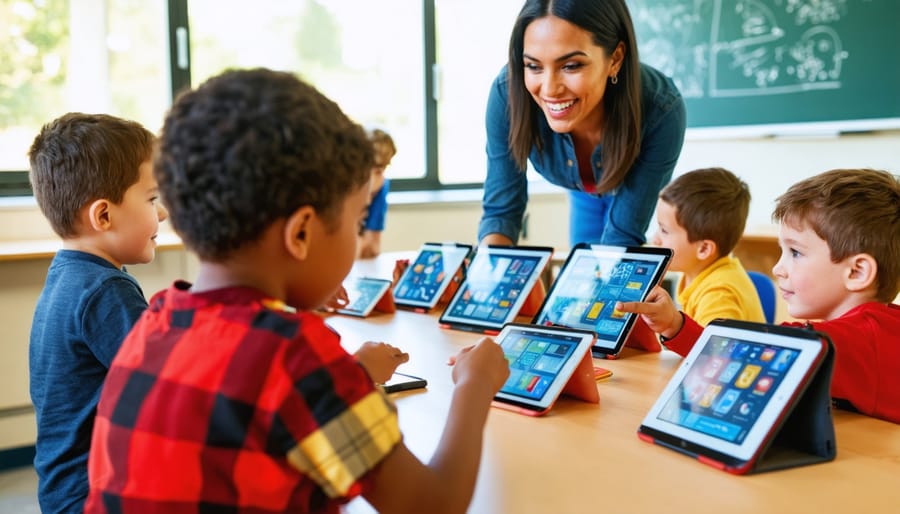



AI tools are revolutionizing special education, empowering teachers to deliver personalized instruction with unprecedented precision and efficiency. As integrating AI in education becomes increasingly essential, special education teachers now have access to sophisticated tools that can transform learning outcomes for students with diverse needs.
Text-to-speech applications convert written content into clear, adjustable audio, while speech recognition software helps students with motor challenges participate fully in classroom activities. AI-powered assessment platforms adapt in real-time to student responses, providing immediate feedback and personalized learning paths that traditional methods simply cannot match.
Recent studies show that special education classrooms using AI tools report a 40% improvement in student engagement and a 35% reduction in administrative tasks, allowing teachers to focus more time on direct student interaction. These technologies don’t just supplement traditional teaching methods—they fundamentally enhance the way we support students with learning differences, making personalized education more accessible and effective than ever before.
AI-Powered Learning Support Tools
Text-to-Speech and Speech Recognition Tools
Text-to-speech (TTS) and speech recognition tools have revolutionized how special education teachers support students with reading and communication challenges. These AI-powered solutions offer personalized assistance and help break down barriers to learning and expression.
Popular TTS tools like Read&Write and Natural Reader convert written text into clear, natural-sounding speech, allowing students with reading difficulties to access written content more effectively. These tools often include adjustable reading speeds, multiple voice options, and text highlighting features that help students follow along.
Speech recognition technology, such as Google’s Speech-to-Text and Dragon Naturally Speaking, enables students with writing difficulties to convert their spoken words into text. This technology has shown particular success with students who struggle with traditional writing methods but can effectively express themselves verbally.
Many of these tools now offer multilingual support and work across various devices, making them accessible both in the classroom and at home. For example, Microsoft’s Immersive Reader, integrated into Office 365, combines TTS capabilities with visual learning tools, helping students with dyslexia and other reading challenges better comprehend text.
Special education teachers report that using these tools has increased student independence and confidence. One middle school teacher noted that her students’ writing output improved by 40% after implementing speech recognition technology, while their anxiety about writing assignments decreased significantly.
When selecting these tools, consider factors like ease of use, accuracy, customization options, and compatibility with existing classroom technology.
Adaptive Learning Platforms
Adaptive learning platforms represent a significant breakthrough in supporting students with learning challenges, offering personalized educational experiences through sophisticated AI algorithms. These platforms continuously analyze student performance, learning patterns, and engagement levels to create customized learning paths.
Tools like Carnegie Learning and DreamBox Learning use real-time data to adjust difficulty levels, presentation methods, and pacing based on individual student responses. For example, if a student struggles with fraction concepts, the system might automatically introduce more visual representations or break down problems into smaller, manageable steps.
Key features of these platforms include:
– Dynamic content adjustment based on student performance
– Multiple presentation formats for different learning styles
– Immediate feedback and progress tracking
– Automated scaffolding of complex concepts
– Data-driven insights for teachers
Special education teachers report significant improvements in student engagement and achievement when using these tools. One middle school reported a 35% improvement in math scores after implementing adaptive learning technology for students with learning differences.
These platforms also help teachers manage differentiated instruction more effectively by providing detailed progress reports and suggesting targeted interventions. This allows educators to focus more time on individual student support while ensuring each learner receives appropriately challenging content.

Behavioral Assessment and Support Tools
Real-time Behavior Monitoring
Modern AI-powered behavior monitoring tools are revolutionizing how special education teachers track and understand student behaviors in real-time. These sophisticated systems integrate seamlessly with existing behavior management strategies while providing data-driven insights that were previously impossible to capture.
Tools like ClassDojo AI and BehaviorWatch Pro use machine learning algorithms to detect and document behavioral patterns throughout the school day. They can identify triggers, track duration of behaviors, and even predict potential escalations before they occur. For example, a teacher in Minnesota reported that her AI monitoring system helped her identify that one student’s disruptive behaviors consistently peaked 30 minutes before lunch, leading to simple schedule adjustments that dramatically improved classroom dynamics.
These platforms typically offer:
– Automated behavior tracking through classroom cameras or wearable devices
– Real-time alerts for concerning behaviors
– Pattern recognition across different settings and times
– Customizable reporting features
– Progress monitoring dashboards
– Parent communication portals
The data collected helps teachers make informed decisions about interventions and supports. One particularly valuable feature is the ability to generate visual representations of behavior patterns, making it easier to share information with parents, specialists, and other team members during IEP meetings. This technology not only saves valuable time but also provides objective data to support educational decision-making.

Intervention Planning Assistance
Modern AI-powered intervention planning tools are revolutionizing how special education teachers develop and implement individualized support strategies. These intelligent systems analyze student data, learning patterns, and progress metrics to suggest evidence-based interventions tailored to each student’s unique needs.
For instance, platforms like Smart IEP Assistant and Learning Bridge AI help teachers identify specific areas where students need support and recommend targeted interventions based on successful strategies used with similar learning profiles. These tools consider factors such as learning style, communication preferences, behavioral patterns, and academic performance to generate personalized recommendations.
The AI systems can also track intervention effectiveness over time, allowing teachers to make data-driven adjustments. For example, if a student shows improved engagement with visual learning tools, the system might suggest expanding the use of visual aids across different subjects while reducing text-heavy materials.
Key features of these AI intervention planners include:
– Real-time progress monitoring
– Adaptive strategy recommendations
– Research-based intervention libraries
– Goal-setting assistance
– Documentation support for IEP meetings
Teachers report saving significant planning time while achieving better outcomes through AI-suggested interventions. One middle school special education teacher noted a 40% reduction in intervention planning time and improved student progress rates after implementing AI-assisted strategy planning.
These tools serve as valuable aids in decision-making, though teachers should always apply their professional judgment when implementing suggested interventions.
Administrative and Documentation Support

IEP Development Tools
Modern AI tools are revolutionizing how special education teachers develop and manage Individual Education Plans (IEPs). These innovative platforms use natural language processing and smart algorithms to streamline the traditionally time-consuming IEP process. Popular tools like IEP Anywhere and SpedTracker now offer AI-assisted goal writing, which suggests appropriate academic and behavioral objectives based on student data and common core standards.
These systems can analyze student performance data to recommend specific accommodations and modifications, ensuring each IEP is truly personalized. For example, some platforms can automatically generate progress monitoring schedules and suggest evidence-based interventions based on similar successful cases.
The real power of AI-assisted IEP tools lies in their ability to maintain compliance while reducing administrative burden. They can automatically flag missing components, ensure legal requirements are met, and even suggest updates based on student progress data. Many systems also include built-in collaboration features, allowing special education teachers to easily share drafts with team members and collect digital signatures from all stakeholders.
By automating routine aspects of IEP development, teachers can focus more time on meaningful student interaction and individualized instruction.
Progress Tracking Solutions
AI-powered progress tracking solutions have revolutionized how special education teachers monitor and document student achievements. Tools like Goalbook Toolkit and IEP&Me enable educators to create detailed progress reports while significantly reducing administrative time. These platforms automatically collect data from student interactions and generate visual progress charts that clearly communicate growth to parents and stakeholders.
Many of these tools feature customizable rubrics and assessment templates specifically designed for special education environments. For example, ClassDojo’s behavior tracking system helps teachers monitor social-emotional progress, while platforms like Branching Minds use AI to identify learning patterns and suggest targeted interventions based on collected data.
Real-time progress monitoring allows teachers to make immediate adjustments to instruction methods. Programs like n2y’s Unique Learning System track student performance across multiple skill areas and automatically adjust content difficulty based on student responses. This data-driven approach ensures that each student receives appropriately challenging material while maintaining detailed documentation for IEP meetings and progress reports.
Most importantly, these tools integrate seamlessly with existing educational technology, making it easier for teachers to maintain comprehensive student records without adding extra work to their already busy schedules.
Implementation Success Stories
The transformative impact of AI tools in special education is best illustrated through real-world success stories. At Lincoln Elementary School in Minnesota, special education teacher Sarah Martinez implemented speech-to-text technology for students with writing difficulties, resulting in a 40% improvement in assignment completion rates within one semester. Her students reported feeling more confident and independent in expressing their ideas, contributing to creating inclusive learning environments where every student can participate effectively.
Another remarkable example comes from Riverside Special Education Center in California, where educators integrated AI-powered personalized learning platforms. The system’s ability to adapt to each student’s pace and learning style led to a 35% increase in math proficiency scores among students with learning disabilities. The platform’s real-time feedback and adjustments helped teachers provide more targeted support while maintaining student engagement.
In Texas, the Wilson School District’s implementation of AI-assisted communication tools has revolutionized how non-verbal students interact with teachers and peers. Using predictive text and symbol-based communication apps, students who previously struggled to participate in classroom discussions are now actively engaging in group activities. Parents reported significant improvements in their children’s social confidence and academic participation.
The Mountain View Academy’s success with AI-powered behavioral analysis tools demonstrates the technology’s potential in supporting students with autism spectrum disorders. Teachers used the system to identify patterns in student behavior and customize intervention strategies, resulting in a 45% reduction in disruptive incidents and improved focus during lessons.
At Eastern Regional Special Education Center, educators utilized AI-powered visual learning tools for students with processing disorders. The technology’s ability to present information through multiple sensory channels led to a 30% improvement in comprehension rates and increased student engagement. Teachers noted that students showed greater enthusiasm for learning and improved retention of complex concepts.
These success stories highlight how AI tools, when thoughtfully implemented with proper training and support, can significantly enhance special education outcomes. The key to success in each case was the combination of innovative technology with dedicated educators who understood their students’ unique needs and carefully integrated these tools into their teaching strategies.
The integration of AI tools in special education represents a significant leap forward in providing personalized, effective support for students with diverse learning needs. These technological advances have demonstrated remarkable success in enhancing student engagement, improving learning outcomes, and reducing the administrative burden on teachers.
From automated assessment tools to adaptive learning platforms, AI continues to revolutionize how special education teachers deliver instruction and monitor student progress. The data-driven insights provided by these tools enable educators to make more informed decisions about individual learning plans and interventions, ensuring each student receives the support they need to succeed.
Looking ahead, the potential for AI in special education appears boundless. Emerging technologies like advanced speech recognition, emotional intelligence algorithms, and virtual reality learning environments promise to create even more inclusive and effective learning experiences. These innovations will likely lead to more sophisticated personalization capabilities, real-time feedback systems, and improved accessibility features.
However, the key to successful implementation remains a balanced approach that combines AI technology with human expertise. As these tools continue to evolve, they will serve as powerful allies for special education teachers, enhancing rather than replacing the crucial human elements of teaching and learning.
By embracing these technological advances while maintaining focus on individual student needs, special education professionals can create more dynamic, responsive, and inclusive learning environments that benefit all students.