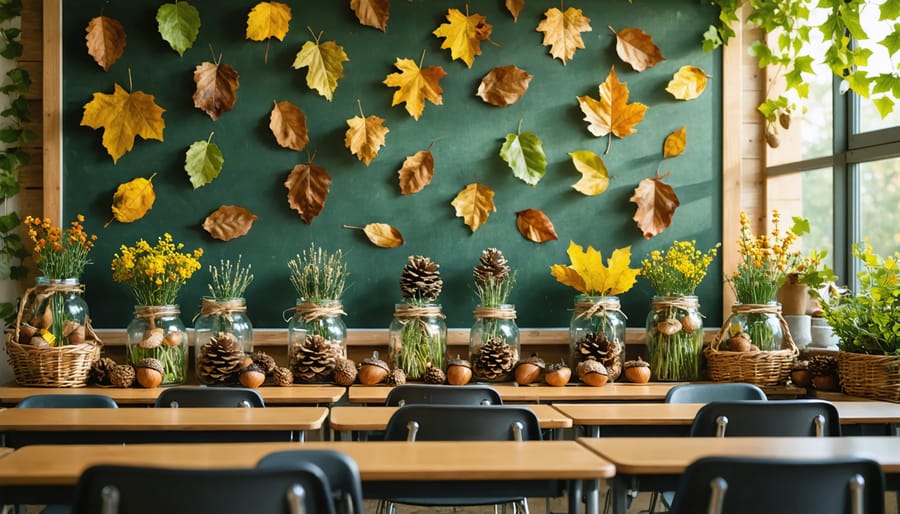



Transform your classroom into a positive learning environment using nature’s abundant resources. Bring the outdoors inside with pressed autumn leaves arranged in creative patterns on bulletin boards, pine cone and acorn collections displayed in clear glass jars, and student-gathered rock collections labeled for science integration. Mount sturdy branches horizontally to create organic hanging spaces for student work, or arrange them vertically in corners for a forest-like reading nook atmosphere. Layer natural textures through woven grass baskets, driftwood name plates, and biodegradable craft materials that double as teaching tools. These earth-conscious decorative choices not only reduce classroom costs but also foster environmental awareness and create a calming, focused atmosphere that enhances student engagement and well-being.
Bringing the Outdoors Inside: Free Natural Materials
Seasonal Collections
Bringing the outside world into your classroom creates an ever-changing display that connects students with nature throughout the year. In autumn, gather colorful fallen leaves, acorns, and pinecones to create stunning seasonal displays. Press the leaves between heavy books for two weeks before using them in window displays or art projects. During winter, collect bare branches, evergreen sprigs, and interesting seed pods to add texture and visual interest to your learning space.
Spring offers opportunities to incorporate fresh blooms, tree blossoms, and interesting twigs with new growth. Consider creating a “nature table” where students can display their own found treasures from the schoolyard or home. Summer brings an abundance of wildflowers, grasses, and seed heads that can be dried and preserved for long-lasting displays.
When collecting natural materials, always check school policies regarding outdoor items and potential allergens. Make gathering expeditions into learning opportunities by having students document what they find, where they found it, and how it changes with the seasons. Remember to rotate collections regularly to maintain freshness and student interest.
Natural Display Ideas
Transform collected natural materials into engaging displays that enhance your classroom’s learning environment. Create a dedicated nature table where students can examine seasonal findings like pinecones, leaves, and rocks. Use clear glass jars of varying sizes to showcase smaller items such as seeds, shells, or interesting pebbles, making them easily visible while protecting them from dust.
Install simple wooden floating shelves at student eye level to display larger natural specimens. Label each item with both common and scientific names to incorporate learning opportunities. Consider creating a “Touch and Feel” station with different textures from nature, such as smooth stones, rough bark, and soft moss (properly preserved).
Arrange branches in tall cylindrical vases for vertical interest, or create a natural mobile by hanging lightweight items like dried flowers or feathers from a suspended branch. Use shadow boxes to create mini-habitat displays, combining related items like forest findings or beach treasures. Remember to rotate displays regularly to maintain student interest and reflect seasonal changes in your local environment.

Low-Cost Natural Display Solutions
DIY Natural Display Cases
Transform everyday materials into stunning natural display cases with these budget-friendly classroom decoration ideas. Start by collecting clear glass jars, old picture frames, and wooden boxes from your home or local thrift stores. Clean them thoroughly and prepare them for their new purpose.
For jar displays, add a layer of small pebbles or sand at the bottom for drainage. Place preserved leaves, pinecones, or dried flowers inside, creating miniature nature scenes. Secure the lid and label each specimen for educational value.
Picture frames can become shadow boxes by removing the back and adding a deeper wooden frame. Paint the wood with non-toxic, natural colors, then attach chicken wire or twine across the back to create a display grid. Use small clips or twine to hang lightweight natural items like pressed flowers or interesting leaves.
Create tabletop display cases using wooden boxes with clear plastic lids (repurposed from packaging). Line the bottom with natural fabric or cork, then arrange collected items like seed pods, shells, or mineral specimens. Add small information cards to identify each item and its significance.
Remember to rotate displays seasonally, encouraging students to contribute found natural objects and participate in creating educational arrangements that reflect your current learning themes.

Nature-Inspired Organization
Natural elements can transform your classroom organization system while maintaining a calming aesthetic. Consider using woven baskets made from natural fibers to store supplies, creating a cohesive look that blends seamlessly with other nature-inspired decor. Large branches can be repurposed as hanging organizers for student work or art displays, while smaller twigs work perfectly as labels for storage bins.
Create sorting stations using bamboo dividers or repurposed wooden crates, which add warmth and texture to your classroom while keeping materials organized. Stone markers or painted rocks make excellent desk identifiers or learning station markers. Cork boards framed with driftwood provide an eco-friendly display surface for student work and important announcements.
For individual student storage, consider using handwoven grass baskets or upcycled wooden boxes decorated with pressed leaves. Label containers using kraft paper tags attached with twine for a natural, rustic look. Organize reading corners with tree stump seats that double as storage units, perfect for keeping books and learning materials within easy reach.
Plant-based organization solutions, such as hanging macramé holders, can maximize vertical space while adding visual interest. Use mason jars filled with sand or pebbles to store writing tools, creating both functional storage and mini sensory elements that students can enjoy while retrieving supplies.
Student-Involved Natural Decor Projects
Class Collection Projects
Engage your students in meaningful collection projects that transform natural materials into stunning classroom displays. Start with a seasonal scavenger hunt where students gather fallen leaves, pinecones, and interesting twigs. Create collection guidelines that teach students to gather responsibly and avoid damaging living plants.
Turn these collecting activities into science lessons by having students sort materials by type, color, or texture. Create nature journals where students can document their findings and sketch their discoveries. Display these collections in clear jars or shadow boxes, adding labels that identify each item and its natural source.
Consider organizing themed collection weeks. In autumn, focus on collecting colorful leaves and seed pods. Spring can emphasize flowers and new growth, while winter might concentrate on evergreen specimens and bark patterns. Create a “Nature Museum” corner where students can curate their findings and rotate displays throughout the year.
Encourage students to create artistic arrangements with their collected items. Press flowers and leaves for lasting displays, design mandalas using natural materials, or create collaborative nature collages. These activities not only beautify the classroom but also foster environmental awareness and scientific observation skills.

Nature-Based Learning Displays
Transform your educational displays into dynamic learning opportunities by incorporating natural elements that engage students’ senses and curiosity. Create seasonal collections using found objects like leaves, pinecones, and seeds, organizing them by type, size, or color to reinforce classification skills. Display these items in clear glass jars or on natural wood slices to maintain the organic aesthetic.
Integrate hands-on learning stations with labeled rock collections, butterfly specimens, or pressed flowers that students can examine and document. These displays can complement your classroom gardening projects and science curriculum while adding natural beauty to your space.
Create interactive wall displays using branches to hang student work or construct nature-inspired word walls using bark, twigs, or dried flowers as decorative elements. Consider developing a “Wonder Wall” where students can post questions about natural specimens on display, encouraging scientific inquiry and discussion.
Rotate displays seasonally to maintain student interest and reflect natural cycles. Include QR codes linking to educational resources about displayed items, making the natural elements both decorative and educational. This approach not only beautifies your classroom but also creates meaningful connections between indoor learning spaces and the natural world outside.
Maintaining Your Natural Classroom Decor
Maintaining your natural classroom decor requires regular attention and care to keep the environment fresh and engaging. Start by establishing a weekly maintenance routine that includes dusting natural displays, refreshing water for living plants, and checking for any signs of deterioration in organic materials.
For seasonal items like pinecones, leaves, or branches, rotate them every few months to prevent fading and maintain their aesthetic appeal. Store unused natural materials in airtight containers in a cool, dry place to preserve them for future use. Consider treating wooden elements with natural preservatives to extend their lifespan and prevent pest infestations.
Create a student involvement system where learners take turns caring for classroom plants and helping to maintain natural displays. This not only reduces your workload but also teaches responsibility and environmental stewardship. Keep a simple maintenance checklist posted near each natural display area to ensure consistent care.
Replace dried flowers and branches before they become too brittle, and regularly assess the condition of rock collections, shells, and other natural specimens. Clean these items gently with a soft brush to maintain their appearance. For living elements like plants, research their specific care requirements and maintain proper watering schedules.
Document which natural elements work best in your classroom environment and which may need more frequent replacement. This information will help you plan future decorating cycles and make informed decisions about which materials to use in different seasons.
Transforming your classroom with natural elements offers multiple benefits that extend far beyond aesthetics. From improving student well-being and concentration to fostering environmental awareness, natural decor creates a calming, engaging learning environment without straining your budget. By incorporating materials like branches, leaves, and stones, you’ll create a unique space that connects students with nature while supporting their educational journey. Start small by implementing one or two ideas, and gradually build your natural classroom oasis. Remember that the most effective classroom designs evolve with your students’ needs and interests. With these sustainable, cost-effective decoration strategies, you can create a welcoming space that inspires learning, creativity, and environmental stewardship for years to come.