


Middle school represents the critical window when students transition from “What do you want to be when you grow up?” to genuinely understanding how their interests, strengths, and values connect to real-world opportunities. Research shows that students who engage in career exploration between ages 11-14 demonstrate 40% higher confidence in their post-secondary planning and make more informed academic choices during high school.
Start career conversations early by connecting classroom subjects to actual professions. When teaching fractions, discuss how architects and chefs use these skills daily. During literature units, explore careers in publishing, journalism, and content creation. This contextual learning helps students see education as a pathway rather than an abstract requirement.
Create low-pressure exposure opportunities through job shadowing, virtual workplace tours, and informational interviews with professionals in diverse fields. A single afternoon observing a veterinarian, software developer, or urban planner can spark curiosity that shapes academic engagement for years. Focus on breadth over depth—middle schoolers benefit most from exploring 10-15 different career clusters rather than narrowing choices prematurely.
Implement self-assessment activities that help students identify their natural talents and interests. Career interest inventories designed for this age group, personality assessments, and reflection exercises build self-awareness that informs future decisions. The goal is helping students find their calling through guided discovery rather than pressure to commit.
Document exploration through career portfolios where students collect reflections, favorite activities, and evolving interests. This ongoing record becomes invaluable as they navigate high school course selection and extracurricular involvement.
The Middle School Advantage: Why This Age Matters
Middle school represents a developmental sweet spot for career exploration that many educators and parents overlook. Between ages 11 and 14, students experience significant cognitive growth that makes them uniquely ready for this type of thinking. Research from the American School Counselor Association shows that students who engage in career exploration during middle school demonstrate 30% higher confidence in their future planning compared to those who wait until high school.
At this stage, young people develop abstract thinking abilities that allow them to imagine future possibilities and understand cause-and-effect relationships between current choices and future outcomes. They can grasp that today’s interests might connect to tomorrow’s careers without feeling pressured to make permanent decisions. This is precisely what makes middle school ideal—students can explore freely without the weight of college applications or immediate job preparation looming overhead.
Middle schoolers also possess natural curiosity that hasn’t yet been dampened by the academic pressures of high school. They ask questions like “Why does this matter?” and “What do people actually do in this job?” with genuine interest. Take Sarah, a seventh grader who discovered her passion for urban planning after a classroom project about community design. She explored the field through interviews and research, but when her interests shifted to environmental science the following year, there were no consequences—just valuable learning.
The low-stakes environment of middle school allows for experimentation and even failure. Students can try a coding workshop, shadow a veterinarian, or explore graphic design without these experiences appearing on transcripts or affecting future opportunities. This freedom to explore multiple paths actually helps students make more informed decisions later. According to data from the National Career Development Association, students exposed to diverse career experiences in middle school are 25% more likely to pursue postsecondary education aligned with their strengths and interests.
What Career Exploration Actually Looks Like in Middle School
Interest Inventories and Self-Assessment Tools
Career assessment tools help middle schoolers identify their interests, strengths, and potential career paths in a developmentally appropriate way. These inventories use simple questions about favorite activities, subjects, and preferences to generate personalized results that spark meaningful conversations about choosing a career.
Several free, student-friendly resources are available online. The YouScience Aptitude Discovery platform combines cognitive assessments with interest inventories, revealing natural talents students may not recognize. Career Cruising offers interactive surveys matching interests to specific occupations with videos and day-in-the-life descriptions. The O*NET Interest Profiler, developed by the U.S. Department of Labor, provides age-appropriate questions linking student preferences to career clusters.
For classroom use, the Holland Code assessment (RIASEC) introduces students to six personality types: Realistic, Investigative, Artistic, Social, Enterprising, and Conventional. Research shows that students who complete interest inventories in middle school are 40% more likely to engage in career exploration activities throughout high school.
These tools work best when followed by discussion. Encourage students to share results with family members and teachers, comparing findings with their own self-perceptions and exploring multiple careers that align with their identified interests.
Hands-On Exploration Activities
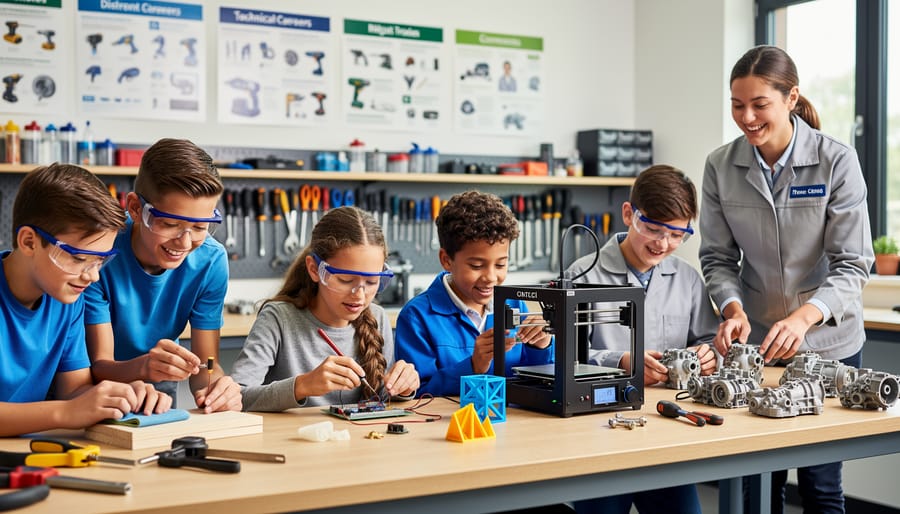
Middle school students benefit tremendously from experiential learning opportunities that bring careers to life. Career days remain one of the most effective approaches, inviting professionals from diverse fields to share their career journeys and daily responsibilities. Schools can organize panel discussions where students rotate through sessions based on their interests, exposing them to 5-8 different careers in a single day.
Job shadowing provides deeper immersion, allowing students to observe professionals for half-day or full-day periods. A 2022 study found that 73% of middle schoolers who participated in shadowing experiences reported increased clarity about potential career paths. While younger than typical participants, learning about the benefits of internships can inspire future planning.
Informational interviews teach valuable communication skills while building professional networks. Students can interview family members, community members, or professionals their teachers connect them with, preparing questions about education requirements, daily tasks, and career satisfaction.
Classroom projects linking academic subjects to real-world applications prove particularly engaging. Math classes can analyze sports statistics for sports analytics careers, while English students might create marketing campaigns, mirroring advertising professionals’ work. Science classes exploring environmental careers through local conservation projects demonstrate tangible career connections while reinforcing subject mastery.
Connecting Classroom Learning to Career Pathways
STEM Subjects and Beyond
STEM fields open doors to diverse careers that extend far beyond laboratory coats and calculators. Math skills, for instance, lead to careers in cryptography, where professionals protect digital information for banks and governments, or sports analytics, where statisticians help professional teams make winning decisions. A 2023 U.S. Bureau of Labor Statistics report projects that computer and information technology occupations will grow 15% through 2031, much faster than average.
Science enthusiasts might explore marine biology to study ocean ecosystems, forensic science to solve crimes, or food science to develop healthier products. Technology careers now include user experience designers who make apps intuitive, ethical hackers who test security systems, and environmental technologists who develop sustainable solutions. Even students who enjoy creative pursuits can combine interests—video game designers use both artistic skills and programming knowledge, while biomedical illustrators merge art with anatomy. Encourage middle schoolers to consider how their STEM strengths might solve real-world problems in unexpected fields, from climate change to entertainment.
Arts, Humanities, and Communication Careers
Creative fields offer middle schoolers exciting pathways that blend imagination with practical skills. Writers and journalists transform ideas into compelling stories, with entry-level positions starting at approximately $45,000 annually according to Bureau of Labor Statistics data. Graphic designers create visual communications for brands, earning median salaries around $50,000, while video editors and multimedia artists are increasingly in demand as digital content grows.
Social science careers like psychology, sociology, and anthropology appeal to students curious about human behavior and culture. Museum curators, historians, and archivists preserve cultural heritage, combining research skills with storytelling. In communication, roles span from public relations specialists to social media managers, fields that have grown 11% in recent years.
Students interested in these areas can explore through school newspaper participation, theater productions, debate teams, or starting podcasts. Many professionals in these fields emphasize that strong writing, critical thinking, and communication skills developed in middle school provide essential foundations for future success in creative and humanities-based careers.
Skilled Trades and Vocational Pathways
Not every successful career requires a four-year degree. Skilled trades like welding, HVAC repair, and electrical work currently face worker shortages, with the U.S. Bureau of Labor Statistics projecting 14% growth in construction trades through 2031. Middle school is the perfect time to explore alternative education paths through hands-on programs, job shadowing with local tradespeople, or introductory technology courses. Encourage students to consider their interests when searching for careers in fields offering strong earning potential, job security, and meaningful work that directly impacts communities.
Practical Strategies for Educators
Integrating Career Exploration Into Daily Lessons
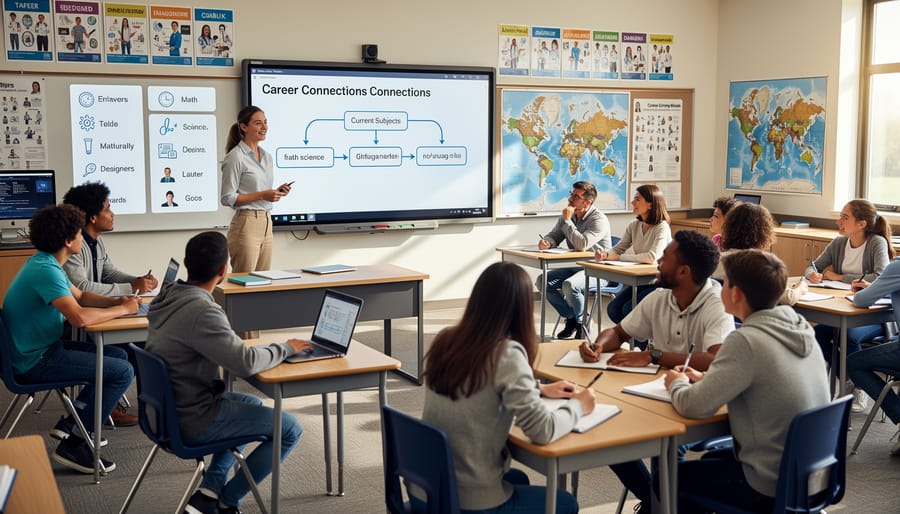
Integrating career exploration into existing lessons requires minimal preparation while maximizing impact. In math classes, students can analyze salary data, calculate budgets based on different career paths, or graph employment trends in growing industries. According to the Bureau of Labor Statistics, healthcare occupations are projected to grow 13% from 2021 to 2031—perfect data for real-world problem sets.
Science teachers can invite local professionals to explain how they use scientific principles daily, whether that’s a pharmacist discussing chemical compounds or an environmental engineer describing water treatment processes. English classes naturally incorporate career exploration through biography units, persuasive writing about workplace issues, or researching professionals for interview projects.
Social studies lessons connect seamlessly when students examine how historical events shaped modern careers or compare international workplace cultures. For instance, discussing the Industrial Revolution provides context for understanding today’s technology sector evolution.
The key is using examples students already encounter in your curriculum. When teaching percentages, reference a chef scaling recipes or a contractor estimating materials. These small, consistent connections help middle schoolers recognize that classroom learning directly applies to future opportunities without requiring additional lesson planning or class time.
Guest Speakers and Community Partnerships
Building meaningful connections with local businesses and professionals transforms career exploration from abstract concepts into tangible experiences. Start by identifying community partners aligned with student interests—reach out to chambers of commerce, Rotary clubs, and industry associations to find willing participants. According to data from Junior Achievement, 79% of professionals are willing to volunteer in classrooms when directly asked, yet fewer than 30% of teachers regularly invite guest speakers.
Create a structured speaker series by inviting professionals from diverse fields to share 20-30 minute presentations about their career paths, including both successes and challenges. Prepare students beforehand with industry-specific questions and vocabulary to maximize engagement. Consider virtual options to access experts beyond your geographic area, expanding possibilities for specialized fields like marine biology or aerospace engineering.
Establish ongoing partnerships rather than one-time visits. A local veterinary clinic might host quarterly job shadows, while an accounting firm could provide mentors for a budgeting project. Document these relationships in a community partner database that grows year after year, creating sustainable career exposure opportunities that require minimal annual planning while delivering maximum real-world insight for students.
Creating a Career-Focused Classroom Culture
Integrating career conversations into daily instruction doesn’t require overhauling your curriculum. Start by connecting lessons to real-world professions—when teaching fractions, mention how chefs use measurements, or link persuasive writing to marketing careers. Create a career corner in your classroom displaying student research, career spotlights, or upcoming exploration opportunities. Invite students to share what their family members do for work during morning meetings, normalizing these discussions.
According to research from the National Career Development Association, students exposed to career education starting in middle school show 27% higher engagement in academic subjects. Implement “Career Connection Mondays” where you spend five minutes highlighting how that week’s learning applies to various fields. Encourage students to interview professionals as part of homework assignments, making career exploration collaborative between school and home. Display a “Jobs of the Week” bulletin board featuring diverse careers, including those requiring different education paths—from trades to advanced degrees—ensuring all students see accessible possibilities ahead.
How Parents Can Support Career Exploration at Home
Starting Meaningful Career Conversations
The key to effective career conversations is keeping them light, exploratory, and connected to your child’s current interests. Rather than asking “What do you want to be when you grow up?”—which can feel overwhelming—try open-ended prompts like “What parts of your day make you lose track of time?” or “If you could solve one problem in the world, what would it be?”
Connect careers to everyday observations. When watching a movie, ask “What jobs do you think it took to make this?” After a doctor’s appointment, explore “What did you notice about how the staff worked together?” These natural moments remove pressure while building career awareness.
Research shows that students with regular career conversations at home demonstrate 34% higher career readiness by high school. Focus on skills and interests rather than specific job titles. Ask questions like “What would your ideal workday look like?” or “Do you prefer working with people, ideas, or things?” This approach helps middle schoolers recognize patterns in their preferences without forcing premature commitments, creating a foundation for meaningful exploration as their interests evolve.

Exposure Through Everyday Experiences
Career exploration doesn’t require formal programs or special events—it happens naturally through daily life when we intentionally point it out. Every grocery store visit, medical appointment, or community event exposes middle schoolers to working professionals. The key is turning passive observation into active learning.
Encourage students to notice the jobs around them. During a restaurant meal, discuss not just servers and chefs, but also restaurant managers, food suppliers, and interior designers. A 2022 survey by Junior Achievement found that 62% of middle schoolers discovered career interests through casual conversations with working adults in their lives, rather than through formal career programs.
Family connections offer invaluable insights. Parents can share what their workday actually involves, including challenges and satisfying moments. Extended family members, neighbors, and family friends represent diverse career paths. A simple conversation about how someone chose their profession or what skills they use daily provides concrete career information that textbooks cannot match.
Community service and volunteer activities naturally introduce students to nonprofit work, event planning, and community organizing. Libraries expose students to information science, youth programming, and public service careers. Even routine errands become learning opportunities when adults ask: “What jobs make this possible?” This approach normalizes career thinking as an ongoing exploration rather than a single decision point.
Addressing Common Challenges and Concerns
Career exploration in middle school presents several challenges, but each has practical solutions that educators and parents can implement effectively.
Student disinterest often stems from activities feeling disconnected from their reality. Rather than abstract career lectures, engage students through hands-on experiences. A Virginia middle school increased participation by 73% when they replaced traditional career day presentations with interactive maker stations where professionals demonstrated their actual work. Let students experience careers through simulations, guest speakers who share real stories, and field trips that showcase diverse workplaces.
Limited resources need not be barriers. Virtual career tours, free online platforms, and community partnerships offer cost-effective alternatives. Local businesses frequently welcome student visits, and retired professionals often volunteer as mentors. One Title I school in Ohio created a thriving career exploration program entirely through community connections and no-cost digital resources like career interest inventories available through state workforce development websites.
Equity concerns require intentional action. Research shows that students from underserved communities have 40% fewer opportunities to explore careers beyond traditional roles. Address this by showcasing professionals from diverse backgrounds, highlighting non-traditional career paths, and ensuring all students access the same exploration opportunities regardless of socioeconomic status. Avoid assumptions about what careers might interest different student groups.
Preventing premature pressure is essential. Frame exploration as discovery, not decision-making. Emphasize that middle schoolers are sampling possibilities, not choosing their life path. Use language like “exploring interests” rather than “picking careers.” Make it clear that most adults change careers multiple times, and middle school exploration simply helps students understand themselves better. This approach reduces anxiety while maintaining engagement, helping students see career exploration as an exciting journey rather than a high-stakes commitment.
Resources and Tools to Get Started
Getting started with career exploration is easier than ever, thanks to numerous free and accessible resources designed specifically for middle schoolers. The U.S. Bureau of Labor Statistics’ Career Outlook website offers age-appropriate career profiles with real salary data and job growth projections, helping students understand the practical realities of different professions. For interactive exploration, CareerOneStop’s Interest Assessment provides a quick, engaging quiz that matches student interests to potential career pathways in just 10 minutes.
MyNextMove is another excellent tool that combines interest inventories with comprehensive career information at a reading level appropriate for grades 6-8. According to recent data, students who use structured assessment tools are 40% more likely to identify careers aligned with their strengths compared to those who explore randomly.
For hands-on activities, organizations like Junior Achievement offer classroom-ready programs connecting students with volunteer professionals. Many communities also provide STEM nights, career fairs, and workplace tour programs through local chambers of commerce or workforce development boards.
Parents can access free resources through their state’s career information system, which typically includes career exploration games and planning tools. Libraries often subscribe to databases like Peterson’s Career Prep, offering practice assessments and career videos at no cost to cardholders.
The key is starting with one or two resources rather than overwhelming students with options. Begin with a simple interest assessment, then use results to guide deeper exploration through informational interviews, job shadowing opportunities, or project-based activities that simulate real workplace scenarios.
Career exploration during the middle school years isn’t about locking students into specific pathways—it’s about opening doors and building confidence through exposure. Research from the American School Counselor Association shows that students who engage in early career exploration demonstrate higher academic motivation and clearer post-secondary goals. The beauty of starting this process in grades 6-8 is that it removes pressure while planting seeds of possibility.
For educators and parents feeling overwhelmed by where to begin, remember that small steps create meaningful impact. A single guest speaker, one career interest inventory, or a family conversation about work can spark curiosity that grows over time. Even informal activities like job shadowing a neighbor or exploring career-related videos together provide valuable exposure to the world of work.
The investment you make today in helping middle schoolers explore their interests and strengths pays dividends throughout their educational journey and beyond. Students who understand that career thinking is an ongoing exploration—not a one-time decision—approach their futures with adaptability and optimism. By creating supportive environments where young people can safely test interests, ask questions, and imagine possibilities, we equip them with confidence and direction that will serve them well into adulthood.