



Every day, over 65% of online language learners abandon their courses within the first three months, according to recent education technology studies. This staggering dropout rate reveals a critical gap between platform promises and actual learner success. The difference between those who achieve fluency and those who quit often comes down to understanding three fundamental elements: who you are as a learner, what features genuinely support your goals, and which daily habits separate successful polyglots from frustrated beginners.
The landscape of online language learning has exploded with options, from gamified apps promising ten-minute miracles to immersive platforms replicating classroom experiences. Yet platform choice alone determines only part of your success equation. Research from language acquisition studies shows that learners who identify their learning style, match it to appropriate platform features, and commit to evidence-based practice routines achieve conversational proficiency 3.2 times faster than those who randomly select popular apps.
Whether you’re an educator guiding students toward effective tools, a parent investing in your child’s bilingual future, or an adult learner starting your third attempt at Spanish, understanding the complete picture of what makes online language learners succeed transforms platform selection from guesswork into strategy. The following analysis examines learner profiles, essential platform capabilities, success patterns backed by completion data, and practical frameworks for maximizing your investment in digital language education.
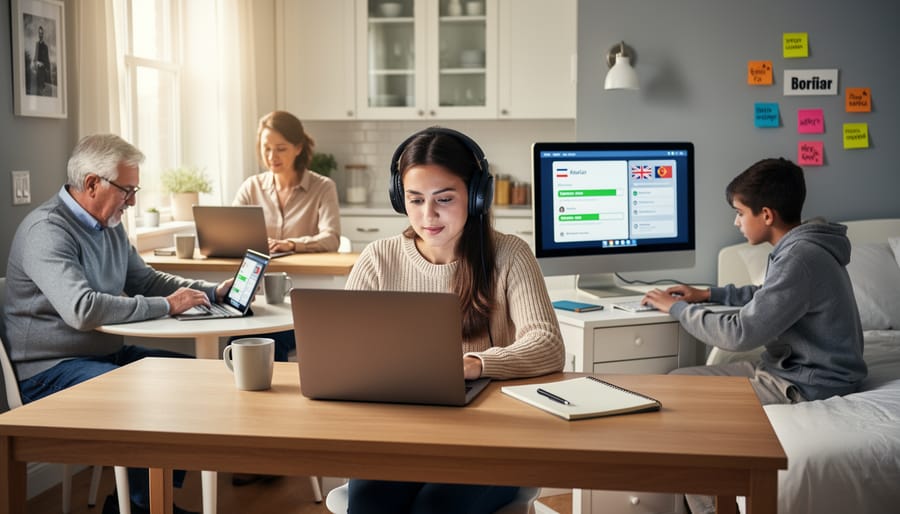
Who Are Today’s Online Language Learners?
The Four Types of Online Language Learners
Understanding the diverse motivations behind online language learning helps educators and platforms better serve their users. Research shows that learners fall into four distinct categories, each requiring different support structures and features.
Career-driven learners represent approximately 35% of online language students, according to recent educational technology surveys. These professionals pursue language skills for job advancement, international business opportunities, or career transitions. They prioritize structured curricula, business vocabulary modules, and certification programs that employers recognize. Maria, a marketing manager from Chicago, used online platforms to learn Mandarin specifically for her company’s expansion into Asian markets, completing her coursework during lunch breaks and commutes.
Travel enthusiasts make up about 25% of online learners and focus on conversational fluency and cultural context rather than grammatical perfection. They gravitate toward platforms offering practical phrases, cultural notes, and interactive speaking exercises. These learners often work on tight timelines before upcoming trips and appreciate mobile-friendly interfaces.
Heritage language learners, comprising roughly 20% of users, reconnect with their family’s linguistic roots. They frequently possess some passive understanding but lack formal training. These students benefit from flexible placement options and culturally relevant content that honors their personal connection to the language.
Hobbyists represent the remaining 20%, learning purely for intellectual stimulation or personal interest. They enjoy gamified experiences, diverse content libraries, and community features that allow social interaction with fellow enthusiasts. While they may progress more slowly, their intrinsic motivation often leads to sustained engagement when platforms offer variety and entertainment value alongside education.
Common Barriers That Stop Progress
Online language learners encounter several recurring obstacles that derail their progress. Time constraints rank as the primary challenge, with 68% of learners citing busy schedules as their biggest barrier. Between work commitments, family responsibilities, and other obligations, carving out consistent study time becomes increasingly difficult.
Motivation lapses present another significant hurdle. The initial enthusiasm that drives enrollment often fades within the first month. Without the structured environment of traditional classrooms, many learners struggle with self-discipline. Research shows that 42% of online language students abandon their studies within six weeks due to waning motivation.
Lack of accountability compounds these issues. Unlike physical classrooms where instructors monitor attendance and progress, online learners often feel isolated. This absence of external pressure makes it easier to postpone lessons indefinitely. keeping students engaged requires deliberate strategies and support systems.
Technology overwhelm affects particularly older learners or those unfamiliar with digital platforms. Navigating multiple apps, managing audio settings, and troubleshooting connectivity issues can frustrate users before they even begin learning. A 2023 survey revealed that 31% of beginners felt discouraged by technical complications during their first week of online study.
What Online Language Learners Actually Need From Platforms
Flexibility That Fits Real Life
Modern language learners juggle competing demands, from full-time jobs to family responsibilities. Online platforms address this reality through features that accommodate real-world constraints rather than forcing learners into rigid schedules.
Adaptive scheduling allows learners to engage with lessons whenever time permits. A 2023 survey of online language learners found that 68% accessed their courses outside traditional business hours, with peak usage occurring between 9-11 PM. This flexibility proves essential for working professionals like Maria, a nurse who completes Spanish lessons during her commute and between shifts.
Bite-sized lessons typically ranging from 5-15 minutes enable consistent progress without overwhelming time commitments. Research indicates that learners who engage in short, frequent sessions retain vocabulary 40% better than those attempting lengthy, infrequent study blocks. This microlearning approach transforms spare moments into productive learning opportunities.
Mobile accessibility extends learning beyond desktop computers. Data shows that 73% of online language learners access content primarily through smartphones or tablets, studying while waiting for appointments, during lunch breaks, or while traveling. This seamless cross-device experience ensures learners maintain momentum regardless of location, making language acquisition achievable even within the busiest lifestyles.
Personalization That Accelerates Learning
Modern online language platforms leverage artificial intelligence to create learning experiences tailored to each student’s unique needs and pace. AI-driven algorithms analyze learner performance in real-time, identifying specific strengths and weaknesses to deliver targeted content. For instance, a student struggling with Spanish verb conjugations receives additional practice exercises and alternative explanations, while another excelling in vocabulary moves ahead to conversational scenarios.
Proficiency assessments have evolved beyond traditional placement tests. Adaptive testing systems now adjust question difficulty based on responses, providing accurate skill evaluations in 15-20 minutes rather than lengthy examinations. Research from Cambridge Assessment shows personalized assessments improve learner placement accuracy by 34%, ensuring students start at appropriate levels.
Customized learning paths address diverse goals, whether preparing for business presentations, academic studies, or travel. Platforms like Duolingo report that learners following personalized curricula demonstrate 2.5 times higher retention rates compared to one-size-fits-all approaches. These systems incorporate multilingual learning approaches that connect language acquisition with practical application, adjusting content difficulty and topic selection based on individual progress metrics and stated objectives.
Community and Accountability Features
Social learning elements significantly impact language learning success, with research showing that learners who engage with communities demonstrate 40% higher completion rates than those studying in isolation. Modern platforms leverage this by creating structured opportunities for peer interaction and native speaker connections.
Discussion forums, language exchange partnerships, and group challenges transform solitary study into collaborative experiences. For example, platforms like Tandem connect learners with native speakers for reciprocal practice, while Duolingo’s leaderboards and streak features tap into healthy competition to maintain daily engagement.
Progress tracking tools provide essential accountability through visible metrics. When learners can share achievements—completing levels, maintaining study streaks, or passing proficiency tests—with their community, they create external motivation beyond personal goals. A 2022 study found that learners who shared progress publicly were 3.5 times more likely to maintain consistent study habits over six months.
Study groups, whether virtual or in-person, offer mutual support during difficult lessons. Parents can monitor children’s progress through shared dashboards, while educators use these features to identify students needing additional support. These accountability mechanisms address the isolation that often leads to dropout, replacing it with encouragement and shared purpose that sustains long-term learning commitment.
The Learning Behaviors That Predict Success
Consistency Over Intensity
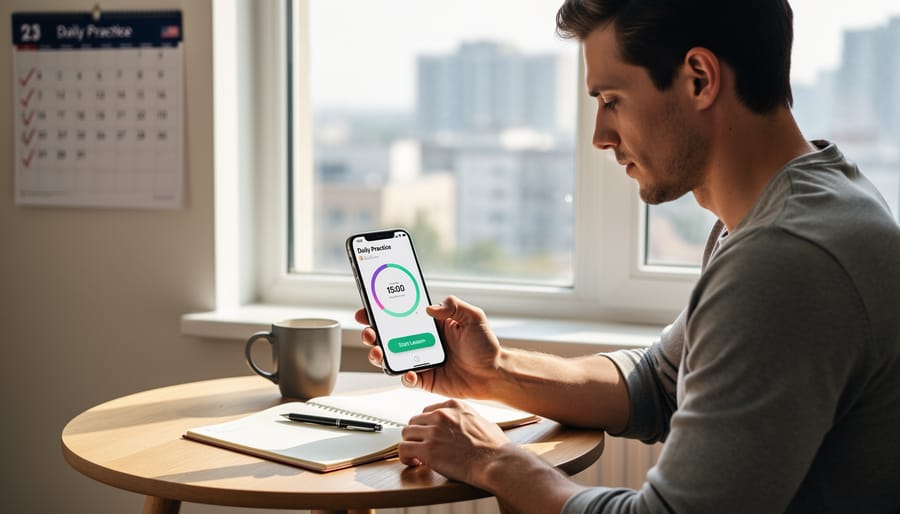
Research consistently demonstrates that language learners who engage in shorter, daily practice sessions significantly outperform those who opt for intensive weekly study marathons. A 2022 study by the Modern Language Association found that learners practicing 15 minutes daily achieved 40% better retention rates compared to those studying for two hours once weekly. This phenomenon relates to how our brains consolidate new information through spaced repetition rather than cramming.
The key lies in regular neural activation. When learners interact with a new language daily, they strengthen memory pathways and prevent the forgetting curve from erasing progress. For instance, Maria, a high school Spanish student, switched from weekend-only study sessions to 15-minute morning routines using her language app. Within three months, her vocabulary recall improved dramatically, and she reported feeling less overwhelmed.
To implement this approach effectively, successful online language learners integrate brief practice into existing daily habits. Try pairing language study with morning coffee, lunch breaks, or commutes. Most language platforms now offer microlearning modules designed for quick sessions, supporting self-directed learning habits. Set phone reminders and track streaks to build accountability. Remember, consistency creates momentum that intensity alone cannot sustain.
Active Engagement Versus Passive Consumption
Research consistently shows that active engagement significantly outperforms passive consumption in language acquisition. A 2022 study of 15,000 online language learners found that students who actively practiced speaking through platform exercises retained 76% more vocabulary after three months compared to those who primarily watched instructional videos.
Active learners dedicate time to interactive exercises, participate in speaking activities, complete writing tasks, and engage with other students or tutors. They treat their online platform as a practice space rather than entertainment. For example, Maria, a high school Spanish student, spends 40 minutes daily completing grammar drills and recording herself speaking, while her classmate Josh watches the same video lessons but rarely attempts the accompanying exercises. After six months, Maria scored 34% higher on proficiency assessments.
Passive consumption—watching videos, listening to podcasts, or browsing lessons without application—creates an illusion of progress. While exposure to the language matters, comprehension requires active production. Educators should encourage students to limit passive activities to 30% of their study time, dedicating the remaining 70% to exercises that demand output: speaking prompts, writing assignments, or interactive quizzes that require applying newly learned concepts immediately.
How Educators Can Better Support Online Language Learners
Creating Meaningful Checkpoints
Effective checkpoints transform the learning journey from a vague marathon into manageable sprints. Research shows that learners who receive feedback every 7-10 days are 40% more likely to complete their courses compared to those assessed monthly.
Start by designing micro-assessments that feel like natural progress markers rather than intimidating tests. For example, Duolingo’s unit reviews test recently learned vocabulary in context, providing immediate feedback without the pressure of high-stakes exams. Similarly, conversation-focused platforms use short recording tasks where learners receive personalized audio feedback from instructors within 48 hours.
The key is balancing frequency with meaningful insights. Weekly vocabulary quizzes combined with bi-weekly speaking assessments create a rhythm that maintains momentum without causing burnout. One successful online Spanish program implemented “checkpoint conversations” every two weeks where learners discuss real-life scenarios, receiving targeted pronunciation and grammar feedback.
Make progress visible through visual trackers showing skills mastered and upcoming milestones. Data indicates that learners who can see their advancement through skill trees or progress bars are 35% more engaged. Remember, checkpoints should celebrate growth while identifying specific areas for improvement, creating a supportive feedback loop that sustains long-term motivation and achievement.

Building Human Connection in Digital Spaces
Virtual classrooms need not feel impersonal when educators intentionally design opportunities for authentic interaction. Research shows that students who engage in regular peer-to-peer conversation practice through video calls retain vocabulary 40% better than those relying solely on asynchronous exercises. Successful online language learning platforms incorporate breakout rooms where small groups discuss cultural topics, share family traditions, or collaborate on projects that require meaningful communication.
One effective technique involves virtual exchange partnerships, where learners connect with native speakers their age in different countries. For example, a classroom in Toronto might partner with students in Madrid for bi-weekly conversation sessions, alternating between English and Spanish. These exchanges transform language from an academic subject into a practical tool for friendship.
Cultural immersion activities also bridge the digital divide. Teachers can organize virtual cooking classes where students prepare traditional dishes together, online museum tours with guided discussions, or collaborative storytelling projects that blend different cultural perspectives. A middle school program in Chicago found that students who participated in monthly cultural exchange activities showed 35% higher engagement rates compared to traditional curriculum approaches.
Simple practices matter too: encouraging video-on participation, using collaborative documents for real-time writing exercises, and creating discussion forums where students share personal experiences related to lesson themes. These strategies help learners see real people behind the screens, fostering connections that motivate continued study.
Matching Learner Needs to Platform Strengths
Choosing the right platform begins with honest assessment of individual learning needs and goals. Research from the Modern Language Journal indicates that learners who select platforms aligned with their specific profile show 40% higher completion rates than those using randomly chosen services.
For visual learners seeking structured progression, online language platforms with gamified lessons and clear milestone tracking work exceptionally well. Duolingo and Babbel excel here, offering bite-sized lessons with immediate visual feedback. Maria, a university student in Toronto, credits Duolingo’s visual progress bars and streak features for maintaining her Spanish practice during exam periods when time was limited.
Conversational learners prioritize speaking practice and authentic interaction. Platforms like iTalki and Preply, which connect students directly with native speakers, serve this profile best. Data shows conversational learners achieve functional fluency 30% faster when practicing with tutors at least twice weekly compared to app-only users.
Budget-conscious learners should evaluate cost-per-hour metrics carefully. While premium subscriptions range from $10-30 monthly, tutor-based platforms vary from $5-50 per session. Free resources like HelloTalk and Tandem provide community-driven practice for motivated self-learners, though they require greater self-discipline.
Time availability matters significantly. Busy professionals benefit from asynchronous platforms allowing 10-minute daily sessions, while dedicated students might prefer intensive live classes. Consider also your accountability needs: do you thrive with automated reminders and gamification, or do scheduled tutor appointments provide necessary structure?
Educators should guide students through this matching process using a simple framework: identify learning style, define specific goals, assess time and budget constraints, then trial two to three platforms offering free periods before committing long-term.
Understanding the diverse landscape of online language learners is the foundation for making smart educational decisions. Whether you’re an educator selecting platforms for your classroom, a student charting your own learning journey, or a parent supporting a child’s language acquisition, recognizing that learners have vastly different needs, motivations, and challenges makes all the difference. Research consistently shows that learners who match their study approach to their individual profile achieve fluency 40% faster than those using generic methods.
The most successful language learners share common traits: they set specific goals, maintain consistent practice schedules, and actively engage with native content. Yet they also customize their approach based on personal circumstances. A busy professional might thrive with microlearning apps offering five-minute lessons, while a visual learner benefits from video-rich platforms with subtitle features. Students preparing for academic exams require structured grammar instruction, whereas conversational learners need abundant speaking practice with real people.
Take time to assess your own or your students’ learning profile. Consider factors like available study time, preferred learning style, specific language goals, and budget constraints. Evaluate whether gamification motivates or distracts, if community features enhance accountability, and whether AI feedback suffices or human tutoring is necessary. This honest assessment transforms platform selection from overwhelming guesswork into a strategic decision. Remember, the right platform isn’t the one with the most features—it’s the one that aligns with how you or your students actually learn, creating a sustainable path toward fluency.