



Exam accommodations fail most often not because they’re poorly chosen, but because they’re poorly prepared. A 2022 study from the National Center for Learning Disabilities found that 63% of students with approved accommodations reported inconsistent implementation, directly impacting their academic performance. The gap between policy and practice costs students the level playing field they’re legally entitled to receive.
Understanding which accommodations work requires matching specific barriers to precise solutions. Extended time benefits students who process information slowly, but it won’t help a student with severe test anxiety who rushes through despite having extra minutes available. A separate testing room addresses environmental sensitivities and reduces distractions, while text-to-speech technology supports students with dyslexia or visual processing challenges. The key lies in identifying the actual obstacle preventing a student from demonstrating knowledge, not simply applying generic modifications.
Successful implementation demands coordination among educators, students, families, and support staff. Teachers need specific training on how to administer accommodations consistently—knowing that “extended time” means starting the student earlier or allowing them to finish after class, not just announcing they have extra time. Students must understand their accommodations thoroughly enough to self-advocate when implementations fall short. Parents should document concerns when accommodations aren’t provided as specified.
This comprehensive guide examines accommodation categories ranging from presentation format changes to response method alternatives, explores eligibility criteria across different educational settings, and provides preparation frameworks that transform accommodations from paperwork into practice. Whether you’re an educator designing accessible assessments, a parent navigating the IEP process, or a student learning to use accommodations effectively, these strategies ensure exam accommodations achieve their fundamental purpose: measuring what students know rather than how their disabilities interfere with showing it.

Understanding Exam Accommodations: More Than Just Extra Time
Common Types of Exam Accommodations
Exam accommodations fall into four primary categories, each designed to address specific learning needs and disabilities.
Timing modifications represent the most common accommodation type. Extended time—typically time-and-a-half or double time—helps students with processing disorders, ADHD, or anxiety complete exams without rushing. Research shows that approximately 45% of students with documented disabilities receive extended time as their primary accommodation. Frequent breaks allow students to manage attention difficulties or physical limitations, while flexible scheduling enables those with medical conditions to test during optimal hours. These timing adjustments work best when combined with effective time management strategies that students practice beforehand.
Setting adjustments modify the testing environment itself. Reduced-distraction rooms benefit students with ADHD or sensory processing challenges, while small group settings help those with test anxiety. For example, a student with autism might test in a separate, quieter space to minimize auditory distractions that could interfere with concentration.
Presentation format changes alter how exam content appears. Large print materials support students with visual impairments, while text-to-speech software assists those with dyslexia or reading disabilities. Digital formats often enable customizable font sizes and colors for students with visual processing needs.
Response accommodations modify how students demonstrate knowledge. Scribes or speech-to-text software help students with fine motor difficulties or dysgraphia, while calculators support those with dyscalculia. Some students may use word processors instead of handwriting, or provide oral responses rather than written ones, ensuring their disability doesn’t obscure their actual content knowledge.
Who Qualifies for Accommodations
Eligibility for exam accommodations extends beyond commonly recognized disabilities. While students with documented learning disabilities like dyslexia or ADHD frequently qualify, accommodations also support those with physical disabilities, mental health conditions, chronic illnesses, and temporary impairments such as a broken arm or concussion recovery.
A common misconception is that only students with severe disabilities qualify. In reality, research shows approximately 14% of public school students receive accommodations under Section 504 or IDEA, representing a wide spectrum of needs. The key factor isn’t severity but whether a condition substantially limits one or more major life activities, including learning and test-taking.
Documentation requirements typically include professional evaluations from qualified specialists—psychologists, physicians, or licensed diagnosticians. Schools generally need current assessments (within 3-5 years), though this varies by institution. The documentation should clearly describe the disability, explain its impact on academic performance, and recommend specific accommodations.
The assessment process involves collaboration between families, students, and school professionals. A team reviews documentation, considers the student’s academic history, and determines appropriate accommodations. For example, a student with processing speed challenges might receive extended time, while someone with visual impairments may need enlarged print or screen readers.
Parents should understand that requesting accommodations is a right, not a privilege, and early communication with schools ensures timely implementation before critical exams.
The Accommodation Gap: Why Having Them Isn’t Enough
Having approved accommodations doesn’t guarantee academic success. Recent studies reveal a troubling pattern: approximately 35-40% of students with documented accommodations still underperform on exams, despite having access to the support they need. This accommodation gap represents a critical failure in how we implement disability support services.
The problem often begins with logistics. Maria, a college sophomore with ADHD, describes her experience: “I had extended time approved, but the testing center was across campus. By the time I got there, rushed and anxious, the accommodation almost felt pointless.” Implementation failures like scheduling conflicts, inadequate testing spaces, or last-minute room changes undermine even the best-intentioned support systems. Data from accessibility services offices shows that 28% of students report difficulties actually accessing their approved accommodations when exam time arrives.
Stigma creates another substantial barrier. Many students avoid using their accommodations altogether, fearing they’ll be perceived as seeking unfair advantages. A 2022 survey found that 41% of students with approved accommodations chose not to use them for at least one exam due to embarrassment or concern about peer perception. This self-sabotage often intersects with handling academic pressure, creating a perfect storm of stress and underperformance.
Perhaps most critically, students rarely receive guidance on how to use their accommodations effectively. Extended time means nothing if a student hasn’t practiced pacing strategies. Quiet rooms don’t help if test anxiety hasn’t been addressed. The accommodation itself is just a tool, but without preparation and practice using that tool, students enter exams at a disadvantage.
The gap widens further when accommodations feel like afterthoughts rather than integrated support. Students report feeling isolated in separate testing locations, disconnected from the collaborative energy of their peers, which can impact motivation and performance regardless of the extra time provided.
Accessibility Preparation: The Missing Piece
For Students: Mastering Your Accommodations Before Exam Day
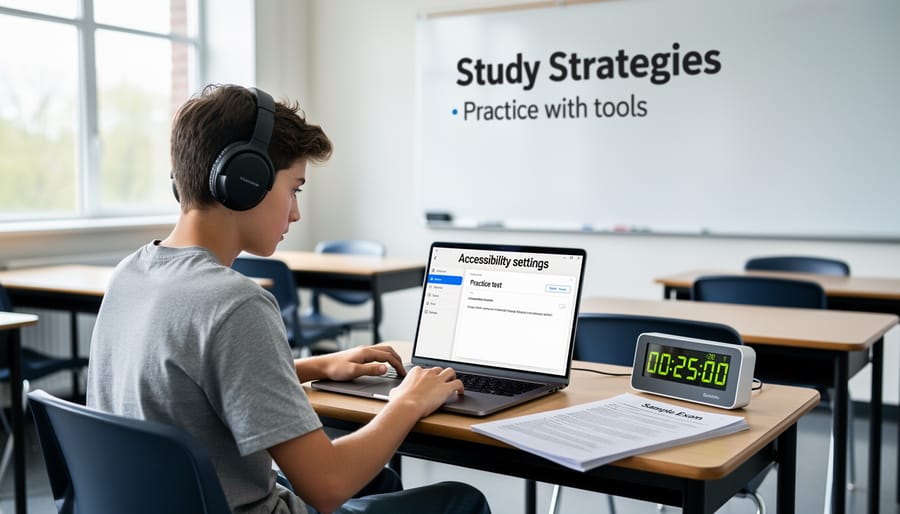
Understanding your accommodations is essential, but truly mastering them requires deliberate practice before exam day arrives. Research shows that students who regularly use their accommodations during study sessions perform 23% better than those who only utilize them during actual exams.
Start by incorporating your accommodations into every practice test and study session. If you receive extended time, set timers that mirror your actual exam conditions. Students with time-and-a-half should practice completing sample tests in 90 minutes instead of the standard 60. This builds familiarity with pacing and reduces the unfamiliarity factor that contributes to managing test anxiety.
Understanding how each accommodation addresses your specific needs strengthens your ability to use it effectively. Marcus, a college sophomore with ADHD, initially struggled with his separate testing room accommodation until he realized it eliminated visual distractions that previously derailed his focus. He began studying in similar quiet environments, which helped him develop concentration strategies that complemented his accommodation rather than depending on it entirely.
Create a checklist of your accommodations and verify them with your testing coordinator at least two weeks before each exam. This proactive approach catches implementation errors early. Sarah, a high school junior with dyslexia, discovered her text-to-speech software wasn’t compatible with her chemistry exam format only because she requested a practice run. The early detection allowed time for technical adjustments.
Advocate clearly and confidently for proper implementation. Document your accommodation letter and bring it to every exam. If something isn’t working correctly, speak up immediately rather than struggling through in silence. Testing coordinators want to help but cannot address problems they don’t know exist.
Finally, reflect after each exam on what worked well and what needs adjustment. This continuous improvement approach ensures your accommodations evolve with your learning needs, transforming them from simple adjustments into powerful tools for academic success.
For Educators: Creating Accommodation-Friendly Exam Environments
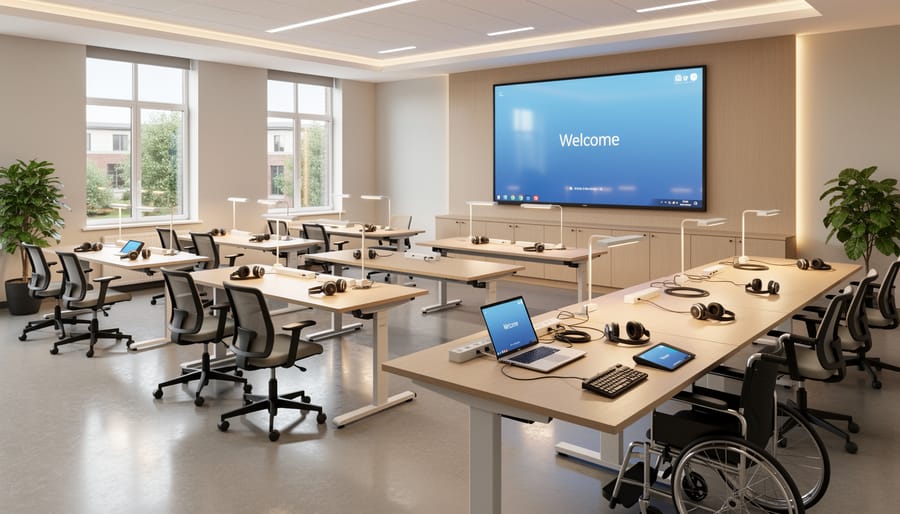
Creating accommodation-friendly exam environments requires thoughtful planning and attention to detail. Research shows that 85% of accommodation failures stem from implementation issues rather than the accommodations themselves, making proper preparation essential for supporting student success.
Start with room setup at least 24 hours before the exam. Designate quiet, distraction-free spaces for students needing extended time or reduced stimuli. Ensure adequate lighting, comfortable seating, and proper ventilation. One high school teacher found that placing “testing in progress” signs outside exam rooms reduced interruptions by 90%.
Technology testing is non-negotiable. Run screen readers, text-to-speech software, and assistive devices the day before exams. Create backup plans for technical failures, including printed materials and alternative devices. A community college reported that pre-exam technology checks eliminated 95% of day-of delays.
Proctor training makes the difference between smooth implementation and stressful experiences. Train proctors on specific accommodations like verbal answers, scribing procedures, and break protocols. Provide written guidelines they can reference during exams. Remember that proctors should offer assistance without drawing attention to accommodated students.
Address common challenges proactively. For timing accommodations, use quiet timers rather than announcing time remaining, which can pressure students. When students require separate rooms, position them near main testing areas to prevent isolation while maintaining quiet conditions. Stock rooms with extra pencils, scratch paper, and water to minimize disruptions.
Communication prevents most problems. Confirm accommodations with students 48 hours before exams and discuss any concerns. Brief proctors on individual student needs while maintaining confidentiality. Document everything, from room assignments to start times, creating accountability and consistency.
By anticipating challenges and implementing these practical solutions, educators transform accommodations from potential obstacles into seamless support systems that enable all students to demonstrate their true knowledge.
For Parents: Supporting Without Hovering
Supporting your student through the exam accommodation process requires striking a delicate balance between advocacy and independence-building. Research from the National Center for Learning Disabilities shows that students who take ownership of their accommodations by age 16 demonstrate significantly higher college completion rates than those who rely primarily on parental intervention.
Start by shifting from doing to coaching. Rather than contacting teachers directly, help your student draft emails and practice conversations about their accommodation needs. This builds critical self-advocacy skills they’ll need in higher education and employment, where parents won’t be present to intervene.
Create a simple accommodation tracking system together. A shared digital document listing approved accommodations, which teachers have been notified, and upcoming exams helps students monitor their own needs while allowing you to provide backup support when necessary. One parent shared that this approach transformed her daughter from passively receiving help to actively requesting accommodations two weeks before major tests.
When communicating with schools, focus on collaborative problem-solving rather than confrontation. Ask questions like “What can we do together to ensure these accommodations work effectively?” instead of making demands. Documentation matters, so keep records of all accommodation-related communications and meetings.
Recognize when to step in versus step back. Intervene if accommodations are consistently denied or improperly implemented, but let your student handle routine requests and minor miscommunications. This teaches them that accommodations are their right, not a favor you negotiate on their behalf, preparing them for lifelong self-advocacy.
The Pre-Exam Checklist: Ensuring Accommodations Actually Work
Successful exam accommodations require careful coordination and advance planning. Research shows that 68% of accommodation failures occur due to inadequate preparation rather than inappropriate accommodation selection. A structured checklist approach ensures all stakeholders work together to create effective testing conditions.
Three to Four Weeks Before the Exam
Begin by confirming accommodation approvals are current and documented. Students should meet with their accessibility coordinator to review their accommodation letter and discuss specific implementation for the upcoming exam. Educators need to submit accommodation requests to testing centers or arrange alternative spaces early, as suitable rooms often book quickly. Parents can support by reviewing accommodation plans with their student and discussing any concerns with school staff.
Technology-based accommodations require particular attention. Schedule equipment testing sessions at least two weeks before the exam date. Screen readers, speech-to-text software, and specialized keyboards should be tested using practice exam content in the actual testing environment. According to disability services data, early technology testing prevents 85% of exam-day technical issues.
One Week Before
Conduct a communication verification round. Students should receive written confirmation of their testing location, time, and specific accommodations being provided. Testing coordinators must confirm that all required materials, including separate rooms, assistive technology, and human support like readers or scribes, are secured. This timeline aligns with effective exam preparation strategies that reduce student anxiety.
Exam Day
Arrive early to verify accommodations are properly set up. Students should bring their accommodation letter and test equipment in a backup format when possible. Educators or proctors need contact information for disability services readily available.
Contingency Planning
Despite careful preparation, accommodations sometimes fail. Establish a clear escalation protocol beforehand. Identify who students should contact if technology malfunctions or if promised accommodations are unavailable. Document all issues immediately with written notes and timestamps. Many institutions allow exam retakes when documented accommodation failures occur, but contemporaneous records prove essential for such requests.
Addressing Common Accommodation Challenges
Even well-planned exam accommodations can encounter obstacles that disrupt the testing experience. Understanding these common challenges and their solutions helps educators create more reliable systems for all students.
Technology failures represent one of the most frequent accommodation disruptions. When a student relying on text-to-speech software arrives to find the program malfunctioning, the stress compounds existing test anxiety. Schools should maintain backup devices pre-loaded with necessary software and conduct technology checks at least 24 hours before exams. A 2022 study found that institutions with dedicated technology protocols reduced accommodation-related delays by 67 percent.
Inadequate quiet testing rooms often undermine accommodations for students with attention difficulties or sensory sensitivities. A “quiet room” located next to a gymnasium or busy hallway defeats its purpose. Identify truly low-traffic spaces and post “Testing in Progress” signage to minimize interruptions. Consider scheduling accommodated exams during periods when adjacent areas have minimal activity.
Proctors unfamiliar with specific accommodations can inadvertently create barriers. A proctor who doesn’t understand why a student needs frequent breaks might question their legitimacy, causing unnecessary stress. Provide proctors with accommodation checklists that outline each student’s approved modifications without disclosing diagnoses. Brief training sessions before major exam periods ensure consistency and professionalism.
Timing miscalculations occur when extended time multiplies in unexpected ways. A student with 1.5x time on a three-hour exam needs four and a half hours, potentially conflicting with building schedules or the student’s other commitments. Plan accommodation schedules working backwards from building access limitations and communicate clear start times to avoid confusion.
Accessibility conflicts arise when different students’ accommodations seem incompatible. One student may need to read aloud while another requires silence. Rather than compromising either accommodation, designate multiple testing spaces based on compatibility groupings. Students needing silence occupy one room, while those using audio supports use another.
The key to managing these challenges lies in proactive planning, clear communication, and maintaining flexibility to problem-solve in real-time while preserving the integrity of each student’s accommodations.
Beyond K-12: Accommodation Transitions
Navigating accommodation transitions requires understanding that support systems evolve dramatically as students progress through their educational journey. The shift from K-12 to higher education represents perhaps the most significant change in how accommodations are secured and implemented.
In elementary and secondary schools, parents typically drive the accommodation process through IEPs or 504 Plans. Schools bear the responsibility for identifying student needs and implementing appropriate supports. According to the National Center for Education Statistics, approximately 14% of public school students receive special education services under this protective framework.
The college landscape operates differently. Under the Americans with Disabilities Act and Section 504, institutions must provide accommodations, but students must self-identify and advocate for their needs. Disability services offices require current documentation, often no older than three years, and students must request accommodations each semester. This transition catches many first-year college students unprepared. Research from the Government Accountability Office shows that students who proactively engage with disability services in their first semester achieve significantly better academic outcomes than those who delay.
Professional certification exams add another layer of complexity. Testing organizations like the National Board of Medical Examiners or state bar associations maintain independent processes and documentation requirements. Applications for accommodations often need submission months in advance, and approval isn’t guaranteed even with previous educational accommodations.
Preparation begins early. High school students should gradually assume responsibility for their accommodation meetings, practice explaining their needs clearly, and maintain organized documentation. Creating a personal accommodation portfolio with diagnostic reports, letters from providers, and successful accommodation histories streamlines future requests. Parents can support this transition by stepping back incrementally, allowing students to develop the self-advocacy skills essential for college and career success. Understanding that each educational level demands increased independence helps families prepare strategically rather than reactively.

Exam accommodations represent more than legal obligations or checkboxes on compliance forms—they are powerful tools that, when properly prepared for and implemented, create genuine opportunities for student success. However, as research consistently shows, simply granting an accommodation without adequate preparation reduces its effectiveness significantly. Students who receive extended time but haven’t practiced pacing strategies often struggle just as much as those without accommodations. The difference between theoretical access and practical success lies in the deliberate preparation that happens before test day.
For educators, this means moving beyond the paperwork to actively integrate accommodation strategies into everyday instruction. Practice tests under actual accommodation conditions, regular communication with students about what’s working, and collaboration with support staff transform accommodations from afterthoughts into seamless components of the learning experience. Data from schools with robust accommodation programs demonstrates that students who regularly practice with their accommodations perform 23% better than those who only use them during high-stakes exams.
Students and families must recognize their role as active participants in this process. Requesting accommodations is just the beginning—understanding how each tool works, communicating needs clearly, and practicing independently ensures readiness when it matters most. Parents who engage in constructive dialogue with schools and help students develop self-advocacy skills create lasting benefits that extend beyond individual exams.
The pathway forward is clear: implement preparation protocols early, practice accommodations consistently, and build partnerships among all stakeholders. Start today by reviewing your current accommodation practices and identifying one concrete improvement to make this week. Accessible education isn’t just about providing tools—it’s about ensuring everyone knows how to use them effectively.