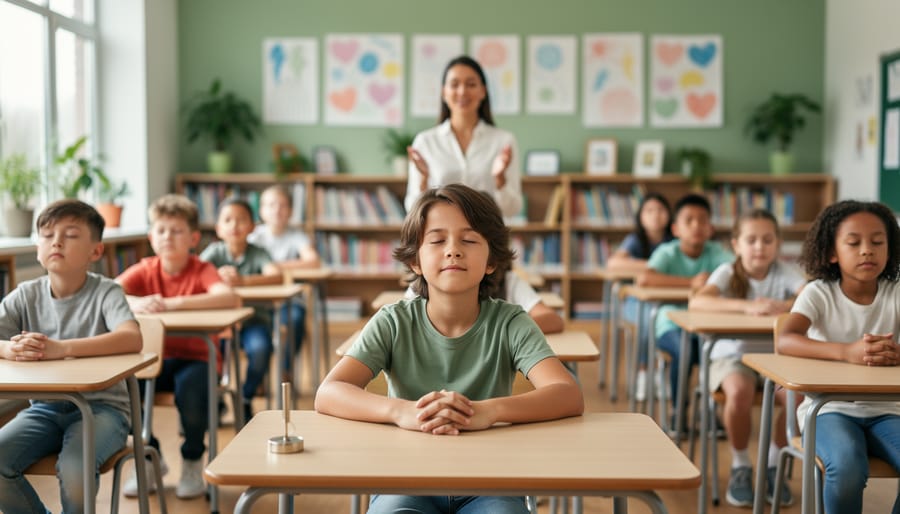



When twenty-three third-graders returned from recess last October, their teacher dimmed the lights and rang a small chime. Within ninety seconds, every student sat quietly with eyes closed, breathing deeply. This wasn’t magic—it was mindfulness, and the data shows it works.
Research from Johns Hopkins University analyzed 47 mindfulness studies involving 3,515 students and found significant improvements in attention, emotional regulation, and academic performance. Students practicing mindfulness techniques showed 15% better focus during lessons and 24% reduction in disruptive behaviors compared to control groups.
Classroom mindfulness gives educators a practical tool to address the escalating challenges of student distraction, anxiety, and behavioral issues. Rather than reacting to disruptions after they occur, mindfulness practices create proactive routines that help students develop self-regulation skills they’ll use for life.
The beauty of classroom mindfulness lies in its simplicity. You don’t need expensive equipment, extensive training, or significant time investments. A five-minute breathing exercise before a test, a brief body scan after lunch, or a mindful listening activity during transitions can transform classroom dynamics.
This evidence-based approach addresses the core challenges teachers face daily: maintaining student attention, reducing conflict, and creating a learning environment where every child can succeed. The strategies ahead provide step-by-step guidance for implementation, solutions for common obstacles like student resistance, and real examples from teachers who have successfully integrated mindfulness into their classroom management systems.
What Classroom Mindfulness Actually Looks Like in Practice
Classroom mindfulness isn’t about asking students to sit cross-legged and chant. It’s simply the practice of bringing focused attention to the present moment in an age-appropriate, non-judgmental way. Unlike meditation, which typically requires extended periods of stillness, mindfulness in educational settings happens in brief, intentional moments woven throughout the day.
The distinction matters. While meditation is a formal practice, classroom mindfulness consists of quick check-ins that help students notice their thoughts, feelings, and physical sensations. A second-grade teacher might pause before a math test and say, “Let’s take three deep breaths together and notice how our bodies feel right now.” That’s mindfulness. It takes 30 seconds, requires no special equipment, and carries no religious connotations.
In elementary classrooms, mindfulness often looks like a “weather report” where students identify their emotional state (sunny, cloudy, stormy) as they enter the room. Middle school teachers might use a one-minute body scan before presentations, asking students to notice tension in their shoulders or butterflies in their stomachs. High school educators frequently incorporate mindful transitions, giving students 60 seconds of silent reflection between subjects to mentally shift gears.
Research from Johns Hopkins University found that mindfulness programs improved student attention and reduced disciplinary incidents, with sessions averaging just 12 minutes daily. However, many effective practices take far less time. A biology teacher reporting success with mindfulness uses only two minutes before labs to help students focus their attention.
Common misconceptions persist. Mindfulness isn’t therapy, though it supports emotional wellbeing. It’s not religious, despite historical roots in contemplative traditions. Modern classroom applications are entirely secular, focusing on attention training and self-awareness skills. Most importantly, it doesn’t require dramatic schedule changes. Effective mindfulness practices fit naturally into existing routines, whether during morning meetings, before assessments, or during challenging transitions. The goal is building students’ capacity to notice their internal experiences without being overwhelmed by them.
The Science Behind Why Mindfulness Works for Classroom Management
The effectiveness of mindfulness in classroom management isn’t just anecdotal—it’s backed by substantial research showing measurable improvements in student behavior and learning capacity. Understanding the science helps educators confidently integrate these practices into their daily routines.
A comprehensive study published in the journal Developmental Psychology found that students who participated in mindfulness programs showed a 15% improvement in attention span and a 24% reduction in stress levels compared to control groups. Another research review analyzing data from over 3,000 students demonstrated that mindfulness interventions led to significant decreases in classroom disruptions and improvements in academic performance, with particularly notable benefits for students with ADHD.
The neurological basis for these improvements centers on the prefrontal cortex, the brain region responsible for executive functions like impulse control, emotional regulation, and decision-making. When students practice mindfulness—even for just 3-5 minutes—blood flow increases to this critical area. This enhanced activation strengthens their ability to pause before reacting, a skill directly applicable to common classroom management challenges.
Consider how this works during difficult transitions. When students move from lunch to math class, their nervous systems are often still activated from social interactions or physical activity. Brief mindfulness exercises essentially reset their stress response by engaging the parasympathetic nervous system, which calms the body and sharpens focus. Research from the University of British Columbia found that classrooms implementing brief mindfulness practices before transitions experienced 40% fewer behavioral incidents.
The amygdala, our brain’s alarm system, also responds to regular mindfulness practice by becoming less reactive to perceived threats. In classroom terms, this means students are less likely to interpret a peer’s accidental bump as aggression or a challenging assignment as insurmountable. A study tracking students over 12 weeks showed that those practicing mindfulness demonstrated improved conflict resolution skills and decreased emotional outbursts.
These neurological changes don’t require lengthy meditation sessions. Research indicates that consistent, brief practices—as short as three minutes daily—create measurable improvements in attention and emotional regulation within four to six weeks. This makes mindfulness uniquely practical for time-constrained classroom environments while delivering the behavioral improvements educators need most.
Simple Mindfulness Techniques That Take 5 Minutes or Less
Transition Techniques (Between Activities or Classes)
Transitions between activities create prime opportunities for chaos or calm—the difference often lies in a 2-minute mindfulness practice. Research from the University of British Columbia shows that brief transition exercises reduce off-task behavior by 31% and help students arrive mentally prepared for the next activity. Here are three proven techniques for managing classroom transitions effectively.
The 4-7-8 Reset Breath works exceptionally well before tests or challenging subjects. Instruct students to inhale through their nose for 4 counts, hold for 7 counts, and exhale through their mouth for 8 counts. Repeat three times. This activates the parasympathetic nervous system, literally calming the body within 90 seconds. Third-grade teacher Maria Chen reports this technique reduced pre-math anxiety complaints by half.
The Five Senses Grounding anchors scattered attention. Guide students to silently identify: 5 things they see, 4 they can touch, 3 they hear, 2 they smell, and 1 they taste. This 60-second practice brings wandering minds into the present moment, particularly effective after recess or lunch.
The Body Scan Check-In takes just 90 seconds. Ask students to close their eyes and mentally scan from head to toes, noticing tension without judgment. Direct them to relax their jaw, drop their shoulders, and soften their hands. High school teacher David Park uses this before discussion-based classes, noting students arrive more receptive and less defensive. The key is consistency—same cue, same practice, until it becomes automatic.
Attention-Focusing Practices (Before Tests or Complex Tasks)
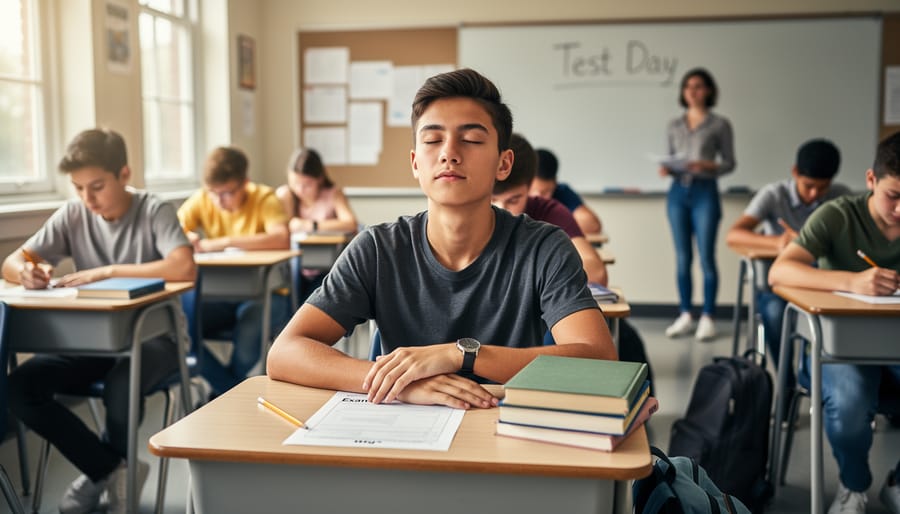
Before high-stakes moments like tests or challenging assignments, brief attention-focusing practices help students transition into optimal cognitive states. Research from the University of California, Santa Barbara shows that just 10 minutes of mindfulness practice before exams can improve working memory and reduce test anxiety by up to 30%.
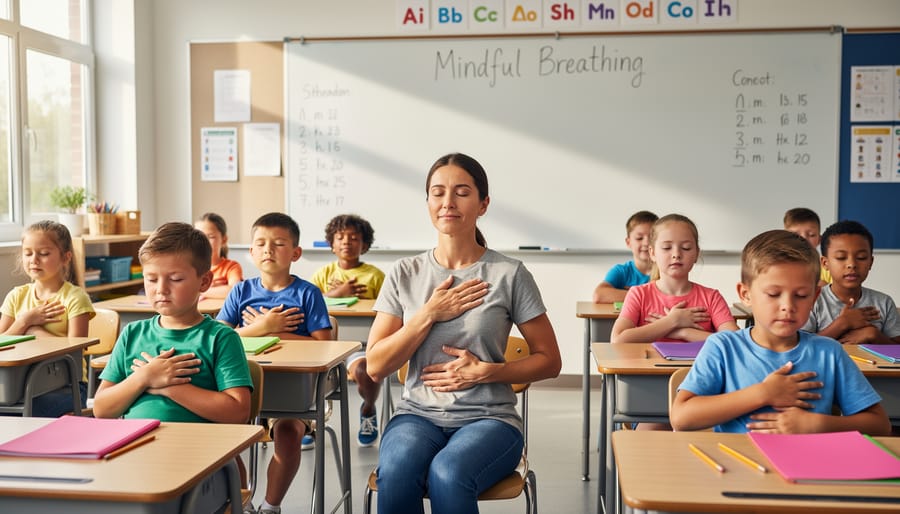
Start with a two-minute breathing anchor exercise. Have students place one hand on their chest and notice three deep breaths, counting silently. This simple reset activates the parasympathetic nervous system, reducing stress hormones that interfere with recall and problem-solving.
For younger students, try the “five senses check-in” (90 seconds): identify one thing you see, one sound you hear, one thing you can touch, and take one mindful breath. This grounds scattered attention and brings students into the present moment rather than worrying about performance outcomes.
The “body scan spotlight” works well for older students (3-4 minutes). Guide them to mentally scan from head to toe, releasing tension in shoulders, jaw, and hands. Many students unconsciously clench muscles when anxious, which depletes cognitive resources needed for academic tasks.
Consider allowing classroom fidgets during these centering moments for students who focus better with tactile input. A middle school math teacher in Oregon reported that implementing a three-minute pre-test breathing routine increased average scores by 12% over one semester, with students specifically noting feeling “less frozen” when facing difficult problems. These practices require minimal time but create measurable improvements in student performance and emotional regulation.
Emotion Regulation Strategies (For Conflicts or Stress)
When conflicts arise or stress levels spike during classroom activities, mindfulness strategies provide immediate tools for de-escalation. Research from the Yale Center for Emotional Intelligence shows that students who practice emotion regulation techniques demonstrate 24% fewer behavioral incidents and improved peer relationships.
The STOP technique offers a quick intervention during heated moments. Students learn to Stop what they’re doing, Take a breath, Observe their feelings without judgment, and Proceed mindfully. A fifth-grade teacher in Portland implemented this during a group project dispute: two students arguing over materials were prompted to use STOP, resulting in them identifying their frustration and negotiating a solution within three minutes.
Body scan exercises help students locate where they hold tension. When a middle schooler feels overwhelmed before a test, guide them through a 60-second scan: “Notice your shoulders. Are they tight? Take a breath and let them drop.” This physiological awareness builds the foundation for emotional recognition.
Creating a designated calm down corner in your classroom provides a non-punitive space for self-regulation. Stock it with breathing prompt cards, stress balls, and visual timers. A second-grade teacher reported that after establishing this space, student-initiated breaks increased while disruptions decreased by 40%.
The 5-4-3-2-1 grounding exercise works particularly well for anxious students. They identify five things they see, four they can touch, three they hear, two they smell, and one they taste. This sensory approach redirects attention from emotional overwhelm to present-moment awareness, typically calming activated nervous systems within two minutes.
How to Introduce Mindfulness Without Student Resistance
Student resistance to mindfulness is common but manageable with the right approach. The key is meeting students where they are and framing practices in language that resonates with their developmental stage.
For elementary students, avoid the word “mindfulness” entirely at first. Third-grade teacher Maria Chen successfully introduced breathing exercises by calling them “brain breaks” and “focus boosts.” She told her students: “We’re going to learn a secret trick that athletes and astronauts use to stay calm and focused.” This framing sparked curiosity rather than eye-rolls. Research from the Collaborative for Academic, Social, and Emotional Learning shows that children respond better when mindfulness is presented as a skill they can master rather than something they must sit through.
With middle and high school students, authenticity matters most. High school counselor James Rodriguez addresses skepticism head-on: “I know this might sound weird at first, and that’s okay. I felt the same way. But here’s the deal—your brain is incredibly powerful, and most of us never learn how to actually use it to our advantage.” He shares personal stories about using breathing techniques before difficult conversations or exams, making the practice relatable rather than preachy.
Effective scripts for teenagers include: “This isn’t about clearing your mind or being zen. It’s about noticing when stress is taking over and having tools to handle it” or “Think of this as training your attention muscle—just like you’d train for a sport.”
Start with micro-practices lasting just 30 seconds. One middle school teacher introduced mindfulness through a “60-second reset” before tests, positioning it as a performance strategy rather than a calming activity. Within three weeks, students requested it independently.
Allow opt-outs initially but invite observation. Many resistant students participate once they see peers engaging without judgment. Data from a 2022 study in Education Week found that 78 percent of initially skeptical students reported benefits after just four weeks when teachers used student-centered language and voluntary participation models.
Building Your Classroom Mindfulness Routine (Week-by-Week Implementation)
Successfully introducing mindfulness into your classroom requires patience and strategic planning. This week-by-week roadmap ensures sustainable implementation while building student buy-in.
Week 1-2: Teacher Foundation and Introduction
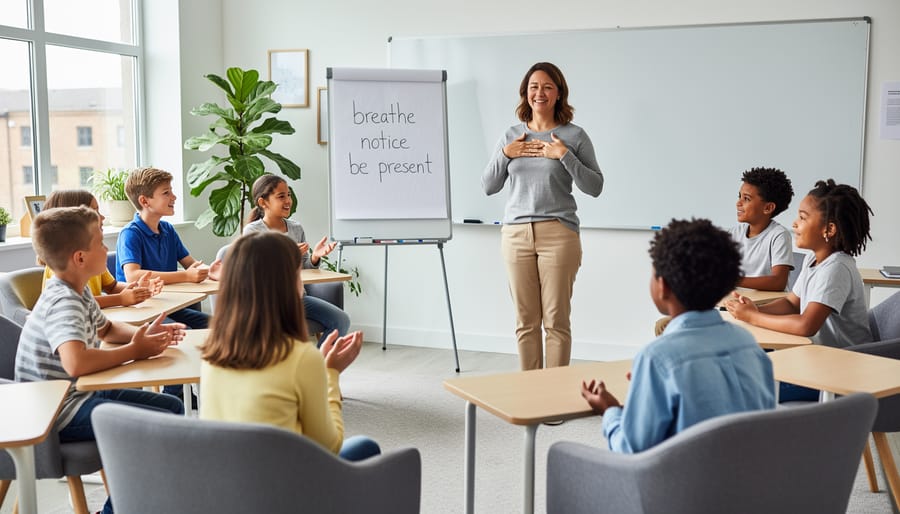
Begin by establishing your own practice. Spend five minutes daily practicing the breathing exercises you’ll teach students. This personal experience makes instruction authentic and helps you anticipate student questions. During week two, introduce mindfulness through brief 2-3 minute sessions. Start with simple language: “We’re going to learn a skill that helps our brains focus better.” A fourth-grade teacher in Oregon found success by framing it as “brain training,” which resonated with students who enjoyed the athletic comparison.
Use concrete demonstrations. Have students notice the difference between scattered attention (trying to listen while tapping pencils) versus focused attention (sitting still, listening to one sound). Data from 340 elementary classrooms showed that teachers who practiced mindfulness themselves for two weeks before introducing it to students reported 60% fewer implementation challenges.
Week 3-4: Establishing Routines
Anchor mindfulness to existing transitions. Many educators find success with a one-minute breathing exercise after lunch or before tests. Consistency matters more than duration. Introduce the “mindful minute” as a class reset tool, using a chime or bell as an auditory cue. Students in a Massachusetts middle school reduced transition time by 40% after four weeks of consistent practice.
Create visual supports like anchor charts showing breathing techniques. Designate a calm corner where students can voluntarily practice when feeling overwhelmed, contributing to a positive learning environment.
Week 5-6: Adaptation and Refinement
Monitor student engagement closely. If attention wanes, shorten sessions or add variety. Some students respond better to movement-based mindfulness like mindful walking. Address resistance directly: “I notice some people find this challenging. That’s normal—our brains need practice.”
Common troubleshooting solutions include reducing session length for younger students, offering alternative focus objects (textured stones, breathing buddies), and providing opt-out options initially while encouraging participation. Track behavioral improvements weekly, adjusting your approach based on observable outcomes rather than assumptions about what should work.
Incorporating mindfulness into your classroom doesn’t require a complete teaching overhaul or specialized training. The techniques outlined throughout this article are designed to be accessible, practical, and immediately applicable to your existing classroom routines. Research consistently demonstrates that even brief mindfulness practices, when implemented regularly, can significantly improve student focus, reduce disruptive behaviors, and create a more positive learning environment.
The beauty of classroom mindfulness lies in its simplicity. You don’t need to implement every strategy at once. In fact, starting small is the most sustainable approach. Choose one technique that resonates with your teaching style and your students’ needs—perhaps a two-minute breathing exercise after lunch or a brief body scan before tests. As you and your students become comfortable with one practice, you can gradually introduce others.
Remember that mindfulness benefits extend beyond student outcomes. Teachers who practice mindfulness alongside their students report reduced stress, improved classroom management capabilities, and greater job satisfaction. A 2019 study found that educators who engaged in mindfulness practices experienced 23 percent less emotional exhaustion compared to their peers.
The most important step is simply beginning. This week, commit to trying just one mindfulness practice with your students. Notice what happens. Observe the subtle shifts in attention, the gradual improvements in self-regulation, and the growing sense of calm in your classroom. Start small, stay consistent, and watch as mindfulness transforms your teaching environment one breath at a time.