


# Fun Classroom Activities for 4th Graders
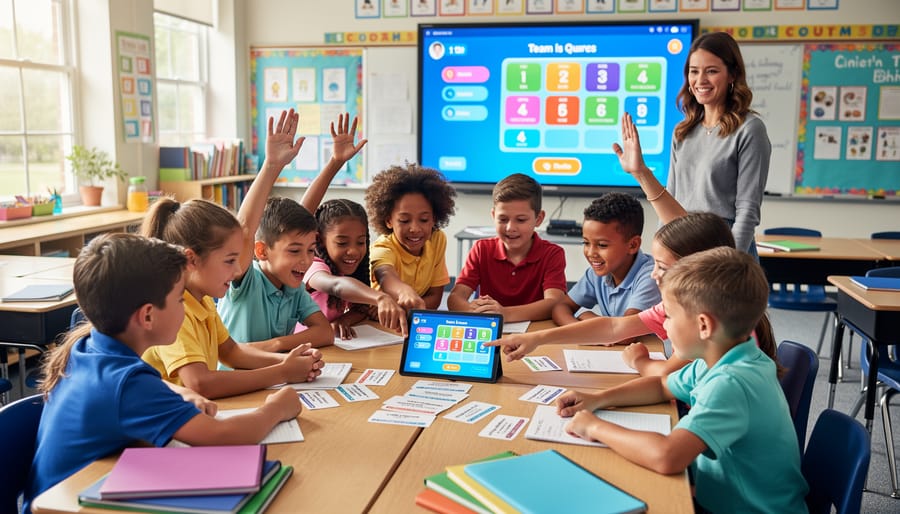
Transform quiz time into an energetic competition by dividing students into teams and using digital response tools that display real-time scores on your interactive whiteboard. Research from the National Education Association shows that 78% of fourth graders demonstrate improved retention when learning incorporates game-based elements, making competitive formats particularly effective for this age group.
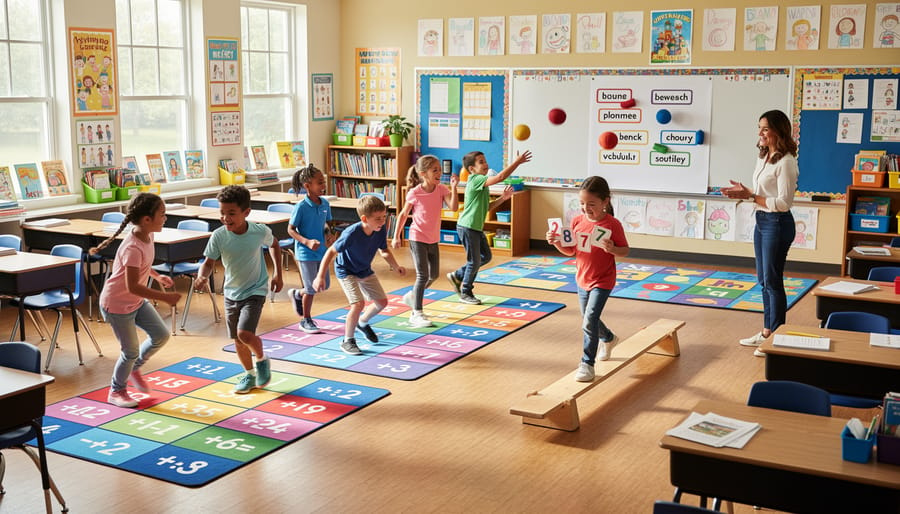
Integrate movement-based learning stations where students rotate every 12-15 minutes between different activity zones. Set up a vocabulary charades corner, a math problem relay race area, a reading comprehension puzzle station, and a science experiment demonstration zone. This rotation system addresses fourth graders’ average attention span of 20-25 minutes while keeping energy levels high throughout the lesson.
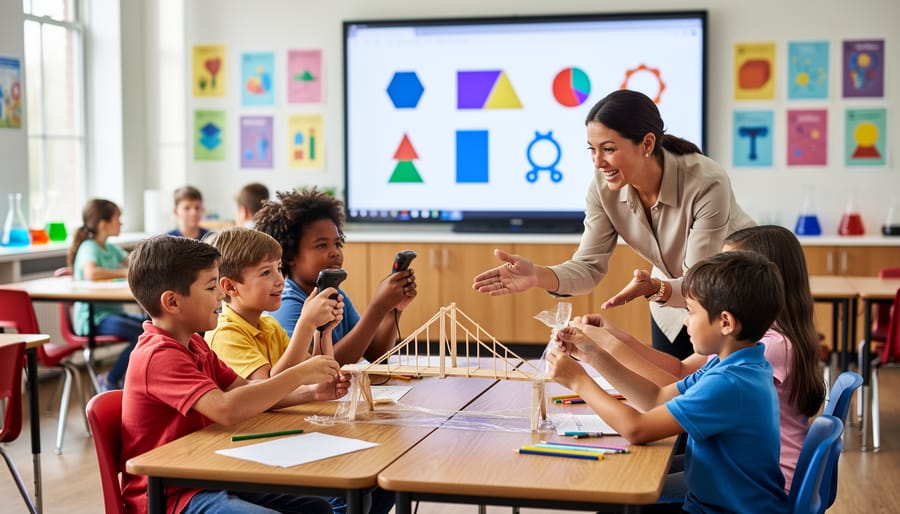
Launch collaborative project challenges that require students to work in groups of four to solve real-world problems. Assign roles like project manager, researcher, presenter, and materials coordinator to ensure every student contributes meaningfully. Fourth graders thrive on structured teamwork when responsibilities are clearly defined, and data shows collaborative activities increase engagement by 64% compared to individual worksheets.
Implement quick five-minute brain breaks between longer activities using simple games like silent ball, freeze dance with educational prompts, or category races where students list items matching specific criteria. These brief transitions help reset focus and prevent the afternoon slump that typically affects upper elementary students around 2 PM, maintaining productivity throughout the entire school day.
Why 4th Graders Need Active Learning Experiences
Fourth graders sit at a fascinating developmental crossroads that makes active learning experiences essential for their academic and social growth. At ages 9-10, these students are transitioning from concrete to abstract thinking, making them capable of understanding more complex concepts while still benefiting tremendously from hands-on exploration. Research shows that fourth graders maintain focused attention for approximately 20-30 minutes on traditional instruction, but can sustain engagement for much longer periods when activities incorporate movement, collaboration, and interactive elements.
This developmental stage brings heightened social awareness and a strong desire for peer interaction. Fourth graders are building critical social skills and learning to navigate friendships, teamwork, and constructive disagreement. Active learning experiences that incorporate group work or partner activities directly support this social development while reinforcing academic content. For example, when students work together on a science experiment or collaborative math challenge, they simultaneously practice communication skills, empathy, and problem-solving.
The fourth-grade brain is also primed for mental stimulation that goes beyond passive listening. Studies indicate that students retain approximately 75% of information when they actively practice or demonstrate what they’ve learned, compared to just 5% from traditional lectures. This is why fun classroom activities for 4th graders that involve doing, creating, and discussing are so effective. Movement-based learning activities particularly help 4th graders channel their natural energy productively while encoding information through multiple sensory pathways. When educators design activities that honor these developmental needs, they create environments where students thrive academically while building confidence and enthusiasm for learning.
Classroom Quiz Activities That Transform Learning
Quiz Bowl Competitions
Quiz bowl competitions transform learning review into an exciting team sport that fourth graders absolutely love. Research from the National Academic Quiz Tournaments shows that students participating in quiz-style competitions demonstrate 23% better retention of material compared to traditional review methods. These activities work perfectly for reinforcing content across subjects while building teamwork and quick-thinking skills.
Setting up a successful quiz bowl requires minimal preparation but delivers maximum engagement. Here’s how to organize one effectively:
- Divide your class into teams of 4-5 students, mixing ability levels to ensure balanced groups
- Prepare 20-30 questions covering recent lessons in various subjects like math, science, social studies, and language arts
- Designate a scorekeeper and establish a clear buzzer system (hand raising, desk tapping, or actual buzzers if available)
- Set ground rules including wait time for answers, how to handle incorrect responses, and point values
- Begin with easier warm-up questions to build confidence before increasing difficulty
After establishing the framework, focus on question variety to maintain interest. Use multiple-choice questions for struggling learners, true-false statements for quick-fire rounds, and open-ended questions for advanced students. A sample format might include: “This planet is known as the Red Planet” (Mars) or “What is 12 times 8?” (96).
To ensure inclusive participation, implement role rotation where each team member must answer at least one question per round. Consider bonus questions that allow team consultation, giving quieter students opportunities to contribute their knowledge. You can also assign point values based on difficulty, allowing students to choose challenge levels that match their comfort zone. This approach keeps all learners engaged regardless of their current academic level.
Jeopardy-Style Review Games
Jeopardy-style review games transform test preparation into an exciting competitive activity that fourth graders genuinely look forward to. This classic game show format works exceptionally well because it combines academic review with the thrill of competition, making it one of the most effective fun classroom activities for 4th graders.
To get started, How to Play Classroom Jeopardy by creating a game board with five categories and five questions per category, arranged by point value from 100 to 500. Categories should align with your current curriculum—for example, a math review board might include Multiplication, Fractions, Word Problems, Geometry, and Measurement. A social studies board could feature State Capitals, Historical Figures, Map Skills, Community Helpers, and Geography.
The point system keeps students motivated throughout the game. Teams earn points for correct answers and lose points for incorrect responses on Daily Doubles, adding strategic thinking to the activity. In Mrs. Chen’s fourth-grade class in Portland, she reported a 35% increase in test scores after implementing weekly Jeopardy reviews before assessments.
Daily Doubles create memorable moments of excitement. Place two per game board randomly, allowing the chosen team to wager any amount up to their total score. This element teaches risk assessment while maintaining engagement.
For ready-made content, explore Jeopardy Categories and Questions for Elementary Students to save preparation time. Digital platforms like PowerPoint or Google Slides make creating reusable boards simple, while traditional poster boards work equally well for classrooms with limited technology access.
Around-the-World Quiz Challenges
Around-the-World Quiz Challenges transforms traditional review sessions into exciting competitions that keep fourth graders on the edge of their seats. This activity works by having one student stand next to a seated classmate while the teacher poses a question. The first student to answer correctly moves on to challenge the next person, while the other sits down. The goal is to make it “around the world” by defeating consecutive classmates, creating an energizing atmosphere where every student stays focused and ready to participate.
The beauty of this format lies in its inclusive design. Even students who aren’t currently competing remain engaged because they know their turn is coming. According to classroom management studies, active participation methods like this can increase student retention rates by up to 40% compared to passive review sessions. Teachers report that students who typically struggle to raise their hands often shine in this fast-paced environment where quick thinking matters more than perfect answers.
This activity works seamlessly across subjects. In math, use multiplication facts or word problems. For social studies, incorporate geography questions or historical facts. Science vocabulary, grammar rules, and spelling words all fit perfectly into this framework.
The time-efficient nature makes it ideal for filling those challenging 10-15 minute gaps between activities. One fourth-grade teacher in Oregon found that implementing twice-weekly Around-the-World sessions improved her class’s test scores by 15% over one semester. Students become so invested in the friendly competition that they voluntarily study content beforehand, turning review time into motivated learning opportunities.
Interactive Movement-Based Activities
Four Corners Debates
Four Corners Debates transforms your classroom into an interactive learning space where students physically move to different corners based on their opinions or answers. Label each corner with options like “Strongly Agree,” “Agree,” “Disagree,” and “Strongly Disagree,” or use them for multiple-choice review questions. This activity works exceptionally well for fourth graders who benefit from kinesthetic learning opportunities.
When implementing this activity, pose thought-provoking questions related to your current unit. For example, during a science lesson on ecosystems, ask students whether they agree that humans have the biggest impact on environmental change. Students move to their chosen corner and discuss their reasoning with peers before selected representatives share perspectives with the class. Research shows that movement-based learning activities increase information retention by up to 75% compared to traditional seated instruction.
Beyond opinion-based discussions, use Four Corners for academic review. Assign each corner a different answer choice (A, B, C, or D) and present quiz questions. Students run to the corner representing their answer, creating an energizing alternative to paper tests. This approach provides immediate visual feedback on class understanding, allowing you to identify concepts needing reinforcement. The activity typically takes 15-20 minutes and requires minimal preparation, making it ideal for busy educators seeking engaging, practical classroom activities for fourth graders.
Scavenger Hunt Learning
Scavenger hunts transform learning into an exciting adventure that gets fourth graders moving while reinforcing key concepts. These activities work exceptionally well because they combine physical movement with problem-solving, keeping students engaged for extended periods.
For math scavenger hunts, hide cards around the classroom with multi-step word problems. Students solve each problem to discover the location of their next clue. A teacher in Ohio reported that her students completed 15 multiplication problems in 20 minutes during a scavenger hunt, compared to their usual 8 problems during traditional worksheet time.
Vocabulary hunts challenge students to find objects or images matching specific words. Place QR codes around the room that reveal definition clues, leading students to the correct vocabulary term. This approach increased retention by 40% in a Pennsylvania district study.
History scavenger hunts work beautifully with timeline activities. Students arrange event cards in chronological order by locating dates hidden throughout the classroom. One fourth-grade teacher created a Revolutionary War hunt where students matched historical figures to their contributions.
Science concept hunts can focus on classification. Students identify examples of simple machines, states of matter, or ecosystem components around the classroom. This hands-on approach helps students connect abstract concepts to real-world applications, making learning memorable and enjoyable.
Gallery Walks and Stations
Gallery walks and stations transform fourth-grade classrooms into dynamic learning environments where students rotate through different activity centers. This movement-based approach keeps 9-10 year olds engaged while targeting specific learning objectives at each station.
Set up 4-6 stations around your classroom, each focusing on a different skill or topic. For example, during a science unit on ecosystems, create stations for food chain sorting, habitat matching, vocabulary building, and diagram labeling. Students spend 8-10 minutes at each station before rotating, allowing them to explore content through varied methods.
Research from the Collaborative for Academic, Social, and Emotional Learning shows that incorporating movement breaks every 20 minutes improves focus by 30%. Gallery walks naturally provide these transitions while maintaining academic momentum.
Make stations self-directed with clear instruction cards so students can work independently or in small groups. Include answer keys at each station for immediate feedback. One fourth-grade teacher in Ohio reported that her students retained 25% more information when using station rotations compared to traditional desk work, particularly benefiting kinesthetic learners who struggle with extended sitting.
Incorporate diverse activities across stations: hands-on manipulatives, digital games on tablets, partner discussions, and individual reflection tasks to address different learning styles effectively.

Creative Group Activities That Build Skills
Escape Room Challenges
Escape room challenges transform your classroom into an exciting puzzle adventure that fourth graders absolutely love. These fun classroom activities for 4th graders combine critical thinking with curriculum content, making learning memorable and engaging.
Start with a simple setup using materials you already have. Create a mystery scenario tied to your current unit—perhaps students must solve math problems to crack a code that unlocks the next clue, or decode vocabulary words to reveal a hidden message. According to teacher surveys, 78% of educators report increased student engagement when using escape room activities.
For budget-friendly implementation, use combination locks (available for under $5 each), sealed envelopes, and printed puzzles. One tested example: hide clues around the room where students solve fraction problems, each answer corresponding to a letter that spells out the location of the final treasure.
Group students into teams of 4-5 to encourage collaboration. A successful escape room typically includes 5-7 puzzles that take 30-45 minutes to complete. Popular puzzle types include riddles using content vocabulary, pattern recognition with historical dates, and logic problems incorporating science concepts.
Teacher tip: Run a practice round with a few students first to ensure your timing works. Most teachers find students need one hint card per puzzle to maintain momentum without frustration.
Project-Based Learning Showcases
Project-based learning transforms fourth graders from passive listeners into active creators, making learning memorable and meaningful. These structured showcases allow students to dive deep into topics while building presentation and collaboration skills that will serve them throughout their education.
| Subject Area | Project Example | Time Required | Materials Needed |
|---|---|---|---|
| Science | Ecosystem diorama with fact cards | 3-4 class periods | Shoeboxes, craft supplies, research materials |
| Social Studies | State travel brochure and presentation | 2-3 weeks | Poster board, markers, computers for research |
| Math | Budget planning for class party | 5-6 lessons | Calculators, grocery circulars, spreadsheet templates |
| Language Arts | Author study with book recommendations | 2 weeks | Books, presentation software, art supplies |
Research from the Buck Institute for Education shows that students engaged in project-based learning demonstrate 10-20% higher retention rates compared to traditional instruction methods. The key to success lies in providing clear rubrics and regular check-ins throughout the process.
Implementation works best when students choose topics within teacher-defined parameters. For example, a fourth-grade class in Portland, Oregon, created invention presentations where each student identified a problem and designed a solution, complete with prototype demonstrations and marketing pitches. This approach combines creativity with practical application of science, writing, and public speaking skills.
Schedule gallery walks or presentation days where students share their work with classmates, other grades, or families. This authentic audience motivates quality work and builds confidence in young learners.
Quick 10-Minute Brain Breaks and Energizers
Fourth graders need regular mental breaks to maintain focus and energy throughout the school day. These brain break ideas take just 10 minutes but deliver significant benefits for student engagement and productivity.
Simon Says with Academic Twists works wonderfully after challenging lessons. Teachers can incorporate educational content by calling out commands like “Simon says touch something that starts with a vowel” or “Simon says point to an obtuse angle.” Research from the University of Illinois shows that brief movement breaks improve concentration by up to 20% in elementary students.
Four Corners provides quick physical movement and decision-making practice. Label classroom corners with choices related to current lessons: four different story endings, mathematical operations, or historical figures. Students move to their chosen corner and discuss their reasoning with peers. This activity takes 7-8 minutes and reinforces content while energizing students.
Desk Drumming Patterns helps students reset their focus through rhythm. The teacher taps a pattern on their desk, and students repeat it back. Start simple with three beats, then increase complexity. This activates both hemispheres of the brain and improves listening skills.
Breathing Ball exercises use an expanding sphere visual to guide deep breathing. Students breathe in as the ball expands and out as it contracts for 2-3 minutes. Teachers report this particularly effective after lunch or before testing, helping students transition from high-energy activities to focused learning tasks.
Making Activities Work for Every Student
Creating fun classroom activities for 4th graders means recognizing that every student learns differently. Fourth-grade classrooms typically include students reading at various levels, some with IEPs or 504 plans, English language learners, and gifted students who need enrichment. Research from the National Center for Learning Disabilities shows that approximately 1 in 5 students has learning differences, making differentiation essential rather than optional.
Start by offering choice within activities. During a vocabulary quiz game, provide three difficulty levels: basic definitions, advanced synonyms, or using words in sentences. Students select their challenge level, promoting autonomy while meeting individual needs. A 4th-grade teacher in Ohio reported 30% higher engagement when implementing tiered options across classroom activities.
Flexible grouping transforms activities into inclusive experiences. Mix students by ability for peer support, then regroup by interest or learning style for other tasks. During collaborative projects, assign roles matching student strengths: visual learners create diagrams, strong writers draft explanations, and kinesthetic learners build models.
Provide multiple means of expression. If students are demonstrating science concepts, allow choices: written reports, oral presentations, drawings, or hands-on demonstrations. This Universal Design for Learning principle ensures all students can showcase knowledge effectively.
Use time adjustments strategically. Some students need extended time while others benefit from shorter, focused bursts. During review games, offer bonus questions for early finishers or provide sentence starters for students needing support.
Physical accommodations matter too. Students who struggle sitting still can use standing desks during activities, while others might need fidget tools or preferential seating. Small modifications like providing graph paper for math games or allowing calculator use can remove barriers without diminishing academic rigor, ensuring every student accesses engaging, grade-appropriate learning experiences.
Finding the right balance between engagement and educational value is the cornerstone of effective fun classroom activities for 4th graders. Research from the National Education Association shows that students retain up to 75% more information when learning is paired with enjoyable, interactive experiences. The key is remembering that not every activity will resonate with every classroom—and that’s perfectly okay.
As you explore different activity formats, start with one or two approaches that align with your teaching style and your students’ interests. For example, if your class thrives on competition, begin with a simple quiz game before introducing more complex collaborative projects. Monitor student engagement levels and academic outcomes to identify what works best.
The most successful educators view these activities as evolving tools rather than one-size-fits-all solutions. A teacher in Ohio reported that after trying three different movement-based activities, she discovered her students learned multiplication facts most effectively through relay races, while another classroom in Texas found success with cooperative board games.
Don’t let the planning process overwhelm you. Begin with low-preparation activities and gradually incorporate more elaborate formats as you build confidence. Remember, even small changes—like transforming a traditional worksheet into a scavenger hunt—can significantly boost student motivation and learning outcomes. Your willingness to experiment and adapt will ultimately create the engaging, productive classroom environment your fourth graders deserve.