



A teacher cooperative is an educator-owned and -governed school where teaching staff collectively manage operations, curriculum, and business decisions. Launching one typically takes 12 to 24 months and requires assembling a founding team of at least three to five committed educators, securing startup capital of $50,000 to $150,000, and navigating state incorporation and charter or private school licensing requirements.
The model has gained traction as teachers seek alternatives to traditional hierarchies that limit professional autonomy. According to recent data from the Democracy at Work Institute, teacher-owned cooperatives report 30% higher educator retention rates compared to conventional schools, largely because members share both decision-making authority and financial stake in their institution’s success. This structure proves especially valuable for hosting student teachers, since cooperative members typically invest more deeply in mentorship when they control hiring, curriculum, and professional development pathways.
Starting a teacher cooperative requires clear-eyed planning across legal formation, governance design, financial sustainability, and community engagement. You’ll need to draft bylaws that define membership criteria and voting structures, develop a business plan showing three-year revenue projections, and build relationships with families who value collaborative educational models. The process demands patience and consensus-building skills, but the payoff is a workplace where educators answer to one another rather than distant administrators. Schools like the Minnesota New Country School and the Boston Teachers Union School have demonstrated that teacher-led governance can produce both academic results and professional satisfaction when founders commit to transparent systems and shared accountability from day one.
What You Need Before Starting a Teacher Cooperative
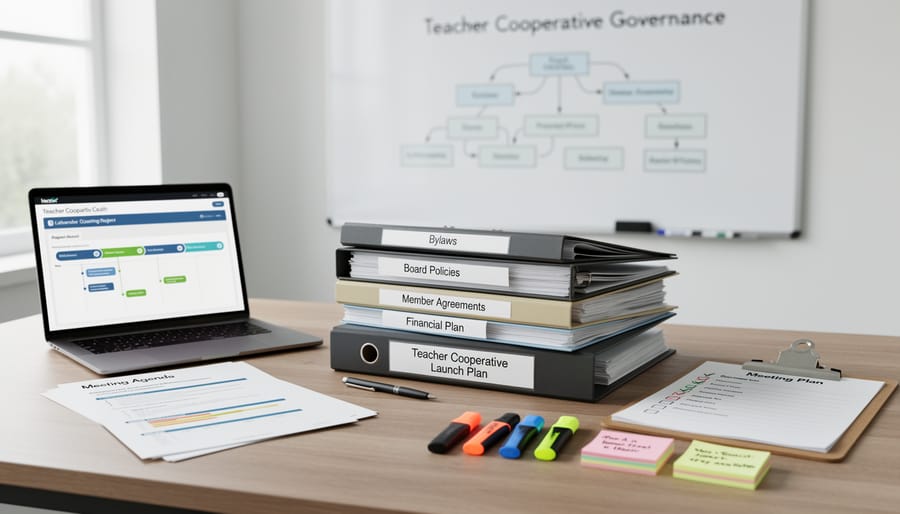
Starting a teacher cooperative demands more than enthusiasm. You need a concrete checklist of resources, relationships, and capital before you file a single document.
Begin with your founding team: three to seven committed educators works best. Smaller groups lack the skill diversity and workload capacity to sustain launch momentum, while larger teams bog down decision-making before you’ve established clear governance. Your team should include at least one member with financial literacy, one with legal or administrative experience, and one with deep community ties. The Wildflower Teacher Cooperative in Portland started with five teachers who collectively brought curriculum design expertise, nonprofit management experience, and parent network connections.
Capital requirements vary by model, but expect $15,000 to $50,000 minimum to cover legal fees, initial technology setup, and operating reserves. Member equity contributions, typically $500 to $2,000 per founding member, demonstrate commitment and seed your startup fund. The Philadelphia Teacher Cooperative raised $30,000 through a combination of member buy-ins, a local credit union loan, and a grant from their city’s cooperative development initiative.
Essential resources include:
– Legal consultation from a cooperative attorney (budget $3,000-$8,000 for formation)
– Accounting software and bookkeeping system for transparent financial tracking
– Governance framework template from established cooperatives or development centers
– Digital infrastructure including shared drives, communication platforms, and digital classroom PDFs for documentation
– Insurance quotes for liability, property, and directors and officers coverage
– State-specific cooperative incorporation guides and education department requirements
You’ll also need organizational tools. Many cooperatives use teacher planners adapted for collaborative scheduling and shared decision calendars. Technology infrastructure should support both internal operations and student-facing programs, expect to invest $2,000 to $5,000 in initial software subscriptions, website development, and secure data systems.
Don’t skip the research phase. Study bylaws from functioning teacher cooperatives, attend cooperative development workshops, and connect with your regional cooperative council. The Democracy at Work Institute and state-level cooperative development centers offer free templates and consultation hours specifically for worker cooperatives in education.
Critical Considerations and Potential Obstacles

Launching a teacher cooperative demands a realistic assessment of what can go wrong before you commit. Legal compliance stands as your first major hurdle, as most states require cooperatives to register under specific statutes that differ from standard nonprofit or LLC structures. Failing to file the correct formation documents, secure proper educational licenses, or maintain compliant governance records can result in dissolution, fines, or loss of your teaching credentials. Partner with a cooperative development center and an attorney experienced in both cooperative law and education regulation from day one.
The time commitment required to build and sustain a cooperative often catches educators off guard. Founding members typically invest 15 to 25 hours per week beyond their regular teaching responsibilities during the first year, handling everything from legal paperwork to facilities management, marketing, and financial administration. This workload strains personal lives and existing employment, particularly when cooperatives launch as side ventures before securing full student enrollment or client contracts. If you cannot realistically carve out this time or persuade your founding team to share the burden equitably, postpone your launch until circumstances allow full commitment.
Financial sustainability presents another stark reality check. Teacher cooperatives need 12 to 18 months of operating reserves to weather enrollment fluctuations, unexpected expenses, and delayed revenue cycles, yet many founders underestimate startup costs and overestimate how quickly families or partner schools will commit. Run conservative financial models, plan for worst-case enrollment scenarios, and secure commitments from at least 60 percent of your target membership before signing facility leases or hiring staff. Without this buffer, you risk burning through member equity and personal savings within months.
Relationship strain among founding members destroys cooperatives faster than external challenges. Shared ownership means shared decision-making, which amplifies disagreements about everything from curriculum philosophy to compensation structures. When mission-driven educators clash over fundamental values or feel their voices go unheard, cooperatives fracture. Establish clear conflict resolution protocols, decision-making thresholds, and exit procedures before tensions rise. If your founding team cannot agree on governance basics during the planning phase, the cooperative model is not what works instead for your group, and pursuing traditional organizational structures may preserve both your professional relationships and your educational vision.
Step-by-Step Process to Establish Your Teacher Cooperative

Build Your Founding Team and Define Your Mission
Start with three to seven founding educators who share a vision for educator-led schooling. Larger groups risk fragmentation during initial planning; smaller ones lack the skill diversity you need for sustainable operations.
Recruit colleagues who complement each other’s strengths. You want classroom expertise across grade levels or subject areas, plus at least one person comfortable with business operations, another with legal or policy knowledge, and someone experienced in community relationships. Don’t stack your founding team with similar teaching backgrounds or identical frustrations with traditional schools. That homogeneity creates blind spots when you face operational challenges.
Host structured conversations where everyone articulates why they want this. Surface individual motivations early, because misaligned expectations sink cooperatives faster than funding shortfalls. Use specific prompts: What decisions do you want control over? What are you willing to sacrifice? How do you define student success? What happens when members disagree?
Document the mission collaboratively. Draft it together rather than assigning one person to write it. Your mission statement should answer what educational model you’re building, who you serve, and what makes your approach distinctive. Keep it concrete. “Create student-centered learning environments where teachers have professional autonomy” beats vague declarations about transforming education.
Test for genuine commitment by assigning homework between meetings. Founding teams that complete research tasks, draft documents, and report back demonstrate they’ll sustain effort through registration and launch.
Choose Your Legal Structure and Register Your Cooperative
Most teacher cooperatives organize as worker cooperatives, where educator-members own and control the business collectively. This structure grants each teacher one vote regardless of investment level, ensuring democratic governance. Some groups choose a multi-stakeholder model that includes parents, community members, or support staff as voting members alongside teachers, though this adds complexity to decision-making processes.
Your state’s cooperative statutes determine available structures and filing requirements. Wisconsin, California, and Massachusetts offer streamlined cooperative incorporation laws, while states like Texas and Florida require forming as a traditional LLC or corporation with cooperative-style bylaws layered on top. This workaround adds legal complexity but remains viable.
Registration costs vary significantly. California’s cooperative filing fee runs $125 plus $800 annually for franchise tax, while Minnesota charges a flat $135 with no recurring state fees. Oregon requires $100 for articles of incorporation plus $50 for cooperative association filing. Budget an additional $500-2,000 for legal review of your formation documents, though this investment prevents costly mistakes.
Partner with a cooperative development center during formation, these nonprofit organizations provide free or low-cost technical assistance. The National Cooperative Business Association maintains a directory of regional centers that understand education-specific cooperatives. They’ll help you navigate state requirements, draft compliant bylaws, and connect you with attorneys experienced in cooperative law.
File your articles of incorporation with your state’s secretary of state office, then obtain an Employer Identification Number from the IRS. Complete this process before opening bank accounts or accepting member capital contributions. Most states allow online filing with approval within 5-10 business days.
Develop Governance Documents and Operating Agreements
Creating governance documents establishes the operational foundation of your cooperative. Start by drafting bylaws that outline membership criteria, voting rights, and the decision-making structure. Most teacher cooperatives use consensus-based or modified consensus models rather than simple majority voting, giving each member meaningful input on major decisions. For example, the Boston Teacher Solidarity Committee requires 75% agreement for financial decisions over $5,000 but uses simple consensus for curriculum choices.
Develop a membership agreement that clarifies financial commitments, work expectations, and withdrawal procedures. Specify whether members contribute equal capital, how new members buy in, and how departing members receive their equity. The agreement should address time commitments, many cooperatives require 5-10 hours monthly for governance work beyond teaching responsibilities.
Create decision-making protocols that distinguish between operational decisions (handled by designated roles), policy decisions (requiring broader member input), and emergency decisions. Document which decisions need full membership votes versus working group authority.
Establish conflict resolution procedures before tensions arise. Outline a graduated process: direct conversation between parties, mediation by designated members, and if needed, neutral third-party facilitation. The Philadelphia Educator Cooperative includes a “right to recall” provision allowing members to remove someone from leadership roles through a two-thirds vote.
Draft these documents collaboratively using templates from cooperative development centers, then have an attorney review them for legal compliance in your state.
Secure Funding and Create Financial Systems
Funding a teacher cooperative demands both immediate capital and long-term financial planning. Member equity contributions form the foundation, founding educators typically invest $2,000 to $10,000 each, creating both ownership stake and operational runway. This initial pool covers incorporation fees, facility deposits, and essential technology purchases before revenue begins flowing.
Beyond member capital, explore cooperative-specific funding streams. The USDA’s Rural Cooperative Development Grant program and foundations like the Cooperative Development Foundation offer grants ranging from $25,000 to $250,000 for education-focused cooperatives. Cooperative business lenders such as the National Cooperative Bank provide startup loans with favorable terms that recognize the member-equity model, often financing $100,000 to $500,000 at competitive rates.
Community investment tools like direct public offerings allow local supporters to buy non-voting shares, building financial partnerships with families and residents who believe in your mission. Some teacher cooperatives raise $50,000 to $200,000 this way while cultivating stakeholder engagement.
Establish transparent accounting systems from day one. Cloud-based platforms like QuickBooks or Wave track member contributions, operational expenses, and revenue separately. Develop monthly budgets that balance teacher compensation, the largest line item, against facility costs, curriculum materials, and reserve building. Study established pricing models to set tuition or service fees that sustain operations while remaining accessible.
Create compensation structures reflecting cooperative values: equal pay across experience levels, transparent salary formulas tied to revenue, or differentiated rates based on hours and roles. Document everything in your operating agreement so financial expectations stay crystal clear as you grow.
Obtain Necessary Licenses and Educational Approvals
Navigating the regulatory landscape for your teacher cooperative requires careful attention to state-specific educational requirements. Start by contacting your state education department to understand licensing standards for private schools or alternative educational models. Most states require documentation of educational philosophy, curriculum frameworks, and teacher qualifications, cooperatives typically meet these standards easily given their educator-led structure.
If you’re pursuing charter status, prepare for a rigorous application process that includes financial projections, governance plans, and community need demonstration. Charter applications take 6-18 months and require substantial documentation. Non-charter cooperatives face fewer barriers but still need business licenses and compliance with health and safety codes.
Accreditation through regional bodies strengthens credibility with families and enables participation in college admissions processes. While not legally required for operation, accreditation opens doors for student teacher placements and validates your instructional quality. The process typically begins in your third operational year.
Don’t overlook employment law compliance: as educator-owners, members must clarify their status as employees versus owner-operators for tax purposes. This distinction affects workers’ compensation, unemployment insurance, and professional liability coverage requirements. Many cooperatives work with specialized attorneys to ensure proper classification while maintaining the collaborative ownership structure that defines their model.
Launch Operations and Onboard Initial Students or Clients
With your legal structure, governance, and funding secured, you’re ready for launch, the most visible and energizing phase. Your first 90 days of operations will define your cooperative’s culture and establish credibility with families or partner schools.
Start with your physical or virtual space. If operating a brick-and-mortar school, finalize classroom setup, ensure safety inspections pass, and stock materials. For cooperatives providing professional development or curriculum services, establish digital infrastructure, video conferencing systems, shared drives, and project management tools. One Massachusetts teacher cooperative working with student teachers created a shared resource library and observation scheduling system during this phase, saving hundreds of hours in their first year.
Your curriculum framework should reflect your cooperative’s mission while meeting state standards. Don’t reinvent everything from scratch; adapt existing resources collaboratively. Assign each founding member responsibility for specific grade levels or subject areas, then review collectively. Build in flexibility for the iterative improvements your democratic structure enables.
Marketing requires targeted outreach. For family-facing schools, host open houses where parents meet the entire teaching team, a powerful differentiator from traditional schools. Emphasize small class sizes, educator expertise, and community ownership. For cooperatives serving as practicum sites or professional development providers, present proposals to university education departments and school districts, highlighting your capacity to host student teachers through structured cooperating teacher arrangements with shared mentorship.
The final 90-day launch sequence:
- Days 1-30: Complete facility preparation, finalize curriculum scope and sequence, begin targeted marketing campaigns, and establish communication systems for members and families.
- Days 31-60: Conduct enrollment interviews or finalize client contracts, hire any additional staff through democratic hiring processes, train all members on operational systems, and implement orientation schedules.
- Days 61-75: Onboard enrolled students or launch client services, verify all regulatory compliance documents are accessible, conduct emergency preparedness drills, and establish feedback collection mechanisms.
- Days 76-90: Monitor daily operations closely, hold weekly check-ins among cooperative members, adjust systems based on real-time challenges, and celebrate early wins to build momentum.
During onboarding, over-communicate with families or partner institutions. Send weekly updates those first few weeks. If hosting student teachers, pair them immediately with experienced cooperating teachers and schedule regular triad meetings, university supervisor, cooperating teacher, and student teacher, to establish clear expectations. This transparency builds trust and demonstrates your cooperative’s commitment to quality.
Expect unexpected challenges: enrollment shortfalls, personality conflicts under pressure, or systems that seemed perfect in planning but falter in practice. Your cooperative structure is an asset here, call emergency member meetings, brainstorm solutions collectively, and implement changes quickly. Traditional schools take months to adjust; you can pivot in days.
How Teacher Cooperatives Support Student Teacher Hosting

Teacher cooperatives transform student teacher hosting from an individual burden into a shared institutional strength. In traditional schools, cooperating teachers often mentor student teachers alongside their full teaching load with minimal support or compensation. Cooperatives redistribute this responsibility across the teaching team, ensuring no single educator carries the entire mentorship weight while maintaining continuity for the student teacher’s learning experience.
The collaborative supervision model inherent to cooperatives means student teachers observe and learn from multiple educators with different pedagogical approaches, classroom management styles, and content expertise. A cooperative hosting a student teacher might assign them to work primarily with one mentor but structure regular observation periods with three or four other member-teachers. This exposes the novice educator to diverse teaching methodologies within weeks rather than years, accelerating their professional development.
Distributed workload benefits extend beyond observation. Cooperatives can rotate lesson feedback responsibilities, with different teachers reviewing and discussing the student teacher’s planning documents, instructional delivery, and assessment strategies. This prevents mentor burnout while giving the student teacher varied perspectives on their developing practice. Many cooperatives formalize this through their governance documents, allocating dedicated time for mentorship activities and future-proofing training systems that evolve with educational best practices.
The cooperative model also solves the compensation problem that plagues traditional student teacher placements. Rather than relying on individual teachers’ goodwill, cooperatives vote on equitable stipends for mentorship work, funded through their collective budget or negotiated partnerships with teacher preparation programs. This financial recognition acknowledges mentorship as legitimate professional labor, attracting skilled cooperating teachers who might otherwise decline placements due to the added workload.
Verification and Measuring Success in Your First Year
Measuring your cooperative’s progress requires tracking both quantitative benchmarks and qualitative indicators. Rather than waiting for end-of-year evaluations, establish monthly check-ins where your governance team reviews specific metrics that signal whether your model is working.
Track these essential first-year benchmarks to assess cooperative health and sustainability:
- Member retention and engagement levels, including attendance at governance meetings and voluntary committee participation
- Financial sustainability ratios: monthly revenue against expenses, member equity contributions received versus planned, and reserve fund growth
- Student or client satisfaction scores through surveys, retention rates, and referral patterns
- Operational efficiency measures like time spent on administrative tasks versus teaching, decision-making speed, and conflict resolution effectiveness
- Educational outcomes including student progress metrics, family feedback, and any applicable state assessment results
Beyond numbers, pay attention to the emotional health of your cooperative. Are founding members still energized by the work, or showing signs of burnout? Do meetings feel productive or draining? Member satisfaction surveys every quarter can catch problems before they become crises.
When verification reveals gaps, don’t panic. Most cooperatives struggle with either financial sustainability, governance clarity, or workload distribution in year one. Seek external support from cooperative development centers when monthly expenses consistently exceed revenue for three months, when the same conflicts resurface repeatedly, or when member departures threaten operational capacity. Organizations like the Democracy at Work Institute and regional cooperative business associations offer consulting specifically for this stage.
Course corrections might mean adjusting your fee structure, redistributing responsibilities, or temporarily scaling back services. Success in year one isn’t perfection, it’s learning what your specific cooperative needs to thrive and building systems that last.
Frequently Asked Questions About Teacher Cooperatives
How do teacher cooperatives handle compensation compared to traditional schools?
Most teacher cooperatives use democratic processes to set salaries, with members voting on pay scales that often prioritize equity over hierarchical structures. Members typically earn competitive wages while also receiving patronage dividends based on the cooperative’s financial performance, creating a direct link between school success and personal income.
Can a teacher cooperative operate alongside traditional public schools?
Yes, many teacher cooperatives function as charter schools within public systems or as independent private institutions that contract services to traditional schools. Some cooperatives focus solely on professional development and student teacher support rather than running full schools, partnering with existing districts to improve teacher training outcomes.
What happens if members disagree on major decisions?
Well-structured cooperatives establish clear decision-making protocols in their bylaws, typically using consensus for major decisions and majority vote for operational matters. Most include formal conflict resolution processes and sometimes engage neutral mediators when disputes arise, ensuring disagreements don’t derail the organization.
Are teacher cooperatives financially sustainable long-term?
Data from established cooperatives shows sustainability depends on strong business planning, diversified revenue streams, and committed membership. Successful cooperatives in 2026 typically combine tuition or per-pupil funding with grants, professional development services, and community partnerships, building financial reserves during growth years to weather enrollment fluctuations.
Beyond these common questions, educators often wonder about the time investment required. Founding members typically dedicate 10-15 hours weekly during the first year on top of teaching responsibilities, though this workload decreases as systems mature. The cooperative model demands more initial effort than joining an established school, but members consistently report higher job satisfaction and professional autonomy as compensation for that investment.
Another frequent concern centers on liability and insurance. Teacher cooperatives carry the same liability coverage as traditional schools, with members protected through the cooperative’s entity structure rather than bearing individual risk. Working with experienced education consultants during formation helps navigate these legal protections effectively, ensuring the cooperative structure shields individual educators while maintaining accountability to students and families.
Building a teacher cooperative represents more than an alternative school model, it’s a reclamation of professional authority in an era when educators often feel marginalized in policy decisions that shape their classrooms. The cooperative structure places instructional expertise, curriculum design, and working conditions directly in the hands of those who understand teaching best: teachers themselves.
Starting this journey requires courage, but the rewards extend beyond individual autonomy. Cooperatives create sustainable mentorship ecosystems where experienced educators share knowledge organically, newer teachers receive genuine support rather than evaluation-driven feedback, and hosting student teachers becomes a collective responsibility that strengthens everyone’s practice. The shared governance model also sparks educational innovation because teachers can pilot new approaches without navigating bureaucratic approval chains.
Begin with conversations. Gather like-minded educators, explore your state’s cooperative development resources, and allow your vision to evolve through dialogue. The path outlined in this guide has been walked successfully by dozens of teacher-led cooperatives now thriving across the country. Your founding team doesn’t need to have every answer on day one, just commitment to building something better together. The teaching profession needs more educators willing to reimagine what schools can be when teachers lead.