



Every student who plays Clash Royale already manages a strict budget: the elixir bar. It decides what they can afford, and every decision they make with it gives something else up. That is textbook opportunity cost, running live on a phone. This one-period, low-prep lesson turns the bar into an interactive economics game that runs on paper, so students can price real tradeoffs and define the concept in their own words.
Why the Elixir Bar Makes Opportunity Cost Visible
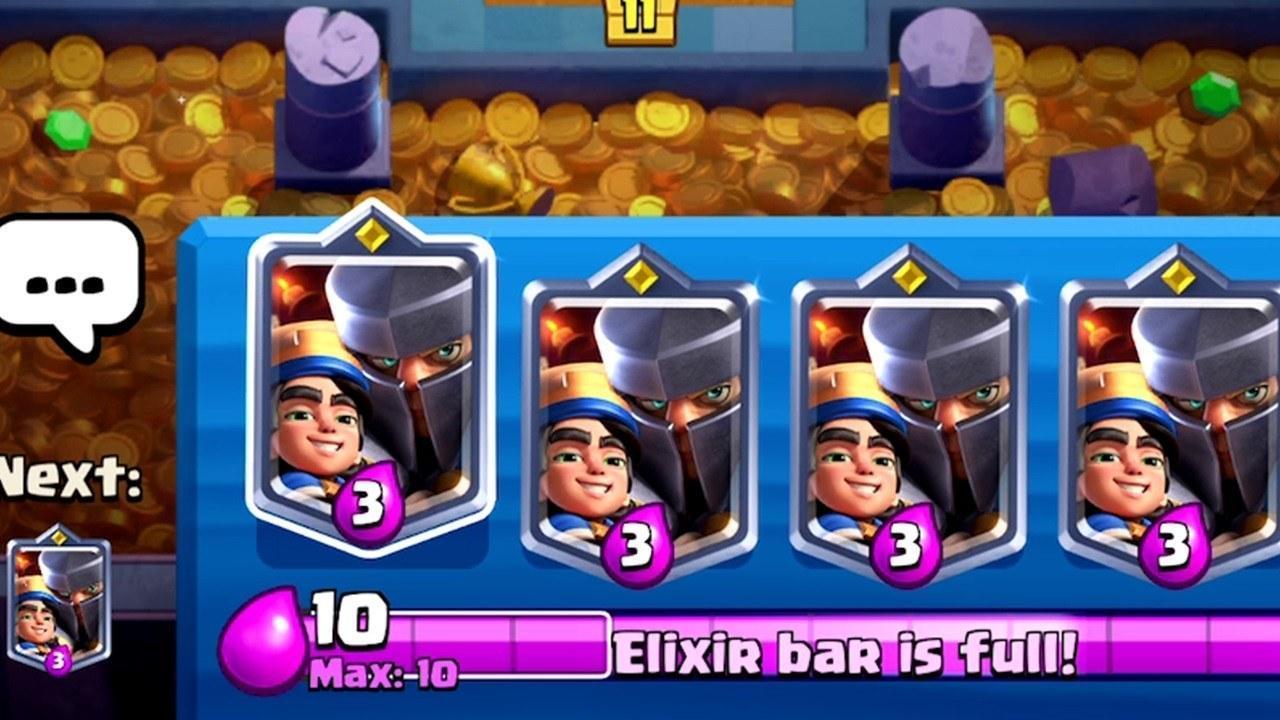
Scarcity is hard to make concrete. Clash Royale hands it over in numbers: each player starts with 5 elixir, regains 1 every 2.8 seconds, and is capped at 10. Every card has a printed price (Skeletons 1, Knight 3, Hog Rider 4, Golem 8), so 4 elixir spent here is 4 that cannot be spent there.
Students who play already estimate refill times, so time becomes a resource they can see and measure. A Hog Rider costs 4 elixir, or 11.2 seconds of regeneration.
The classroom idea has academic backing. Nicola Thomas of Charles Sturt University makes the case for mobile gaming in The Elixir to Engagement: Using Clash Royale to Teach Foundation Level Economics, pairing short Clash Royale clips with activities for Gen Z foundation-level students.
Cricket gives non-players the same frame: a limited-overs captain who burns the strike bowler’s capped overs early has none left for the closing overs.
A Five-Step Opportunity Cost Lesson for the Classroom
This guide fits one 40-minute period. You need a projector, a printed 10-box elixir tracker per pair, and four card slips with real costs. No devices. Run the steps at 5, 10, 8, 8, and 7 minutes, plus a 2-minute exit ticket.
1. Hand Out a Ten-Elixir Budget
Give each pair a tracker and four cards: Cannon (3), Knight (3), Mini P.E.K.K.A (4) and Hog Rider (4). Ask what they want to do. Defend? Attack? Save up and build a bigger push? Total the wish list. Playing all four cards costs 14 elixir, the bar never holds more than 10, and a fresh match starts with just 5.
That gap between what students want and what the bar holds is scarcity, the reason choice exists at all. Every possibility from here on is a decision about where limited elixir goes.
2. Freeze One Decision and Price It
The pause-and-explain routine from using Solitaire to teach students to explain a move fits here. Freeze this scenario: the opponent drops a 4-elixir Hog Rider at the bridge, and you hold 6 elixir. Options:
- Cannon (3), leaving 3
- Mini P.E.K.K.A (4), leaving 2
- Counter-push: your own Hog Rider (4) in the other lane, accepting tower damage, leaving 2
Each pair decides, then prices the choice two ways. First in elixir and seconds: Cannon costs 3 elixir, or 8.4 seconds. Then in what that elixir can no longer buy: no Mini P.E.K.K.A and no surviving troop to counter-attack. It doubles as an elixir tip: answering a 4-elixir card with a 3-elixir one is a positive trade, and strong players hunt for those all match.
As students evaluate, stress one rule: every alternative must be feasible. Under a viral Clash Royale opportunity-cost reel, one commenter asked, “How will a pekka kill a baloon”. It can’t. Mini P.E.K.K.A only hits ground troops, so against a Balloon it is no alternative at all.
3. Name Only the Next Best Alternative
Ask each pair for the opportunity cost of their choice, and listen for two errors every teacher hears. The first is listing every rejected card. “I gave up Mini P.E.K.K.A and the counter-push” describes the tradeoffs on the menu, not the opportunity cost. A student who picked Cannon could only have played one other option instead, so the cost is the value of that next best alternative alone. The second error is naming the least-preferred option, which lowballs the cost.
The Foundation for Teaching Economics (FTE) frames it as “choosing is refusing” and stresses that valuation is subjective. One student ranks the counter-push second; another ranks Mini P.E.K.K.A second because it defends, then attacks. Both are right if they justify the ranking consistently.
4. Settle the Leaking Elixir Debate
At 10 elixir, regeneration stops. Every 2.8 seconds on a full bar throws away an elixir, so 11.2 seconds of sitting full leaks a whole Hog Rider. Given enough time, that leak decides matches.
Then put a common objection to the class: leaking is just waste, not opportunity cost. Let them argue, then settle it. Waiting is a choice, and its opportunity cost is the best option the leaked elixir could have funded. On a production possibilities curve, an idle bar is a point inside the curve: free output, left on the table. The player’s fix: near 10 with no threat, drop a cheap card at the back to start a push.
Finish with the FTE distinction. If the opponent takes a tower while you sat full, the lost tower is a consequence. The forgone defensive play is the opportunity cost.
5. Spring the Sunk Cost Trap on a Failed Push
Final scenario: your 8-elixir Golem lumbers toward the tower, and the opponent answers with a 5-elixir Inferno Tower that melts it. Someone will say, “I already spent 8, I have to back it up.” That is the sunk cost trap.
The 8 elixir is already spent, and no card played now will recover it. The only relevant question is the best use of the next elixir: prop up a dead push, or defend the other lane, where an opponent who just won the trade by 3 is about to attack. Good players cut their losses without blinking. In any decision-making, past investment never belongs in the comparison.
Connect the Elixir Bar to Real Money Decisions

In personal finance terms, an allowance or part-time paycheque is an elixir bar: it refills on schedule and can’t fund everything. Buying a new game this weekend means not putting that money into savings, so the opportunity cost includes the interest or market gains it would have earned. Idle cash is leaking elixir, because doing nothing is still a choice.
The Elixir Collector makes the investing case: elixir up front for elixir later, plus the defense you can’t afford while it pays back. Supercell’s latest nerf slowed its production, and the developers noted its return now takes longer to pay off.
The game also trades money against time. Some players grind for months to level cards, some spend allowance on gems, and some skip the climb, against Supercell’s terms and at risk of a ban, by picking up a leveled Clash Royale account through a marketplace such as igitems. Have students price each route in hours and dollars given up, then follow up with these financial literacy lessons. Parents can run the same conversation at home.
Conclusion and Exit Ticket

Three habits show the lesson landed: students price a choice in elixir and seconds, name one next best alternative instead of a list, and keep waste and sunk cost apart from opportunity cost.
For an extension, try 2v2, where each player runs their own elixir bar. The teammate who gives up less to defend should specialize in defense while the other attacks: comparative advantage and gains from trade, with winning as the reward.
Close with the exit ticket: What did you give up, and how many elixir was it worth?