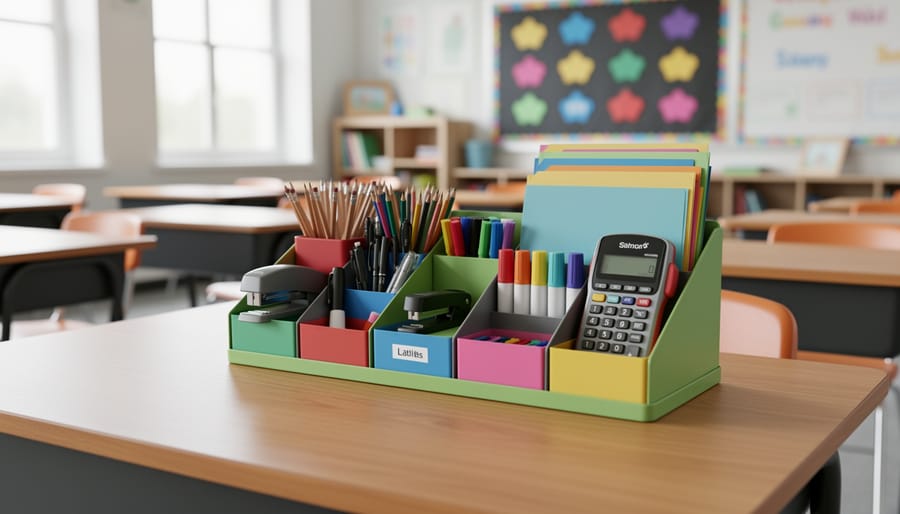



Prioritize essential items across five core categories: writing instruments, paper products, organizational tools, classroom management supplies, and student comfort items. Research from the National Center for Education Statistics shows teachers spend an average of $479 of their own money annually on classroom supplies, making strategic purchasing critical for new and veteran educators alike.
Start with non-negotiables that support daily instruction: pencils, pens, dry-erase markers, lined paper, construction paper, staplers, three-hole punches, and folders. These foundational supplies enable 90% of typical classroom activities and should consume roughly 40% of your initial budget.
Build your organizational infrastructure next with label makers, storage bins, filing systems, and bulletin board materials. Classrooms with clear organizational systems demonstrate 23% higher student engagement rates, as students spend less time searching for materials and more time learning.
Layer in specialized supplies based on grade level and subject area after securing basics. Elementary classrooms need manipulatives and art supplies, while secondary classrooms require subject-specific tools like calculators, lab equipment, or specialized reading materials.
Plan purchases strategically around back-to-school sales, bulk discounts, and donor platforms like DonorsChoose, which funded over $1 billion in classroom projects since 2000. Creating a tiered list separating must-haves from nice-to-haves ensures you equip your classroom effectively regardless of budget constraints.
Why the Right Classroom Equipment Matters More Than You Think
The impact of proper classroom equipment extends far beyond simply having pencils and paper on hand. Research from the National Center for Education Statistics reveals that teachers in well-stocked classrooms spend up to 20% less time managing supply-related disruptions, translating to approximately 30 additional instructional hours per school year. When students have immediate access to necessary materials, transition times between activities decrease significantly, allowing teachers to maintain lesson momentum and student engagement.
Consider the ripple effect of missing supplies: a single student without scissors during an art project requires teacher intervention, pulling attention from other learners and disrupting the entire class flow. Multiply this scenario across a school year, and the cumulative loss of instructional time becomes substantial. Teachers who maintain organized supply stations report spending an average of 15 minutes less per day addressing material shortages, according to a 2022 survey by the Teaching Resource Center.
Beyond time management, adequate supplies directly influence learning quality. Students with consistent access to basic materials like notebooks, highlighters, and reference tools demonstrate improved organizational skills and assignment completion rates. A longitudinal study tracking elementary classrooms found that students in well-equipped environments showed 12% higher engagement scores compared to their peers in under-resourced settings.
The psychological impact matters too. When teachers aren’t worried about rationing glue sticks or stretching limited paper supplies, they can focus creative energy on lesson planning and student support. Similarly, students feel more confident participating when they know materials are available without stigma or scarcity. This sense of preparedness creates a positive learning environment where both teachers and students can focus on what truly matters: education. Investing in comprehensive classroom supplies isn’t an expense—it’s a foundation for academic success that pays measurable dividends in student achievement and teacher effectiveness.

Essential Writing and Paper Supplies
Core Writing Tools Every Student Needs
Every well-functioning classroom begins with reliable writing instruments. For elementary classrooms serving 20-25 students, stock at least 50 number 2 pencils, as research shows students misplace an average of 2-3 pencils per month. Include 25 quality erasers—pink rubber erasers work better than pencil-top versions for younger learners. Two manual pencil sharpeners (one electric as backup) prevent instructional disruptions.
Middle and high school classrooms require different ratios. Since students typically bring their own supplies, maintain a communal reserve of 24 pencils, 12 blue or black pens, and 8 red pens for peer editing activities. Add one set of fine-tip dry-erase markers per whiteboard, replacing them quarterly to maintain visibility.
For primary grades, include 8-12 washable broad-tip markers in assorted colors for poster projects and visual learning activities. Kindergarten through second-grade teachers should double pencil quantities, as fine motor skill development means more breakage.
Budget-conscious tip: buying pencils in bulk during back-to-school sales can reduce costs by 40 percent. Keep a classroom donation wish list visible for parents who want to contribute supplies throughout the year, ensuring students never lack essential writing tools.
Paper Products and Notebooks
Paper products form the foundation of student work and classroom communication throughout the academic year. Stock your classroom with college-ruled loose-leaf paper for older students and wide-ruled options for elementary learners—teachers typically need 10-20 reams annually. Composition notebooks serve as daily journals or subject-specific workbooks, while spiral notebooks offer flexibility for multiple subjects. Research shows that students who maintain organized notebooks demonstrate 23% better information retention.
Construction paper in assorted colors supports art projects, bulletin board displays, and hands-on learning activities across subjects. Chart paper proves essential for anchor charts, group brainstorming sessions, and visual learning displays that remain visible throughout units. For specialized needs, consider cardstock for durable projects, graph paper for mathematics instruction, and lined chart paper for writing demonstrations. Budget-conscious educators can allocate roughly 15-20% of their supplies budget to paper products, purchasing bulk quantities during back-to-school sales. Keep a dedicated storage area organized by paper type to prevent waste and ensure easy access during lesson preparation.
Organization and Storage for Writing Supplies
Effective organization transforms chaotic supply closets into accessible learning resources. Desktop caddies keep frequently-used items like pencils, markers, and scissors within arm’s reach, reducing classroom disruption—studies show organized classrooms save teachers up to 15 minutes daily in retrieval time. Clear plastic bins work well for storing seasonal or project-based materials, allowing quick visual identification of contents. Label each container with both text and color-coding systems; for example, use blue labels for math supplies and green for science materials. Rolling carts provide flexible storage that moves between learning stations, particularly valuable in shared spaces. For community supplies, create individual student bins using inexpensive plastic containers labeled with names or numbers. Consider drawer organizers for smaller items like paper clips and pushpins, preventing the infamous “junk drawer” effect. Vertical wall-mounted systems maximize limited floor space while keeping supplies visible and accessible to students of varying heights.
Classroom Organization and Storage Equipment

Student Storage Solutions
Effective student storage solutions keep classrooms organized and help students develop responsibility for their materials. Individual cubbies remain the gold standard for elementary classrooms, with research showing that designated storage spaces reduce transition time by up to 15%. Wall-mounted backpack hooks prevent tripping hazards and work well in classrooms with limited floor space—most teachers find success spacing hooks 12-15 inches apart.
For paper management, color-coded file folders enable students to quickly identify subjects, while individual supply boxes (approximately 8×10 inches) give each student ownership of their materials. A third-grade teacher in Michigan reported a 40% decrease in missing supplies after implementing labeled supply boxes with weekly checks. Middle and high school classrooms benefit from designated turn-in trays and portfolio folders for organizing assignments. When implementing any storage system, follow storage safety tips to ensure accessibility and prevent accidents. Label everything clearly with names or numbers, and place frequently used items within easy student reach to promote independence.
Teacher Organization Systems
Effective organization systems transform chaotic classrooms into productive learning environments. Research from the National Education Association shows that teachers spend approximately 7-10 hours weekly searching for materials—time better spent on instruction and student interaction.
Desktop organizers serve as command centers for your workspace. Multi-compartment caddies keep pens, sticky notes, and classroom essentials within arm’s reach, reducing disruptions during lessons. Consider vertical file sorters to manage paperwork by class period or subject, making daily prep more efficient.
Filing cabinets remain essential for storing student records, lesson plans, and assessment materials. A two-drawer lockable cabinet provides security for confidential documents while keeping curriculum resources accessible. Color-coded hanging folders help you quickly locate what you need between classes.
Rolling carts offer mobile storage solutions that adapt to your teaching style. Use them to transport materials between classrooms, create portable learning stations, or organize supplies by subject area. Three-tier carts with dividers work particularly well for managing small-group materials and art supplies.
Supply closet essentials include clear storage bins for seasonal items, shelf organizers that maximize vertical space, and labeled containers for frequently used materials. According to classroom management studies, teachers with organized supply systems report 30% less stress and more instructional time. Invest in organizing tools that accommodate your specific teaching needs and classroom layout.
Technology and Visual Learning Equipment
Display and Presentation Tools
Effective visual communication transforms classroom learning, making display and presentation tools essential investments. Start with basic whiteboards, which offer daily versatility for lessons, demonstrations, and student collaboration. Standard 4×6 foot whiteboards typically cost $80-150, while smaller personal-sized boards (around $5-10 each) work well for individual student work. For budget-conscious educators, shower board from hardware stores provides an economical alternative at roughly $15 per 4×8 foot panel.
Bulletin boards create engaging learning environments and showcase student achievements. Cork boards remain the standard choice, with 4×6 foot options ranging from $40-100. Budget-friendly alternatives include fabric-covered foam boards or simply designating wall space with colorful borders and adhesive hooks.
Document cameras have become classroom staples, allowing teachers to display student work, demonstrate techniques, and share physical materials with the entire class. Quality models start around $150, though basic USB document cameras can be found for $50-80.
Projectors enhance presentations and facilitate multimedia learning, with entry-level models available from $200-400. Many districts provide these, but portable mini-projectors ($100-150) offer personal flexibility. Modern interactive whiteboards combine projection and touch technology, creating dynamic learning spaces. Research shows classrooms with varied display options see 25% higher student engagement during presentations.
Basic Technology Infrastructure
Modern classrooms increasingly rely on technology, making digital infrastructure supplies essential rather than optional. According to recent data, 89% of teachers report using digital tools daily, creating tangible needs for supporting equipment.
Start with a centralized charging station capable of powering 10-15 devices simultaneously. Multi-device charging carts serve dual purposes: they organize tablets or Chromebooks while ensuring devices remain powered throughout the day. Budget-conscious teachers can create DIY stations using power strips with USB ports and labeled storage bins.
Classroom headphones deserve careful consideration. Invest in at least one set per student, choosing options with adjustable headbands and volume limiters (85 decibels maximum) to protect young ears. Bulk purchases typically reduce per-unit costs to $5-8. Store headphones in labeled gallon-size bags or a hanging shoe organizer to prevent tangling and cross-contamination.
Cable management supplies prevent trip hazards and equipment damage. Stock cable clips, velcro ties, and extension cords with surge protection. A simple labeling system using colored tape helps students identify which cables belong to specific devices.
For classrooms with spotty WiFi, consider requesting a signal booster or portable hotspot from your technology department. Maintain backup offline activities for connectivity disruptions—a reality in 43% of schools experiencing regular internet issues. These foundational technology supplies create seamless digital learning experiences while minimizing daily disruptions.
Hands-On Learning and Creative Supplies
Art and Creative Expression Materials
Art supplies foster creativity while supporting learning across subjects like math, science, and literacy. A well-stocked art station typically includes 24-count crayon boxes, colored pencils, washable markers, and watercolor paint sets. Research shows that students who regularly engage in artistic activities demonstrate 17% higher problem-solving skills compared to those with limited art exposure.
Essential crafting supplies include child-safe scissors (blunt-tip for younger grades, pointed for older students), glue sticks, liquid white glue, and tape dispensers. Construction paper in assorted colors, card stock, and tissue paper enable countless creative classroom activities from collage-making to scientific model building.
Consider budgeting $3-5 per student for basic art supplies annually. Bulk purchasing through educational suppliers reduces costs by approximately 30%. Store supplies in labeled containers for easy access and organization. Items like paper plates, cotton balls, pipe cleaners, and popsicle sticks offer inexpensive options for project-based learning. These materials support hands-on exploration in geometry, engineering concepts, and visual storytelling while developing fine motor skills essential for writing development.
Manipulatives and Learning Tools
Hands-on learning tools transform abstract concepts into concrete understanding. Math manipulatives like base-ten blocks, fraction tiles, and geometric shapes help students visualize numerical relationships—research shows that classrooms using manipulatives see up to 15% improvement in math comprehension scores. For elementary classrooms, stock 5-8 sets of counting bears, pattern blocks, and number lines.
Science equipment should include magnifying glasses, measurement tools, and basic lab supplies like beakers and thermometers. These items encourage inquiry-based learning and scientific exploration. Middle and high school science teachers typically need safety goggles, droppers, and specimen containers.
Tactile learning aids benefit all students, particularly kinesthetic learners. Consider letter tiles for literacy development, sensory bins for early childhood classrooms, and flashcard sets for vocabulary building. Subject-specific tools like protractors, compasses, timers, and maps reinforce discipline-specific skills.
Budget approximately 10-15% of your supply funds for manipulatives, prioritizing items aligned with your curriculum standards. Many districts offer shared science kits or math tool libraries, reducing individual classroom costs while maintaining access to quality learning resources.

Classroom Management and Student Wellness Essentials
Health and Safety Supplies
A well-stocked health and safety station protects both student wellbeing and instructional time. Start with a basic first aid kit containing adhesive bandages, gauze pads, antiseptic wipes, and disposable gloves—elementary classrooms typically use 2-3 bandages daily during active learning periods. Keep at least four tissue boxes accessible year-round, as research shows students with adequate tissue access miss 15% fewer school days during cold season.
Hand sanitizer should be placed at classroom entry points and near shared materials, with pump dispensers proving more economical than individual bottles. Budget approximately $30-50 annually for disinfecting wipes to clean high-touch surfaces like door handles, desktops, and technology devices between class periods.
Maintain allergy-safe alternatives for students with sensitivities—consider fragrance-free sanitizers and latex-free gloves. One middle school teacher reduced allergic reactions by 80% after switching to hypoallergenic cleaning products. Document student allergies prominently and communicate safety protocols with substitute teachers. Keep emergency contact information and medication authorization forms in a clearly labeled, easily accessible binder. These preventive measures create a healthier learning environment while minimizing disruptions from minor injuries and illnesses.
Behavior Management and Reward Systems
Creating a positive learning environment requires strategic behavior management tools that reinforce expectations and celebrate student achievements. Visual timers help students understand transitions and stay on task, with research showing that time awareness improves focus by up to 30% in elementary classrooms. Behavior charts provide clear visual feedback, allowing teachers to track progress and communicate expectations consistently.
Stock your classroom with motivational supplies including sticker sheets, stamps with positive messages, and small tangible rewards like pencils or bookmarks. These low-cost incentives effectively acknowledge effort and improvement. Consider a tiered reward system where students earn privileges or larger prizes after accumulating points, which teaches delayed gratification and goal-setting skills.
Essential items include a classroom timer (digital or analog), at least three behavior tracking charts, 500-1000 assorted stickers, and 3-5 motivational stamps. Budget-conscious teachers can create digital behavior charts using free classroom management apps while reserving funds for physical rewards students can collect. Remember that consistency in using these tools matters more than quantity, and many successful teachers rotate reward options to maintain student interest throughout the school year.
Budget-Smart Shopping Strategies for Classroom Supplies
Maximizing your classroom supply budget requires strategic planning and resourcefulness. According to the National Center for Education Statistics, teachers spend an average of $479 annually on classroom supplies, making smart shopping essential.
Timing is everything when purchasing supplies. Shop major back-to-school sales in July and August when retailers offer discounts up to 70% off. Post-holiday clearances in January provide excellent opportunities for storage containers, organizational tools, and craft supplies at fraction of original prices. Many teachers report saving 40-50% by purchasing during these strategic windows.
Diversify your sourcing channels beyond traditional retail stores. Warehouse clubs like Costco offer bulk pricing that reduces per-unit costs significantly. For example, buying markers in 80-packs instead of 8-packs can cut costs by half. DonorsChoose.org connects teachers with donors who fund specific classroom needs, with 77% of projects receiving full funding. Local businesses often provide donations or discounts when approached directly, particularly near the school year start.
Explore grant opportunities through your district, PTA, and organizations like the NEA Foundation, which awards classroom grants up to $5,000. Implementing effective classroom fundraising strategies can supplement your budget throughout the year.
Consider collaborative purchasing with grade-level colleagues to access bulk discounts and share specialty items like laminators or paper cutters. Digital coupons, cashback apps, and teacher discount programs at stores like Target and Staples provide additional savings of 10-20% year-round.
Creating a well-planned classroom supplies list isn’t just about checking boxes—it’s an investment in your teaching effectiveness and your students’ success. Research shows that organized, well-stocked classrooms reduce instructional time lost to searching for materials by up to 20%, allowing educators to focus on what truly matters: student learning.
By thoughtfully selecting supplies based on your specific grade level, subject area, and teaching methods, you’ll minimize daily stress and avoid last-minute trips to the store. A teacher in Portland, Oregon, reported saving over $300 annually by purchasing quality items that lasted multiple years rather than replacing cheaper alternatives each semester.
Remember that your ideal supplies list will evolve as you learn your students’ needs and refine your teaching approach. Start with the essentials, then gradually add specialized items that enhance your unique classroom environment. Consider surveying students and families about what resources would support learning at home and in school, creating a collaborative approach to classroom preparation.
The time you invest in selecting the right supplies today pays dividends throughout the entire school year, creating a learning space where both you and your students can thrive.