



An online master’s in nursing education prepares registered nurses to become clinical instructors, simulation coordinators, and faculty members at nursing schools, hospitals, and healthcare training centers. The degree typically includes coursework in curriculum design, teaching methodologies, assessment strategies, and clinical instruction, combined with supervised practicum experience in educational settings. Graduates qualify for teaching positions that allow experienced nurses to shape the next generation of healthcare professionals while often maintaining clinical practice.
The transition from bedside nursing to nurse education addresses a growing need. As healthcare systems expand and the nursing workforce grows, qualified instructors become essential to prepare students for clinical practice. Many online nursing school programs now offer education tracks that allow working nurses to complete their degrees while maintaining their current positions, making the career shift more accessible than ever before.
Programs vary in structure and emphasis. Some focus heavily on academic teaching roles, preparing graduates to design courses and evaluate student performance in college settings. Others concentrate on clinical instruction, developing skills for teaching in hospital-based orientation programs or continuing education departments. Most programs require a practicum component where students gain hands-on teaching experience under supervision, applying theoretical knowledge to real classroom and clinical environments.
Choosing the right program requires careful consideration of accreditation, specialty focus, and practicum placement support. Regional accreditation and specialized nursing education accreditation ensure the degree will be recognized by employers and licensing boards. The program’s teaching philosophy, faculty expertise, and connections to clinical teaching sites all influence your preparation for this distinct career path. Understanding these factors before enrollment helps you select a program aligned with your professional goals and teaching interests.
What Is an Online Master’s in Nursing Education?
An online master’s in nursing education prepares experienced registered nurses to step into teaching roles that shape the next generation of healthcare professionals. This specialized graduate degree focuses on developing the skills needed to design curricula, deliver effective instruction, and assess student learning in both classroom and clinical environments.
The program addresses a critical need in healthcare education. Nursing schools and healthcare facilities need qualified educators who understand both clinical practice and teaching principles. Unlike clinical nursing master’s programs that deepen expertise in patient care specialties, a master’s in nursing education shifts the focus to instruction, curriculum development, and educational leadership.
Understanding some key distinctions helps clarify what this degree entails:
- MSN in Nursing Education
- A graduate degree that combines nursing expertise with educational theory and instructional methods, preparing nurses to teach in academic institutions, healthcare facilities, and continuing education settings.
- Nurse Educator Role
- A professional position focused on teaching nursing students or practicing nurses, requiring mastery of both clinical knowledge and effective teaching strategies to develop competent healthcare practitioners.
- Clinical Teaching versus Academic Instruction
- Clinical teaching occurs at the bedside or in healthcare settings where educators guide hands-on patient care skills, while academic instruction happens in classrooms or online environments focusing on theoretical knowledge and critical thinking.
The curriculum typically covers teaching methodologies that address different learning styles, curriculum development aligned with nursing competencies, and assessment strategies to measure student progress. Students learn how to create lesson plans, design meaningful clinical experiences, and evaluate educational outcomes. Many programs include practicum components where students gain supervised teaching experience in real academic or clinical settings.
Online delivery makes these programs accessible for working nurses who want to transition into education without leaving their current positions. The asynchronous format allows students to complete coursework around shift schedules, though some programs require occasional in-person or synchronous sessions for teaching demonstrations or collaborative activities. This flexibility has made online continuing ed increasingly popular among nurses pursuing advanced credentials while maintaining their clinical practice.
Core Components of Nursing Education Programs
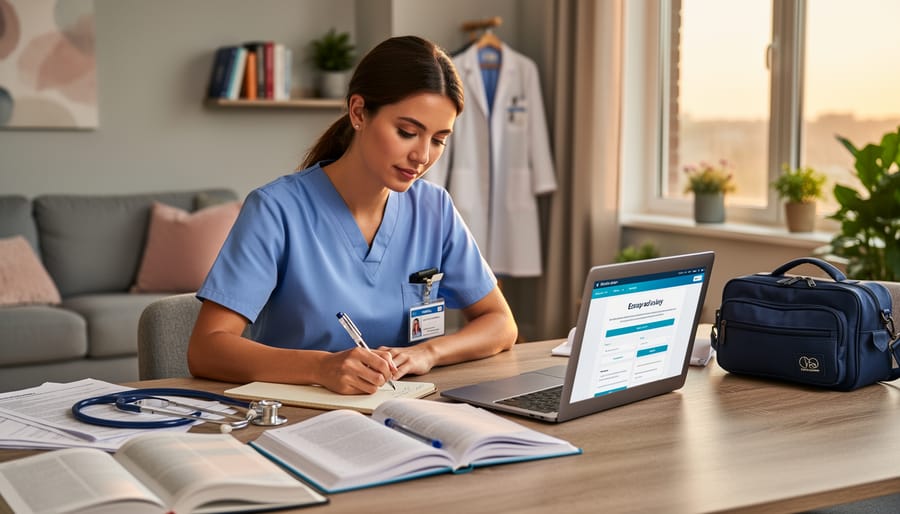
A master’s in nursing education equips you with the specialized skills to teach, mentor, and shape future nurses. Unlike clinical-focused programs, these degrees center on pedagogy and the science of teaching healthcare professionals.
At the heart of most curricula is educational theory and how adults learn. You’ll study foundational models like constructivism and experiential learning, exploring how nursing students develop critical thinking and clinical judgment. These frameworks help you understand why certain teaching methods work better than others in healthcare education.
Curriculum design forms another cornerstone. You’ll learn to build course structures that align learning objectives with teaching activities and assessments. This includes mapping competencies across an entire program, sequencing content logically, and integrating clinical skills throughout coursework. Many programs teach you to develop syllabi, lesson plans, and instructional materials that meet accreditation standards.
Assessment and evaluation methods receive substantial attention. You’ll examine how to create exams, design practical skills assessments, evaluate clinical performance, and provide meaningful feedback. Programs typically cover both formative assessment (ongoing checks during learning) and summative evaluation (final demonstrations of competency). You’ll also learn to assess student performance fairly while maintaining academic rigor.
Clinical instruction methods prepare you to teach in simulation labs, clinical settings, and skills practice environments. This includes facilitating high-fidelity simulation scenarios, debriefing students after clinical experiences, and supervising hands-on practice. Since online learning has become integral to nursing education, most programs address digital teaching tools, virtual classroom management, and hybrid course delivery.
The practicum or teaching experience allows you to apply what you’ve learned. Working under an experienced faculty mentor, you’ll typically teach actual nursing students in academic or clinical settings. You might lead classroom discussions, supervise lab sessions, grade assignments, and manage student interactions. The number of required practicum hours varies by program, so check each institution’s specific requirements.
Some programs include content on educational leadership, preparing you to serve on curriculum committees or take on program coordination roles. Others emphasize clinical education roles in hospital settings rather than academic teaching positions.
Career Opportunities After Earning Your Degree
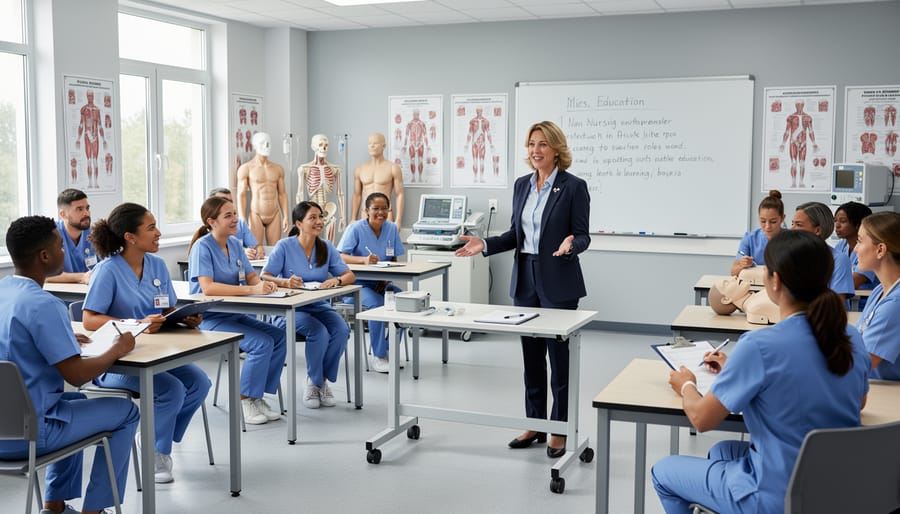
Earning your degree opens doors to diverse roles where you can shape nursing practice and education while continuing to advance your career in healthcare. Graduates find opportunities across academic settings, healthcare facilities, and professional development organizations.
Academic Faculty Positions
Many graduates transition into teaching roles at community colleges, technical schools, and universities. As nursing faculty, you’ll develop curricula, deliver classroom and clinical instruction, mentor students, and contribute to program accreditation efforts. Community colleges particularly need qualified educators to teach in associate degree nursing programs, which graduate a significant portion of new nurses entering the workforce each year. University positions may include teaching in bachelor’s or graduate nursing programs, with opportunities to engage in scholarly activities and research alongside teaching responsibilities.
Clinical Educator Roles
Hospitals and healthcare systems employ clinical educators to develop and deliver training programs for nursing staff. In these positions, you’ll design orientation programs for new hires, provide continuing education on emerging practices and technologies, ensure regulatory compliance training, and support evidence-based practice initiatives. Clinical educators bridge the gap between classroom learning and bedside care, helping nurses at all experience levels refine their skills and stay current with evolving standards.
Staff Development and Professional Growth
Staff development specialists focus on organizational learning needs, conducting competency assessments, identifying skill gaps, and creating targeted educational interventions. You might coordinate specialty certification preparation, lead quality improvement education, or develop leadership training for charge nurses and managers. These roles typically involve collaborating with multiple departments to align educational offerings with institutional goals.
Continuing Education Coordination
Healthcare organizations, professional associations, and private companies need coordinators to manage continuing education programs that help nurses maintain licensure and certifications. This work involves identifying learning needs, selecting or creating educational content, managing logistics for conferences and workshops, tracking participation and outcomes, and ensuring programs meet accreditation standards.
Growing Demand
The demand for qualified nursing educators continues to expand as healthcare evolves and nursing programs work to increase enrollment capacity. Faculty shortages at nursing schools limit how many students can be admitted, creating ongoing opportunities for graduates prepared to teach. Whether you’re drawn to academic environments or prefer hospital-based education, your degree positions you to influence how nurses learn and grow throughout their careers.
What to Look for When Choosing an Online Program
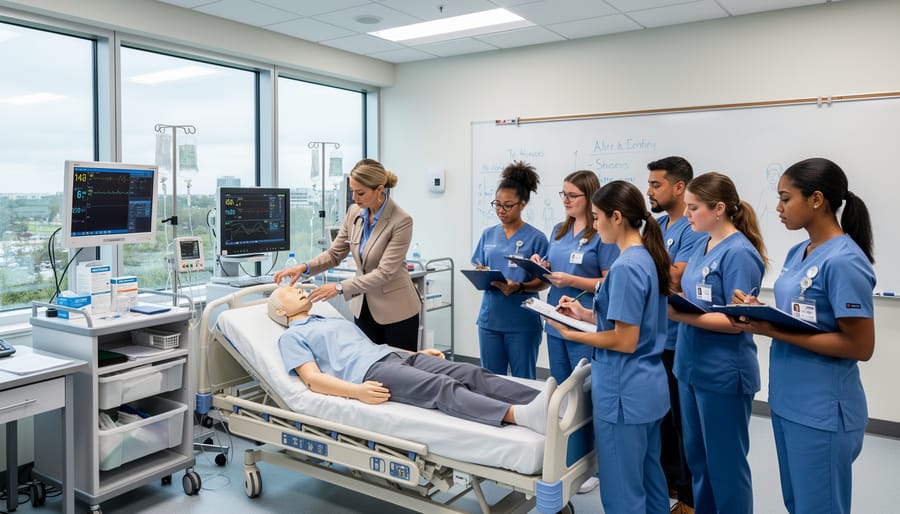
Accreditation stands as the single most important criterion when evaluating any online master’s program in nursing education. You’ll want to confirm that the institution holds regional accreditation from bodies like the Higher Learning Commission or Middle States Commission on Higher Education, which validates the overall quality of the university. Equally critical is nursing-specific accreditation from either the Commission on Collegiate Nursing Education or the Accreditation Commission for Education in Nursing, as this ensures the program meets professional standards for nursing education curricula.
Faculty credentials deserve close examination because they directly influence the quality of your education. Look for programs where instructors hold doctoral degrees and maintain active engagement in nursing education research or practice. Review faculty profiles to see if they publish in academic journals, present at conferences, or hold leadership roles in professional organizations. Programs that employ full-time faculty rather than relying heavily on adjuncts often provide more consistent mentorship and better availability for student support.
Practicum placement support separates strong programs from mediocre ones. Teaching practicums form a central component of nursing education degrees, so investigate how each program helps students secure these required clinical teaching experiences. Does the school maintain partnerships with local nursing programs and healthcare facilities, or will you need to arrange placements independently? Programs with dedicated practicum coordinators and established networks make this process considerably easier, particularly for students in rural areas or regions with fewer nursing schools.
Course scheduling flexibility matters greatly when you’re balancing graduate studies with clinical shifts and family obligations. Examine whether programs offer asynchronous courses that let you complete work on your own schedule, or if they require real-time attendance at specific class sessions. Some programs operate on accelerated terms while others follow traditional semesters, consider which pace suits your learning style and availability. The ability to enroll part-time versus full-time only can determine whether pursuing the degree is even feasible given your current work commitments.
Technology platforms and student support infrastructure also warrant attention. Request access to demo versions of the learning management system to assess its ease of use and mobile accessibility. Ask about library resources available to distance learners, technical support hours, and whether the program provides access to educational technology tools you’ll use in future teaching roles. Strong programs equip you not just with pedagogical knowledge but with practical experience using the digital platforms you’ll encounter as a nursing educator.
Admission Requirements and Prerequisites
Most online master’s in nursing education programs require applicants to hold an active, unencumbered registered nurse license and a Bachelor of Science in Nursing from an accredited institution. Admissions committees typically look for a minimum undergraduate GPA, with competitive programs often expecting grades that reflect academic readiness for graduate study. Because nursing education roles demand both clinical competence and teaching aptitude, programs generally prefer candidates who have gained meaningful clinical experience as practicing nurses, though the specific amount varies widely by institution.
Beyond academic credentials and licensure, the application process usually includes submitting letters of recommendation from professional references who can speak to your clinical abilities, work ethic, and potential as an educator. These letters often carry significant weight because they provide insight into qualities that transcripts alone cannot reveal. A personal statement or essay is another standard component, giving you the opportunity to articulate your motivations for transitioning into nursing education, your teaching philosophy, and how the program aligns with your career goals.
Some programs may also require a current resume or CV documenting your nursing background, and a few conduct interviews to assess communication skills and teaching potential. Prerequisites such as statistics or prior coursework in education are less common but worth checking when researching specific schools. Requirements differ considerably across institutions, so it pays to review each program’s admissions criteria carefully and reach out to admissions advisors with questions about your particular situation. Understanding these expectations early allows you to prepare a strong application and identify programs where your background and goals are the best fit.
Balancing Work, Life, and Online Study
Successfully managing an online nursing education program while working full-time requires deliberate planning and honest self-assessment. Most students juggling clinical shifts, family obligations, and coursework find that structure matters more than sheer willpower.
Start by mapping your actual available hours each week. Look at your shift schedule, family commitments, and necessary downtime. Be realistic about when you can focus without interruption. Many working nurses discover they have more fragmented time than they initially thought, an hour before a shift, two hours after the kids sleep, a quiet Sunday morning, and these pockets become their study foundation.
Asynchronous course formats give you control over when you engage with material, but that flexibility requires discipline. Set specific study appointments with yourself and protect them as you would clinical shifts. Treat coursework as non-negotiable rather than something to squeeze in when convenient. This mental shift helps you stay on track when competing demands arise.
Creating a sustainable schedule that works with your life typically follows this sequence:
- Review your program’s weekly expectations and map out all assignment deadlines for the semester.
- Block out your work schedule, family commitments, and necessary self-care time on a calendar.
- Identify consistent study windows that appear each week, even if they’re only thirty to forty-five minutes.
- Assign specific tasks to specific time blocks based on energy levels, save reading for tired moments, reserve complex assignments for when you’re sharpest.
- Build in buffer time before major deadlines to account for unexpected clinical demands or family needs.
- Reassess monthly and adjust as your schedule changes or you learn what actually works.
Communicate your academic commitments to family, colleagues, and supervisors early. When people understand your goals and constraints, they’re often willing to accommodate study time or pick up occasional slack. Some employers offer educational leave or flexible scheduling for nurses pursuing advanced degrees.
Accept that some weeks will feel overwhelming. Clinical emergencies happen, children get sick, technology fails. Give yourself permission to do adequate work rather than perfect work when life intervenes. Completion matters more than perfection in graduate education.
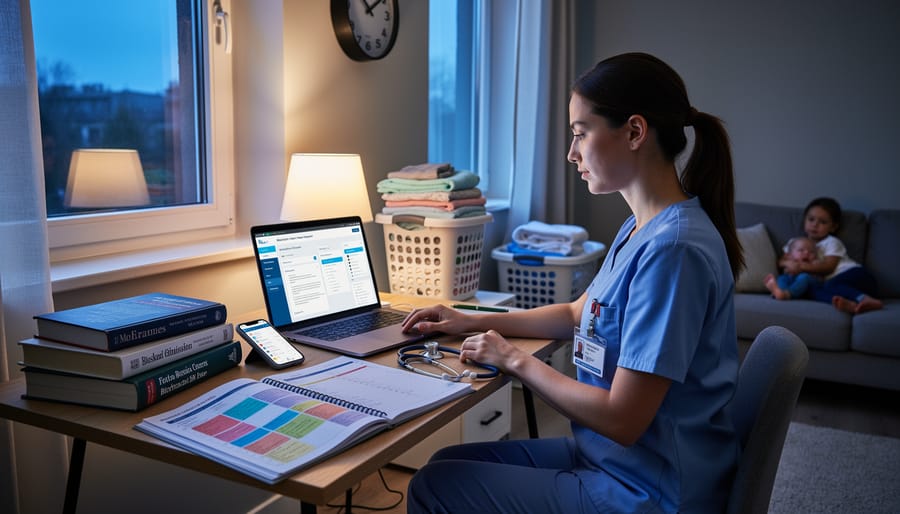
An online master’s in nursing education opens a pathway to one of healthcare’s most rewarding roles, preparing the nurses who will care for future patients. By choosing this degree, you’re positioning yourself to address a critical need while gaining the flexibility to advance your career without stepping away from clinical practice. Online programs make it possible to develop teaching expertise on your schedule, fitting coursework around your current responsibilities.
As you explore your options, focus on programs with strong accreditation, experienced faculty who understand both clinical practice and education, and robust support for your teaching practicum. The right program will provide not just theoretical knowledge but practical experience that prepares you to step confidently into an educator role. Take time to compare programs based on factors that matter most to your situation, curriculum structure, technology platforms, practicum placement assistance, and how well the program accommodates working nurses.
The nursing profession needs educators who bring real-world clinical insight into the classroom. If you’re drawn to mentoring, teaching, and shaping healthcare education, this degree can help you make that transition. Start by researching accredited programs that align with your career goals and learning preferences. The investment in your education today can lead to a fulfilling career influencing nursing practice for years to come.