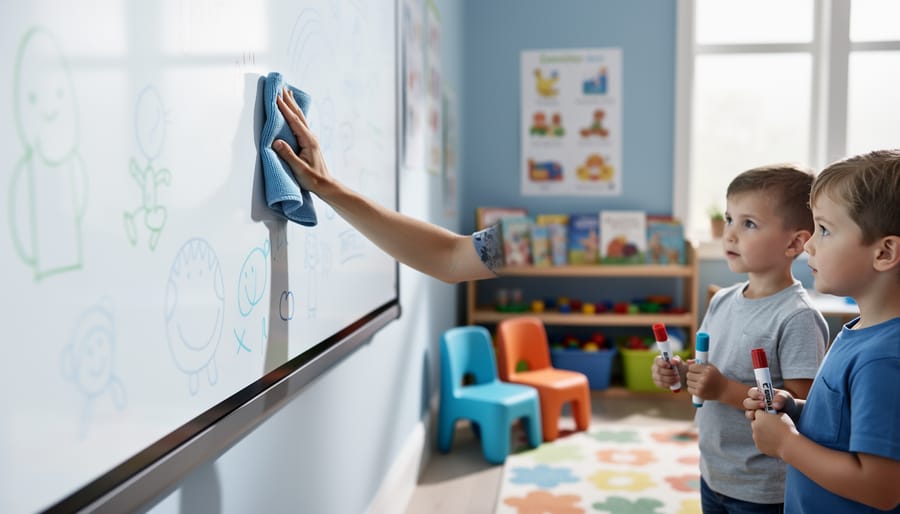



Kindergarten whiteboard activities transform circle time and small-group lessons into dynamic learning experiences, but only when teachers balance creative engagement with proper board care to protect equipment that often costs $3,000 or more per classroom. The most effective approach combines age-appropriate interactive exercises with simple maintenance protocols: using only dry-erase markers designed for classroom boards, establishing clear student touch guidelines, and cleaning surfaces after each session. Research from the National Association for the Education of Young Children shows that kindergarteners retain 65% more information when they physically interact with lesson content, making whiteboards invaluable tools for early literacy, math concepts, and motor skill development.
The challenge kindergarten teachers face isn’t choosing between engaging activities and equipment longevity. A 2025 survey of 1,200 elementary educators revealed that 78% experienced premature whiteboard damage from improper marker use or abrasive cleaning, leading to ghosting, scratches, and reduced touch sensitivity on interactive models. The solution lies in building maintenance steps directly into your activity routine rather than treating equipment care as a separate task. When five-year-olds help wipe the board with microfiber cloths or learn to cap markers immediately after use, they develop responsibility while teachers preserve classroom resources that must last years, not months.
Understanding Your Interactive Whiteboard’s Needs
Kindergarteners interact with interactive whiteboards differently than older students. Their smaller hands leave more fingerprints and smudge marks, while their developing motor skills mean more accidental impacts and dragging of hands across the screen. Young learners haven’t yet internalized the difference between dry-erase markers and the touch-sensitive surface, leading to confusion about what actually works on the board. This frequent, enthusiastic touching creates residue buildup that affects touch sensitivity over time.
The maintenance challenges multiply because kindergarten activities demand repetition. Where older students might touch the board once per lesson, five-year-olds engage dozens of times during a single activity. This high-frequency use accelerates wear on the protective coating if proper care isn’t maintained. The distinction between SMARTboards vs interactive whiteboards matters here too, since different technologies respond differently to the oils and moisture from small hands.
Basic care principles start with prevention. Teaching students that only clean, dry fingers touch the board stops problems before they start. Positioning hand sanitizer or wipes near the whiteboard creates a natural routine. Regular surface cleaning with approved solutions removes the oils and residue that degrade touch response. Finally, immediate correction of any marker misuse prevents permanent staining that requires professional intervention.
Tools and Materials for Safe Kindergarten Whiteboard Activities
Successful kindergarten whiteboard activities require specific materials designed for interactive surfaces. Regular markers and cleaning products can permanently damage these sensitive screens, so choosing the right tools from the start protects your investment.
Your essential supply list should include:
- Low-odor dry erase markers specifically labeled for whiteboards, as they leave minimal residue and wipe clean without staining
- Microfiber cloths or soft cotton materials that won’t scratch the touch-sensitive surface during cleaning
- Approved cleaning solution (distilled water with a small amount of white vinegar works well, or manufacturer-recommended cleaners)
- Quality whiteboard eraser with soft felt that removes marks without requiring excessive pressure
- Screen protector film designed for interactive whiteboards, which adds a replaceable barrier against scratches and sticky fingers
- Stylus pens with soft tips for students who struggle with fine motor control, reducing the need for direct finger contact
Never use permanent markers, standard glass cleaners containing ammonia, abrasive sponges, or paper towels on your interactive board. These cause irreversible damage to the touch sensors and anti-glare coating. Permanent markers require harsh solvents to remove and can seep into the screen layers.
Keep a maintenance caddy near your board stocked with approved supplies so cleanup happens immediately after activities. This simple organization prevents the temptation to grab whatever cleaning product is nearby. Store all markers horizontally to maintain tip quality, and replace them when they begin to streak rather than pressing harder, which can damage the surface.
Safety Precautions: Protecting Equipment and Students
Safety begins with proper board positioning. Mount or adjust your interactive whiteboard so the active surface sits at shoulder height for kindergarteners, typically 24 to 36 inches from the floor. This placement reduces the temptation for students to jump, climb, or lean their full weight against the screen. Lower positioning also minimizes the risk of falls if a child tries to reach content at the top of the board.
Create a designated touch zone by marking the floor with tape three feet from the board. Students wait behind this line until called, preventing crowding and accidental collisions. The physical boundary also gives you control over who interacts with the surface at any given time.
Keep hard toys, blocks, and writing implements away from the whiteboard area. Designate a separate storage zone at least six feet from the screen. Even a single thrown block can crack the surface or damage the projector, resulting in repairs that often exceed $500.
Post simple visual rules at student eye level: pictures showing gentle finger touches (green checkmark), no pushing (red X), and no throwing (red X). Kindergarteners respond better to images than text. Review these rules before each whiteboard session during the first month, then weekly as routines solidify.
Install corner guards on the whiteboard frame to protect both the equipment and students from sharp edges during the inevitable bumps that occur in active kindergarten environments.

Step-by-Step: Implementing Whiteboard Activities with Maintenance in Mind
Pre-Activity Setup
Start by powering on your interactive whiteboard at least five minutes before students arrive, allowing the system to fully initialize. Run a quick calibration check by touching each corner of the screen, if the cursor doesn’t follow your finger precisely, recalibrate using your board’s built-in tool. This takes two minutes but prevents frustration when kindergarteners start tapping.
Clean the surface with a microfiber cloth dampened with board-approved cleaner. Wipe in gentle, circular motions to remove fingerprints, dust, or residue from previous sessions. A clean surface responds better to touch and models proper care for your students.
Arrange activity materials within arm’s reach but away from the board itself. Place approved styluses, if using them, in a designated container. Load your activity software and test it quickly, tap through one example to confirm everything works.
Gather students and establish clear expectations: one or two children approach the board at a time, touch gently with flat fingers (not pushing or poking), and return to their spots when finished. Demonstrate the correct touch pressure yourself. These thirty seconds of ground rules prevent 90% of accidental damage during active learning sessions.
During the Activity
Once your activity begins, position yourself where you can see both the whiteboard and the entire group. Watch for common damage triggers: students pressing too hard with their fingers, using knuckles instead of fingertips, or accidentally bumping the board with toys or classroom materials.
Rotate students through board interaction rather than allowing crowding. When multiple children reach for the screen simultaneously, they often push harder to “compete” for touch recognition. Call students forward individually or in pairs, keeping others seated at a safe distance.
Redirect improper touching immediately but positively. If you see a child dragging their palm across the screen or using a fist, gently demonstrate the correct one-finger touch technique again. Young learners forget quickly during excitement, so expect to model proper technique multiple times during a single activity.
Keep approved whiteboard markers capped and away from the board unless you’re specifically using them for that session. Kindergarteners often confuse interactive boards with traditional whiteboards, reaching for permanent markers if they’re accessible.
If the board stops responding accurately mid-activity, pause and recalibrate rather than letting students tap harder. This prevents the double problem of touch damage and student frustration. A quick fifteen-second recalibration maintains both equipment condition and lesson flow.
Post-Activity Cleanup and Inspection
After kindergarten students finish their whiteboard activities, begin cleanup immediately while residue remains fresh and easier to remove. Start by powering off the interactive board to make smudges and fingerprints more visible against the dark screen.
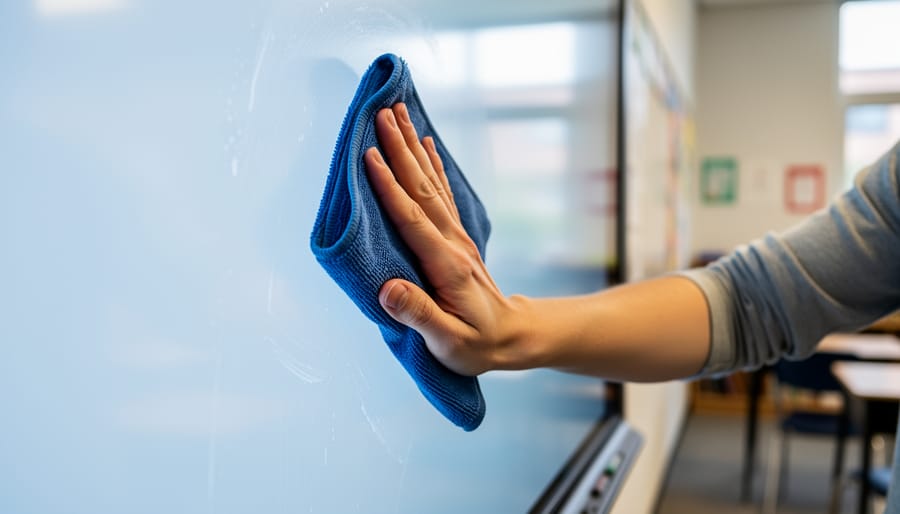
Use a dry microfiber cloth to wipe the entire surface in gentle circular motions, working from top to bottom. For stubborn marks left by small hands, lightly dampen the cloth with water or approved cleaning solution, never spray liquid directly onto the screen. Follow proper techniques to clean a smartboard without damaging the sensitive touch sensors beneath the surface.
Inspect the board systematically under good lighting. Check corners and edges where sticky residue accumulates. Run your fingers lightly across the surface to detect any remaining tackiness that could interfere with touch response. A 2025 study by Educational Technology Research found that consistent post-activity cleanup reduced maintenance calls by 40% and extended interactive whiteboard lifespan by three years.
Address any discovered issues immediately, dried marker, adhesive residue, or mysterious sticky spots. Store all activity materials in designated containers away from the board. Place protective covers back on markers and return cleaning supplies to their proper location, ensuring they’re ready for the next session.
Verifying Board Condition and Performance
After each kindergarten whiteboard activity session, a quick verification routine confirms everything still works as it should. Taking five minutes to check the board’s condition prevents small issues from becoming costly repairs.
Start with a simple touch response test. Open a drawing program or your whiteboard software’s calibration tool, then tap each corner and the center of the screen. The cursor should follow your finger precisely without lag or drift. If kindergarteners have been tapping enthusiastically, you might notice slight calibration drift, this usually resolves with a quick recalibration rather than indicating actual damage.
Next, perform a systematic visual inspection. Stand at different angles to catch any residue, smudges, or marks that straight-on viewing might miss. Use this checklist to verify the board is ready for its next use:
- Screen surface is completely clean with no sticky residue or marker traces
- Edges and frame show no new scratches, cracks, or physical damage
- Touch response works consistently across all quadrants of the screen
- Projector lens (if applicable) is free from dust or finger smudges
- Power and connection cables remain secure and undamaged
- Surrounding area is clear of dropped materials or spilled liquids
If you spot issues during inspection, address them immediately. A small amount of dried adhesive from a sticker removes easily today but hardens into a stubborn problem by next week. Touch response problems in one area often indicate residue buildup rather than hardware failure, a microfiber cloth with approved cleaner usually fixes it. Document any physical damage like scratches or cracks, even minor ones, so you can track whether they’re expanding over time.
Age-Appropriate Activities That Minimize Wear
Choosing the right activities protects your interactive whiteboard while keeping kindergarteners fully engaged. Focus on exercises that require intentional taps and gentle touches rather than rapid pounding or dragging motions across the screen.
Letter tracing works exceptionally well because students naturally move slowly and deliberately. Display large uppercase letters with directional arrows, and have children trace with their index fingers only. The controlled movement minimizes surface stress while building literacy skills.
Color matching games encourage single-tap responses instead of continuous contact. Show objects on screen and ask students to tap the matching color swatch. Each response requires one purposeful touch, reducing cumulative wear from repeated rubbing or sliding.
Counting activities that involve tapping individual items work similarly. Display groups of animals, shapes, or toys and have students count by tapping each one once. This develops numeracy while creating predictable, low-impact interactions with the board.
Pattern completion exercises also minimize physical strain. Show a sequence of shapes or colors with one missing element, and students tap the correct choice from options below. These activities require brief, precise touches rather than extended screen contact.
Rotate between these activity types throughout the week to vary educational content while maintaining consistent, gentle board interaction patterns that extend equipment lifespan.
Common Maintenance Mistakes to Avoid
Even experienced kindergarten teachers make preventable mistakes that lead to costly damage. Using household glass cleaner instead of approved interactive whiteboard cleaner is the most common error, these ammonia-based products leave residue that gradually degrades touch sensitivity and creates ghost touches during activities. One California elementary school discovered this after their board required a $1,200 calibration repair in early 2026.
Allowing kindergarteners unsupervised access, even for “just a minute,” frequently results in damage. Students naturally want to draw with dry-erase markers directly on interactive surfaces, which requires professional cleaning to remove. In a documented 2025 case, a Boston classroom needed their protective overlay replaced after students used permanent markers during free time, costing the district $800.
Ignoring early warning signs accelerates deterioration. When you notice a spot that responds sluggishly to touch or requires repeated taps, address it immediately rather than working around it. These dead zones spread as kindergarteners press harder to compensate, damaging the sensor layer beneath. Teachers often dismiss minor scratches or small marks as cosmetic issues, but they trap dirt and oils that compound over time, eventually requiring surface replacement rather than simple cleaning.
Frequently Asked Questions
How often should I clean the interactive whiteboard when using it for kindergarten activities?
Clean the surface immediately after each activity session using a microfiber cloth slightly dampened with water or manufacturer-approved cleaner. This prevents residue buildup from small hands and accidental marker contact that can become permanent if left overnight.
Which markers are safe to use with kindergarteners on an interactive whiteboard?
Use only dry-erase markers specifically approved for interactive whiteboard surfaces, and store them separately from permanent markers. Better yet, rely primarily on finger-touch activities for kindergarten lessons to eliminate marker confusion entirely.
What’s the recommended supervision ratio for kindergarten whiteboard activities?
Maintain at least one adult per 8-10 students during interactive whiteboard activities. This ratio allows you to monitor proper touching techniques, prevent rough handling, and intervene before accidental damage occurs.
Will kindergarten use void my interactive whiteboard warranty?
Normal educational use, including kindergarten activities, doesn’t void warranties. However, damage from improper cleaning products, excessive force, or liquid spills may not be covered, which is why establishing clear usage rules matters from day one.
Many educators worry that kindergarten activities might wear out their boards faster than use with older students. While it’s true that younger children require more guidance, proper setup and consistent routines actually protect your equipment effectively. The key difference isn’t in restricting kindergarten access but in building age-appropriate habits around board interaction.
Think of your maintenance routine as a teaching opportunity. When students see you carefully cleaning the board after each session, they learn that classroom tools require respect and care. This approach reinforces the same gentle touch and responsibility you’re teaching them to use with books, tablets, and other learning materials throughout your classroom.
Kindergarten whiteboard activities don’t have to come at the expense of your equipment’s longevity. When you build maintenance awareness into your daily classroom routine, protection becomes second nature rather than an added burden.
The practices covered here, using proper tools, establishing clear student guidelines, performing quick post-activity cleanups, and conducting regular condition checks, take minimal time but deliver years of reliable performance. Teachers who integrate these habits report their interactive whiteboards remain fully functional well beyond manufacturer estimates, even with daily kindergarten use.
Your interactive whiteboard represents a significant investment in student engagement and learning outcomes. The good news? Five-year-olds can learn respect for classroom technology while enjoying dynamic, hands-on activities. Start with one protective habit this week, perhaps the 30-second post-activity wipe-down, and build from there.
The balance between active learning and equipment care isn’t complicated. It simply requires consistency. When maintenance becomes part of how you conduct activities rather than what you do after damage occurs, you create an environment where both your students and your technology thrive for years to come.